
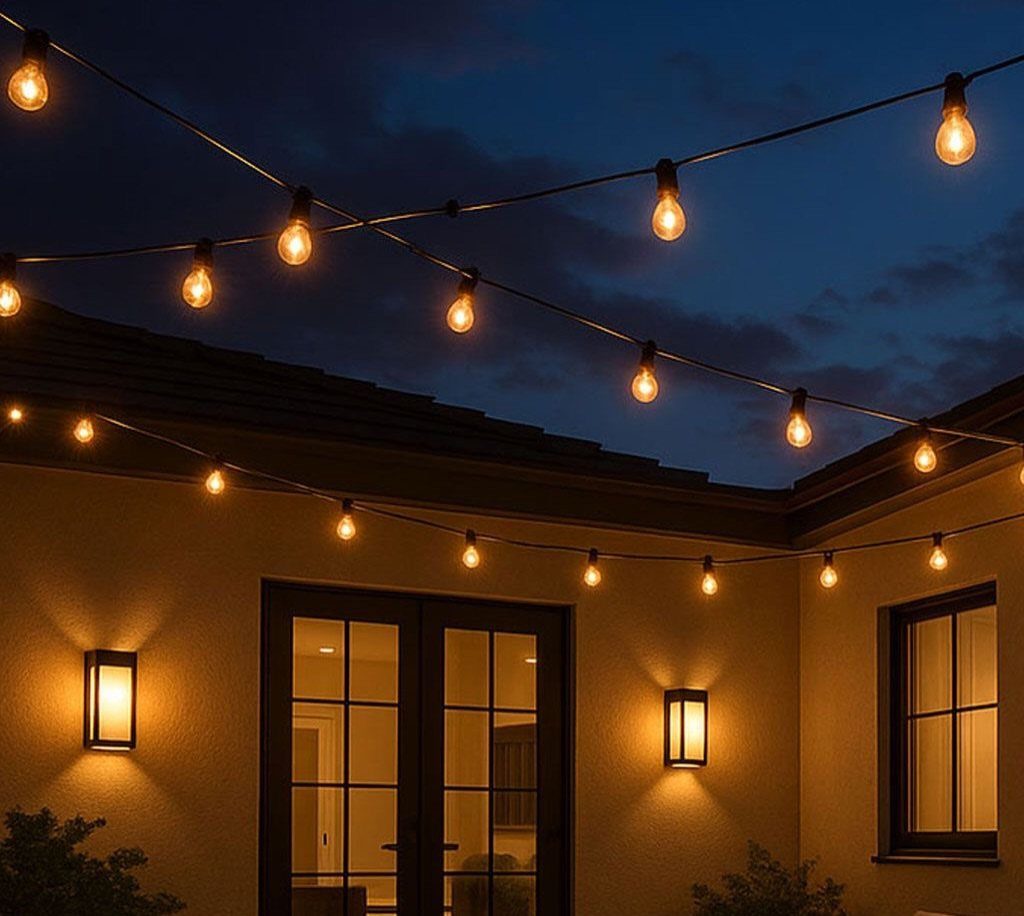
These ideas run from free shipping pallets to about $1,000 for a full pallet deck with cushions and a frame, so the budget is not what limits you.
What decides which project lands in your yard is how you already use the space: Friday gatherings call for a fire pit ringed with rocks, and if you cook with fresh herbs, a pallet vertical garden on fence space is hard to beat.
The raised bed in this list needs a check for full-day sun before you fill it, because moving one after it is built is a job no one wants twice.
[link-whisper-related-posts]1. Raised Beds Garden
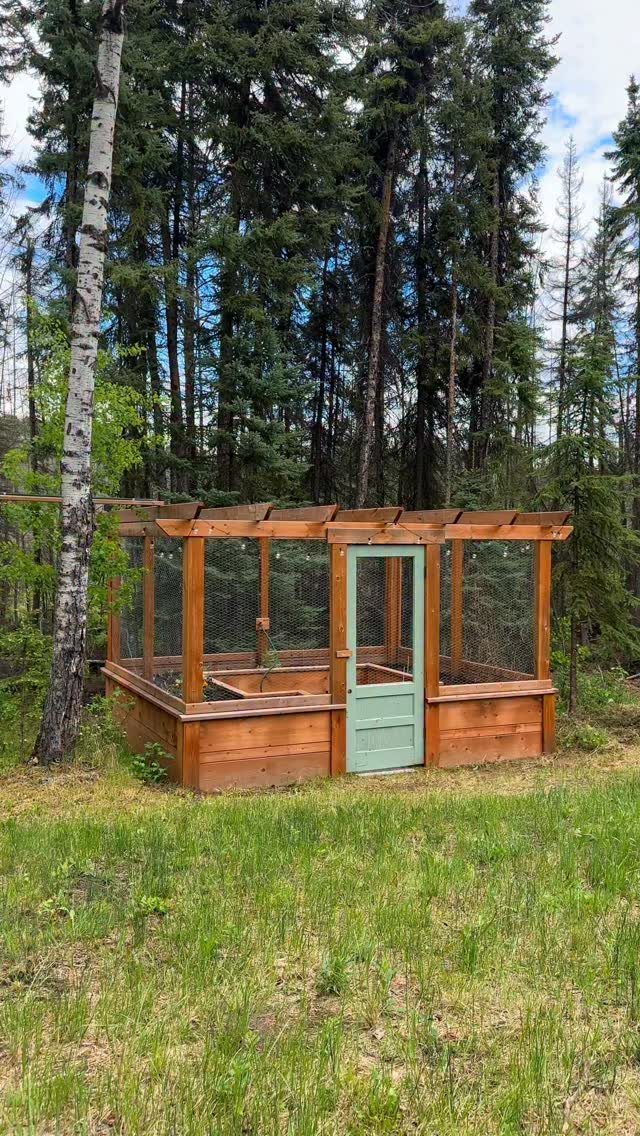
A raised bed garden lifts your planting surface above ground level, which buys you better soil control and fewer weeds.
A wire mesh enclosure around a raised bed is worth building if deer or rabbits visit your yard; a small door makes tending tomatoes or greens straightforward without leaving the bed open to pests.
Pressure-treated lumber or cedar will last a few seasons in most climates.
I would check that your chosen spot gets solid sun through most of the day before filling a raised bed, since moving one after it is built is not a job you want twice.
2. Pallet Vertical Garden
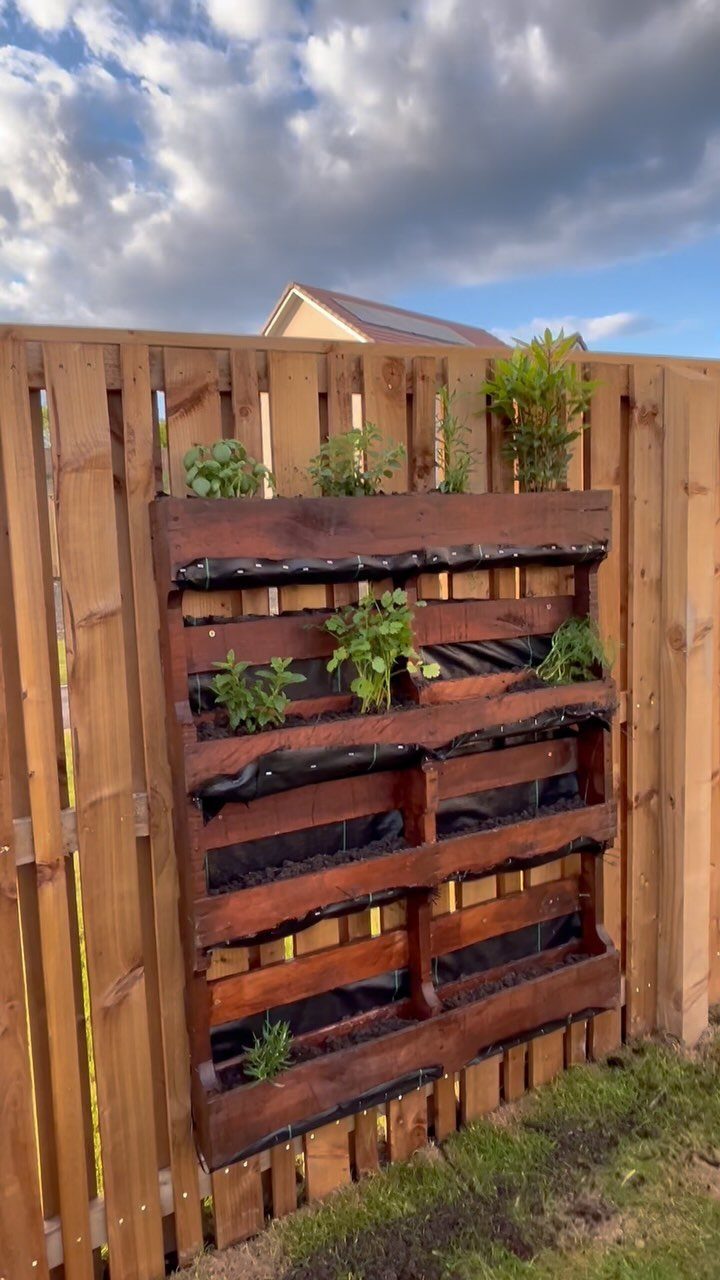
A pallet vertical garden hangs flat against a fence to grow herbs or shallow-rooted plants where floor space is missing.
Mounting a pallet vertical garden on wood siding or a fence is the safer call; a chain-link fence will sway and dry out faster.
Mount the pallet onto a fence, add landscape fabric behind the slats to hold soil, and pack potting mix into each row rather than garden dirt, which compacts and won’t drain.
I would keep this for herbs, strawberries, or annual flowers, not deep-rooted vegetables. One full pallet run on a fence face takes an afternoon and fills awkward corners that otherwise stay bare.
A trellis is an easy and budget-friendly way to add visual interest to a backyard or garden.
3. String Lights
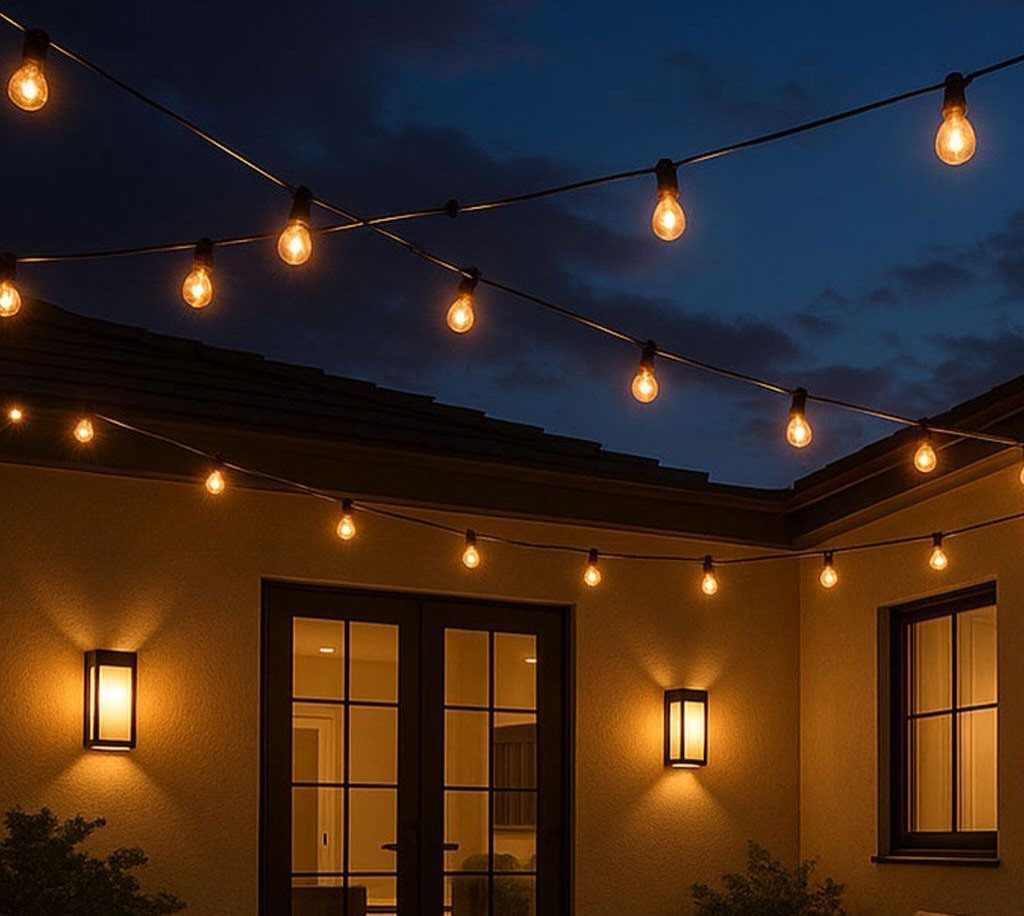
String lights turn a patio or deck into usable space after sunset for the cost of a takeout dinner, with plenty of length and bulb style options in the budget tier.
Classic Edison bulbs in a crisscross pattern look best over a defined area like a dining table or seating zone rather than scattered at random.
Check your outlet placement before you hang; extension cords across walking paths are a trip hazard and an eyesore. LED bulbs last longer and draw less power, though the warm glass look of incandescent is what most people picture.
I use screw-in guide wire or cup hooks rather than nails, so the pattern can shift when I want it to.
4. Fire Pits
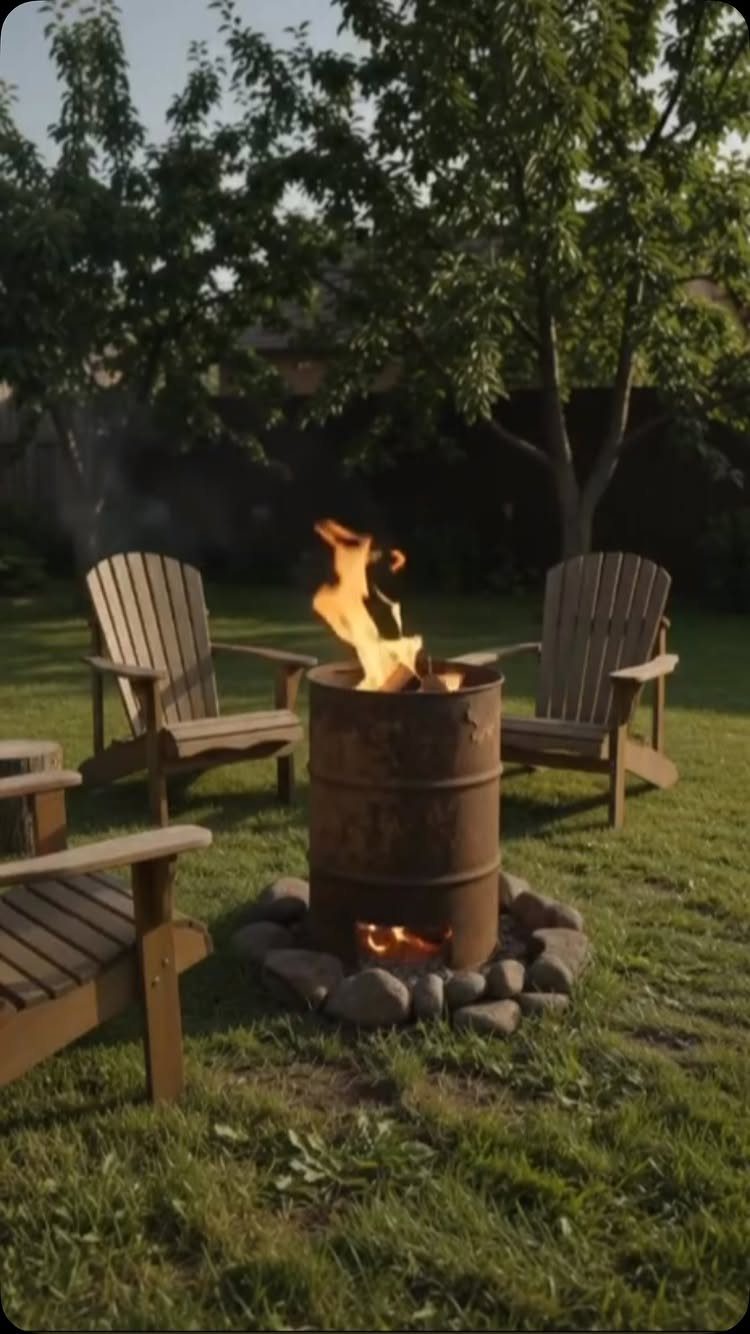
A metal barrel fire pit gives you a contained burn surface for about the cost of a stock tank or salvaged drum, far under the price of manufactured steel pits.
The rocks ringing this one are not decoration; they keep embers off dry grass and mark the safe perimeter so chairs stay back.
I would set any pit well away from structures or overhanging branches, and check local burn ordinances before the first light; some counties require screens or ban open flames entirely in dry months.
Adirondack chairs around it sit low and lean back, which is the right posture for watching flames but not for cooking over them. If roasting marshmallows matters, plan a separate grate-height surface.
5. Use Gravel for Low-Cost Hardscaping
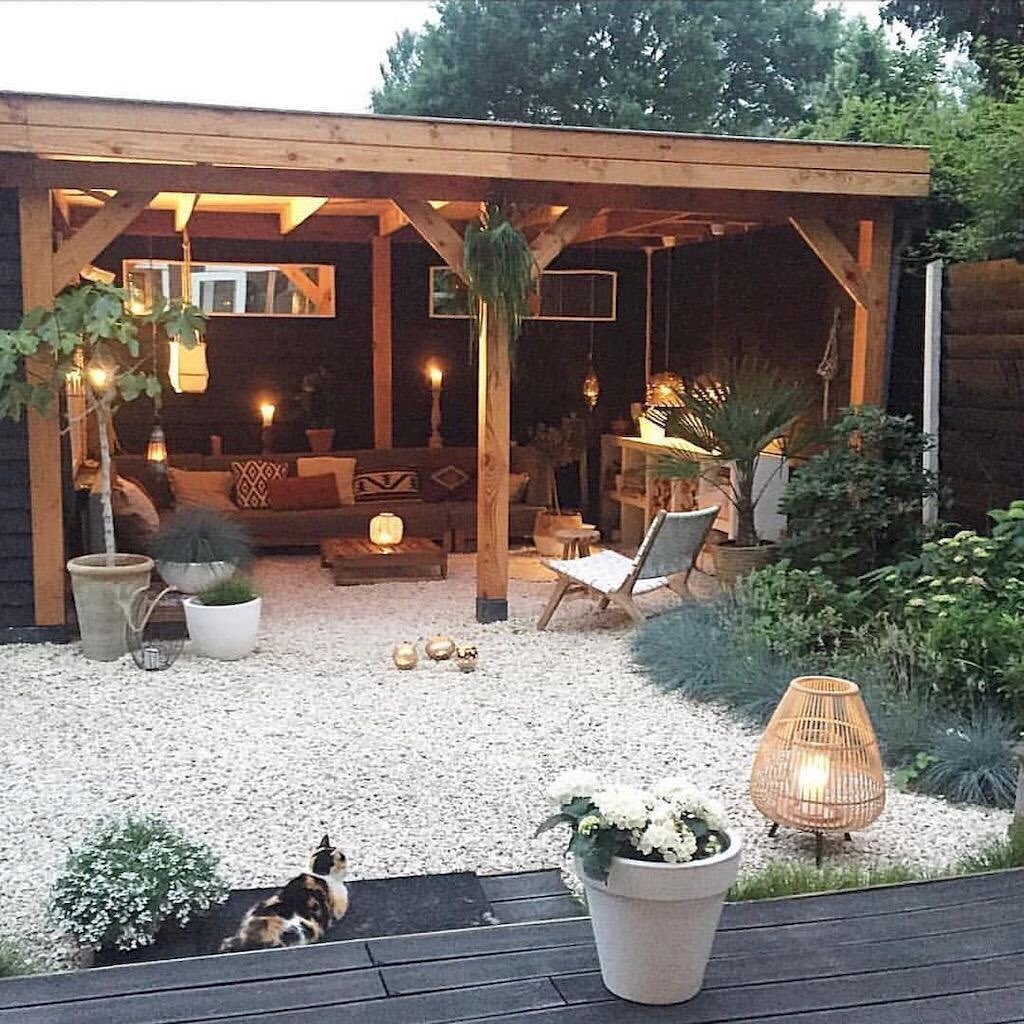
Gravel hardscaping is the cheapest ground cover you can spread yourself, costing a fraction of poured concrete per square foot with no curing time.
White stone reads clean and reflects light under a covered structure, though lighter shades show every leaf and spilled drink; tan or gray blends longer between cleanings.
You need landscape fabric underneath or weeds come through by year two, and a 2-inch depth locks stable underfoot without swallowing chair legs.
Slope it slightly away from the house for drainage. I would keep gravel out of high-traffic paths in bare feet; the same texture that looks soft in photos does not feel it on a hot day.
6. Pallet Deck
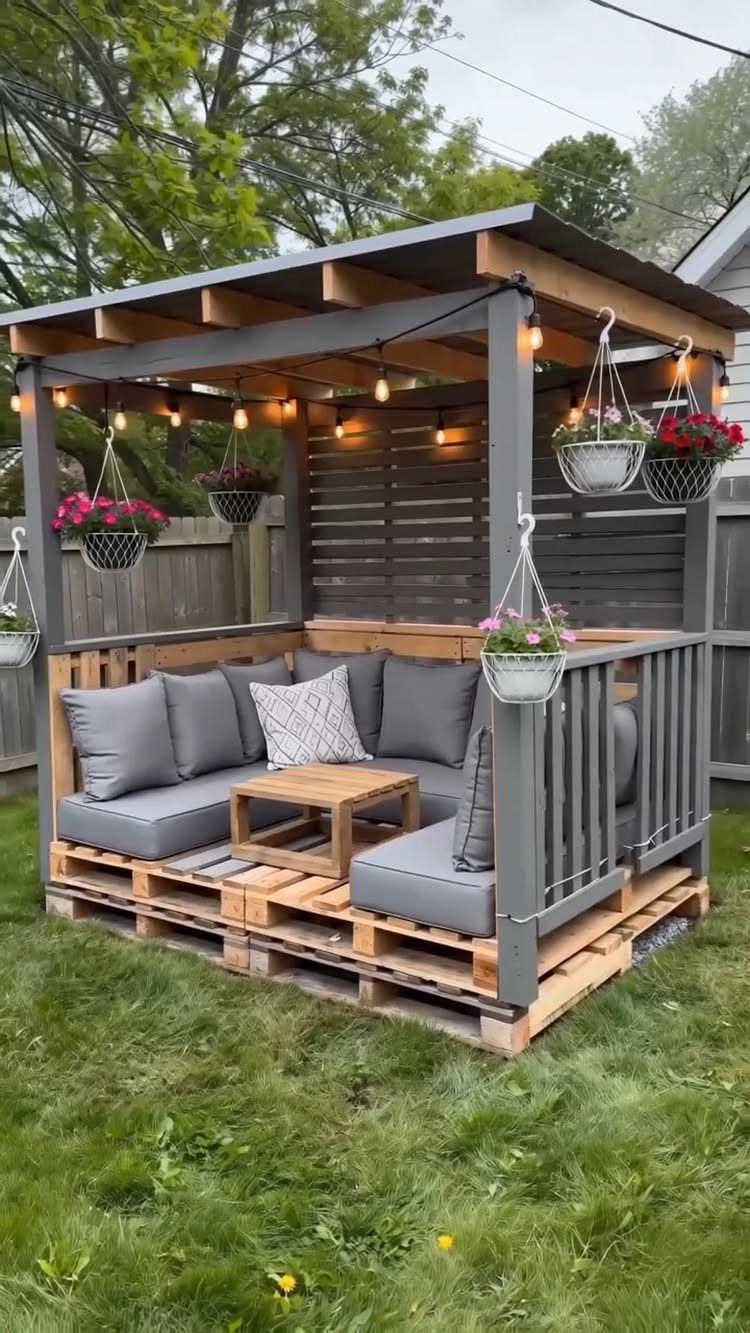
A pallet deck stacks standard shipping pallets into a low platform you can cover with outdoor cushions and a roof frame.
I would pressure-wash any pallet first and mark heat-treated boards (look for "HT," not "MB") since chemical-treated wood is not something I want near where I sit.
A small cluster of pallets makes a surface about the size of a full mattress footprint, which is enough for 2 chairs and a small table. Anchor them if you raise them; shifting underfoot is not a surprise I enjoy.
7. Flagstone Steps Pathways
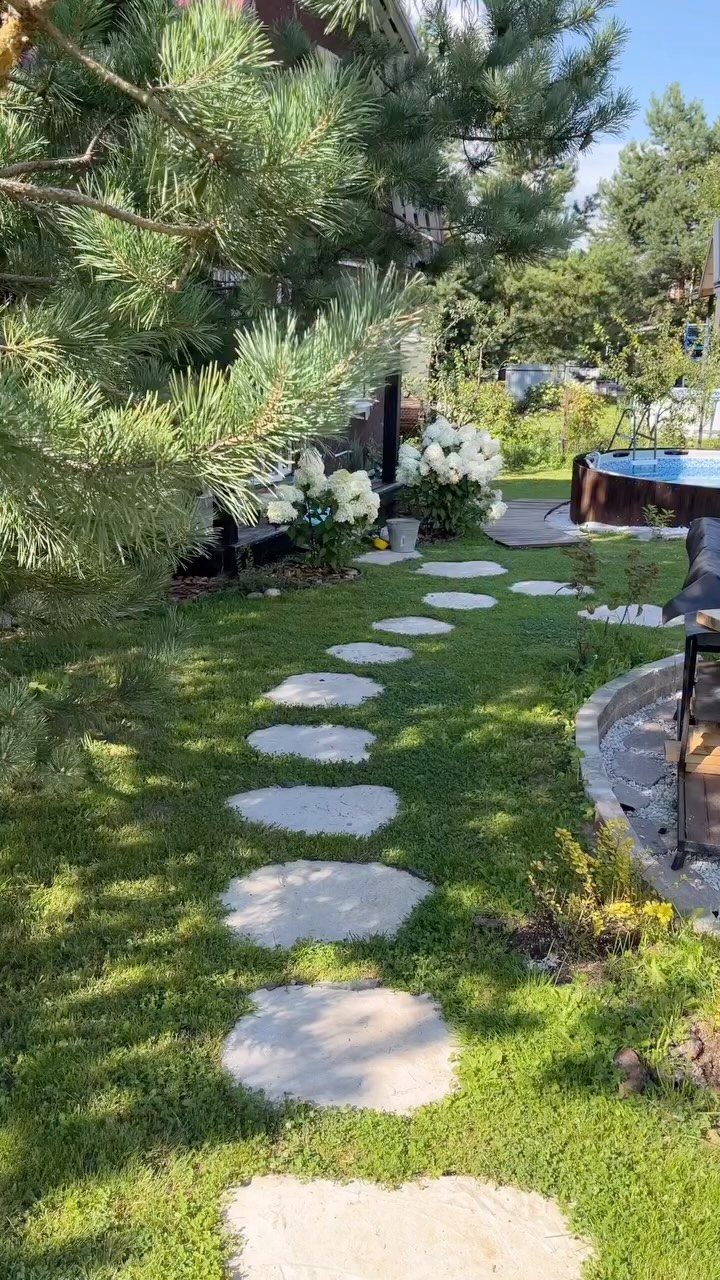
Curved flagstone steps sink into a lawn better than straight ones, following how people actually walk toward a pool or garden bed.
Each stone wants a few inches of packed sand underneath so it does not tilt underfoot after the first rain. I would lay them out dry first and step on every stone; a wobble now means a sprained ankle later.
Grass grows between the gaps if you leave them, though that means edging twice a season to keep the path visible.
8. DIY Fountain
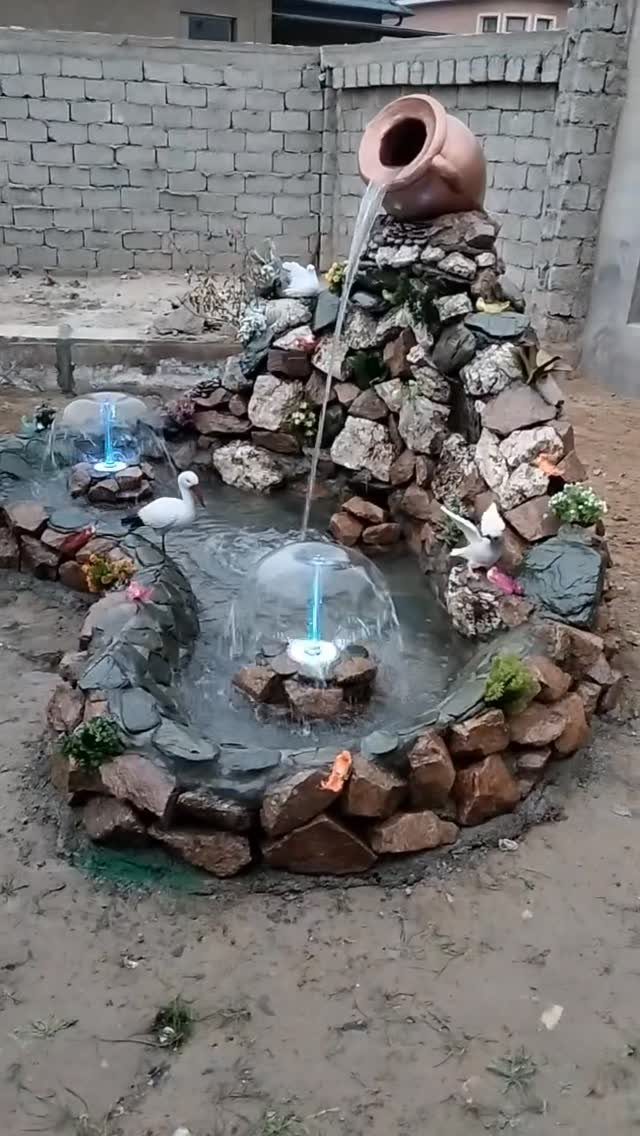
A recirculating fountain with a poured water jug needs a small submersible pump and a basin deep enough that the returning water does not splash out in a breeze.
I would set the whole assembly on level ground and check that the pump cord reaches a GFCI outlet, since extension cords near water are not a shortcut I would take.
9. Outdoor Rooms
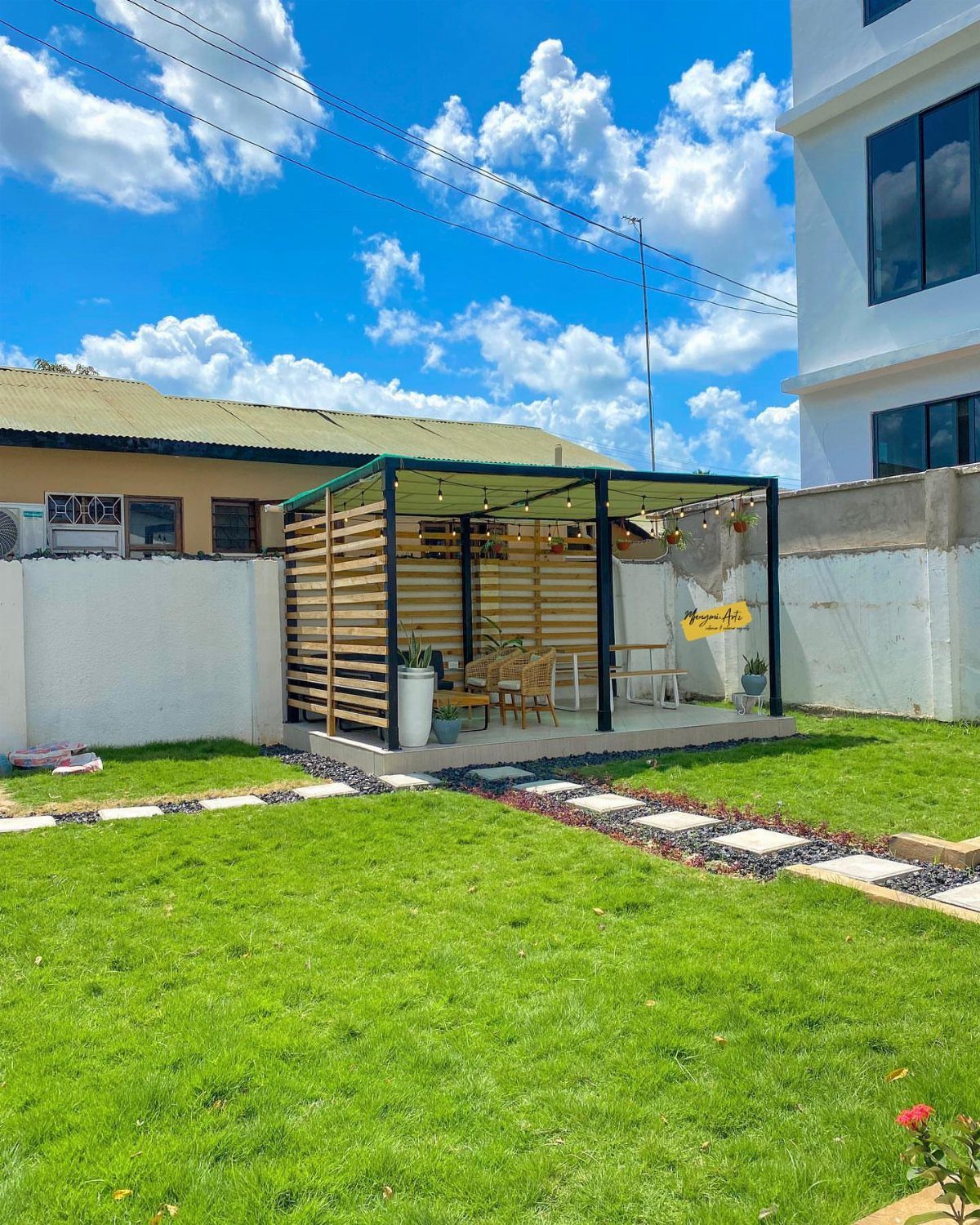
A pergola with slatted top defines outdoor space without blocking the sky, which matters on a raised platform where you want shade but not a roof.
The black frame here is powder-coated aluminum or painted steel; either way, anchor bolts through the platform into posts below are what keep it upright in wind.
I would measure the afternoon sun angle before setting slat spacing, since too wide leaves no shade and too close turns the room dim. Furniture under it should be outdoor-rated, not patio furniture dragged out from the dining room.
10. Small Outdoor Bar
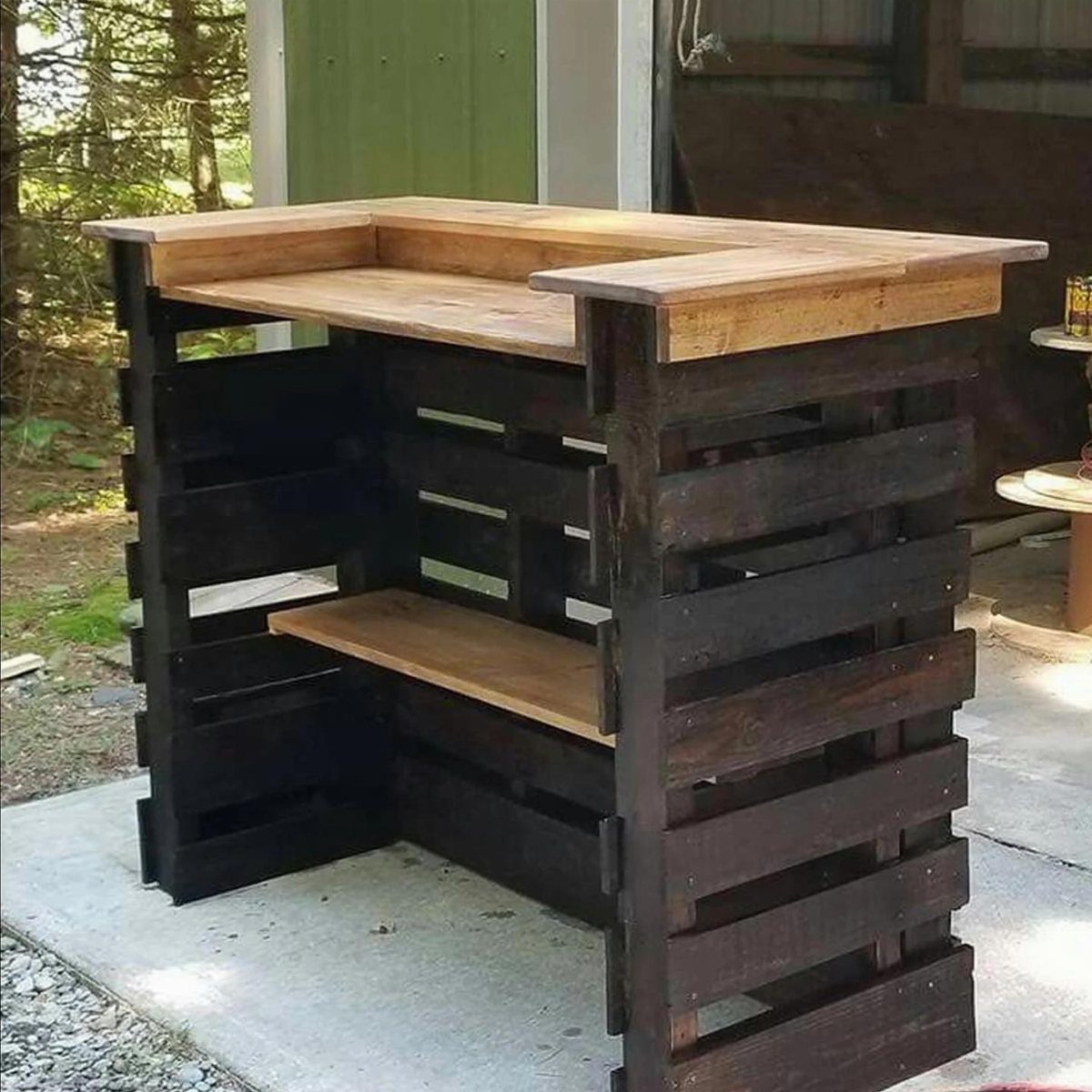
An L-shaped bar from stained pallets gives two work surfaces, one for mixing and one for guests to lean on, which is the geometry that actually works for serving.
The light wood top here looks like boards screwed across the pallet deck; I would sand well and seal with exterior polyurethane or the first spilled drink stains permanently.
A shelf inside the corner stores bottles out of direct sun. This size wants a patio or concrete pad underneath; legs on grass sink and wobble within a week.
11. Flowering Shrubs

Dense pink bottlebrush shrubs hit peak bloom with almost no attention once established, which is the trade I like: plant, water the first season, then ignore.
Mature shrubs bought in gallon pots can be planted in early spring for coverage that fills in over a season; keep the root ball intact, dig a hole twice as wide, and water steadily until established.
I would space them at mature width, not nursery size, since crowding means pruning twice a year to keep air moving through the branches.
12. Projector and Screen Backyard Theater
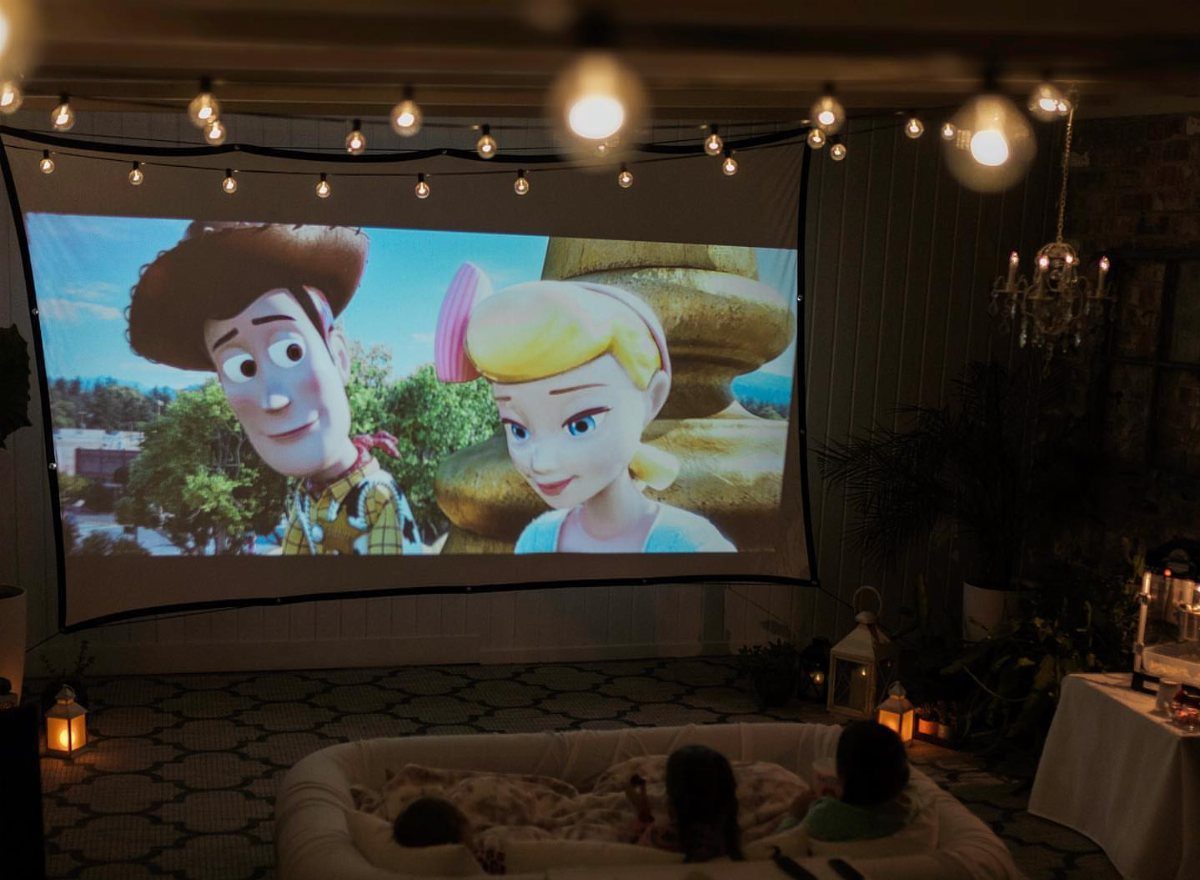
An outdoor screen stretched between poles and a projector on a table turns a lawn into a theater for the cost of the equipment, and basic setups have gotten cheap enough that the pair is a real weekend project.
The screen here is strung with lights around the edge, which is pretty but competes with the image; I would keep those dim or off once the movie starts.
Beanbag seating works for kids and low backs, but adults want something with lumbar support by the second hour. Check your projector’s lumens; lower output needs full dark, and summer dusk lingers late in most US latitudes.
13. Repurposed Plastic Bottle Planters

Soda bottles cut in half and strung on twine make planters for small starts or succulents where floor space is gone.
Paint sticks to textured plastic only after sanding or a primer coat; acrylic craft paint chips by month two without it.
I would keep these for plants that like to dry between waterings, since clear plastic traps humidity and rots roots faster than terra cotta. Mount the twine under an eave or the rain fills them and the twine rots.
14. DIY Pallet Furniture Lounge
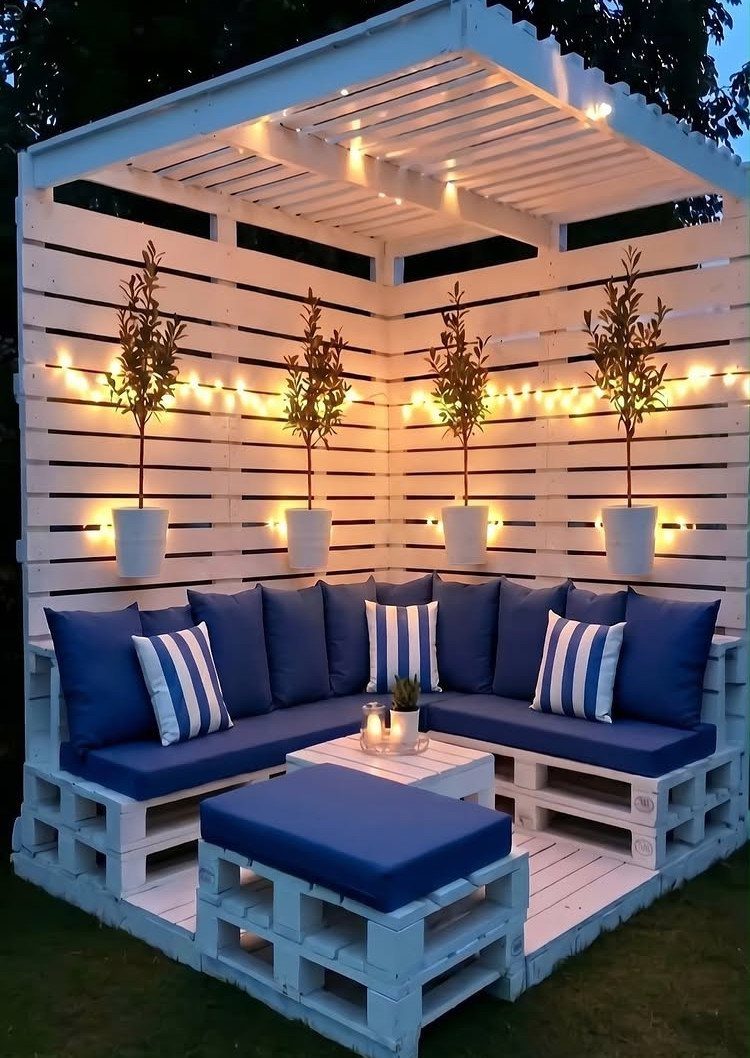
White-painted pallets stacked into an L with cushions on top give lounge seating for the cost of paint and outdoor foam.
The pergola overhead here is pallet-built too; I would check that any cantilevered piece is bolted, not screwed, since summer storms test what looked stable in calm weather.
Cushions need to come inside or into a deck box; even outdoor-rated foam mildews if it sits wet for days. 2 pallets high is the practical limit before the seat feels like a barstool.
15. Wall Mounted Wire Grid Planter
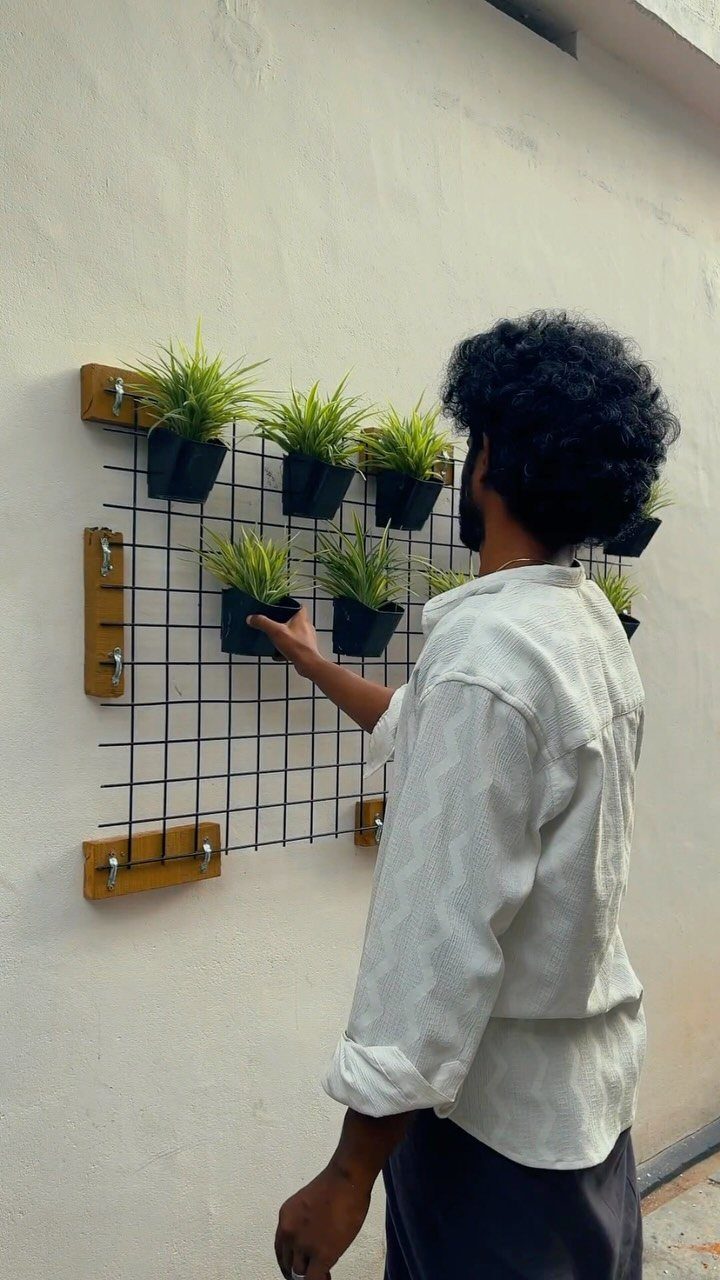
A black wire grid screwed to wall blocks with wood spacers turns vertical space into a shelf for small potted herbs or trailing vines.
The grid here sits flat; I would angle the top row slightly outward so pots do not tip in wind or when bumped.
Use pots with some weight, terra cotta over plastic, since a light pot on wire shifts with every watering. This suits walls that get morning sun and afternoon shade; full south exposure cooks root balls against dark metal.
16. Cozy Lawn Bistro Set
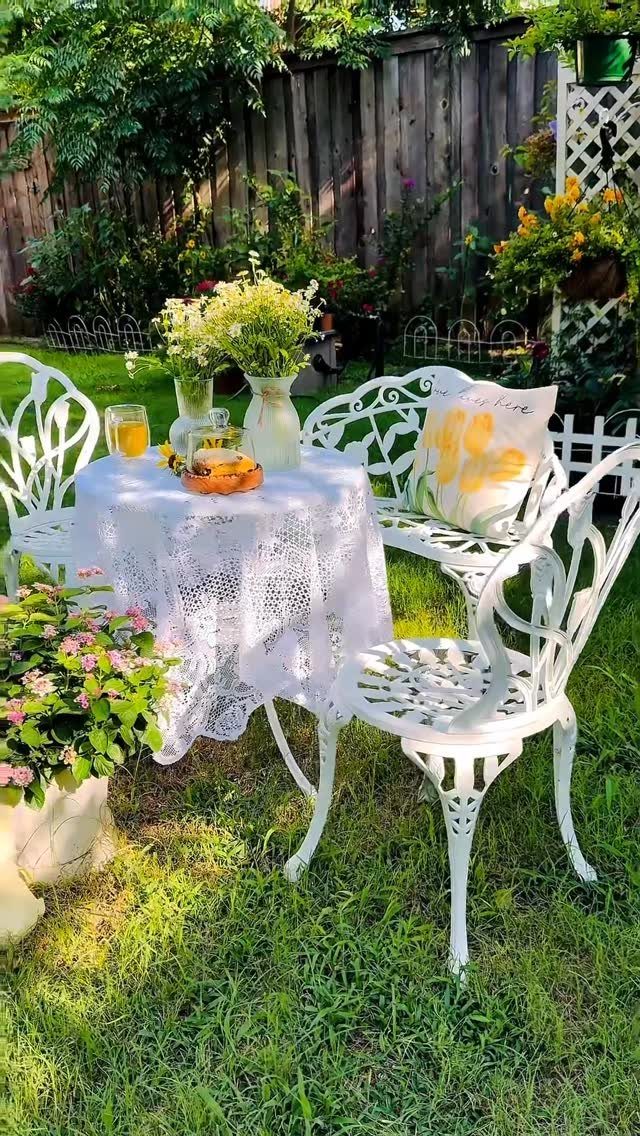
Ornate white metal bistro sets fold flat and cost less than teak, though the lattice seats need a cushion for any sit longer than coffee.
Lace and textiles on grass read charming in photos; I would skip the cloth for daily use, since damp ground wicks up and stains linen in one morning.
Level the ground first or the table rocks; a patio stone under each leg works where permanent paving is not an option. This is the right scale for a couple of chairs and a small spread, not a dinner party.
Setting a Realistic Budget
Start by walking your yard with a notepad and marking where you actually sit, where the sun hits at 4 p.m., and which corner stays muddy after rain.
That tells you whether your money goes toward seating, shade, or drainage, not toward the project that looked best on someone else’s feed.
Plenty of worthwhile backyard work lands between $300 and $1,000. That range covers pressure-treated lumber for a raised bed, a pallet deck with cushions, string lights, and gravel for a small patio area without needing to do them all at once.
Pick the one upgrade that matches how you already use the space; a fire pit makes sense for Friday gatherings, a vertical garden for someone who cooks with herbs.
Split the work into pieces you can finish in single weekends so costs spread across paychecks instead of hitting at once.
YouTube makes every project look like a quick transformation; your own timeline will include 2 trips for forgotten bolts and a Saturday lost to weather.
Using Upcycled Materials
Shipping pallets are the obvious free material, though not every pallet is usable. Check the stamp before loading your car.
Gravel, flagstone scraps, and poured concrete remnants turn up on local marketplace listings when neighbors demolish patios or replace driveways.
Weight limits what you can haul in a standard sedan; a full pallet of stone needs a truck or borrowed trailer. Factor that into whether the material is actually free.
Clear plastic soda bottles make planters after a sanding and primer coat, but the work is fussy for a container that lasts 2 seasons.
I would spend that effort on a wire grid system with proper pots instead, unless you already stockpile bottles and craft paint.
The real savings from upcycled material come from matching the material to a project it suits, not from forcing free stuff into a job it was never meant for.
Frequently Asked Questions
What is the least expensive backyard landscaping?
Mulch or wood chips are the cheapest ground cover you can spread yourself, often free from municipal sources or tree services, with no curing time and little more labor than a wheelbarrow and rake.
Mulch or wood chips also run low on cost and suppress weeds while improving soil health. I would put landscape fabric under gravel or weeds come through by year two.
How can I make my yard look good on a budget?
Start by walking your yard with a notepad and marking where you actually sit, where the sun hits at 4 p.m., and which corner stays muddy after rain.
I split most of my outdoor work into single-weekend pieces costing $300 to $1,000, which spreads the total across a couple of paychecks and keeps me from burning out.
What is the most low-maintenance yard?
Dense flowering shrubs like pink bottlebrush hit peak bloom with almost no attention once established; plant, water the first season, then ignore. Ground cover plants such as creeping thyme or clover fill bare patches and spread quickly without constant upkeep.





