
These outdoor flower pots ideas range from a tipped metal pail on a shepherd’s hook to a cedar raised box on legs, with most landing in the spend-a-weekend zone where renters and first-home owners already live.
What picks one over another is whether you can touch the ground you’re planting on, or whether you need a setup that moves with you when you leave.
The hollow log that needs dry hardwood and a spade bit for drainage holes belongs to the owner with a yard; the window box on brackets beneath the sill belongs to the renter who wants it back at move-out.
[link-whisper-related-posts]1. Tall, Medium, and Trailing Plants in Pots
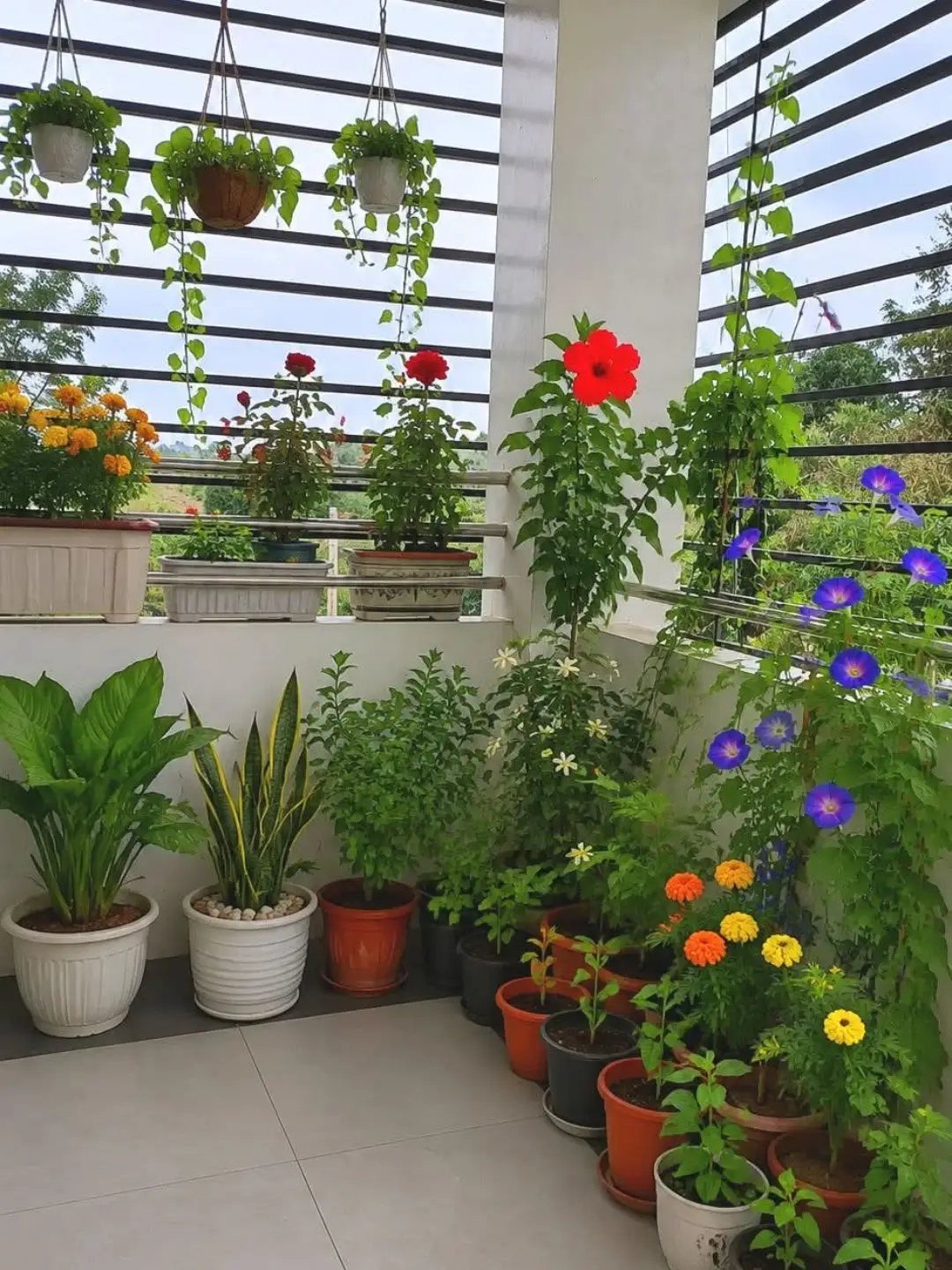
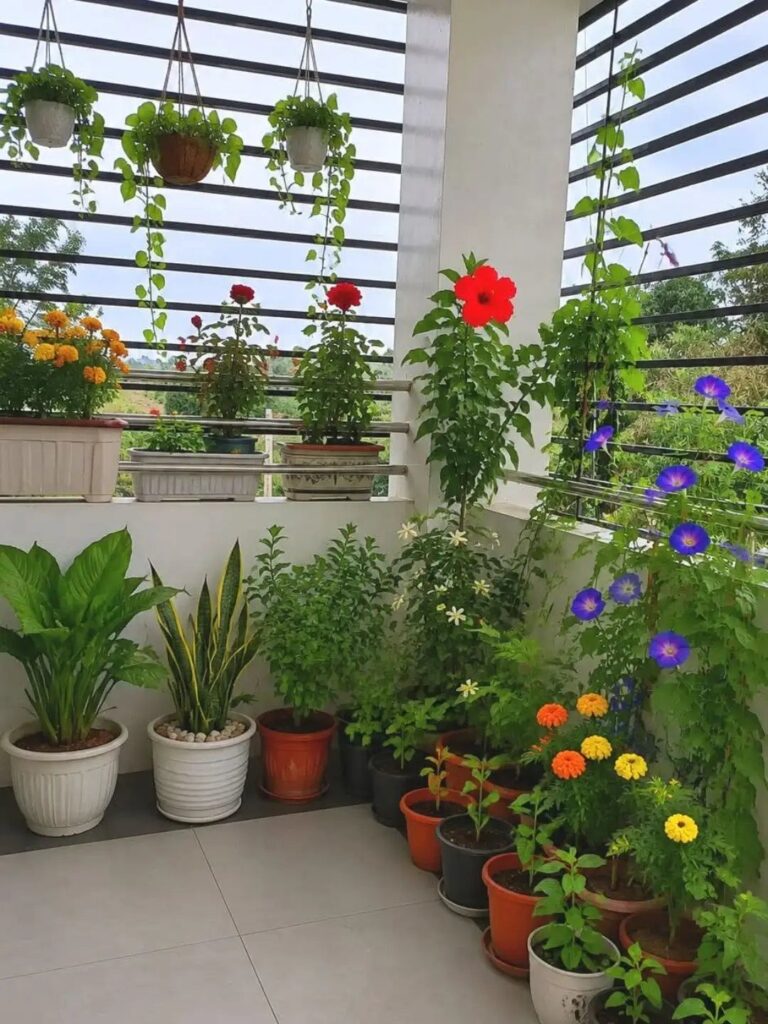
Grouping tall, medium and trailing plants in separate pots across a balcony gives you the look of a full garden bed without the ground space. I reach for this on balconies and small patios where every inch counts.
A thriller in the center, fillers around it and spillers over the edge: that is the classic formula.
Check your light before you buy; hibiscus, morning glories and snake plants all want sun, and mixing shade lovers with sun worshippers leaves one side looking thin by midsummer.
Pick plants with matching water needs too, or you will be nursing the overdamped and underwatering the thirsty in the same container.
2. Window Box Planters
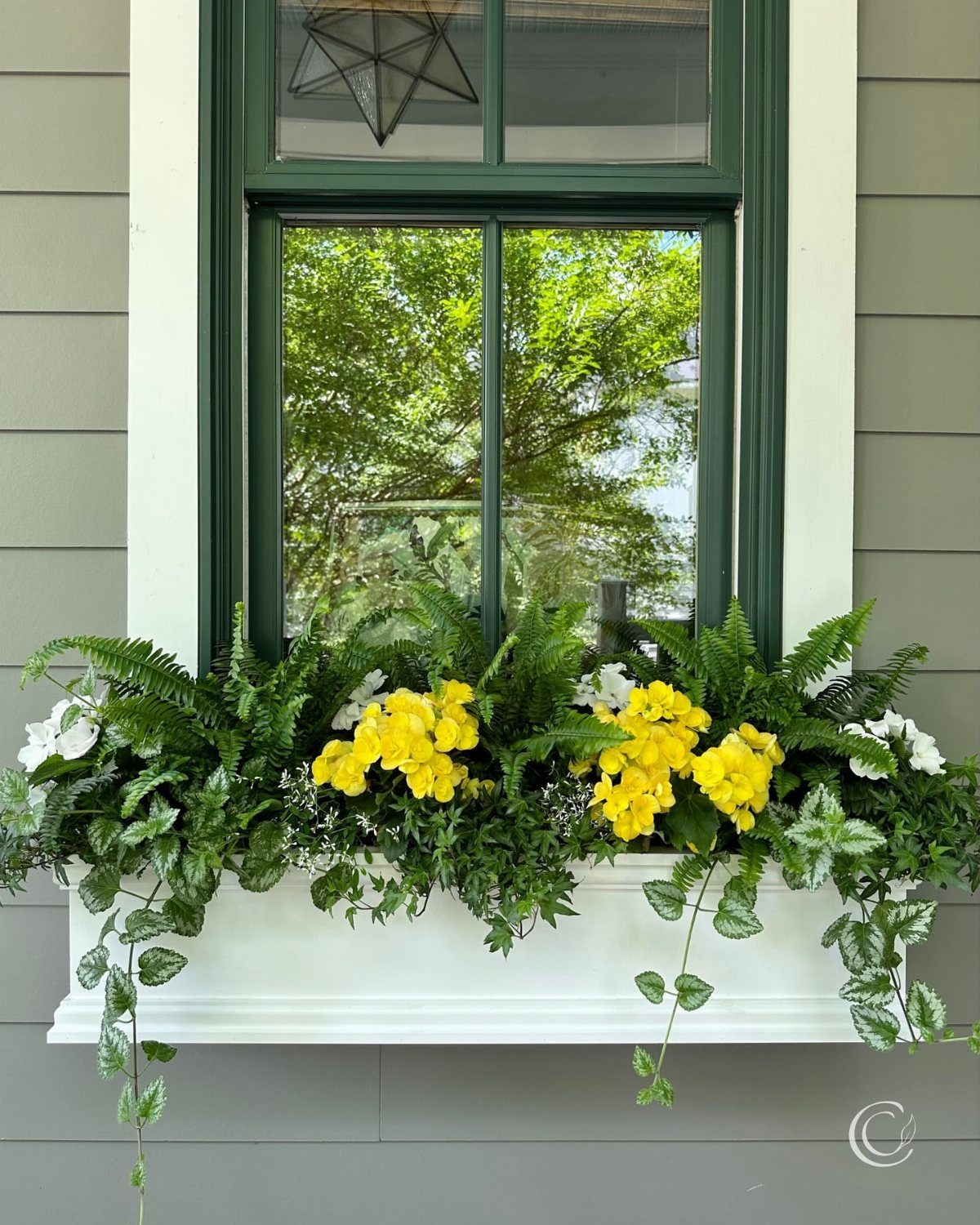
Window boxes turn the outside wall into growing space, which matters when you rent and cannot dig beds in. They also soften the line where siding meets foundation, which I think makes even a basic house look finished.
Before you mount one, check what your window trim can hold.
Look for a box that sits beneath the sill on brackets so you do not have to drill into the wall itself; that is the version to buy if you want your deposit back.
Weight adds up fast with soil, water and mature ferns, so the brackets matter more than the box.
3. Planters with Contrasting Colors
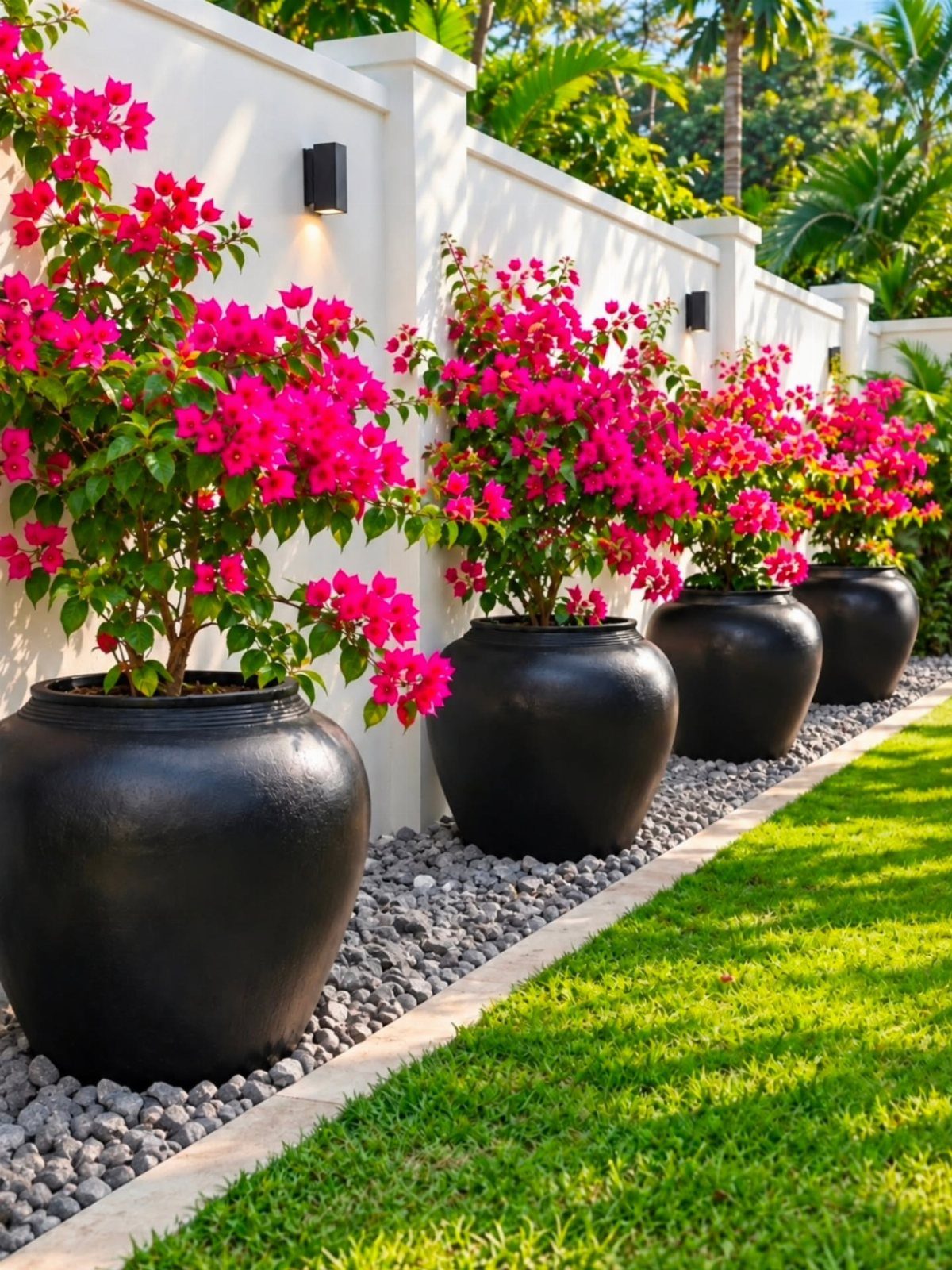
Set a dark pot against a light wall, or bright flowers against both; the contrast does the visual work so the planting stays simple. I like this approach when I want impact without complexity.
The urn shape is formal, but the color clash keeps it from reading too stiff. Terracotta and cobalt would do the same work, or zinc and orange marigolds; distance on the color wheel matters more than the specific pair.
Bougainvillea wants heat and sun, so this is a full-summer look for zones 9 and up, or a container you roll indoors where winters bite.
4. Trellised Planter Boxes
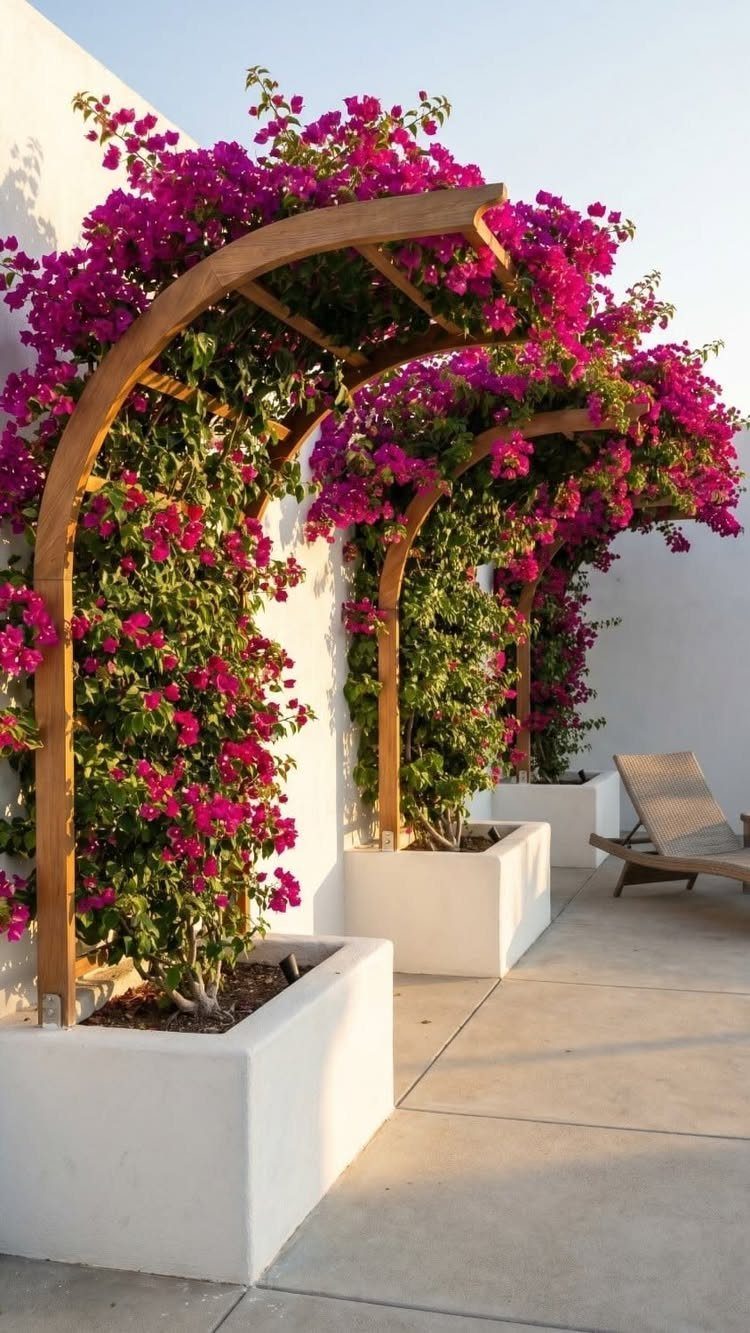
A built-in trellis saves you from rigging chicken wire or fishing line later. An arch gives bougainvillea something to claim in its first season, and a white planter keeps it looking clean even when the vine is bare.
These boxes are heavy already; add wet soil and a mature woody vine and you are not moving them.
I would set the feet on pavers or deck tiles, not directly on wood or grass, so the base does not rot or sink.
If your climber is aggressive, check whether the trellis wood is hardwood or soft; some vines will twist soft pine apart fast enough to make you wish you had asked first.
5. Spilled Flower Bucket Design
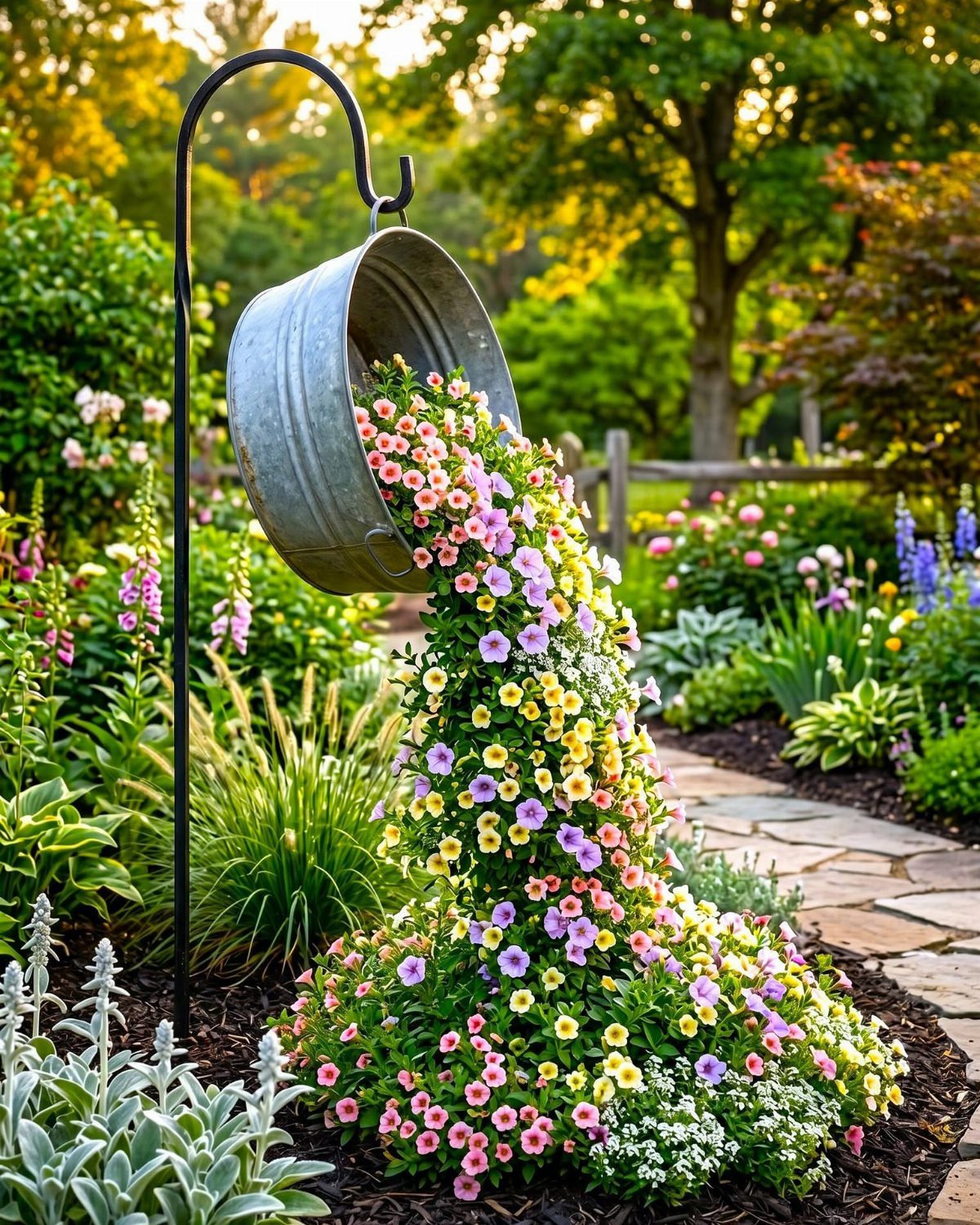
The tipped bucket trick is pure theater built from hardware-store parts. A shepherd’s hook and an old metal pail do the work; the petunias handle the rest once they start trailing.
Balance is the detail that decides it. Hook the bucket through its handle so it hangs at the angle you want, then pack soil firm enough to hold that tilt without spilling out the back.
I would drill drainage holes first or the roots will sour in a wet week.
The hook needs to go deep, a foot at least, or the weight of a watered pot will lever it loose and leave your spill on the ground.
6. Rustic Hollow Log Planters
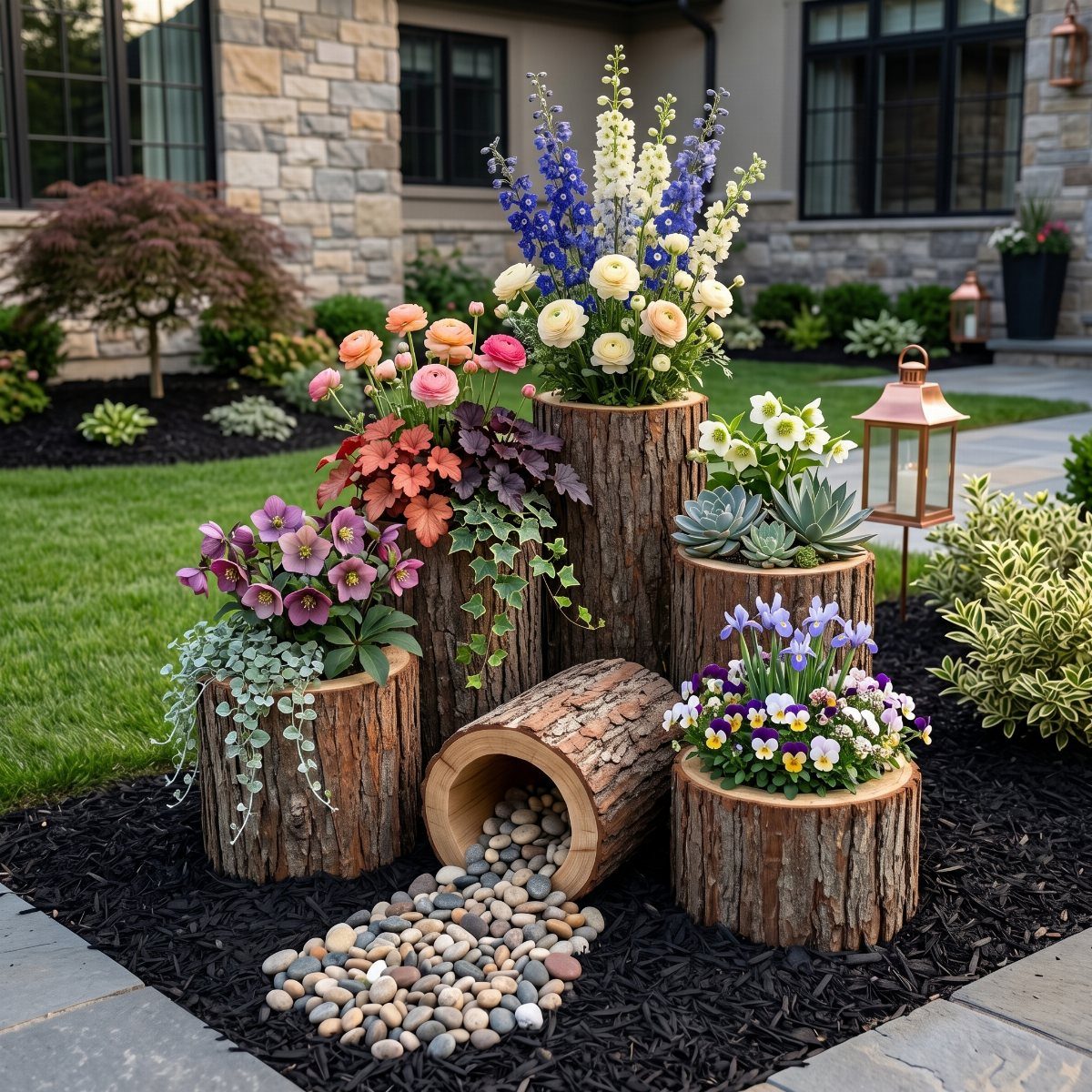
Hollow logs give you height variation without building risers or buying stands in 3 sizes. Set upright versions at staggered depths, so the eye travels from short to tall without any one piece shouting.
Check that the wood is dry and hard, not punky or fresh cut; soft rot collapses under soil weight and wet wood breeds the fungi that kill annual roots.
I would line the cavity with landscape fabric to keep soil from washing through cracks, then punch a few drainage holes through the bottom with a spade bit.
The horizontal log spilling river stones is optional, but it anchors the cluster and gives you one element that never needs water.
7. Colorful Wall-mounted Pots
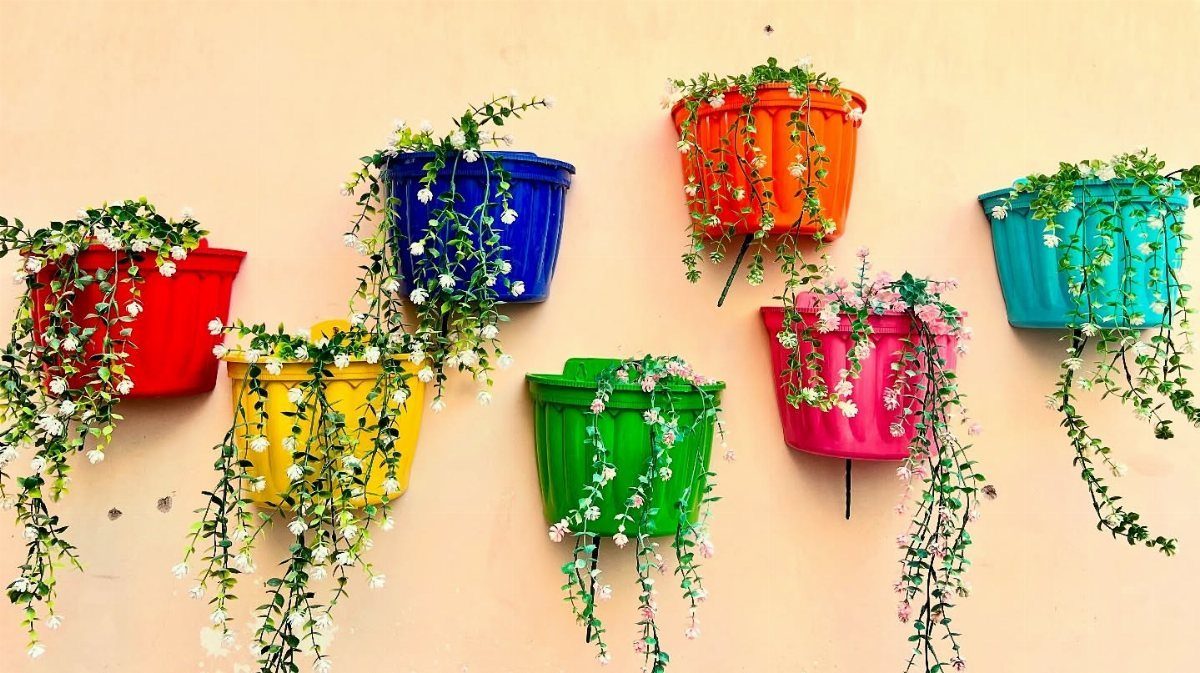
Wall-mounted pots turn vertical surfaces into planting space without eating floor area. I like this for narrow walkways or rental patios where a standing planter blocks traffic.
Plastic keeps the weight low, which matters when you are drilling into siding or stucco.
Check the mount hardware before you buy; some systems need a flat backing, and textured vinyl or brick will need anchors sized right. Arrange colors in an order you can live with, because rearranging means new holes.
8. Decorative Screen Planter Box
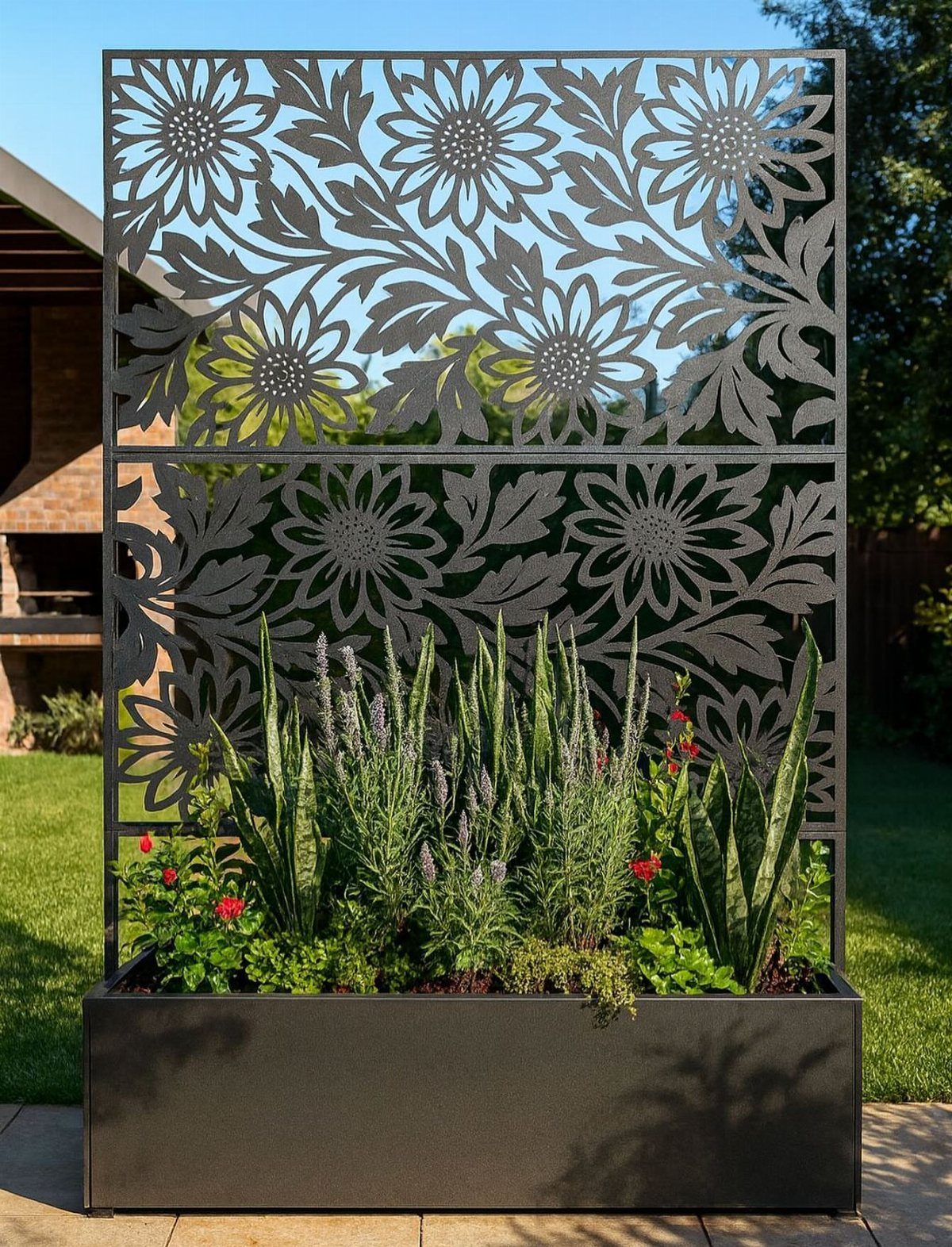
A planter backed by a decorative screen gives you 2 things at once: growing space and something to look at besides your neighbor’s fence. The black metal trough is simple; the cut screen behind it does the visual work.
Set the planter a few inches forward so water drains clear of the screen, or rust streaks will stain the pattern in one season.
The screen itself needs footing or anchoring; wind catches those cutouts like a sail. I would bolt it to a weighted base or a wall, not trust ground spikes alone on a breezy patio.
9. Rustic Wooden Garden Planter Box
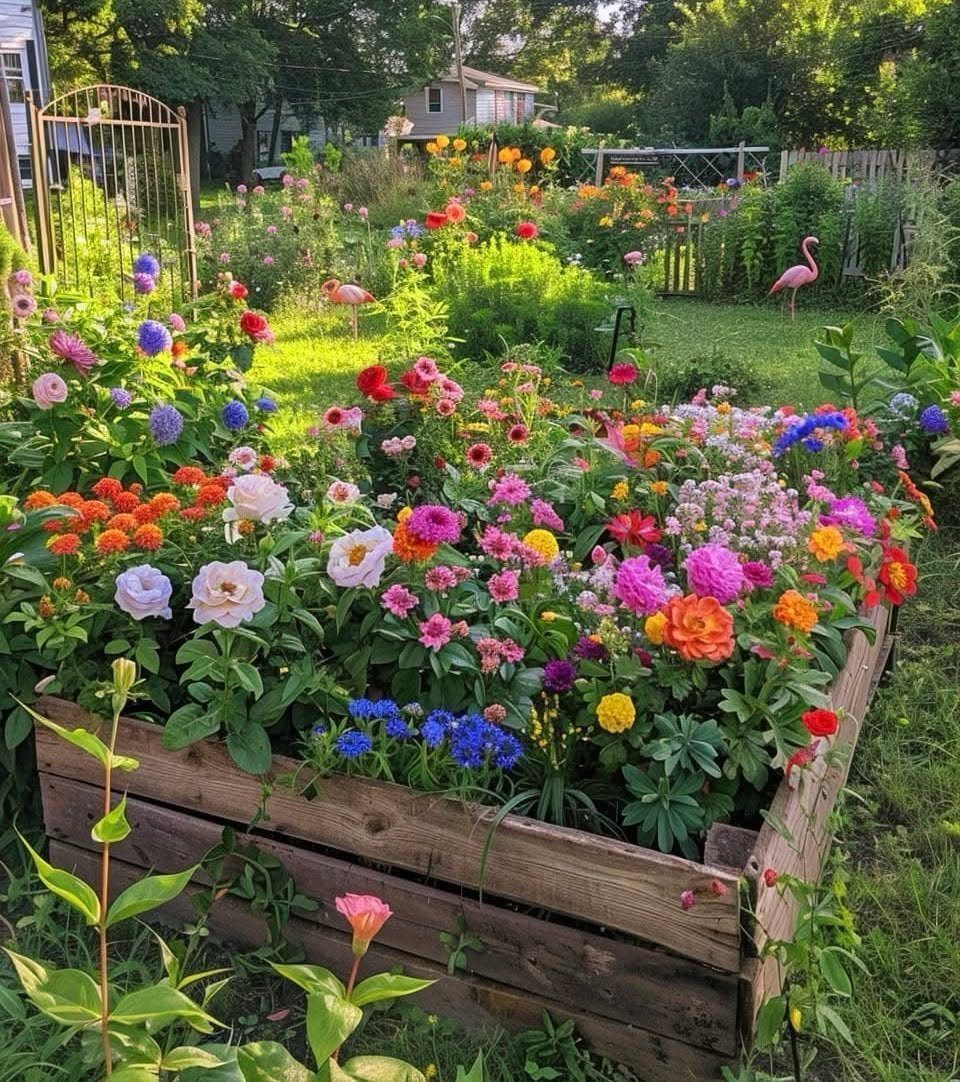
A raised wooden box packed with zinnias and dahlias is the closest thing to a guaranteed summer show. Both germinate fast from seed, so a packet of seeds replaces store-bought starts and still fills the box by midsummer.
Cedar or redwood lasts longest against wet soil; pine rots in 2 seasons and treated lumber leaches chemicals I do not want near cut flowers.
Line the inside with plastic sheeting if you use old boards of unknown origin; salvaged wood can carry lead paint or old preservatives.
Height saves your knees, but you need enough soil depth for dahlias; their tubers need room to spread.
Container Gardening Benefits
Container gardening puts the soil entirely in your hands, which matters when the ground you have is compacted clay, contaminated fill, or someone else’s property.
A pot is a clean slate: you choose the mix, the drainage, and where it sits.
That control extends to organization. Pots let you group by water need, move sun lovers out of afternoon shade, and rotate annuals in without tearing up a bed.
I think of it as editing your garden in real time, something you cannot do once plants are rooted in the earth.
For renters especially, this is the practical path to a garden that moves with you. The containers are yours; the soil inside them is yours; the landlord’s ground stays untouched.
Maintenance Tips for Planters
Container soil dries faster than ground soil, and the gap widens as summer heats up. In July, a pot in full sun can need water twice daily; the same plant in a bed might hold out for days.
Check by weight, not by schedule. Lift the pot, and a dry one telegraphs it immediately.
Fertilizer leaches out with every watering, so the steady diet a bed provides from decomposing matter does not happen here.
I feed with a granular fertilizer monthly through the growing season, the same one my mother passed along years ago. Liquid feeds work too, but they need more frequent application than I reliably manage.
Choosing the Right Pots
Drainage holes are non-negotiable. A pot without them is a root rot machine, and no amount of gravel in the bottom fixes it.
If you fall for a vessel that lacks holes, drill them or use it as a cachepot, with a smaller planted pot lifted inside.
Size matters more than beginners think. A tomato in a pot too small will stunt; its roots need room to spread and soil volume enough to buffer temperature swings.
For annual flowers, I go one size up from the nursery pot at minimum. For perennials I intend to keep, 2 sizes up gives them space to settle in.
Material shapes the lifespan. Unglazed terracotta breathes well but cracks in freezing winters.
Plastic is light, cheap, and survives the cold, though it grows brittle in UV after a few years. Glazed ceramic and concrete hold moisture and weight alike; plan their placement, because you will not be shifting them full.
Frequently Asked Questions
What are some ways to use pots in garden beds?
I use pots as focal points and to separate different garden areas without digging into the ground.
A well-placed container draws the eye to a specific spot, and a row of matching pots can edge a path or divide a vegetable patch from a seating area.
This works especially well in rental gardens or anywhere you need flexibility.
Which planters are best for outdoors?
I pick based on what the container must survive. Drainage holes matter more than material, every time.
What are some good ideas for planters for my garden?
Layering tall, medium and trailing plants in one pot gives the look of a garden bed without the ground space.
Window boxes soften where siding meets foundation. A tipped bucket on a shepherd’s hook turns hardware-store parts into theater.
What is the best potting mix for outdoor flowers?
A mix that drains fast but still holds moisture is what I aim for, because container soil dries out quicker than ground soil and lacks the steady nutrient release of decomposing matter.
I would look for a blend labeled for containers rather than garden soil, since garden soil compacts in a pot and suffocates roots.





