
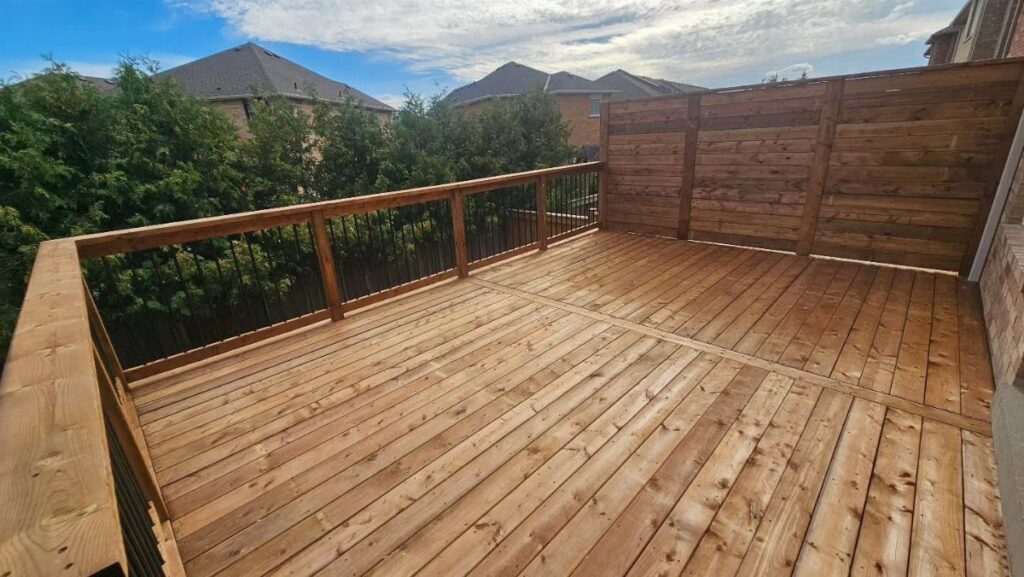
These deck privacy ideas run from a free restack of firewood you already have to frosted glass panels that cost the most on the list.
What picks one over another is whether you need the privacy now or can let it grow in, since a solid wall goes up in a weekend but vines on a trellis need a full season to fill out.
A privacy wall often needs a permit where a slatted screen does not, and one call to local code enforcement saves a do-over before you buy a single board.
[link-whisper-related-posts]1. Solid Privacy Wall
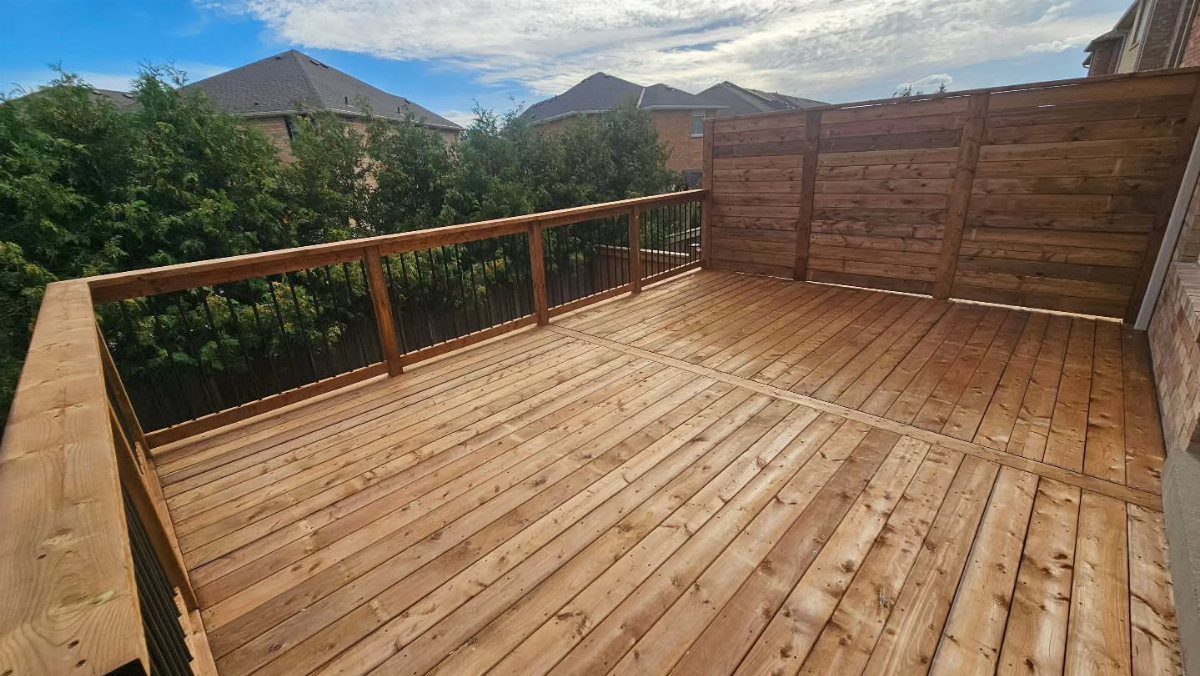
A solid privacy wall is the most direct way to block sightlines completely. I would verify local code on height limits too, since a wall this tall often needs a permit where a screen does not.
2. Wood Privacy Screen
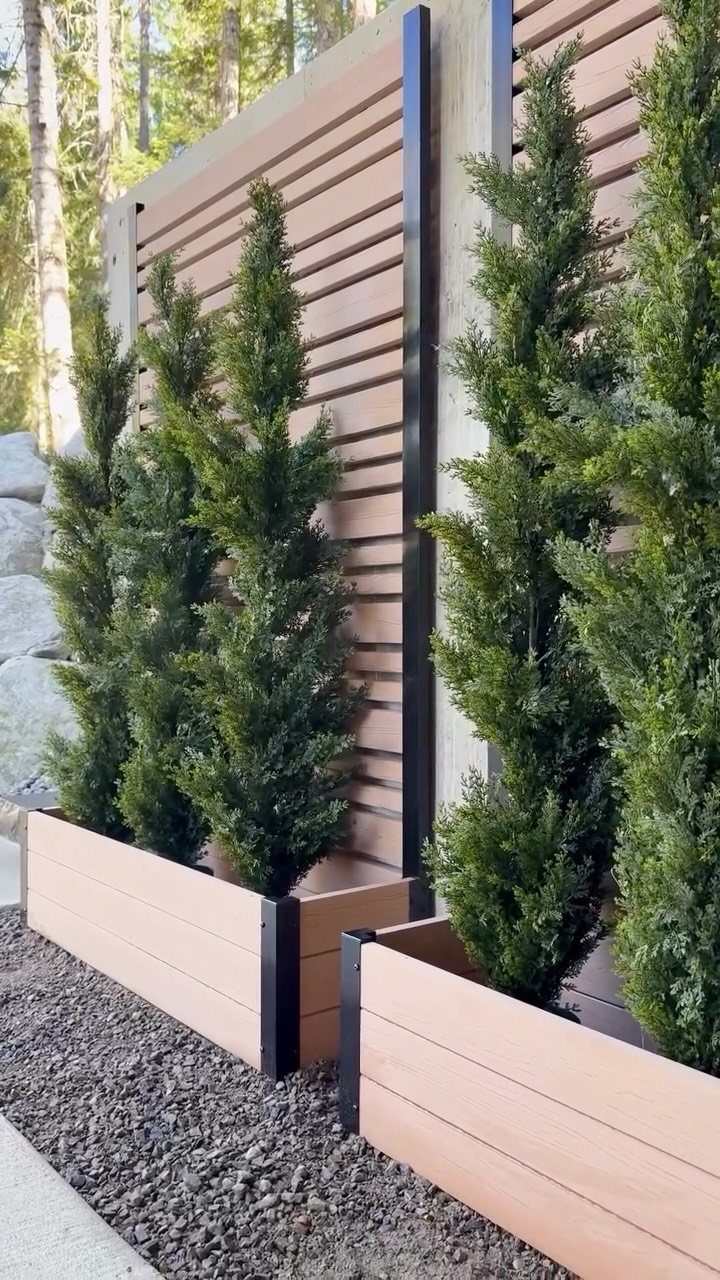
Slatted screens with planters in front give you 2 layers: the wood breaks the sightline up high, and the greenery fills it in below.
Slender evergreens stay happy in raised boxes long-term, which matters because root-bound trees turn sparse and stop doing their job.
I like that the gravel border keeps maintenance low; no lawn to trim against the wood. One maker of a similar setup noted their artificial trees rated a 10 out of 10 for realism, if live planting feels like too much upkeep.
3. Water Feature Walls
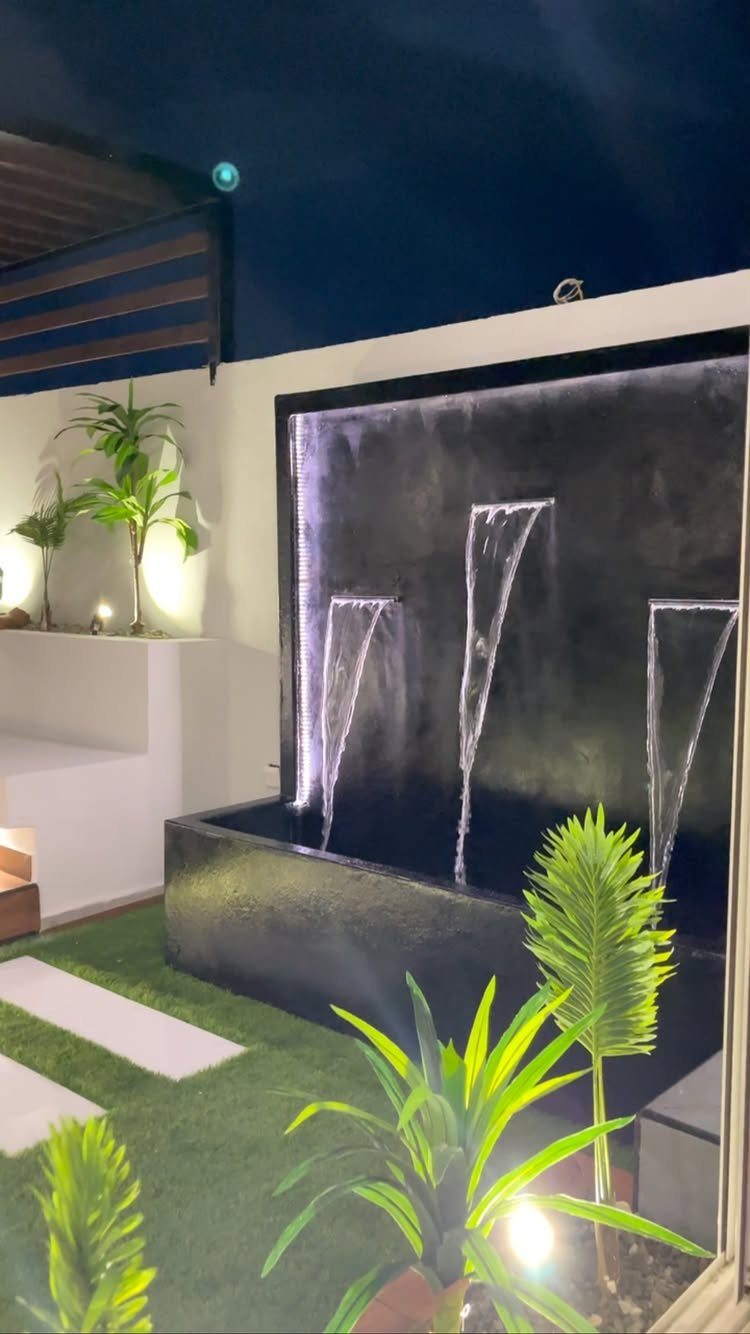
Running water covers conversation and traffic noise while the wall itself blocks the view.
3 spouts give enough flow to keep the sound active without the splash becoming its own distraction. You will need power nearby for the pump, and a basin deep enough that evaporation in summer does not leave you refilling daily.
I would place this where you actually sit, not just where the sightline needs breaking; the payoff is the sound, and that only matters within earshot.
4. Trellis with Vines
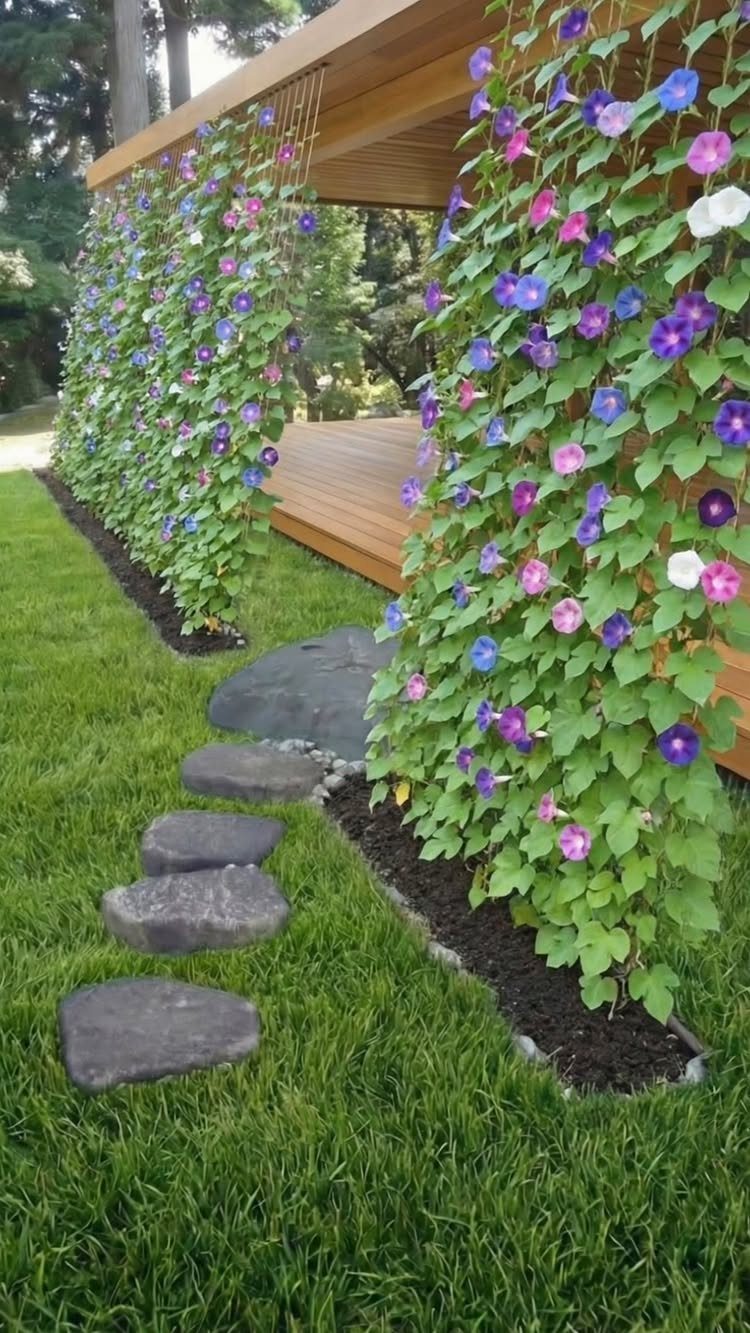
Morning glory climbs fast and seeds itself, which means a string trellis like this can go from bare to dense in a single season.
Morning glory is an annual in most zones, so plan on replanting or letting volunteers fill back in each spring; clematis is a hardy perennial that comes back on its own in zones 4–9.
I would set posts or anchor points in concrete; a full-grown vine in wind is heavier than it looks, and a leaning trellis ruins the effect. Check sun exposure too, these flowers want full morning or afternoon sun to perform.
5. Lattice Panels
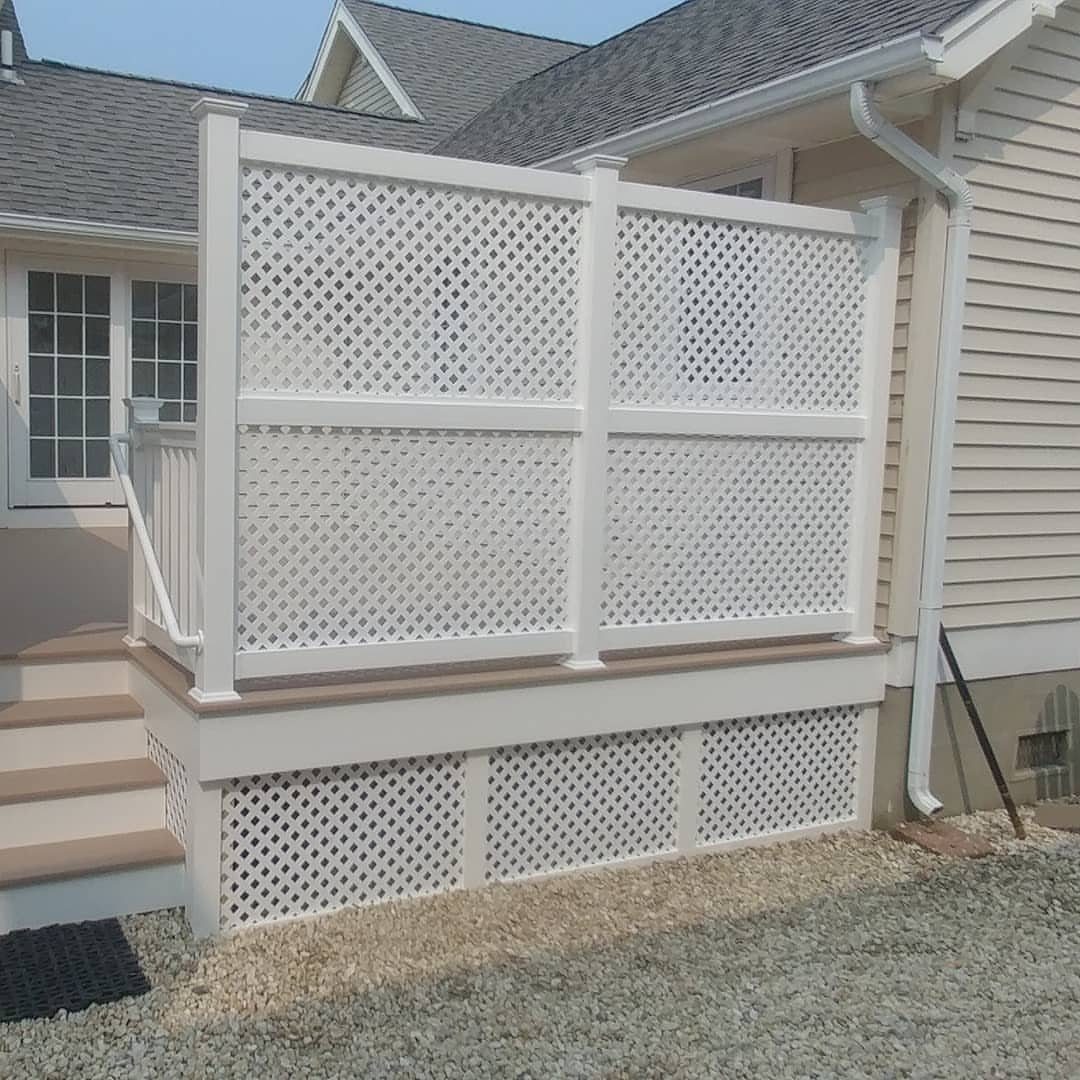
White lattice lets air through while still breaking up the view, which makes it practical for hot climates where a solid wall turns the deck into an oven.
Vinyl that matches the house siding is a detail I would copy rather than fighting the existing palette.
Measure your railing height before buying panels; standard lattice comes in 4 by 8 foot sheets that may need cutting, and the diagonal pattern shows every uneven edge. Pressure-treated lattice is cheaper but will check and gray unless you stain it.
6. Frosted Glass Panels
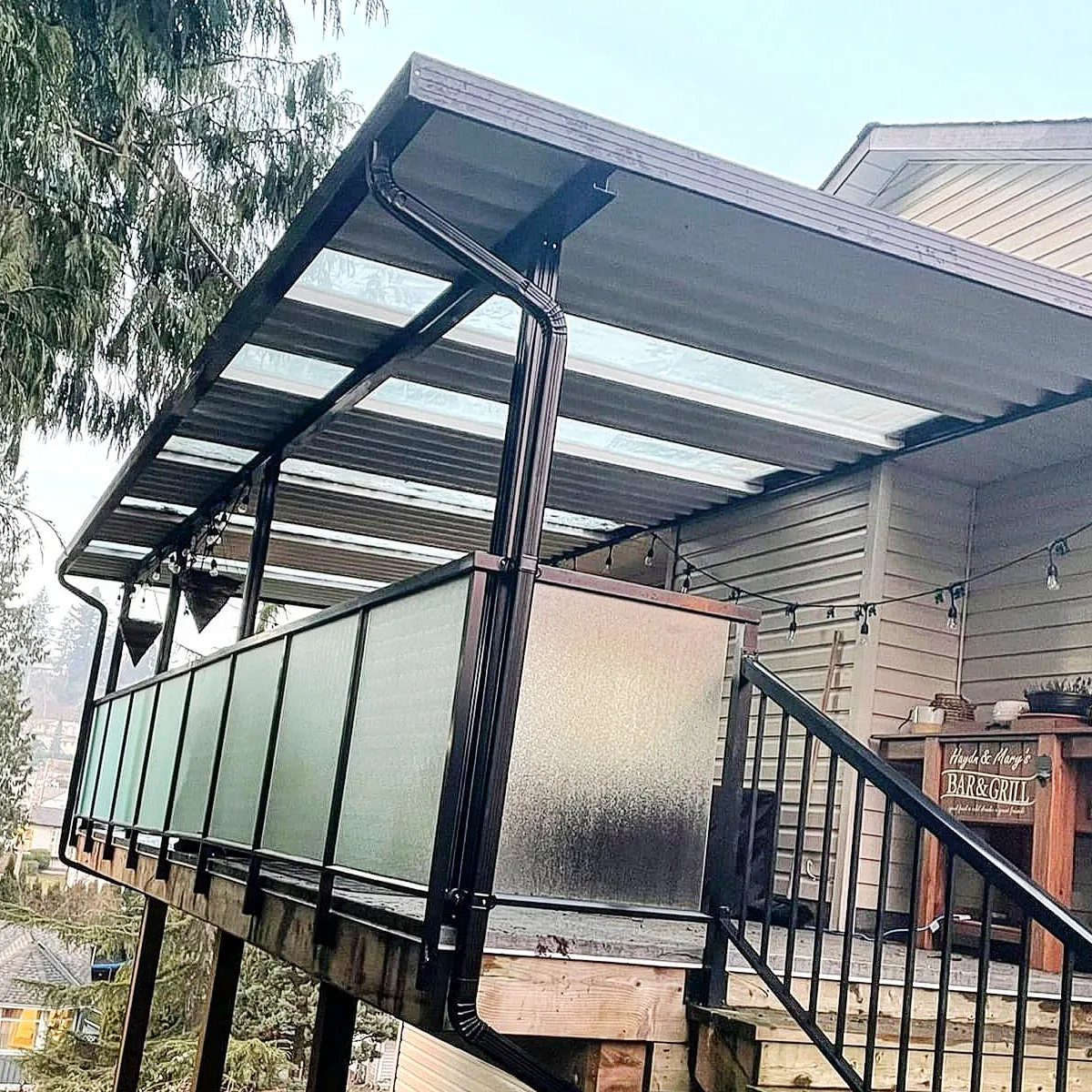
Frosted glass in a metal frame gives you the light without the exposure, and a black powder coat keeps the look sharp against the translucent panels.
This is the most expensive option on the list, and it shows; I would reserve it for a covered deck where the framing is already modern and the glass stays clean.
Check that the panels are tempered, which is code for railings but worth confirming on retrofits too. A translucent roof extends the idea upward, though that is a separate project if you are starting with open sky.
7. Built-In Bench with Back Wall
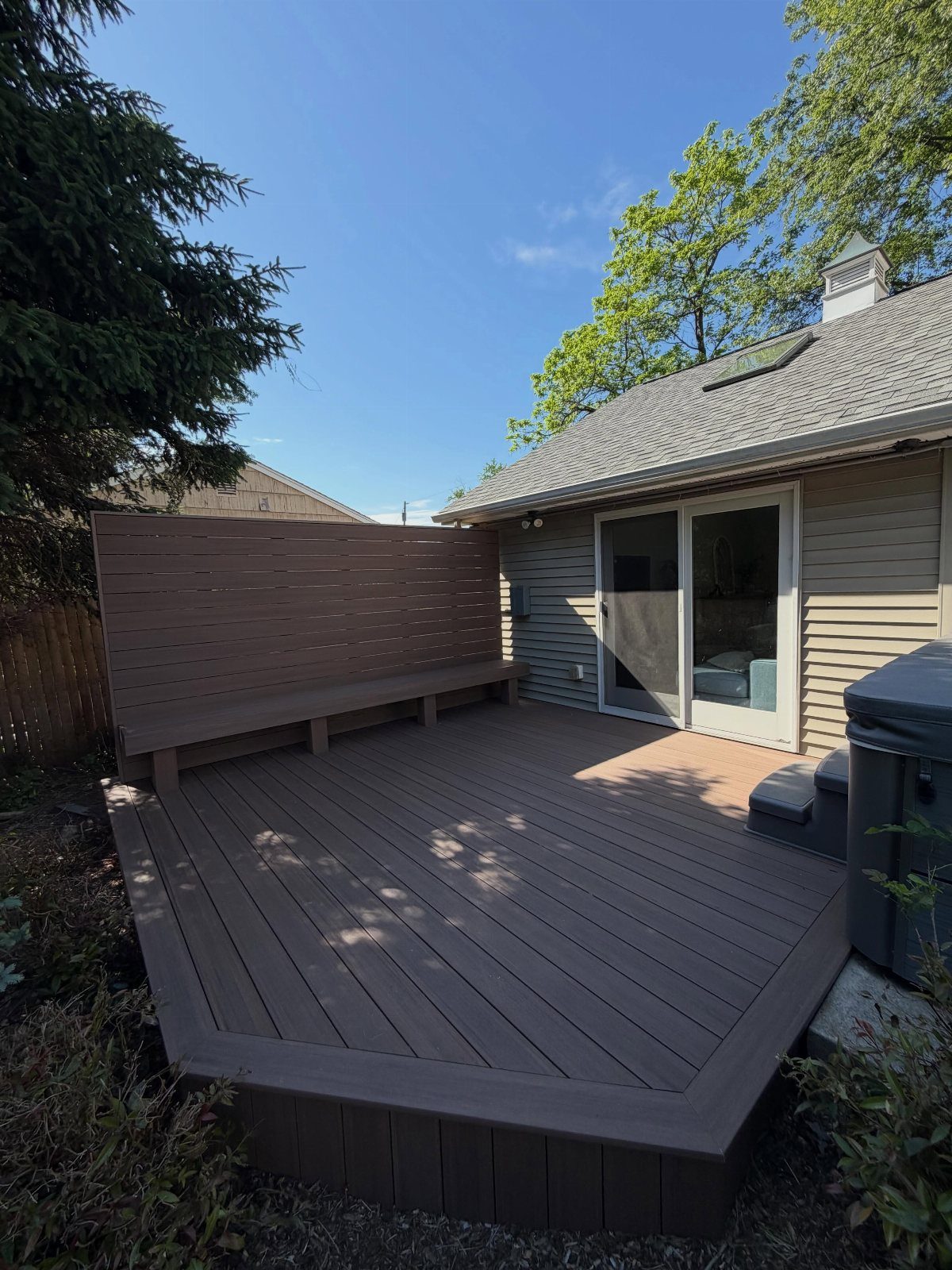
A built-in bench backed by a horizontal slat wall gives you seating and privacy without eating floor space, which matters on smaller decks where a separate screen would crowd the traffic path.
Slat spacing is the decision; tight gaps filter light and air while still breaking the view, and wider gaps read more open but do less work.
I would cap the top rail flat so it doubles as a shelf for drinks or a planter.
Composite decking for the bench top matches the deck boards and never needs resealing; wood is cheaper but plan on annual maintenance if the bench sits in full sun.
8. Planter Benches
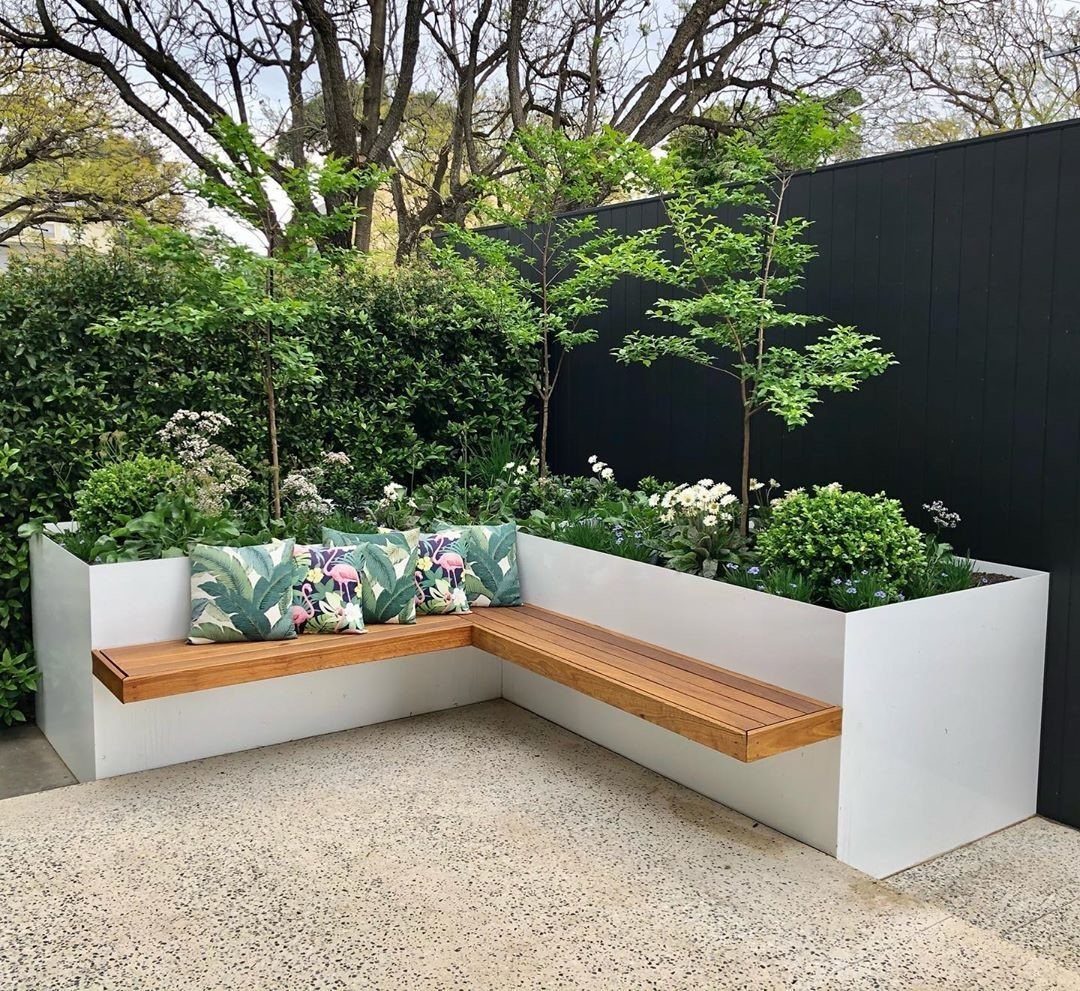
Planter benches wrap seating into raised boxes so the greenery does the privacy work while you sit inside it.
An L-shape uses the corner that most decks leave empty, and white boxes against a dark fence is a contrast I would copy; it keeps the structure from feeling heavy.
Drainage is the detail to get right; each box needs weep holes or a gravel layer so the bench seat does not trap water against the wood.
Plan on deeper soil than a standard planter; small trees need room or they stay stunted and sparse.
9. Shade Sails
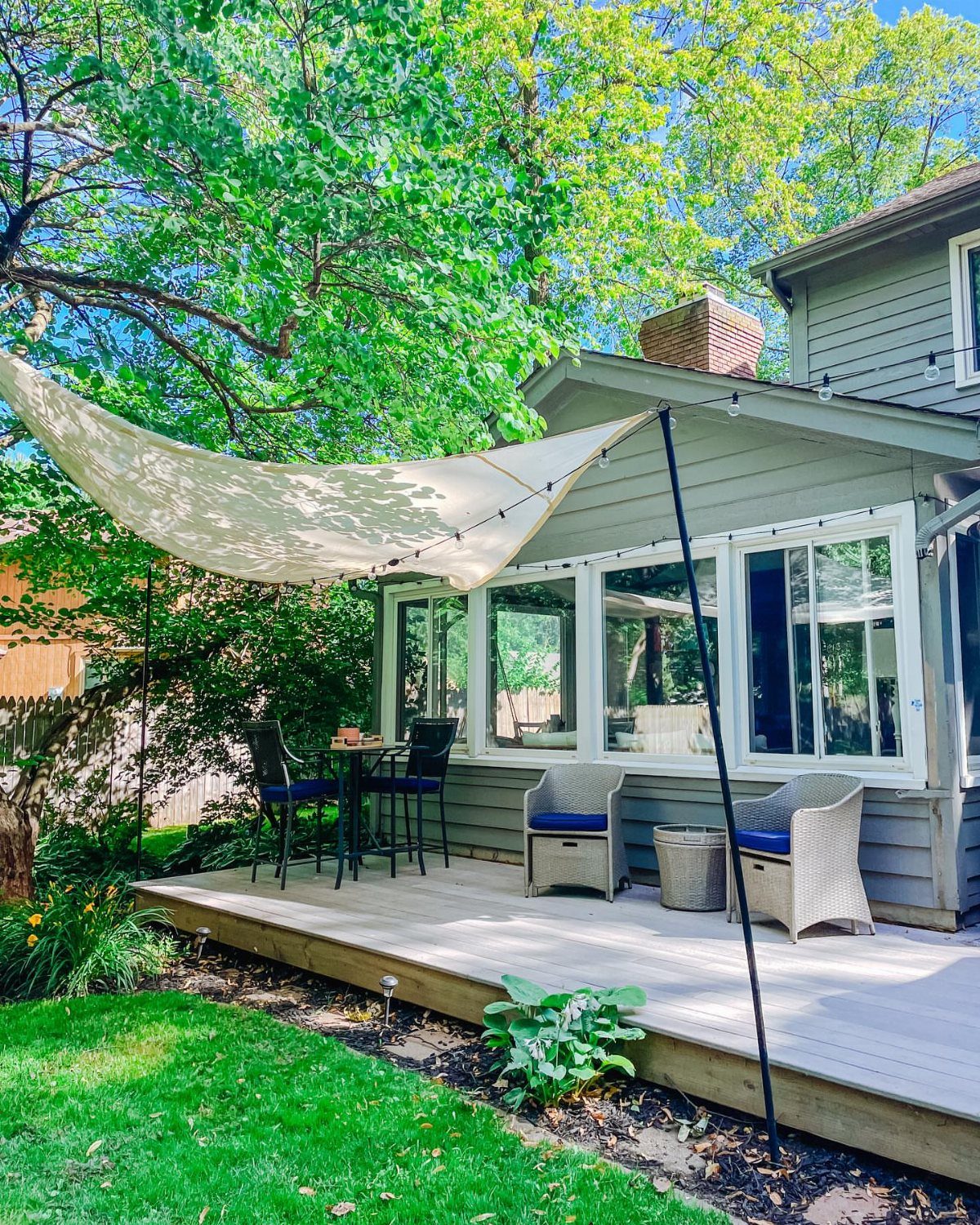
Shade sails give you partial privacy from above, the angle blocks sightlines from second-story windows without closing the deck in.
A triangle is simpler to tension than a rectangle; three anchor points, one usually to the house fascia and two to posts, and the fabric finds its own plane.
I would check the wind rating on the hardware, cheap kits sag by August and flapping wears the fabric fast.
A light color stays cooler than dark shades, which matters if you are under it at midday. Plan on taking it down for winter in snow zones; ice load tears the stitching.
10. Gazebo
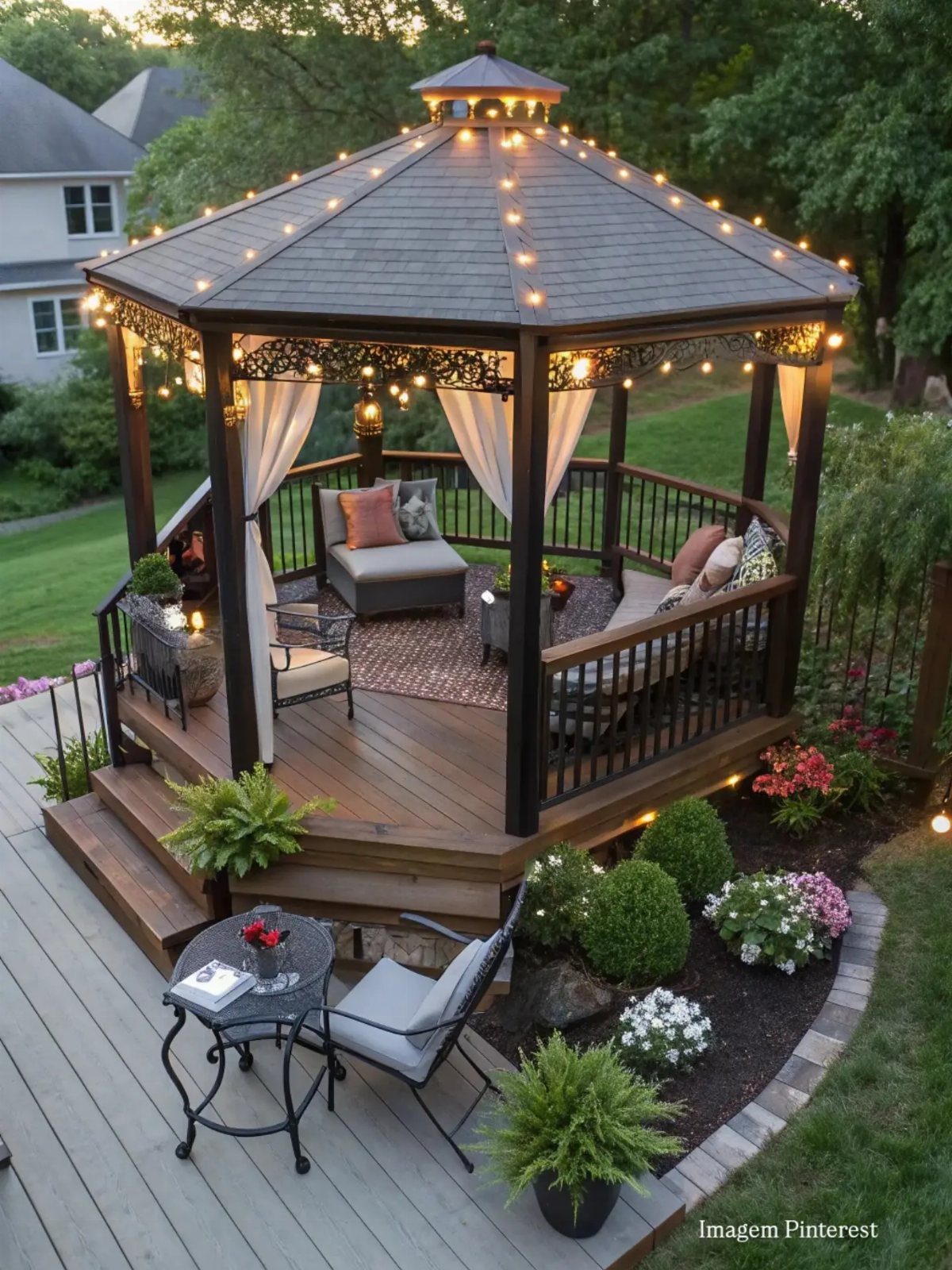
A gazebo on the deck gives you walls of privacy plus a roof, and curtains are the detail that lets you open or close the space as the neighbors change.
An octagonal footprint fits a round table well, though I would measure your existing furniture before committing; a big gazebo eats most of a standard deck.
String lights on the interior rafters are easy to add during build, running the wire before the roof goes on is simpler than retrofitting.
An elevated base needs proper footings, not just deck posts; check local code since this is a structure, not just furniture.
11. Storage Privacy Walls
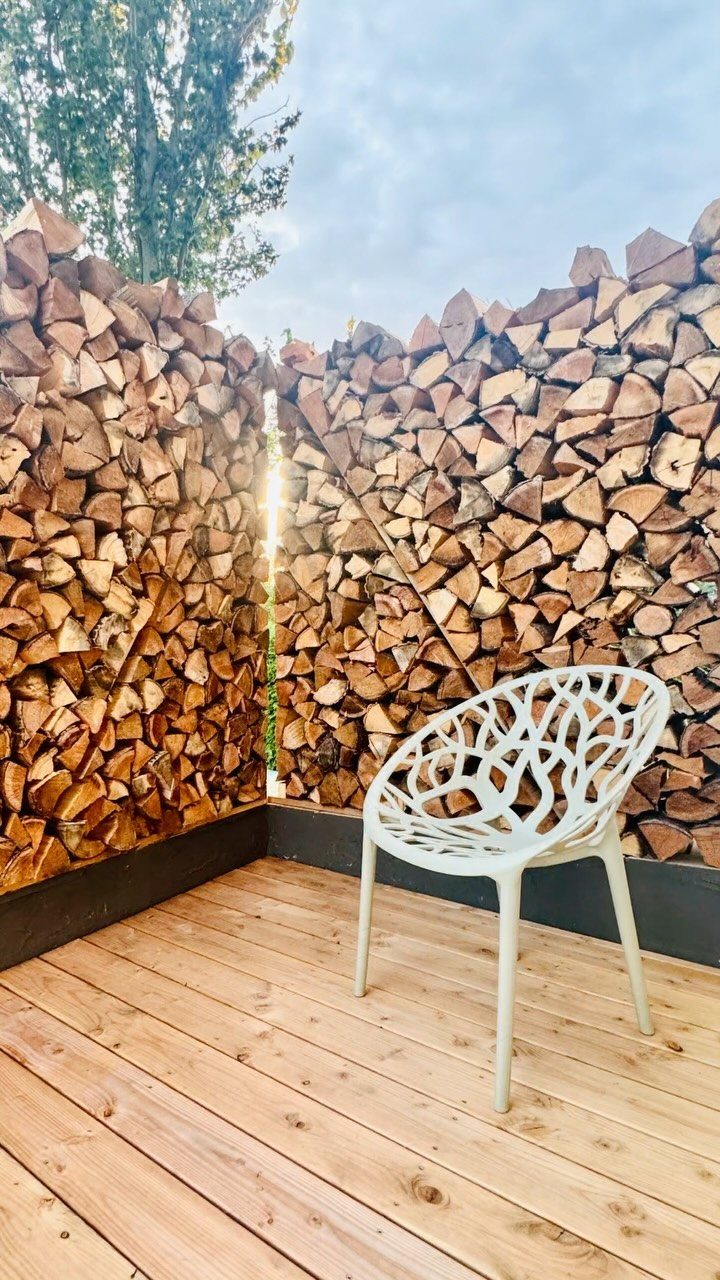
Stacked firewood as a privacy wall is the most functional screen on the list; the logs are already on your property, you are just organizing them.
Seasoned hardwood holds its shape, green softwoods slump and split as they dry, so use what is already cured.
Tight vertical stacking reads as deliberate architecture, not a woodpile; a frame or raised platform keeps the bottom course off the deck boards so moisture does not migrate.
I would leave a gap for a hand cart, restocking from one side and burning from the other turns the wall into rotation storage, not just a static display.
Importance of Privacy
Privacy turns a deck from a stage into a room.
Without it, I find myself watching for movement at the neighbor’s window instead of settling into a chair. The sound piece matters too, a solid wall or running water gives conversations a boundary that open air does not.
Plants do this work gradually, which I prefer on a tighter budget.
A row of slender evergreens or a trellis of morning glory builds a screen over months while you live with the partial cover, rather than swallowing the whole cost at once.
The practical detail is that most privacy ideas also read as intentional design.
Stacked firewood, a shade sail, a planter bench; each solves a second problem while it blocks the view. That dual purpose stretches your budget further than a single-function purchase.
Materials for Privacy Solutions
Wood, metal, and outdoor fabric are the materials that hold up, and each fails in its own way if you choose wrong.
On curtains, fabric must be weather-tested for your climate, not just outdoor-labeled. The elegant look of drapes only lasts if the material does not rot at the grommets.
Using the same wood already on your deck for a privacy wall means that continuity reads as built-in, not added-on, and costs nothing extra.
Installation Tips
Local code governs more of this than most first-timers expect. A solid privacy wall often needs a permit where a screen does not, and a gazebo counts as a structure, not furniture.
I would verify height limits before buying a single board; a wall just under the threshold may pass where the next whole foot triggers review.
Anchor points are the detail that separates a weekend build from a do-over.
A trellis in concrete, shade sail hardware with a proper wind rating, gazebo footings below frost line; each takes longer than the visible work but prevents the lean or sag that ruins the effect.
Power access for a water feature pump belongs in the planning phase, not after the wall is up. Running cable later means either exposed conduit or dismantling what you built.
Frequently Asked Questions
What can I build my deck out of?
Composite decking costs more upfront than pressure-treated lumber, but it holds up better for built-in seating or privacy walls that take daily wear and weather without staining or sealing.
It matches existing deck boards and skips the annual resealing that full sun demands of wood.
What are the privacy options for deck railings?
Frosted glass panels in a metal frame give you light without exposure, and tempered glass is code for railings. White lattice is another path; it breaks the view while letting air through, which keeps the deck cooler in hot climates.
What are some privacy ideas for my back porch?
A solid privacy wall blocks sightlines completely, though local code on height limits may require a permit.
A wall fountain blocks sightlines and covers conversation noise, though I would only put one where you actually sit; the sound carries only so far, and the plumbing is not worth it for a space you pass through.
How do I enclose a deck?
Privacy walls, screens, or curtains each create an enclosed feel without full construction.





