
A homestead garden layout can run from a weekend cold frame build to a stone-walled greenhouse that needs excavation equipment and a hired operator.
What decides which of these 13 ideas belongs in your ground is your budget in dollars and hours, not your acreage.
I would test my soil through the county extension before I spent money on any of them; the post below starts with that test because most layouts fail before a seed goes in.
[link-whisper-related-posts]1. Raised Beds
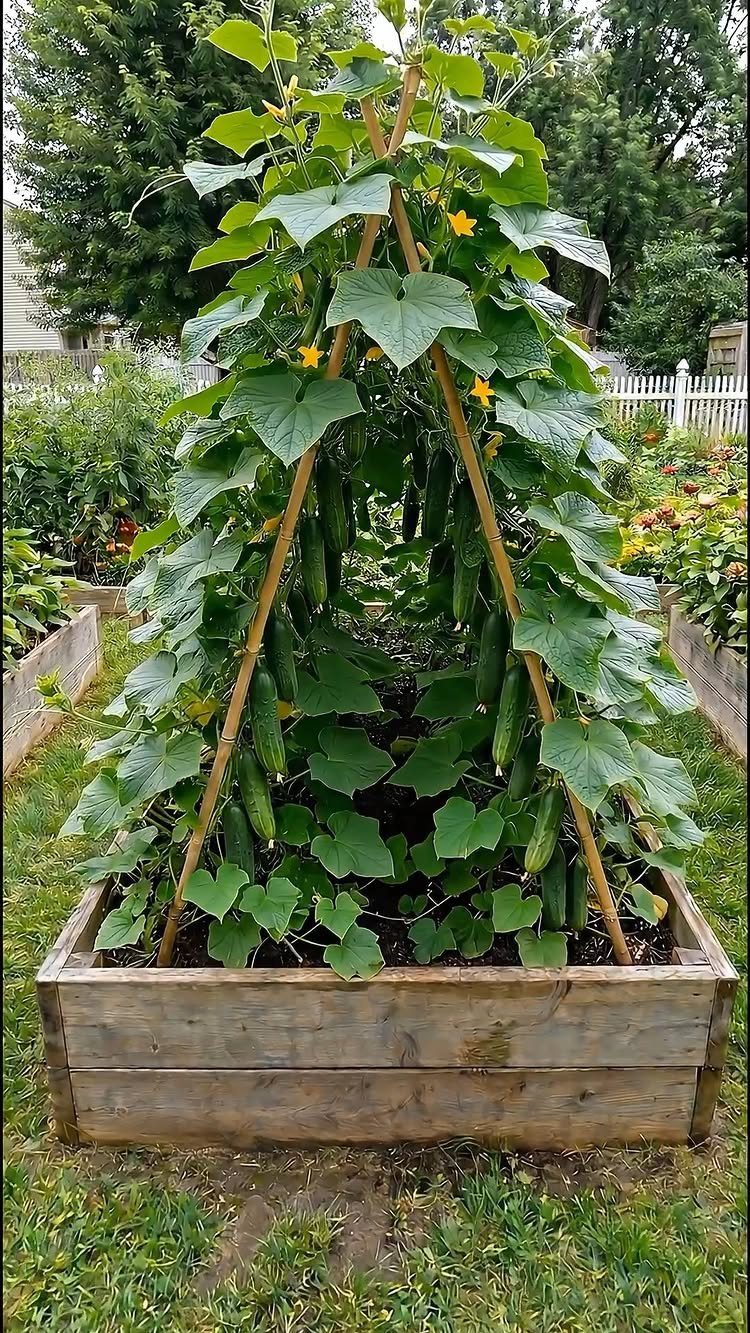
Raised beds lift your soil and your back at the same time. I like them for anyone starting out with packed clay or contaminated urban ground, because you’re building fresh soil from scratch rather than fighting what’s there.
The A-frame trellis in this one is a smart pairing: cucumbers climb naturally, and the hanging fruit stays cleaner and straighter than vines left to sprawl.
Cedar or a rot-resistant alternative lasts the longest; pine needs a liner or it rots fast.
Check that your bed width stays narrow enough to reach the middle from either side, or you’ll end up stepping in and compacting the soil you just paid to fill.
Compact 4×7 raised bed divided into 1×1-foot squares for easy planning, planting, and harvesting.
2. Fruit Trees
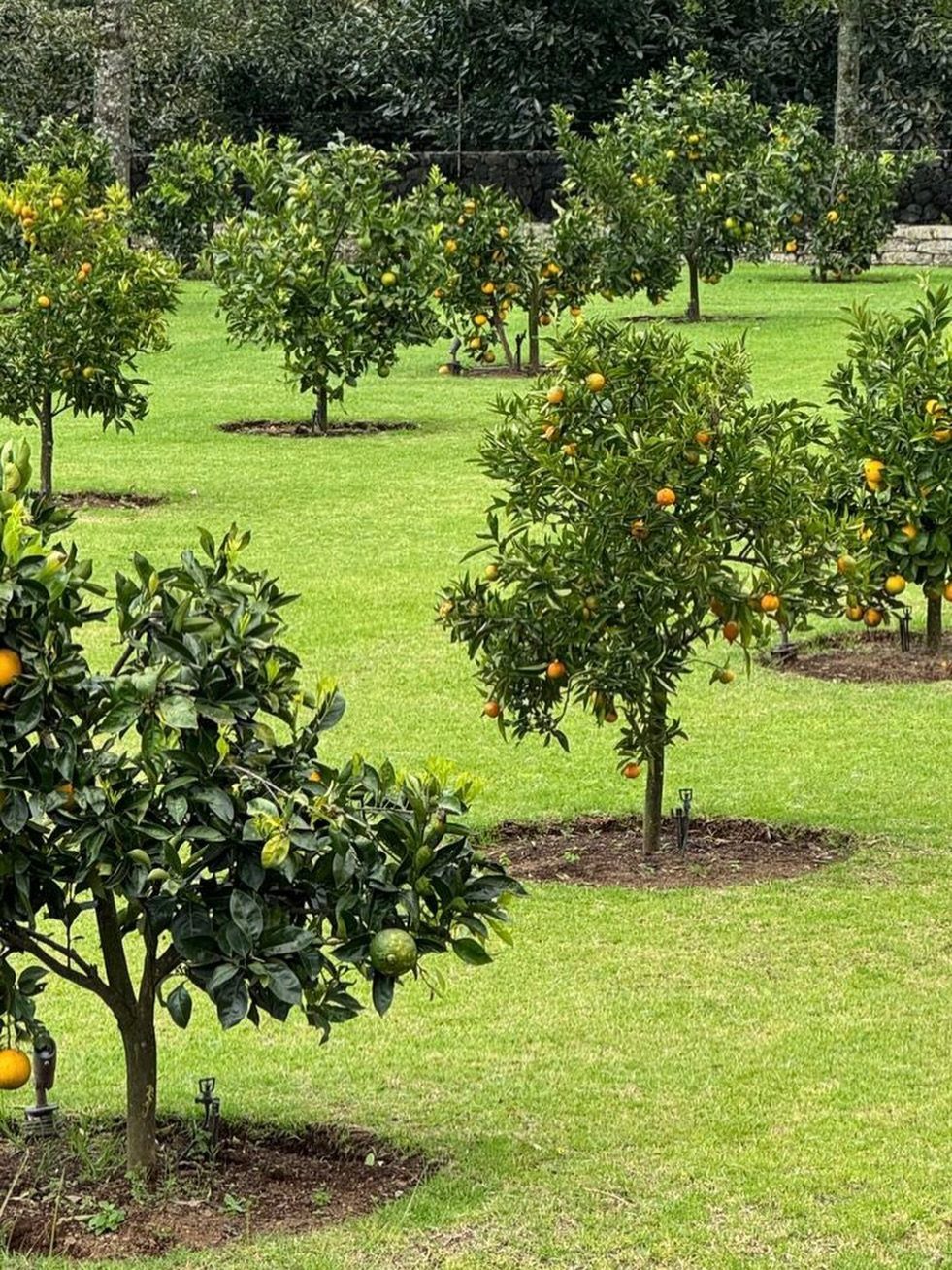
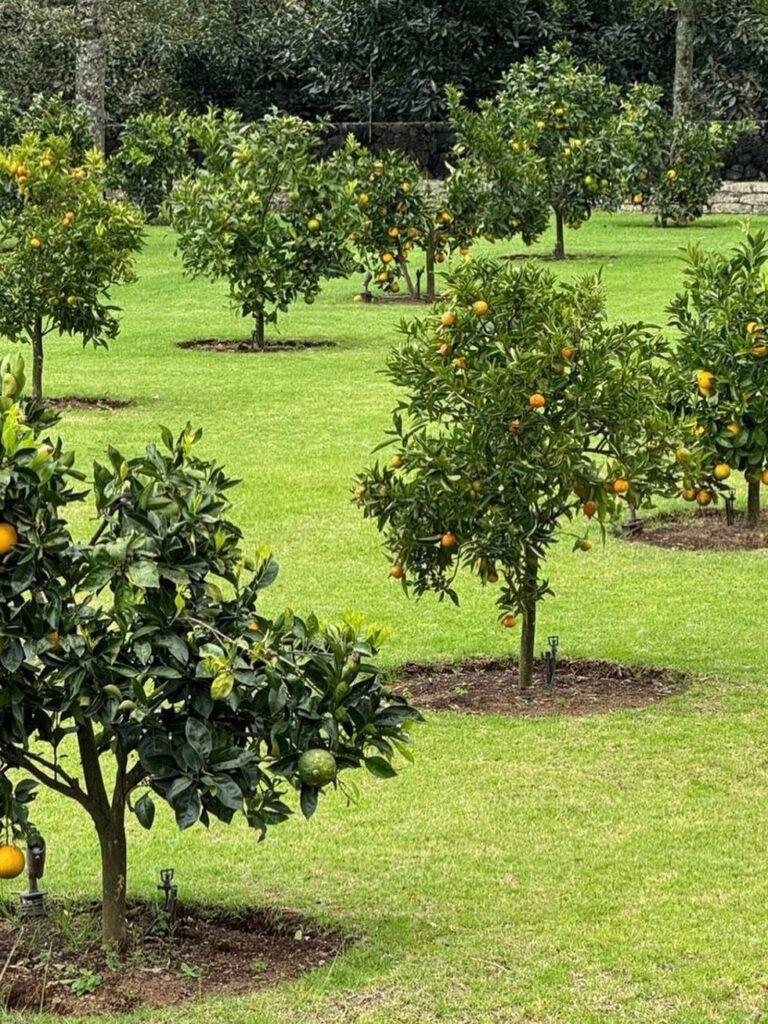
Fruit trees take the longest to reward you in a homestead layout, but the one you plant this year is the only way to get fruit down the line.
I would put citrus only where winters stay mild; in colder zones, apples, pears, or plums handle hard freezes once established. The mulch rings here do real work, keeping mowers away from trunks and holding soil moisture through summer.
Order bare-root trees in late winter for far less than potted, and plant them before buds break. Dwarf or semi-dwarf rootstocks keep harvesting within reach and fit more varieties into limited space.
3. Pollinator Garden
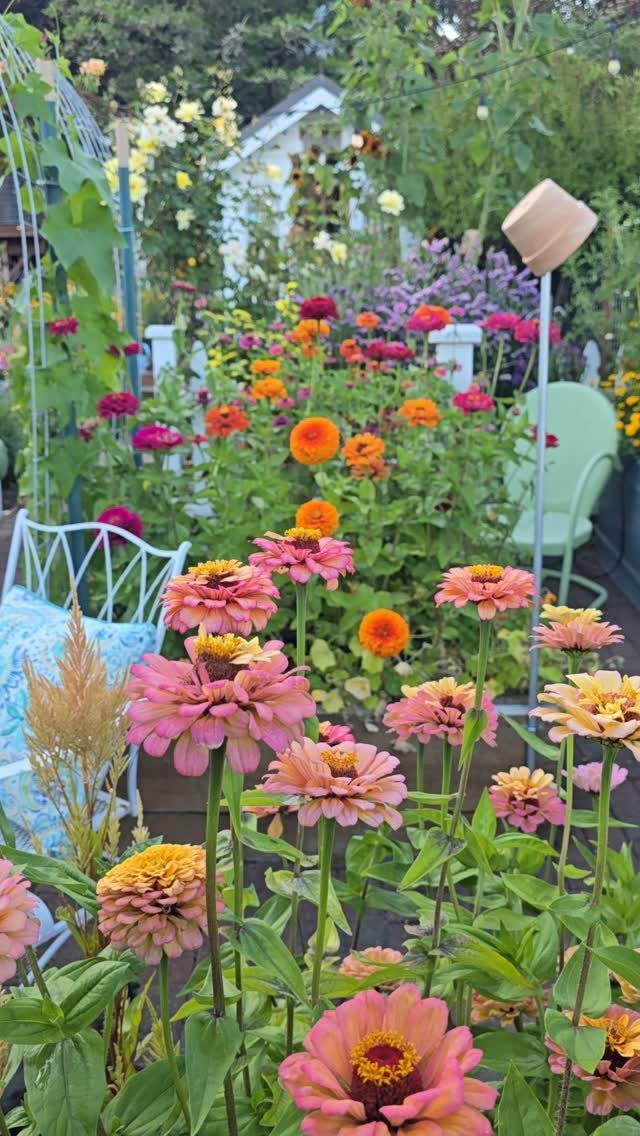
A pollinator patch is not decoration; it is infrastructure. Bees and solitary wasps that feed on zinnias and asters all August are the same ones working your squash and tomatoes in June.
I would site it close to your vegetable rows, near enough that beneficial insects find your crops without thinking about it. Deadhead for longer bloom, or let some go to seed if you want the patch to self-sow next spring.
4. Trellises for Vertical Gardening
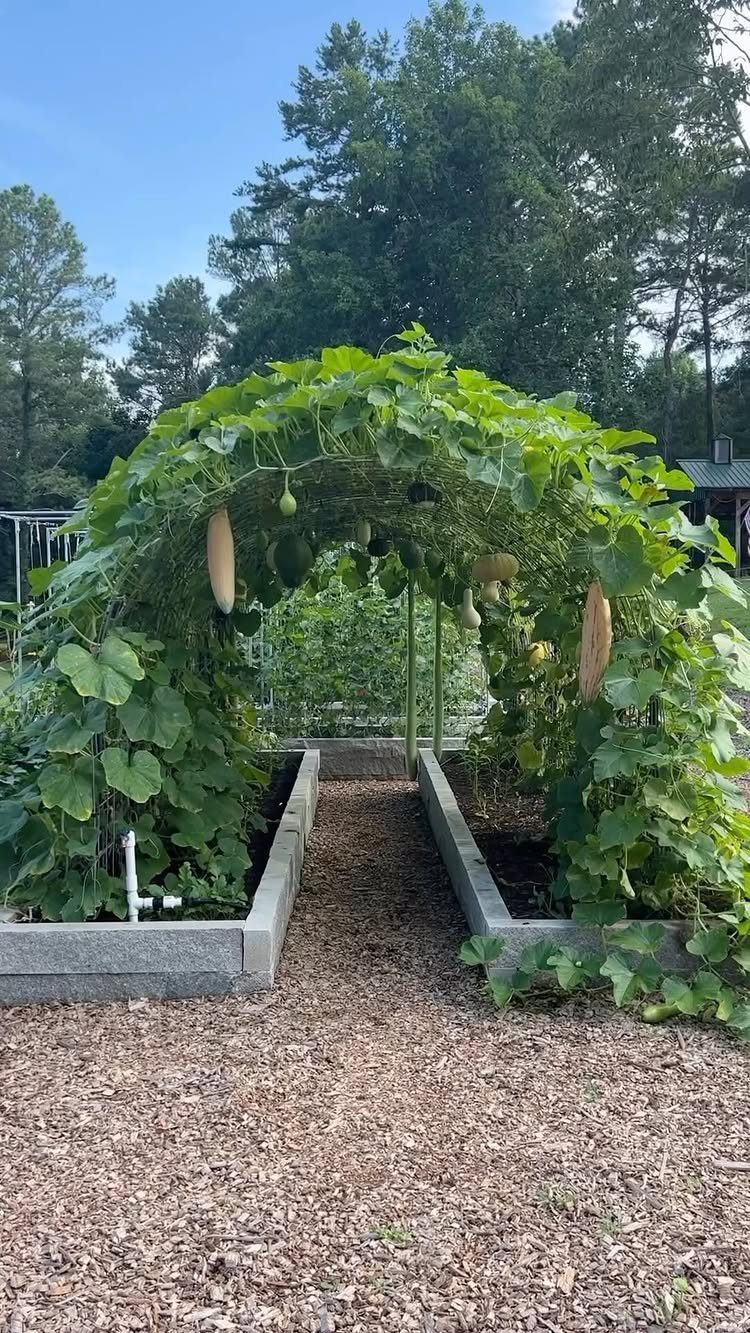
Vertical growing buys back ground space you can still use for roots or walkways. I would anchor any metal arch at the base; a July thunderstorm loaded with wet foliage turns lightweight frames into damage.
Match the trellis height to what you climb: peas stay lower, indeterminate tomatoes want more room, and vigorous winter squash might need a re-clip midseason. Woodchips between beds, like these, keep mud down and let you work right after rain.
5. Greenhouse Growing Area
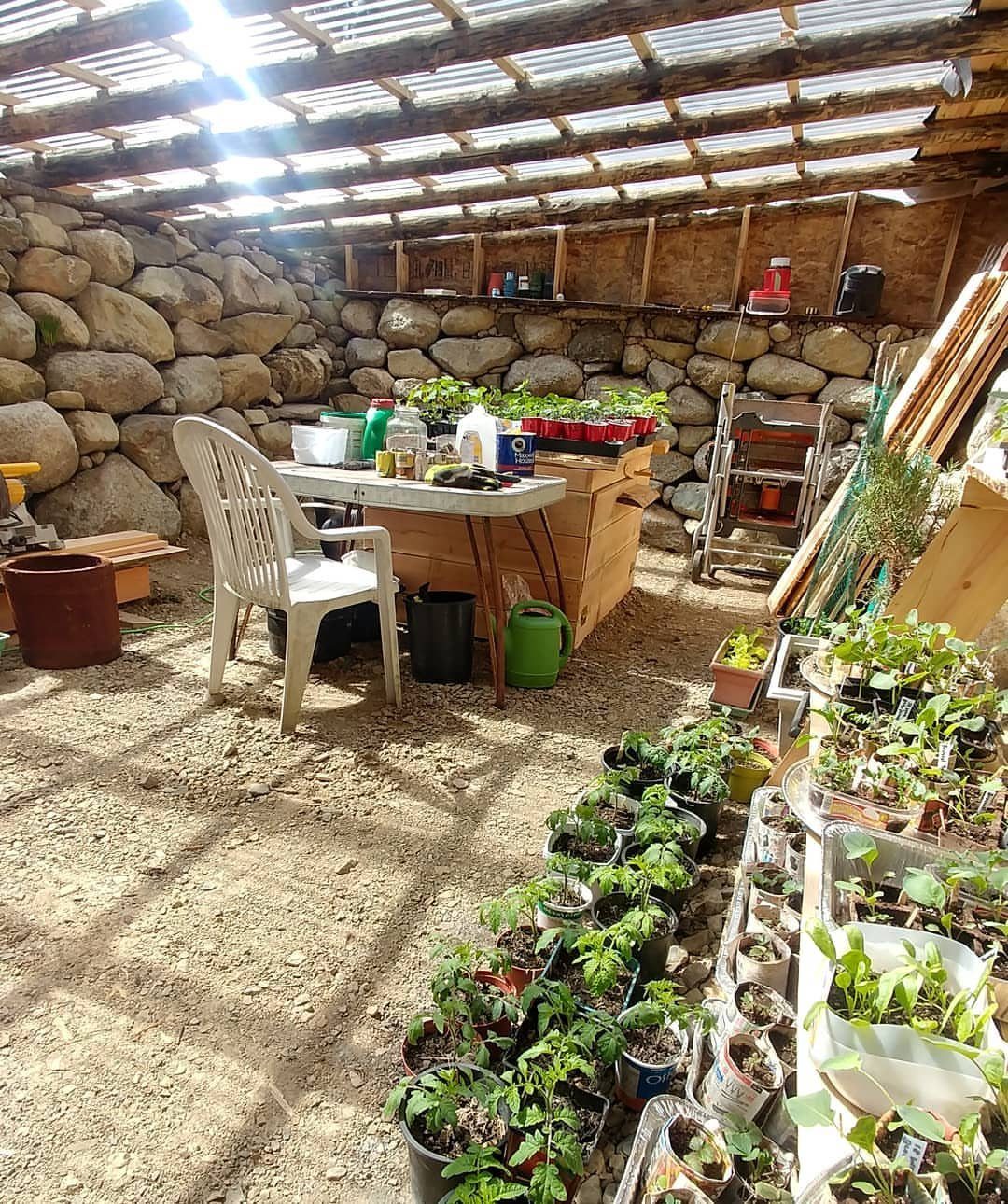
An earth-sheltered greenhouse, stone-walled with a translucent roof, buffers temperature swings that kill seedlings in above-ground frames.
Budget expectantly: even a modest stone-and-poly structure runs high in materials, and the excavation is a weekend of rental equipment or a hired operator.
6. Herb Spiral
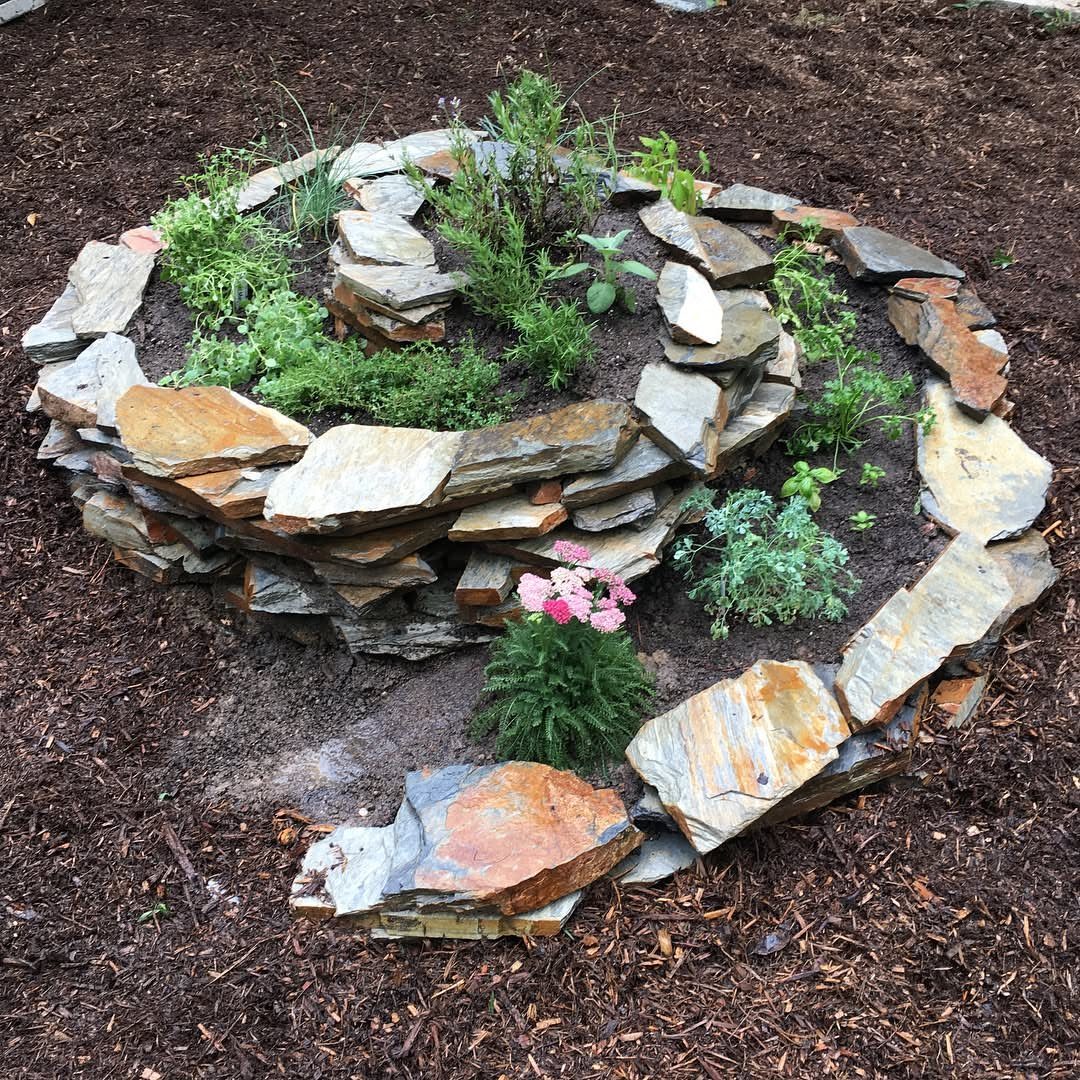
The herb spiral stacks growing conditions into a small footprint: drier and hotter at the top, moister and cooler at the base, partial shade on the north side if you place it right.
Stone construction, like these flat slate pieces, stores and releases heat that Mediterranean herbs, thyme and rosemary especially, prefer through cool nights.
I would fill the center with a sandier mix than the lower levels, and add drainage if your clay holds water.
The spiral shape is not just visual; it puts every plant within arm’s reach from the path, which matters more than it sounds when you’re harvesting in August heat.
7. Circular Garden Around a Pond
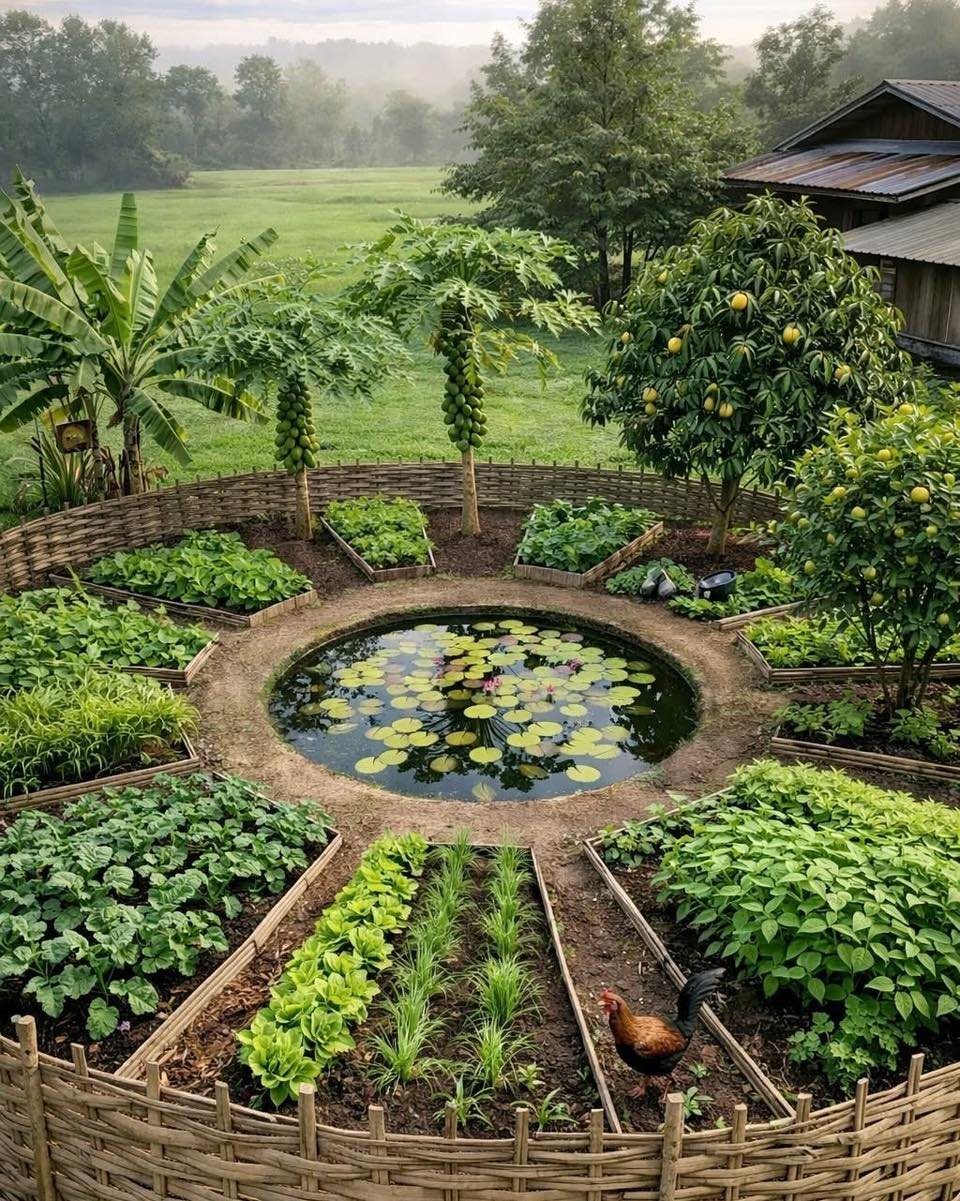
Wedge-shaped beds radiating from a center point let you reach every plant from the path without ever stepping on soil.
The pond here does more than reflect sky; it moderates temperature, draws pest-eating frogs, and gives you a water source within hose distance of thirsty crops.
I would check local codes before digging a pond, and line clay-heavy ground rather than hoping it holds. Curved fencing follows the outer ring neatly, but gates need thought or you’ll walk the long way around with a harvest basket.
8. Tiered Pyramid Planter
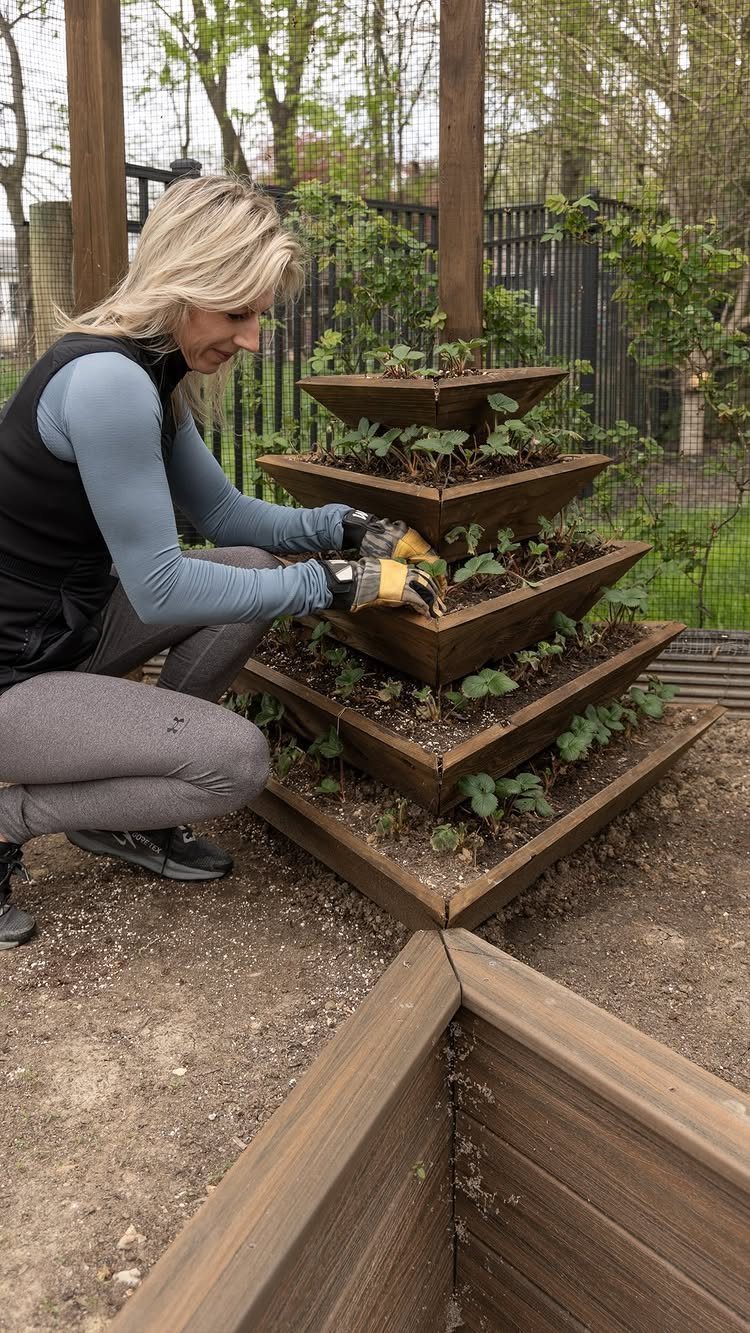
Stacked levels shrink the footprint to what a balcony or small patio can spare, though the height makes top-tier watering awkward without a wand or drip line.
Cedar or another rot-resistant wood buys you seasons; the soil mass holds moisture better than a single pot in July sun.
Strawberries and greens suit the tilted face planting slots, but I’d avoid deep-rooted tomatoes here, their roots want more than a pyramid offers. Move it before loading; once filled, the weight is final.
9. Vertical Hydroponic Growing Towers
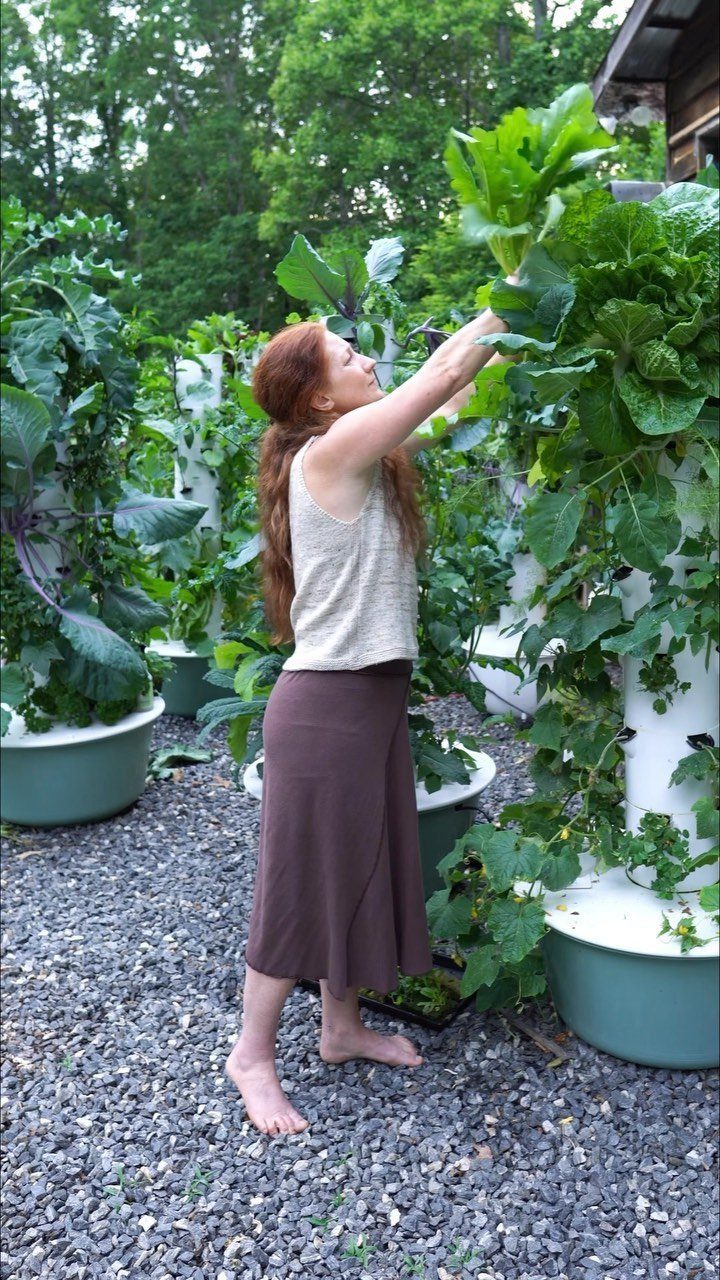
Gravel bases and outdoor placement mean these run on recirculating nutrient solution rather than soil at all.
The upfront cost runs higher than raised beds, and you are tied to replacing nutrients, checking pH, and keeping pumps running through power outages.
Leafy greens and herbs perform reliably; fruiting crops need more light and stability than open towers guarantee. I would start with one tower to learn the rhythm before scaling to a row of them.
10. Zoned Homestead Master Plan
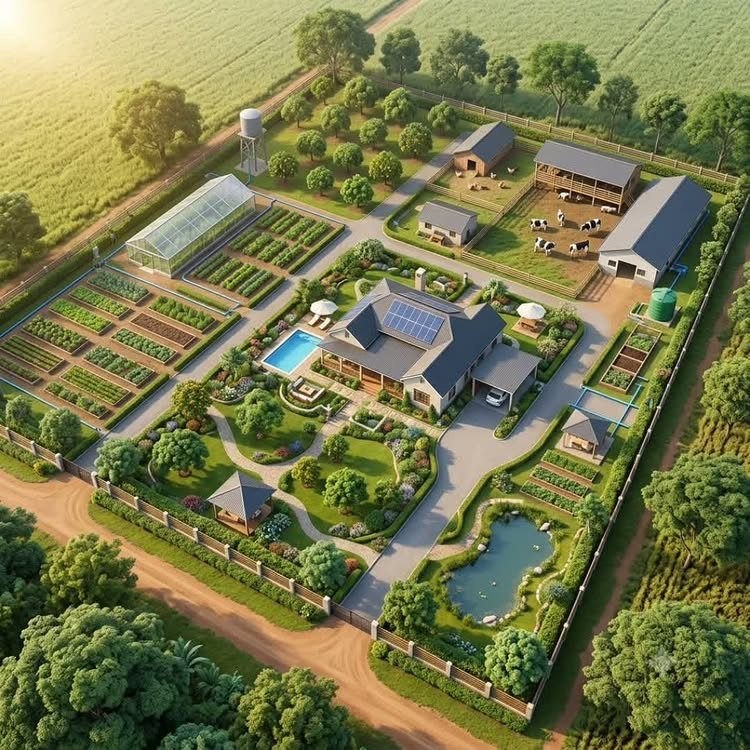
A full-property map, even as a sketch, keeps you from planting permanent fruit trees where future outbuildings will shade them.
Zones group by frequency of visit: salad greens near the door, garlic and storage crops farther out, livestock where hauling feed and water does not cross your best vegetable soil.
The render shows pool and pond both; I would pick one water feature in a working homestead, maintenance splits fast between beauty and production.
Begin with the zones you will actually tend this season, not the dream plan you might never finish.
11. Cold Frame Garden Bed
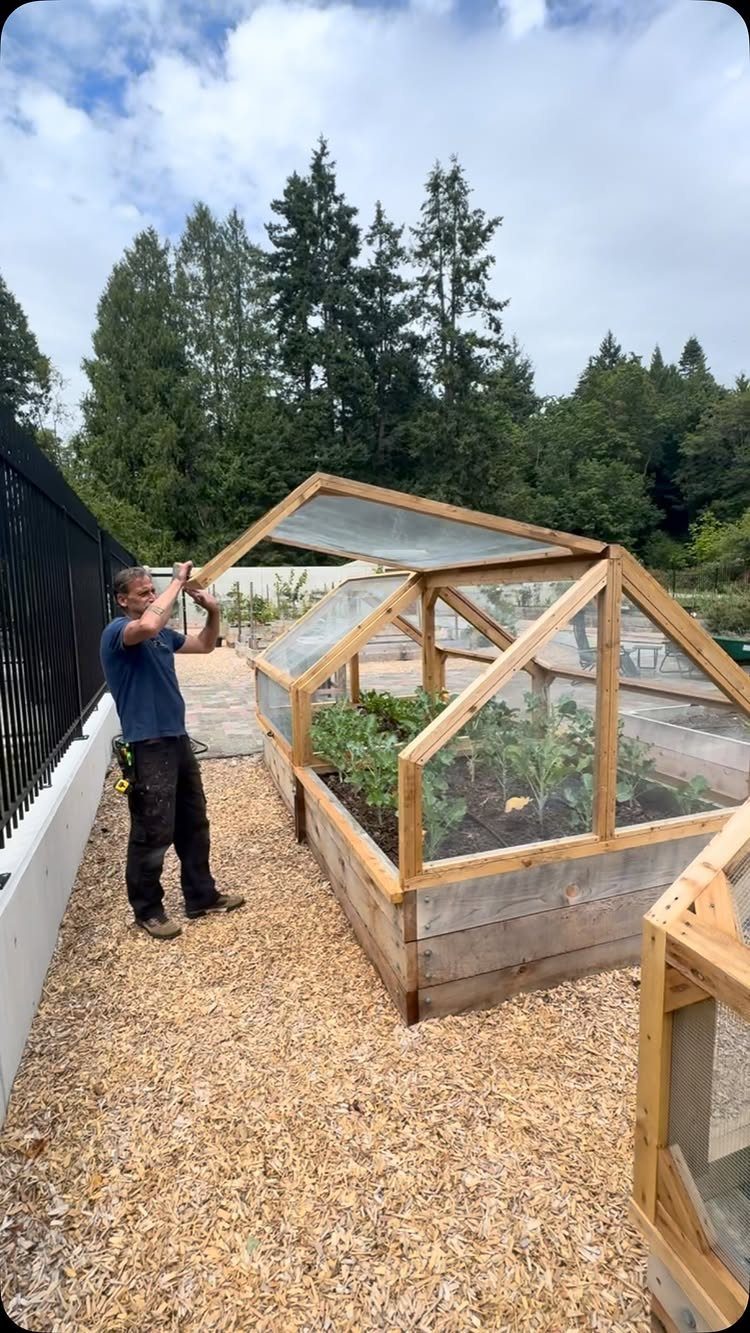
A hinged lid of old windows or clear polycarbonate turns a raised bed into season extension for a few dollars and an afternoon.
Angling the lid toward the south catches lower winter sun; prop it open on mild days or you will cook seedlings in March.
A wood frame sitting on wood chips instead of bare soil keeps the base drier and slower to rot.
I would use hinges that lift and hold without a stick in the wind; a slammed lid in April costs you a month of growth.
12. Garden Integrated with Chicken Run
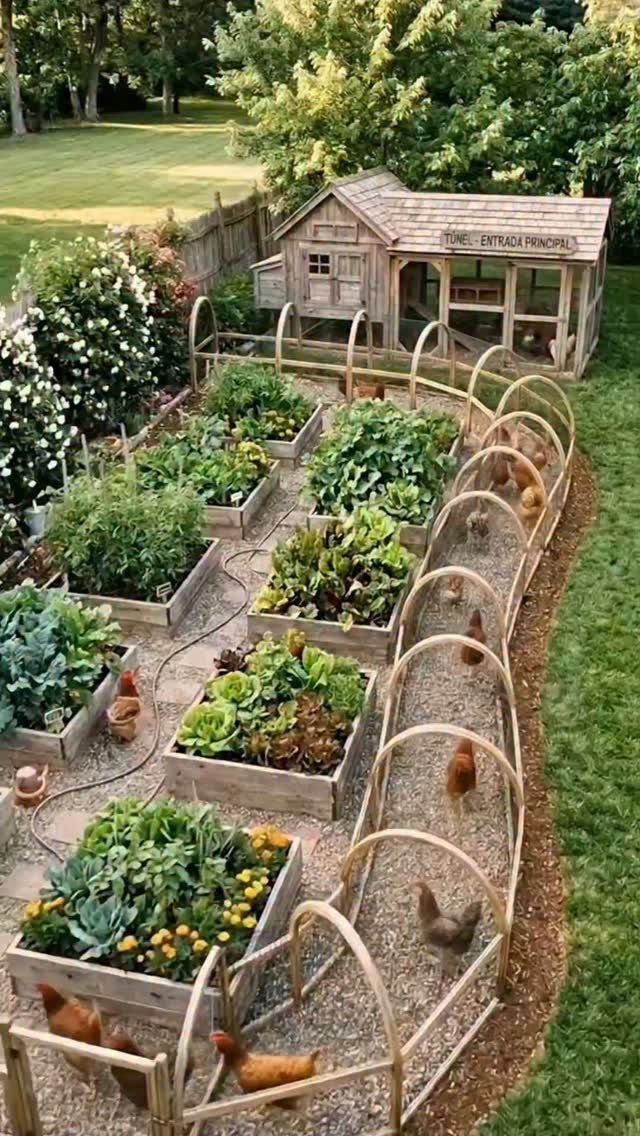
An arched tunnel run, rather than a static coop yard, lets chickens till and fertilize one bed at a time before you move them on.
The mesh keeps them from scratching seedlings bare once you plant; timing matters, they need a week or two to work each section, not the whole season.
Raised beds beside the run share the same foot traffic pattern, which matters when you are hauling compost or harvest in wet weather.
I would anchor the tunnel ends well; a motivated flock will lift lightweight frames to get at a fresh lettuce bed.
13. Fully Enclosed Pest-Proof Garden
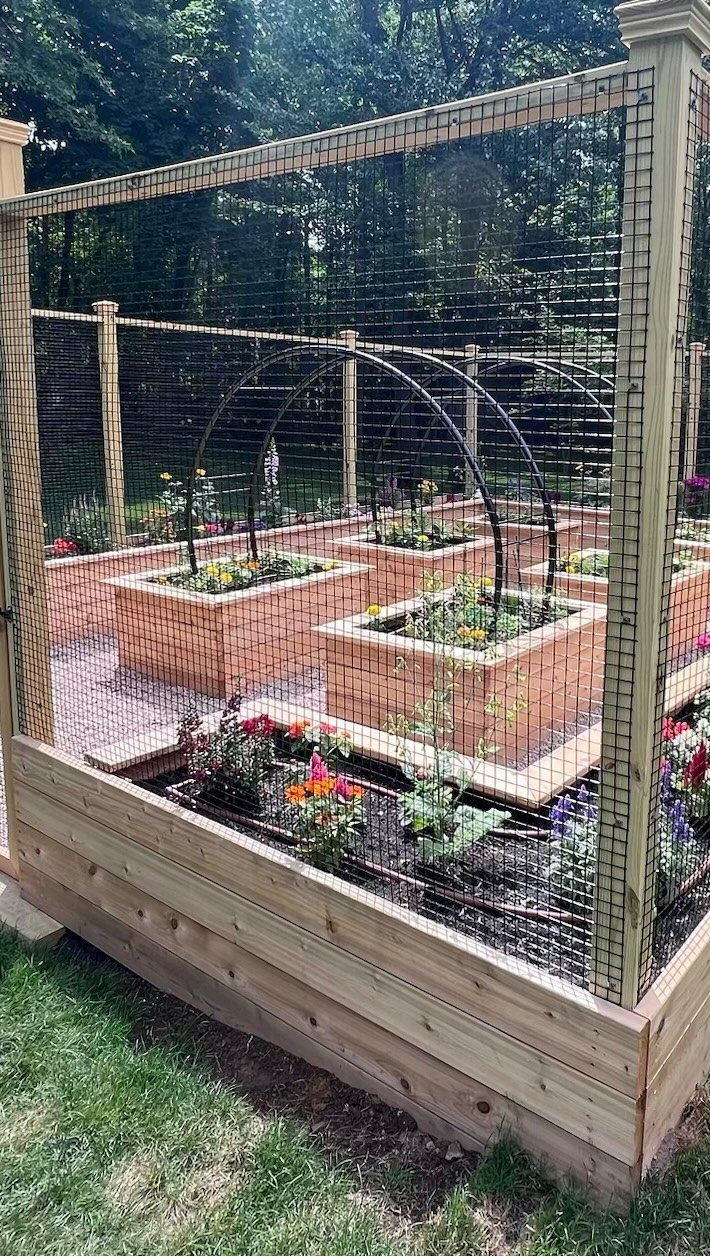
Wire mesh walls and a walk-in gate turn raised beds into a season without deer raids, rabbit nibbles, or squash vine borer moths laying where you cannot reach them.
Black mesh on timber frames, like this one, blends into background better than silver chicken wire and lasts longer in sun.
I would set the door where your wheelbarrow path already runs; stepping through a side gap with compost every week gets old fast.
The mesh gauge matters: half-inch stops small rodents, one-inch lets bees through but not rabbits. Bury the skirt deep enough that digging pests hit wire before they reach carrots, or hinge it outward to create the same barrier.
I like the hinged version better; you can lift it to till or weed without disturbing the bury line.
Inside, the beds stay standard construction; you are paying for peace of mind, not a growing method.
The enclosure shrinks your usable footprint by the width of the paths around each bed, so plan tighter spacing than an open garden allows.
The frame itself blocks almost no light with mesh this open, though morning glory will volunteer on the wire and shade beds by late summer if you let it run.
Move the structure once and the math changes; the labor is in setting posts plumb and stretching mesh taut, not in the beds themselves.
I would build this only after I had the soil right in standard raised beds for a season, the cage solves pest pressure, not drainage or compost mistakes already made.
Soil Preparation
Soil preparation is where most homestead layouts fail before a seed goes in. I would test pH and nutrients in late fall or early winter, which gives you time to amend before spring planting starts.
A basic soil testing kit reads pH and the main nutrient levels; send samples to your county extension if you want the full profile.
Compost is the amendment I add every year, whether the test calls for it or not. It improves fertility and drainage at the same time, which matters in clay-heavy ground where water sits and roots rot.
Grass clippings work in a pinch, though I prefer finished compost that will not tie up nitrogen while it breaks down.
Spring soil remediation is a practice worth repeating annually; soil health shifts with what you grew and how hard you pushed it the season before.
Watering Strategies
Water access shapes where I place every bed and row, not the other way around.
A homestead needs more than a hose bib near the house; I would plan for wells, ponds, or rainwater collection within practical reach of each growing zone.
Wells give the most reliable pressure for drip lines running to raised beds. Ponds work for livestock and larger irrigation, though I would check water rights if you are pulling from anything that feeds a watershed.
Rainwater barrels or tanks collect what falls on roofs and outbuildings; the volume adds up faster than most people expect, and the water is free of municipal chlorine.
Drip irrigation is the system I would run to raised beds specifically: it puts water at root level without soaking foliage, and the consistent schedule keeps plants from the stress of boom-and-bust watering.
Automatic timers are worth the cost once you have more beds than mornings to walk them with a hose.
Frequently Asked Questions
How to design a garden layout at the front yard?
I would pair flowers and vegetables in the same space so the bed feeds you and still looks intentional from the street.
Herbs and pollinator plants along the path draw bees that later work your backyard crops, and dwarf fruit trees keep the harvest within reach without overwhelming the entry.
Lavender, rosemary, and marigolds are choices that handle heat and still produce something usable.
How can I start homesteading?
I would begin with a zone map, even a rough sketch, that places what you tend most often closest to your door.
Check your soil in fall or winter so you have time to amend before spring; 6 hours of sun is the minimum for most food crops.
Raised beds let you build good soil from scratch if your ground is packed clay or of unknown quality, and they keep the project to a weekend.
What is the most common mistake of first-time gardeners?
Planting too much without a plan for how you will actually walk, water, and harvest it all.
Permanent trees go where future sheds will not shade them, and beds sit where hoses reach, not where they look prettiest in a magazine spread.
I think zoned planning solves the most common first-timer mistake before you break ground. I would rather start with half the beds I think I can handle and expand in year two.
What are the downsides of homesteading?
The costs and labor run higher than most beginners expect, and you wait years before fruit trees or perennial systems start giving anything back.
Stone greenhouses, earthworks, and full-property fencing take serious money or rental equipment, and maintenance splits your attention between production and infrastructure.
Water features especially demand a choice: I would run either a pool or a pond on a working property, not both, or upkeep becomes a job in itself.





