
These 8 layouts run from a few hours with recycled bottles to a full Saturday fitting stone, and the right one depends on whether you have wall space, floor space, or ground to dig into.
Vertical options like trellis buckets or cut PET bottles suit renters and tight patios since they leave no footprint, while raised beds and stone rings work once you have soil you control.
The spiral garden is the only layout that builds actual microclimates into its structure, waist-high dry stone at the center draining fast enough for rosemary while the bottom pocket holds moisture for basil.
[link-whisper-related-posts]1. Container Herb Garden
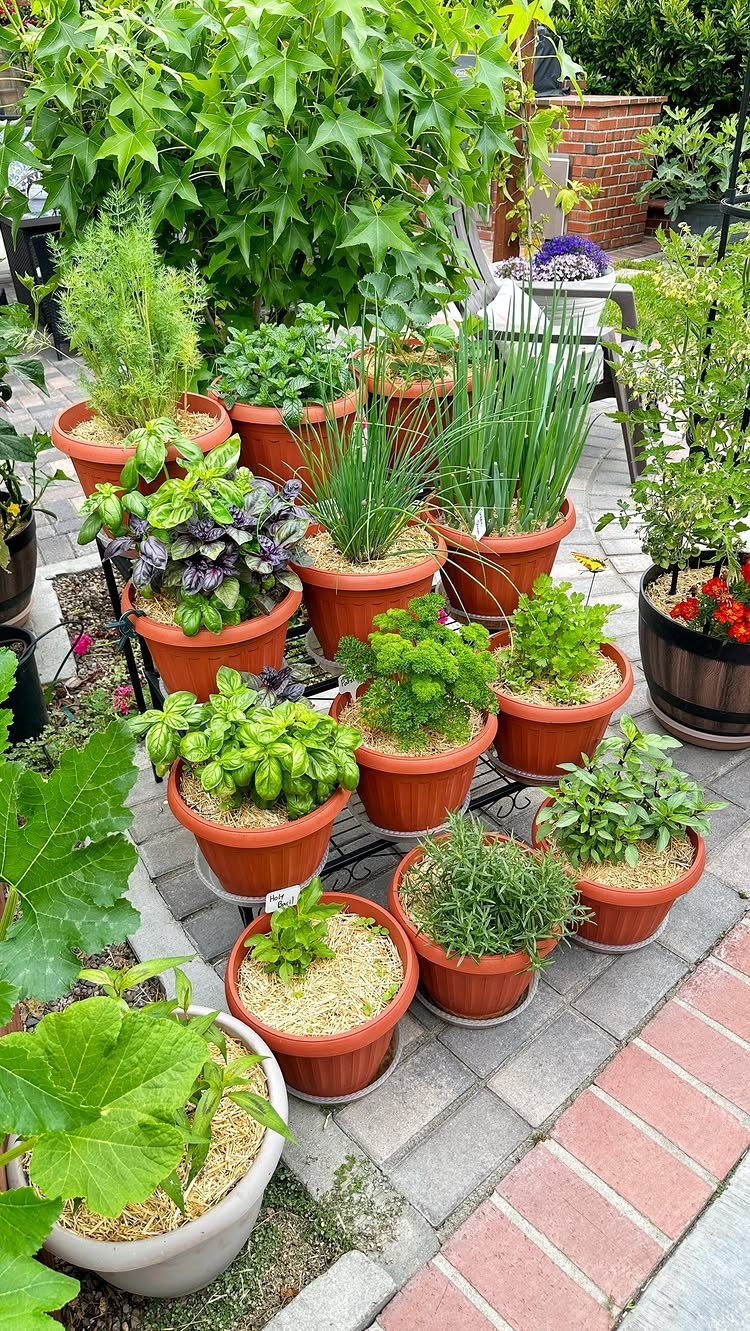
Tiered stands let you stack 12 containers in the footprint of maybe 3. The maker ended up with 4 tiers, which is about the ceiling for stability if you’re using standard plastic pots and need to water from above.
I would put basil and parsley on the lower levels where I can reach them daily, and let rosemary sit higher since it tolerates a little neglect.
Chives and holy basil fill the middle. Straw mulch on top of each pot cuts evaporation by roughly half in summer heat.
This layout suits anyone with a patio, a balcony, or just a corner of a driveway. The pots move when the sun shifts, and you start over fresh each spring without digging.
2. Raised Bed Herb Garden
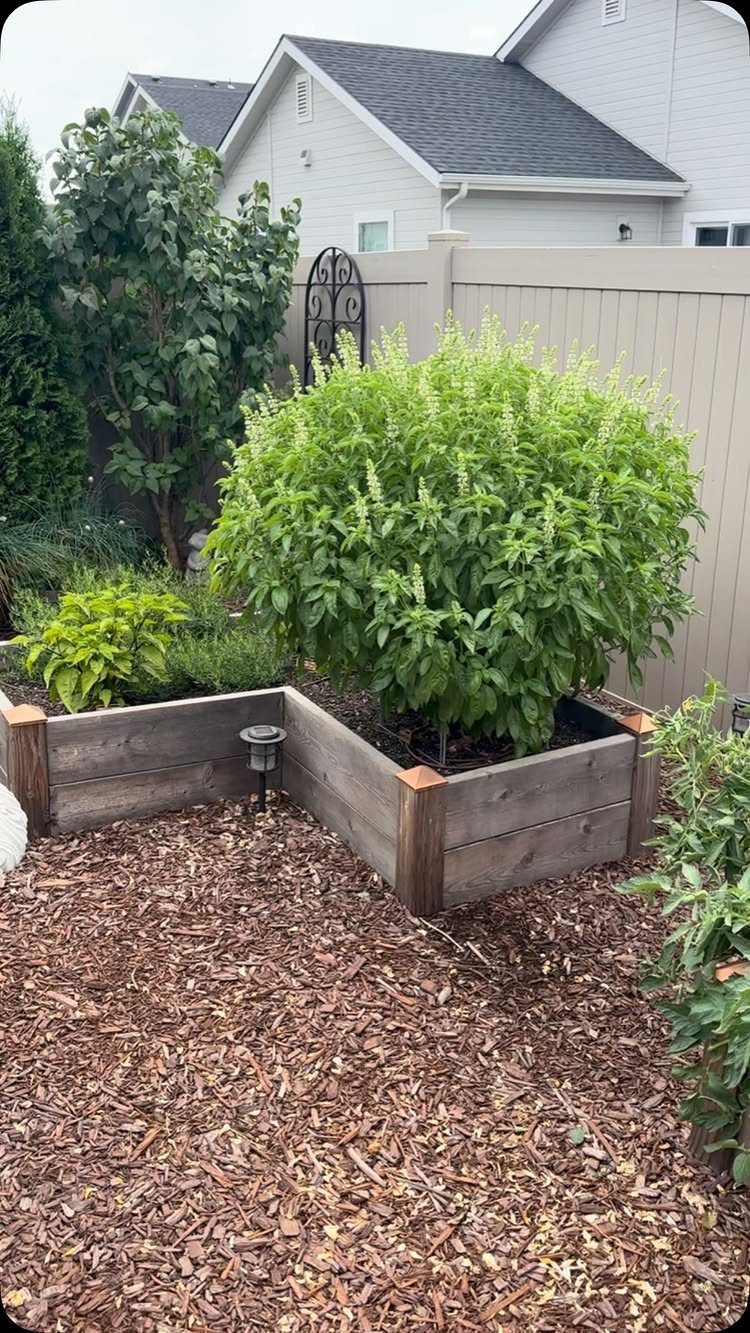
Corner-shaped beds like this one turn fence lines into workable space. A raised bed height in the low double digits is enough for basil roots and most culinary herbs; anything shallow dries out too fast in summer.
Check what your bed sits on.
Grass underneath means laying cardboard or hardware cloth to stop weeds and tunneling pests. Against a house wall, leave some clearance for air circulation and any painting you might do later.
I would build with cedar or a rot-resistant composite if I planned to keep it long term. Pine works for a trial run at a lower price.
3. Circular Herb Garden Layout
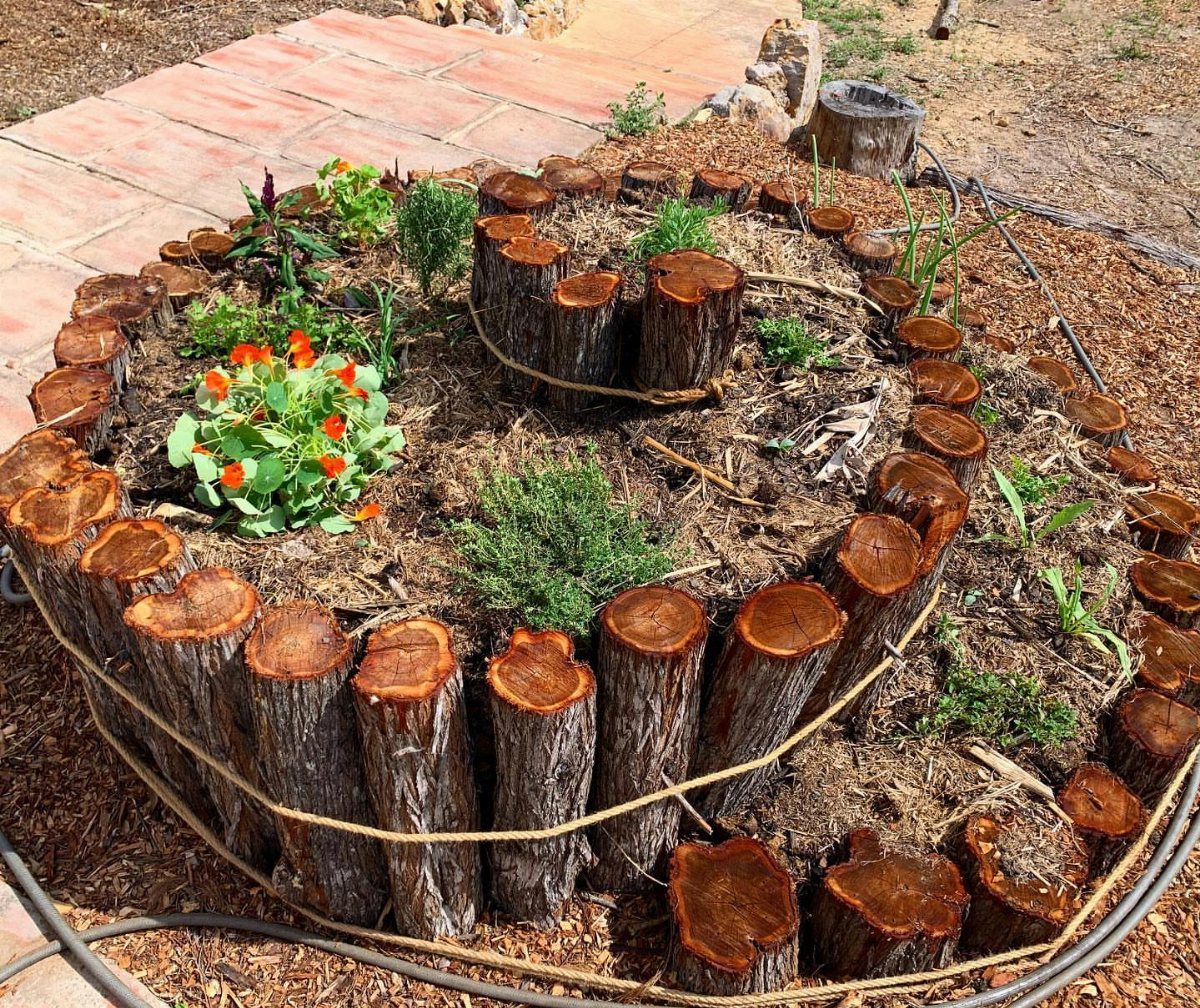
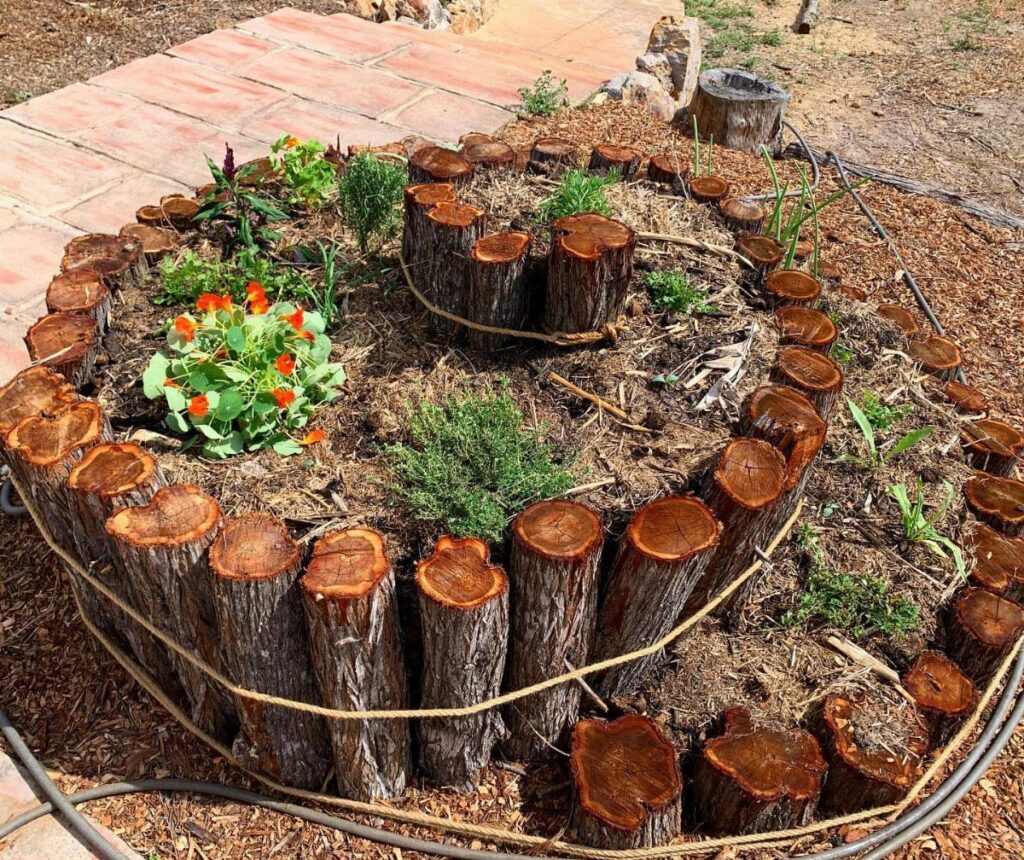
The rope binding lets you adjust or replace individual sections as they weather.
The spiral path visible here is half the point.
You plant what you harvest most often, parsley or chives, along the inner edge where your feet stop. Thyme and sage can sit farther back.
This shape costs more in edging material than a square bed of the same area, and the gaps between logs let soil creep.
I would line the interior with landscape fabric if I were building on lawn I did not want to reclaim later.
4. Herb Border
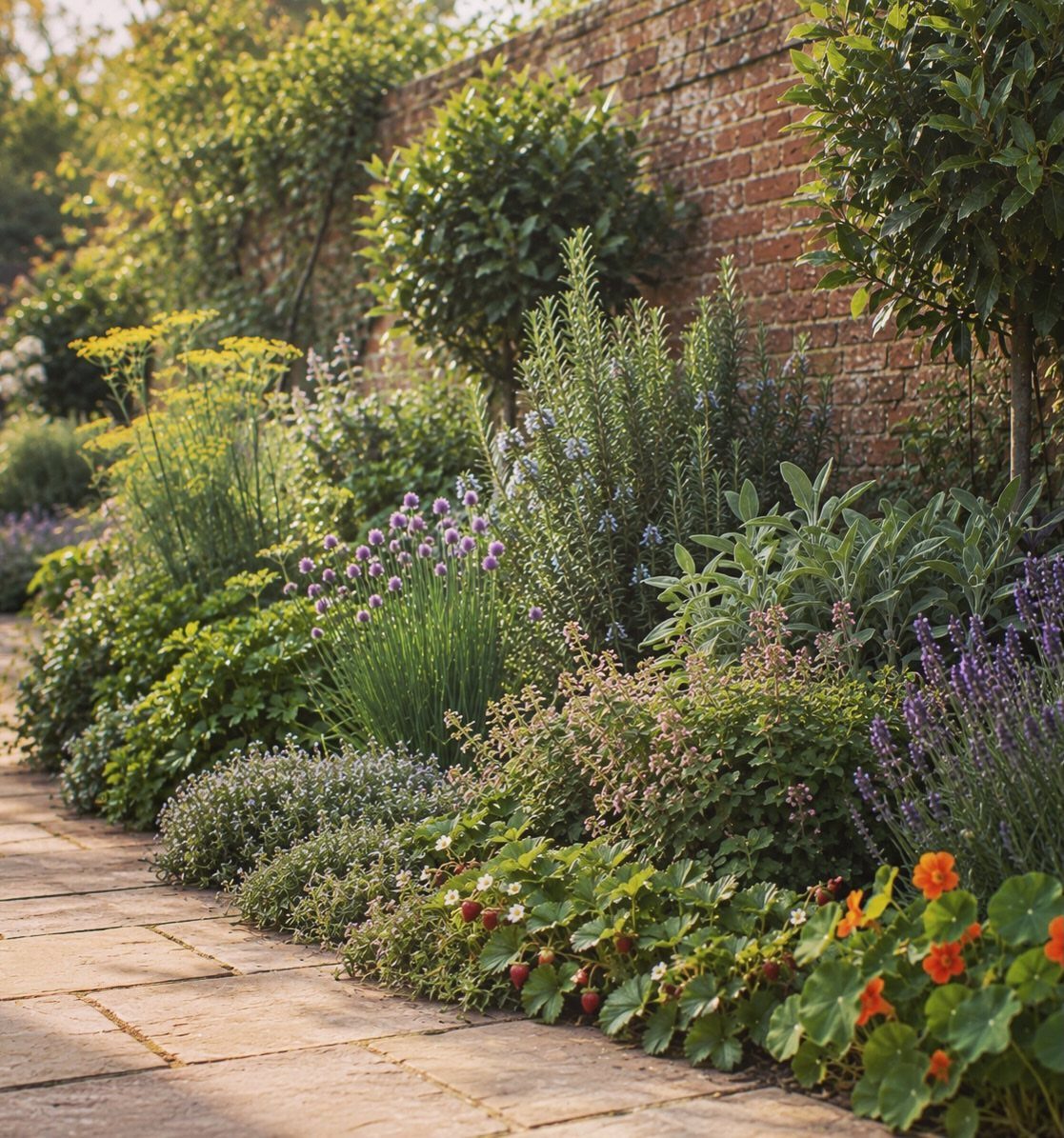
A border runs along what you already have: a path, a wall, a fence line. The chives, rosemary, and thyme here are all perennial in most of the US, so this planting pays back after year one.
Nasturtium is the exception, reseeding in warm zones and dying out where winters hit hard. I would treat it as annual filler and not depend on it for structure.
Leave breathing room between the border’s back edge and any wall. Herbs need air, and you need room to cut sage and thyme without scraping brick.
5. Herb Spiral Garden
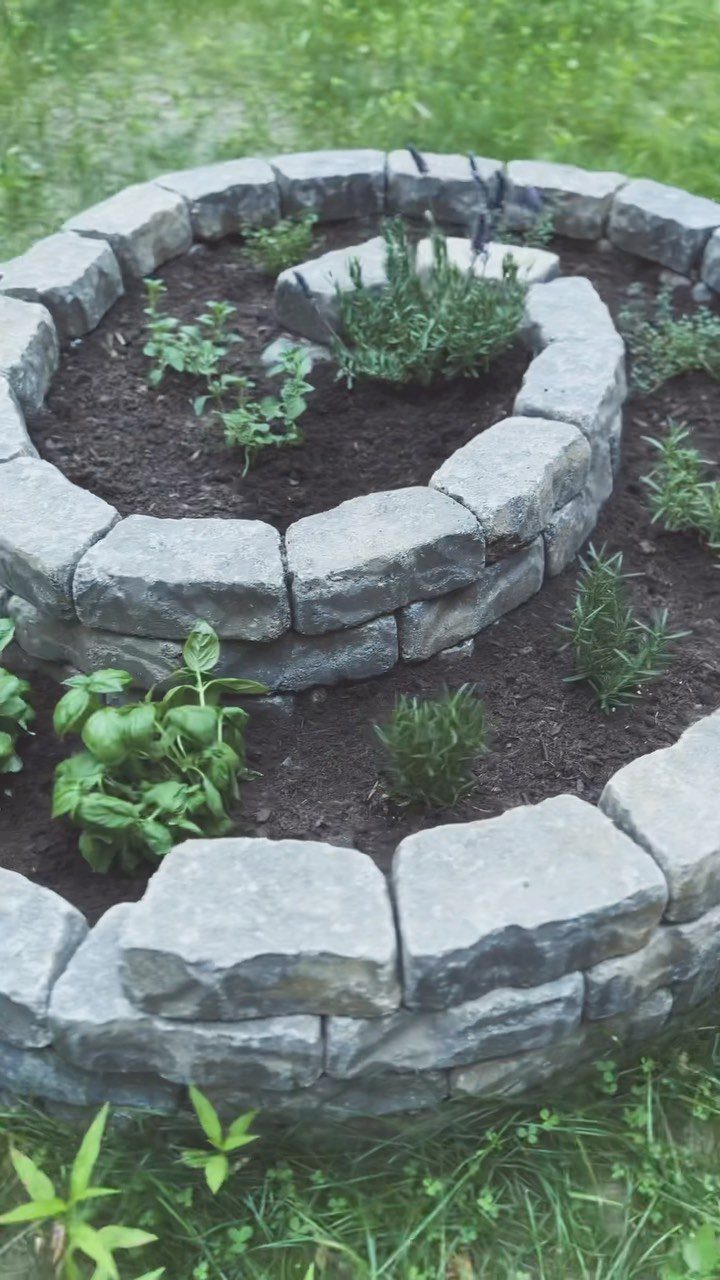
Dry-laid stone spirals rise to a center point about waist high, then wind back down.
The top drains fast and bakes; rosemary and oregano live there. The bottom pocket holds moisture for basil and parsley.
Each tier steps up by a small margin above the last. You need stones with enough flat surface to stack without wobbling, and the base ring should sit partly buried for stability.
I would build this on flat ground, not a slope.
A spiral looks organic but it is precise work; every stone needs contact with 2 others or the whole thing shifts by August. The look is striking, and the microclimates actually work.
6. Stone Edged Herb Bed
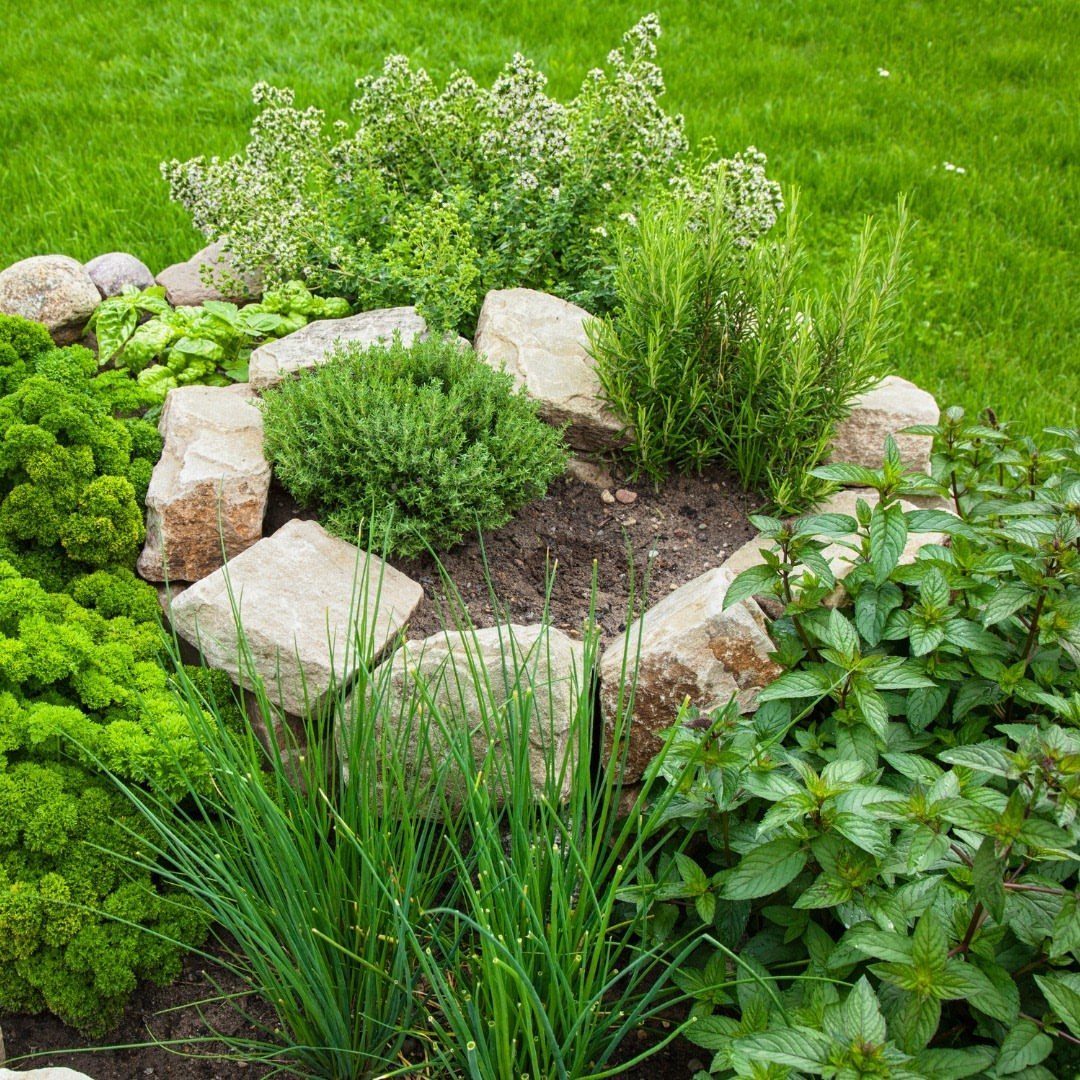
Large stones between plant groups do the organizing for you. Mint stays boxed in by rock on all sides, which matters because mint roots will cross open soil fast in a single season.
Light-colored stone warms the soil on its south face, a slight advantage for chives and parsley in spring.
Parsley and rosemary want different watering schedules, so I would separate them with a stone wide enough to stop root spread, or accept that one side will be slightly off its preference.
This is a quick Saturday layout if the stones are delivered. Digging the pockets and fitting the rock takes longer than planting.
7. Trellis Hanging Herb Pots
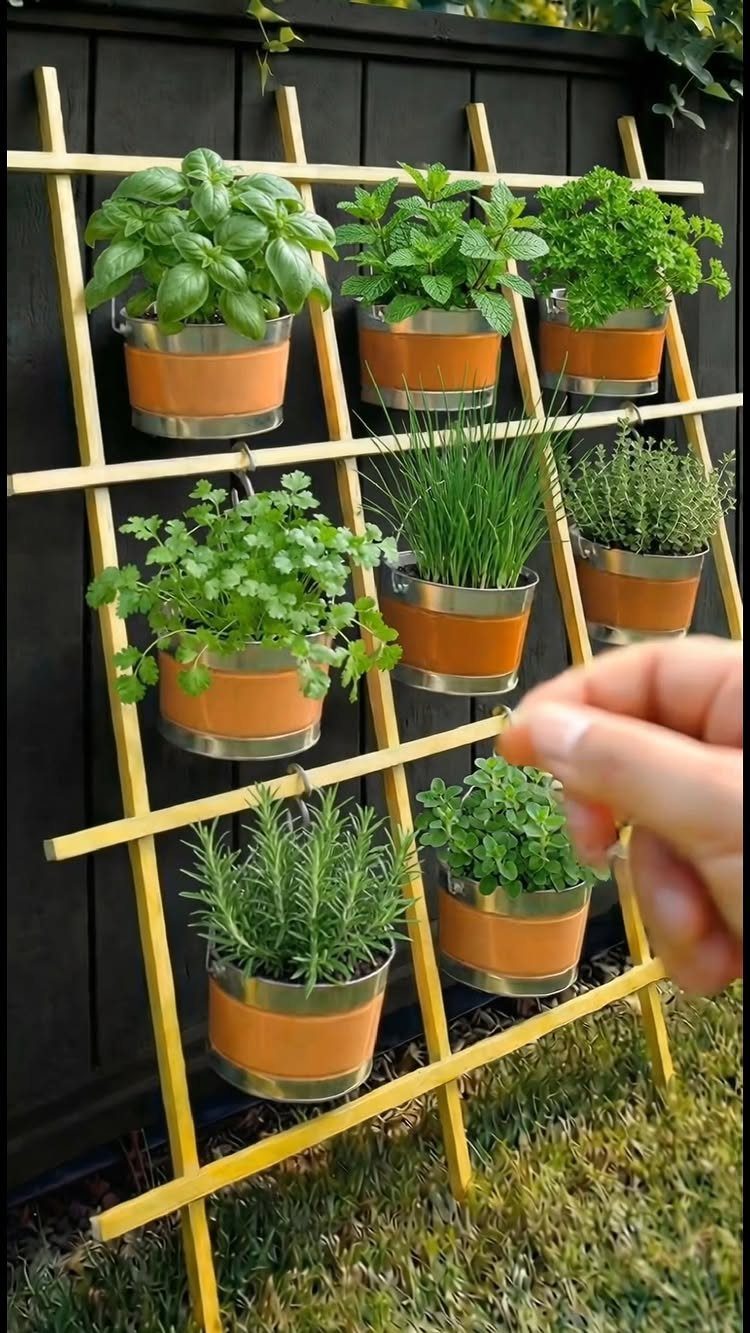
A trellis mounted flat against a fence gives you vertical real estate without sacrificing floor space.
Metal buckets with drainage holes hook onto the lattice at intervals that leave room for growth; basil and mint spread fast enough to crowd neighbors if you pack them tight.
The wood here sits a few inches out from the fence slats, which matters for air movement and for keeping the fence dry.
I would check that the trellis hardware hits studs or solid blocking, not just siding, before I loaded it with wet soil.
Sun angle on a vertical surface changes through the day, so this suits herbs that take partial shade or a fence face that catches morning light.
8. Vertical Bottle Herb Garden
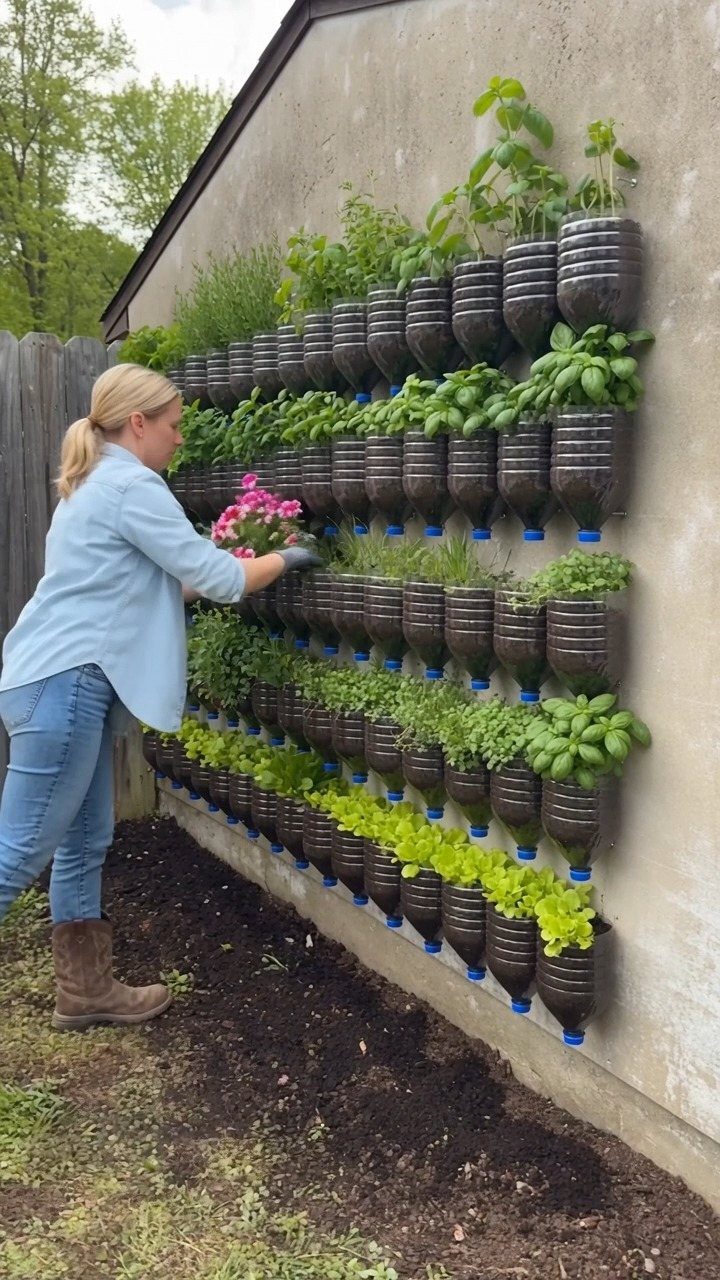
Cut plastic bottles mount neck-down so water drains through the cap, which you perforate with a heated nail or drill bit.
Each bottle needs its flat side held to the wall with a strap or wire loop; stagger the rows so lower plants still get their share of sky.
PET plastic softens in direct summer heat and UV breaks it down over seasons, so I would treat this as a short-term project rather than a permanent structure.
It costs nothing but time, and the footprint is literally wall space that grows nothing else. Leaf lettuce and basil do better in bottle depth than rosemary or thyme, whose roots want more room to roam.
Herb Growing Conditions
Full sun means more than 6 hours of direct light per day, and that is where most herbs do their best work.
Rosemary, thyme, basil, sage, and lavender underperform in shade: they stretch toward light, grow thin, and lose the essential oils that give them flavor.
Parsley, chives, mint, and cilantro are the exception. Four to six hours of sun, partial sun by definition, keeps them productive without the stress that would slow their growth.
If your site offers only morning light or dappled afternoon, plan for that group instead of fighting the site with sun-lovers.
Check your spaces before you commit. A south-facing wall reads differently than an open yard, and a fence line that seems bright at noon may fall short by August when the sun angle drops.
Match the herb to the hours you actually get, not the ones you hope for.
Herb Maintenance Tips
Regular harvesting is pruning by another name. I harvest in small cuts rather than big ones; the plant responds by filling out thicker and bushier, and you keep it from bolting to flower before its time.
I harvest often even when I do not need the herb that day; the plant benefits regardless.
For the lowest-effort garden, mint, rosemary, thyme, oregano, chives, and parsley tolerate missed waterings and irregular feeding without turning on you.
They are the herbs to start with if your track record includes killing houseplants or if travel pulls you away on weekends.
Watch for pests after rain or during humid stretches where air sits still. Catching an outbreak early means a rinse with the hose instead of losing half a bed.
Companion Planting
I group herbs by what they like, water and soil and sun, and they get along fine without one drowning or drying out the neighbor.
Rosemary, sage, thyme, lavender, and oregano all want lean soil, good drainage, and as much sun as you can give them; they belong in the same bed or container cluster.
Dill, cilantro, chervil, and parsley share a taste for cooler roots and more consistent moisture. Basil, oregano, chives, and chamomile form a third workable set.
Some pairings do more than coexist.
Chives planted near roses, if your garden includes them, help repel Japanese beetles and reduce black spot. The effect is documented and practical, not decorative theory.
Watch the conflicts.
Basil and rue do not belong near each other; the basil suffers. Fennel inhibits germination and growth in nearby plants through allelopathy, so I would isolate it in its own corner or pot rather than risk stunting neighbors.
Cilantro and anise, on the other hand, grow well together; the pairing is worth trying if you use both in the kitchen.
Frequently Asked Questions
What is the best layout for an herb garden?
The best layout depends on what space you have and how you cook.
I would pick a container garden for a patio or balcony, since you can move pots to follow the sun and control each herb’s soil and water separately.
A raised bed suits anyone with a small yard who wants more growing room without digging into existing grass, and a circular or spiral layout works well if you want a focal point you can walk around.
What herbs should never be planted together?
Fennel is the herb to isolate; it releases chemicals through its roots that stunt or stop germination in neighbors, a process called allelopathy. Basil suffers near rue, so I would keep those two in separate beds or pots.
Mint does not poison other plants, but its roots run fast and will crowd anything in open soil, so I always box it in with stone or give it its own container.
Dill and lavender, marjoram, sage, or parsley also make a poor match because dill likes moist soil while the others want dry conditions.
What herbs grow well together chart?
I group herbs by what they need, not by what sounds nice.





