
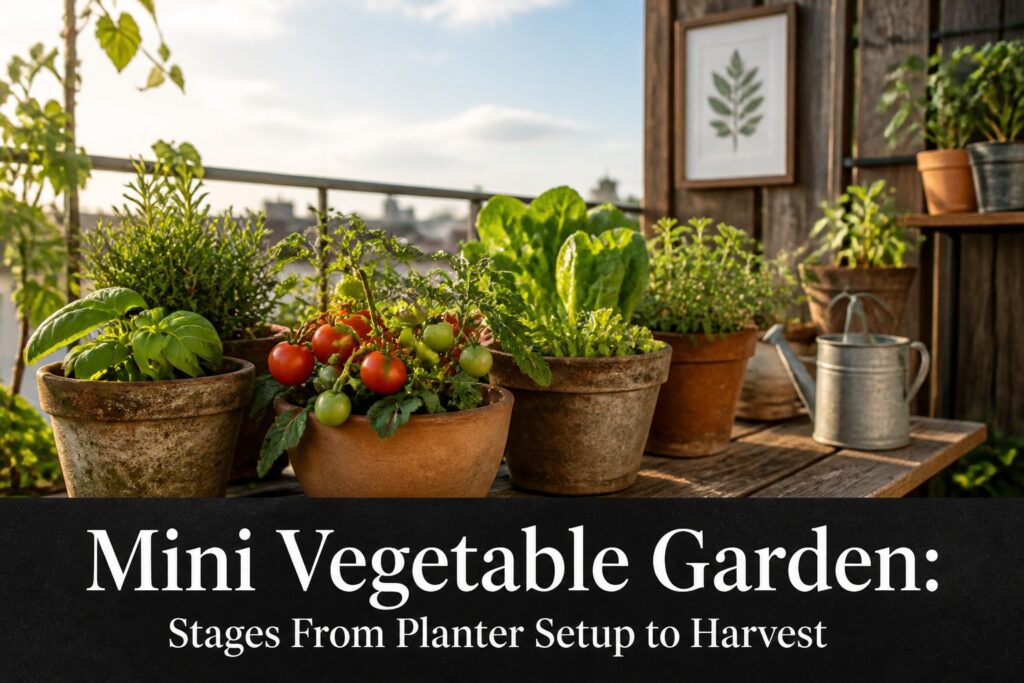
A mini vegetable garden is a container-based growing system designed for patios, balconies, and small outdoor spaces where ground soil is not available.
Most failures come down to drainage, not neglect: a pot without holes becomes a pond after one rain, and roots rot before the leaves show distress.
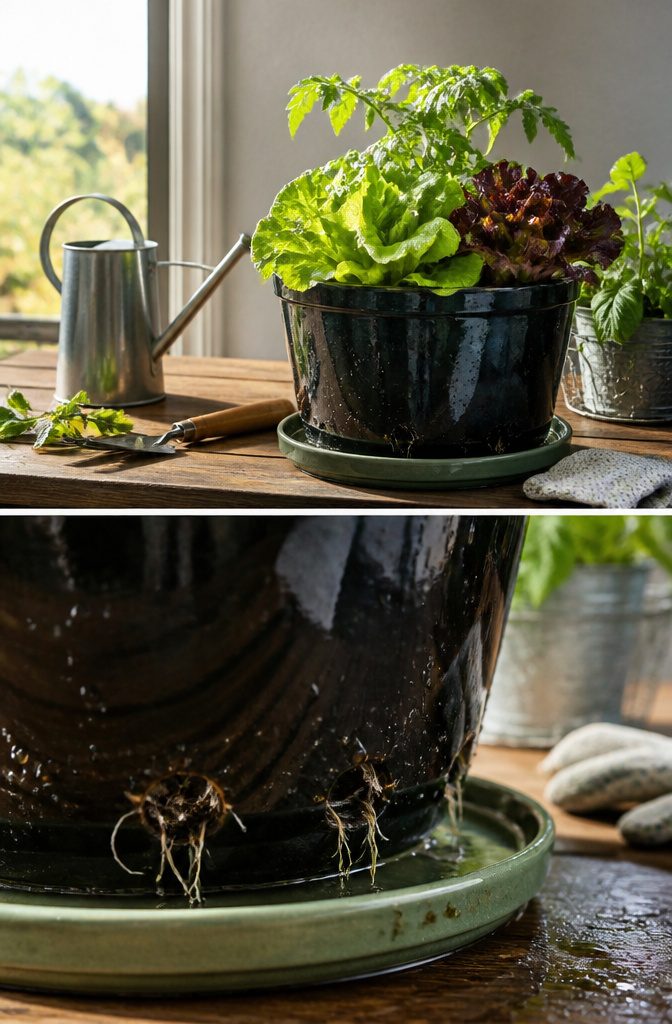
I drill my own when a solid-bottomed planter is all I have, then pair it with a raised-grid saucer that keeps wood surfaces clean without drowning the plant.
Six to eight hours of direct sun is the minimum most vegetables need to produce anything worth harvesting, and a south-facing wall gives the strongest light if your space allows it.
[link-whisper-related-posts]Where to Put It
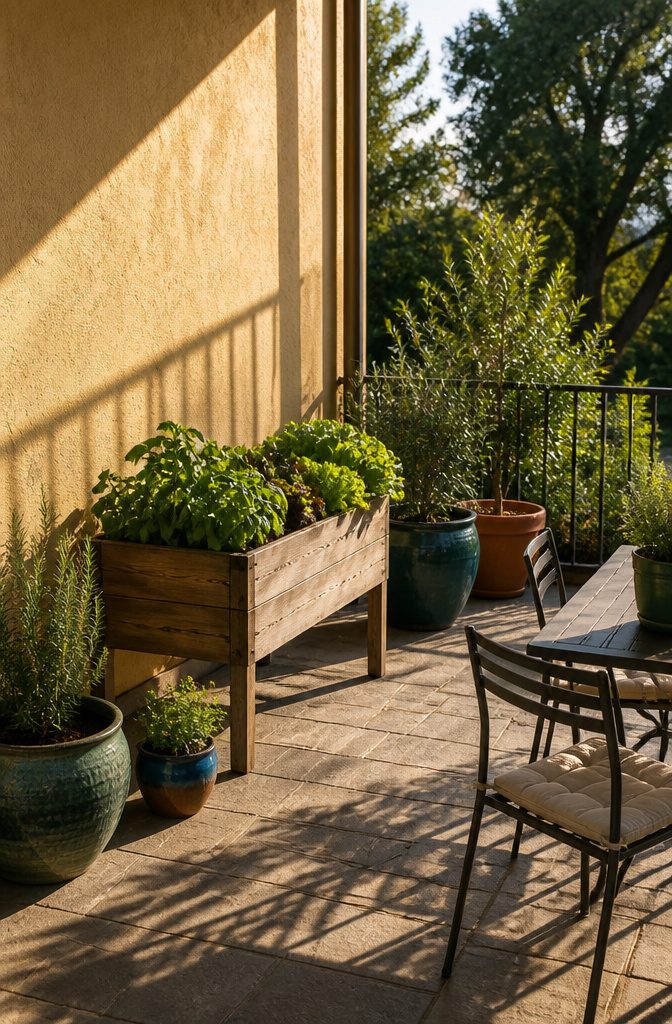
Six to eight hours of direct sun is the minimum most vegetables need to produce anything worth harvesting.
Fruiting crops like tomatoes, peppers, and squash sit at the top of that range, while peas, beans, and root vegetables can manage with closer to five.
If your patio or balcony only catches four or five hours, shift toward leafy greens and herbs, even the ones labeled full sun, basil included. They will grow slower and smaller, but they will grow.
Reading your space means checking it at three different times, morning, midday, and late afternoon, because a shadow that clears by ten is not the same as one that stays until two.
A south-facing spot gives you the strongest light, but walls and railings matter too.
Western exposure pulls in afternoon sun when the heat peaks, and that radiated warmth lingers after sunset, which tomatoes and peppers prefer over the gentler morning light that eastern exposure provides.
If you have a choice between the two, afternoon sun wins for anything that fruits.
Containers and Depth
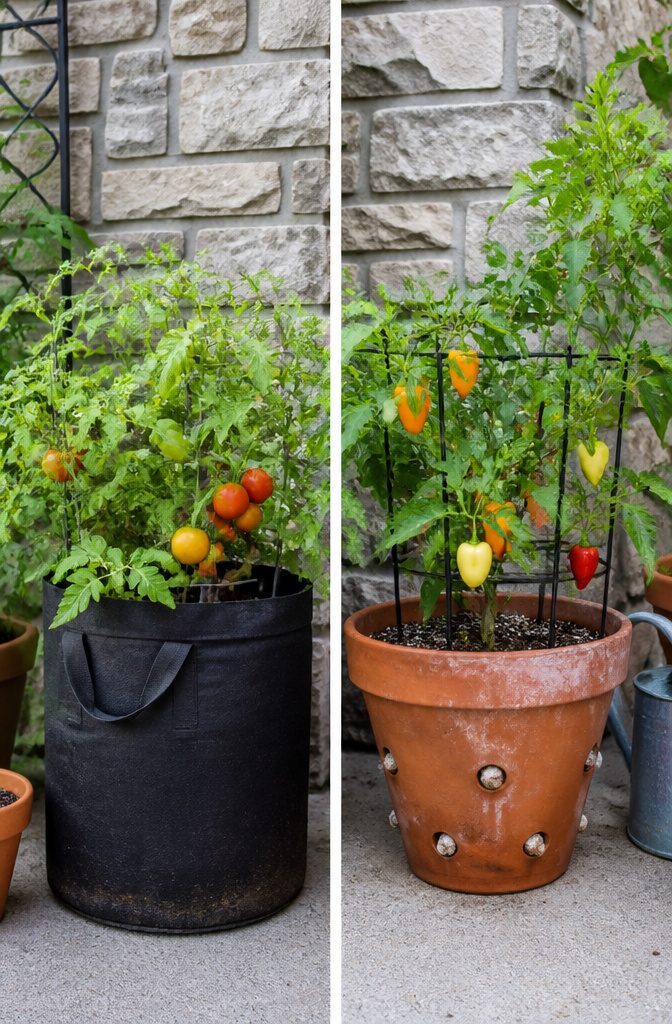
Most vegetables need at least 8 to 10 inches of soil depth to set roots properly, though a 5-gallon pail squeezes by for single plants if that is what you already own.
I would not buy one new for this purpose. The real decision is material, and each option costs you something.
Plastic is light, cheap, and easy to move when the sun shifts across a patio.
It also cracks after a season or two in hard sun. Ceramic looks finished enough to sit by a front door, but the weight makes it a commitment, and one dropped corner in spring means starting over.
Fabric pots drain fast and store flat in winter, which matters in a rental where closet space is already spoken for.
I keep a few on my own patio for exactly that reason, though they dry out faster than anything else and need checking more often.
Drainage holes are not a place to compromise.
A container without them turns into a pond after one heavy rain, and roots rot before you notice the leaves flagging. I drill my own if the pot comes solid-bottomed.
Saucers are trickier. The kind that holds a standing puddle keeps a deck stain-free but leaves the roots sitting in water; the raised-grid style lifts the pot clear and still catches what drips.
That is the version I would pick for a wood surface I do not own.
Soil That Works
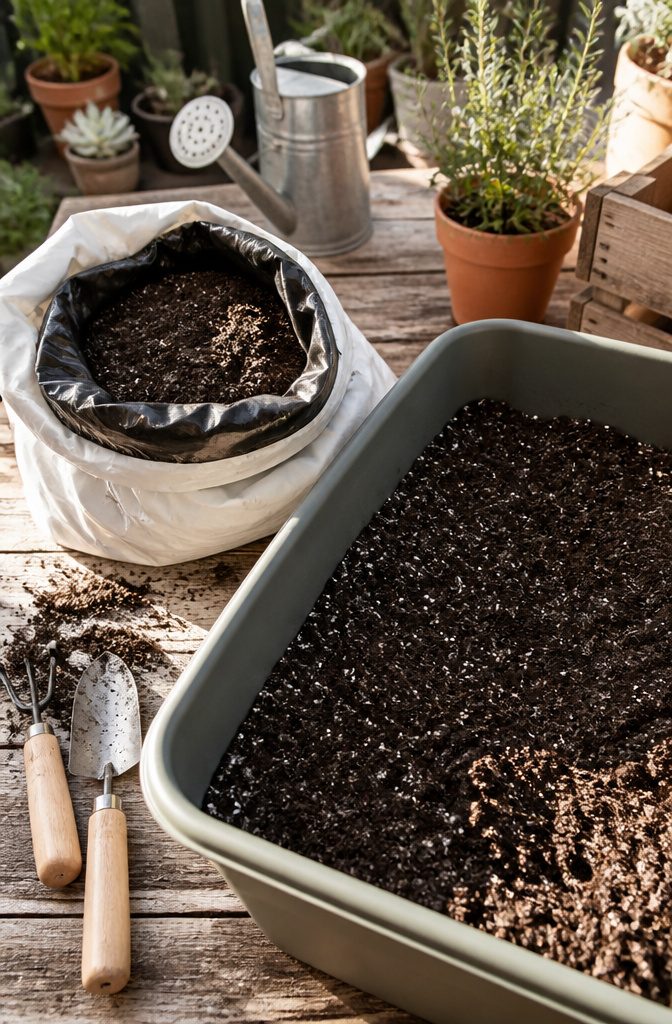
Bagged potting mix wins this choice every time, and the reason comes down to weight. Garden soil is too dense and heavy for containers; it compacts around roots and shuts out the air they need.
A proper potting mix stays light because it is built from materials like sphagnum peat, coir, perlite, or pine bark rather than native topsoil. That same lightness means water moves through fast enough that roots do not drown.
The perlite content is what tells you whether a mix drains quickly enough.
Visible white granules throughout the bag mean the manufacturer added enough to keep the structure open. If the mix looks uniformly dark and fine, it will likely stay too wet for vegetables.
A bagged mix also starts you off disease-free, which matters more in a mini vegetable garden than in open ground where soil biology balances itself over time.
I amend with compost when I am growing hungry crops like tomatoes, mixing it in at planting and topping up monthly through the season.
For quick greens or herbs in a small planter, I skip the compost and rely on the slow-release fertilizer already in the bag; they finish before the original nutrients run out.
Layout and Vertical Space
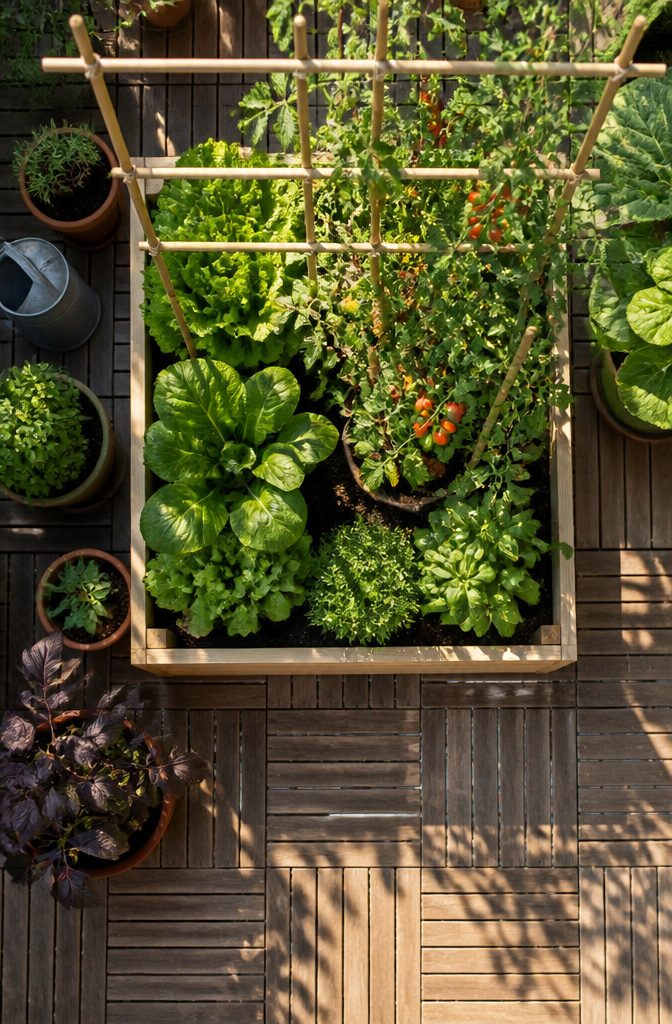
Cucumbers left alone will spread across the ground, but a simple trellis turns them upward and saves the footprint for something else.
Pole beans work the same way; a bamboo teepee or garden trellis lets them climb instead of bush out, and the more you harvest, the more they produce.
Cherry tomatoes do best in a hanging position where the vines drop and light reaches every cluster.
The one mistake that blocks light on lower plants is crowding the vertical layer too close to the north side of the arrangement. Tall climbers cast afternoon shade that starves everything underneath.
For a mini vegetable garden, I would set up a single 2×4 foot station before I would scatter individual pots.
A contained bed lets you plan square by square, the way pre-planned garden layouts do, with tall crops at the back and low ones forward.
Pots drift apart, dry unevenly, and waste the gaps between them. A station keeps the soil, the water, and the light in one deliberate plane.
What to Plant
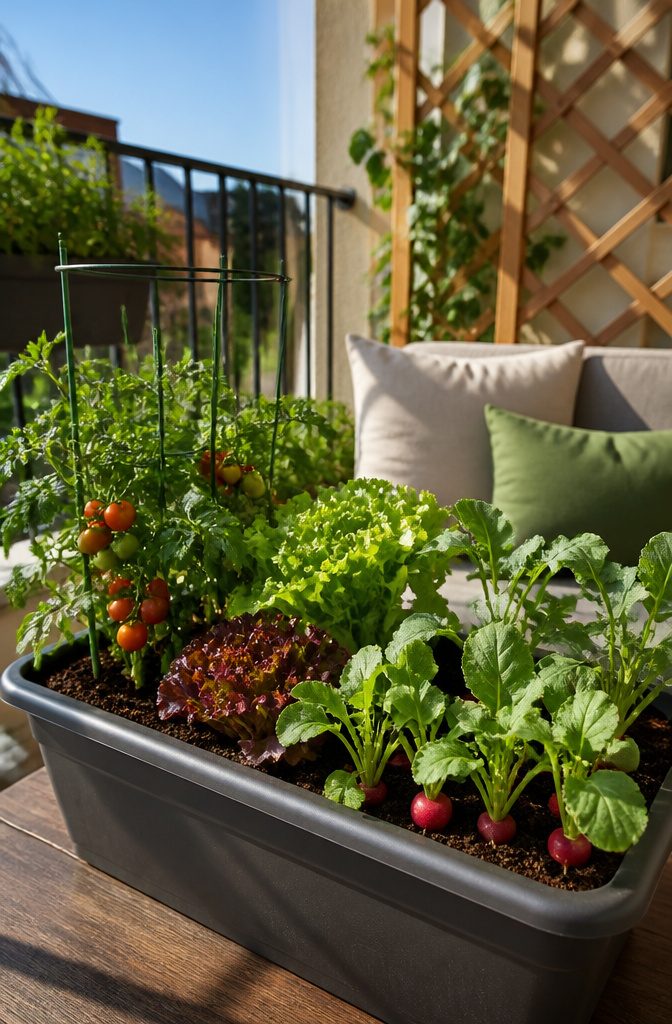
Cherry tomatoes and bush varieties like Sweetheart of the Patio or BushSteak stay compact enough for a planter without sprawling.
Lettuce fills gaps fast, and radishes deliver a harvest in 3 to 4 weeks, which matters when you need to see progress. Green beans, spinach, and carrots (look for Danvers or Nantes) round out the early-season lineup.
Zucchini and peppers need more room but pay it back in volume; one zucchini plant can overwhelm a small household by August if you let it.
Cucumbers climb unless you choose bush types like Spacemaster or Muncher, and herbs (basil, parsley, mint, thyme) edge the container without competing for root space.
Tom Thumb peas are the exception I would not skip. At 10 inches tall, they need no staking, survive down to 20°F, and fit where taller climbers would demand a trellis you do not have.
Height is disputed, one source says 18 inches, but the 10-inch figure tracks with the old 1850s variety bred specifically for pots.
Bush beans stay low; climbing peas and cucumbers want vertical support. I would pick bush over pole every time in a mini vegetable garden, because the space you save on infrastructure is space you get back for soil.
Water and Drainage
Consistency beats volume every time in a mini vegetable garden. Overwatering kills more container plants than underwatering, and the damage happens before you notice yellow leaves.
I check moisture with a finger pushed two knuckles into the soil. If it clings damp, I skip watering even if the surface looks dry.
Actual drainage matters more than the holes you drilled. A container that sits in a full saucer is waterlogged by noon; roots suffocate in that standing water.
I empty saucers within an hour of morning watering, every time. Lift the pot if you are unsure.
A fully watered 8- to 10-gallon container has real heft, and a dry one feels hollow. That weight check becomes habit faster than guessing from soil color.
Wilting is not a reliable signal.
A drowning plant droops exactly like a thirsty one, and adding more water finishes the job. The finger test takes ten seconds and removes the doubt.
Harvest to Keep It Growing
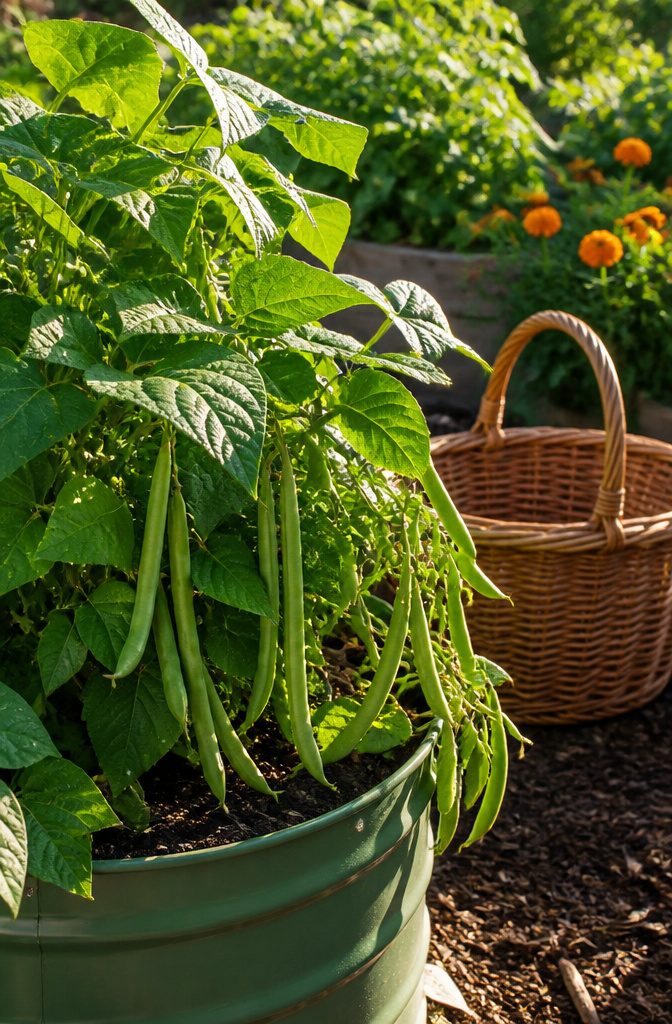
Regular harvest is what keeps a mini vegetable garden productive.
Picking fruiting vegetables while they are young signals the plant to set more, which matters for both determinate varieties that ripen their crop in one flush and indeterminate types that keep climbing and flowering until frost.
Lettuce works differently.
Once it bolts, that bitter, milky sap means the leaves have turned tough and the plant has shifted to seed production. I pull it and resow, especially in hot weather when the cycle speeds up.
Zucchini left on the vine too long turns woody and bitter, and the plant slows down, thinking its work is done. A single plant can produce several pounds over the season, but only if I stay ahead of it.
My weekly check starts with beans, which love to hide behind leaves. I lift foliage and check the back side of every plant, or I miss pods that turn starchy overnight.
For leafy greens, I cut outer leaves and let the center keep growing, though I know crowded plants lose steam faster and need replanting sooner than spaced ones.
Container Gardening on Patios and Balconies
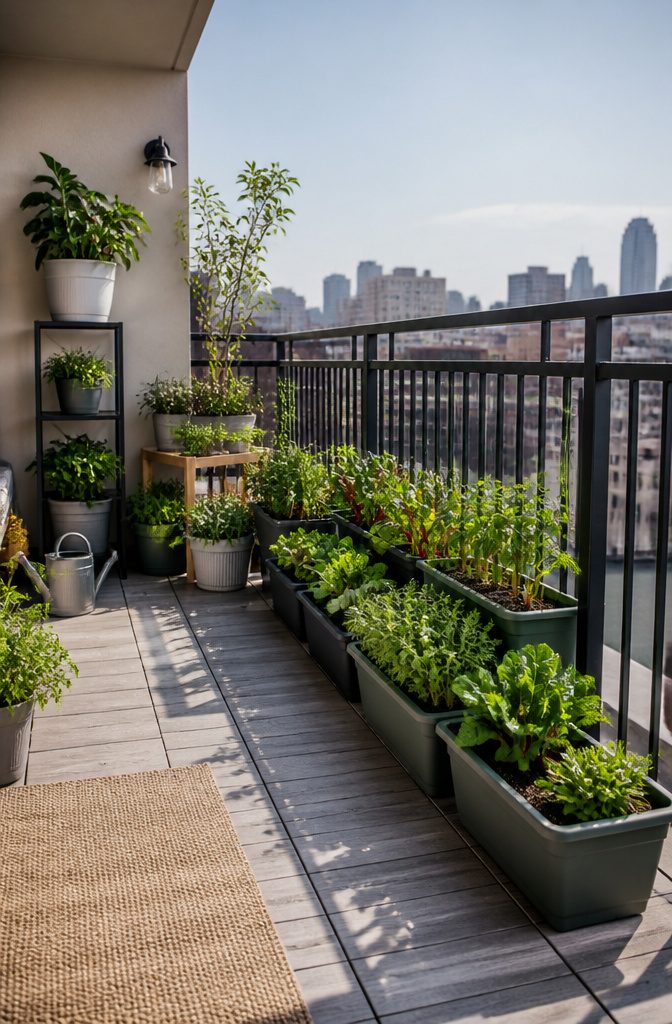
Most vegetables want at least six hours of direct sun, and eight is better.
Lettuces and herbs can manage with about three hours or bright indirect light, so a north-facing balcony is not automatically out. The real limit is weight.
A fourth-floor walk-up means terra cotta and saturated soil are liabilities I would skip; resin or fiberglass pots shave pounds without giving up root space, and a 12-inch diameter is enough for peppers or compact tomatoes.
Wind strips moisture faster on balconies than at ground level, so I would line the railing with boxes rather than tall pots that catch gusts and dry out by afternoon.
The upside is mobility. Containers roll or lift to chase sun as the season shifts, and they retreat under cover when frost threatens.
A driveway or unused corner of patio works the same way: pavement becomes growing space because the pot holds the soil, not the ground beneath it.
Dwarf varieties are built for this. They keep the compact habit that lets a pepper plant live in a pot without looking starved, and the fruit colors as it ripens.
I would plant for the light I actually have, not the light I wish for, and I would treat every container as temporary: here for the season, moved when conditions change.
Vertical Setups and Trellises
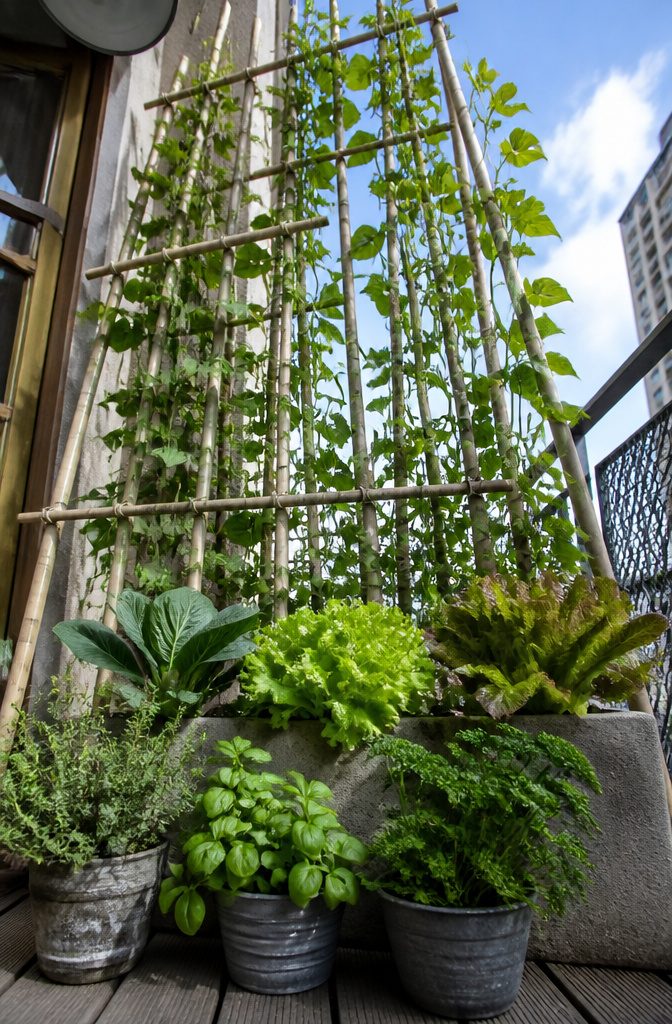
Wall-mounted planters and free-standing supports each solve a different problem in a mini vegetable garden. A wall-mounted setup keeps the footprint at zero, which matters on a narrow balcony where every inch of concrete counts.
I would skip anything made of untreated pine in that spot; the wet-dry cycle from watering rots it in a single season.
Powder-coated metal or cedar holds up, and the upfront cost difference pays back the first time you are not rebuilding the frame in April.
For tomatoes, a basic cage is enough if you are growing a determinate variety that tops out at bush height.
Indeterminate vines outgrow those rings by July and need either a tall stake or a string trellis you can weave as they climb.
Beans are simpler. Pole beans want a bamboo teepee or garden trellis to wrap themselves around, and the harvest is cleaner when the pods hang free instead of dragging through soil.
Cucumbers grow fast enough to swamp a weak support, so match the structure to the vine: a single string works for the parthenocarpic types bred for greenhouse training, but standard slicing cucumbers need mesh or wire they can grip with their tendrils.
An A-frame of bamboo and wire mesh does double duty, with the slanted sides giving the vines air and sun from two angles.
Plant leafy greens underneath and they get the dappled shade that keeps lettuce from bolting in summer heat.
Compact and Dwarf Varieties
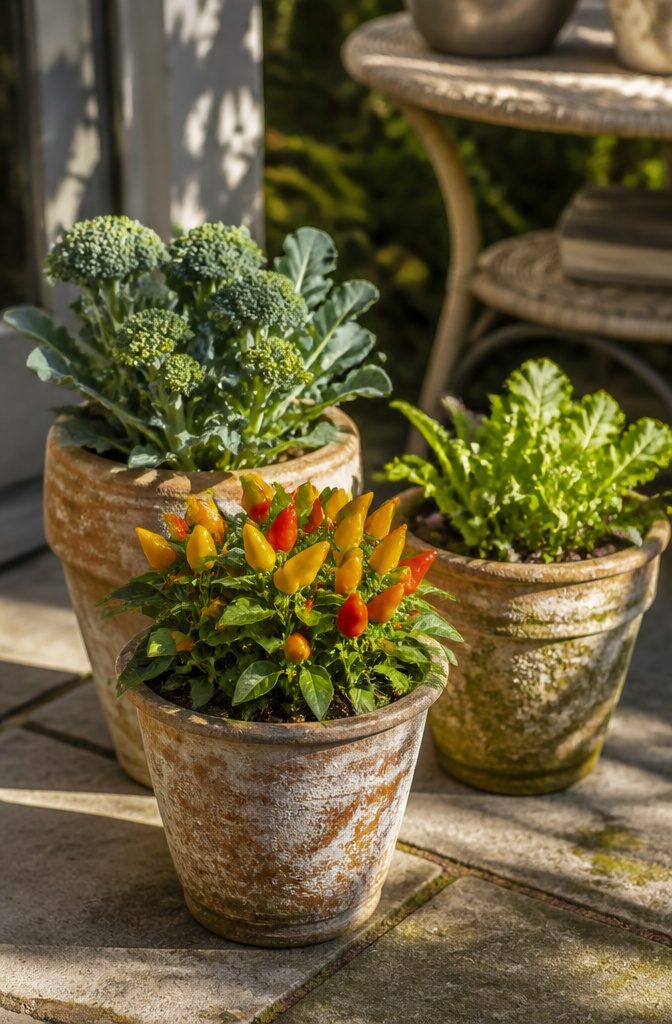
Miniature vegetable varieties bred for containers are where a small garden stops feeling like a compromise and starts outperforming.
Compact, bush, and container varieties are the three words that actually mean something on a seed packet, and the plants that lack them will outgrow a pot before July.
Full-size tomatoes or standard broccoli need root space and elbow room a planter cannot give; bush-types stay manageable and keep producing.
Baby broccoli like Waltham stays under 20 inches and sends up side shoots for weeks after the first cut.
Mini peppers such as Sweet Golden Baby Belle top out at three or four inches of fruit and grow in tight, ornamental bunches that fit a decorative pot.
Tom Thumb peas hit 18 inches full height and still bear heavily enough to snack on through summer.
Finding seeds that deliver on the label takes some care. Burpee lists a "Miniature Baby Vegetables" section, and Pinetree Garden Seeds sells small packets at low cost, which suits a gardener trying several varieties without committing to fifty of each.
I would skip anything described only as "great for small gardens" without the specific growth habit named; that phrase gets stretched to cover plants that need more support and space than a planter allows.
The varieties above, though, earn their spot in a mini vegetable garden by staying small and yielding full flavor.
Soil and Fertilizer Choices
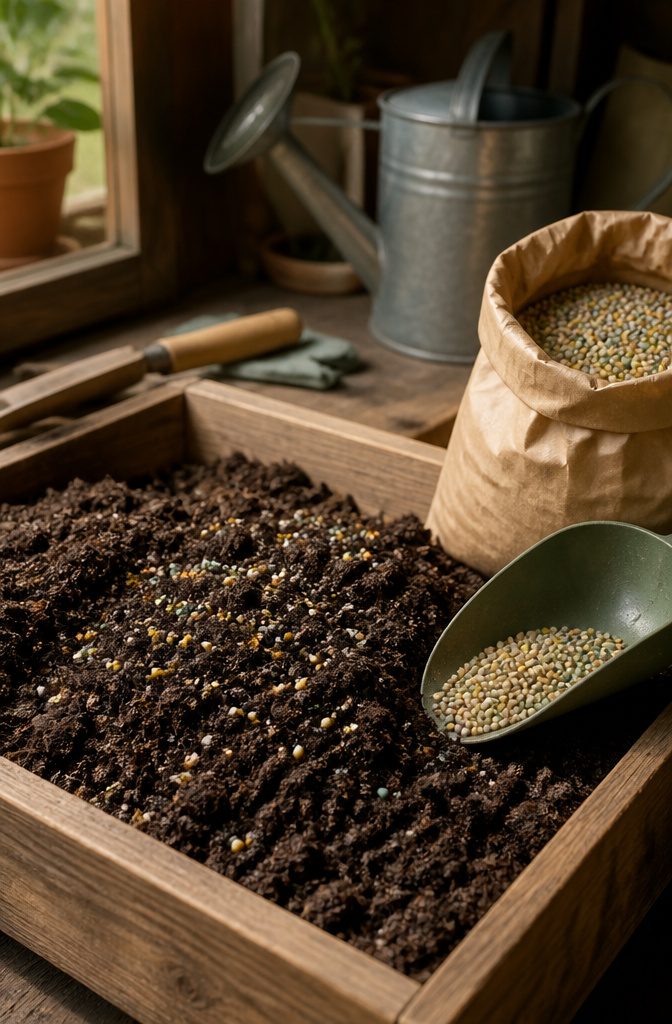
Commercial potting soil is the only base worth starting with for a mini vegetable garden. Garden soil is too heavy and dense for containers; roots need air and water moving freely, and bagged mix is blended for exactly that.
I stir in a handful of compost at planting for the biology, then add a slow-release fertilizer so nutrients feed in every time I water.
The overfertilizing trap is real: more nitrogen on tomatoes grows leaves, not fruit.
I learned that the hard way one season with a lush, towering plant that gave me three tomatoes total. Slow and consistent beats a jolt of high-concentration liquid every time.
Top it up periodically as the nutrient bank depletes, but keep the release gentle. Organic options work fine here; the release rate matters more than the label.
Frequently Asked Questions
What vegetables can I grow in a small garden?
Cherry tomatoes, lettuce, radishes, green beans, spinach, carrots, zucchini, peppers, cucumbers, and herbs like basil, parsley, mint, and thyme all work well in a mini vegetable garden.
Compact varieties bred for containers, such as Tom Thumb peas, Sweet Golden Baby Belle peppers, and bush beans, stay small enough to thrive in limited space while still producing full-sized harvests.
How much sunlight do vegetables need?
Most vegetables need 6 to 8 hours of direct sun daily, with fruiting crops like tomatoes and peppers at the higher end. Leafy greens and herbs can manage with 3 to 5 hours, making them better fits for partly shaded patios or balconies.
Check your space at morning, midday, and late afternoon, because shadows that clear by 10 a.m. behave very differently from ones that linger until 2 p.m.
What is the best way to water container plants?
Check soil moisture with your finger pushed two knuckles deep; water only when it feels dry at that depth, not just on the surface.
Empty saucers within an hour of watering so roots do not sit in standing water, and lift the pot to gauge weight if you are uncertain.
Wilting means either too much or too little water, so the finger test removes the guesswork.
How do you make a mini vegetable garden?
Start with a container that has drainage holes and holds 8 to 10 inches of potting mix, then position it where it will get the right light for what you want to grow.
Fill with bagged potting mix rather than garden soil, plant compact or dwarf varieties suited to containers, and water consistently while checking moisture before adding more.
A single 2×4 foot contained bed keeps soil, water, and light in one deliberate plane rather than scattering individual pots.
What is the 70/30 rule in gardening?
The growing guidance here focuses instead on matching plant choices to actual light conditions, using proper drainage, and selecting compact varieties that fit container constraints.





