

These ideas run from free pinecones gathered before the first snowfall to a queen-sized plush coverlet, with most landing in the craft-supply to small-furniture range.
[link-whisper-related-posts]1. Evergreen Branches
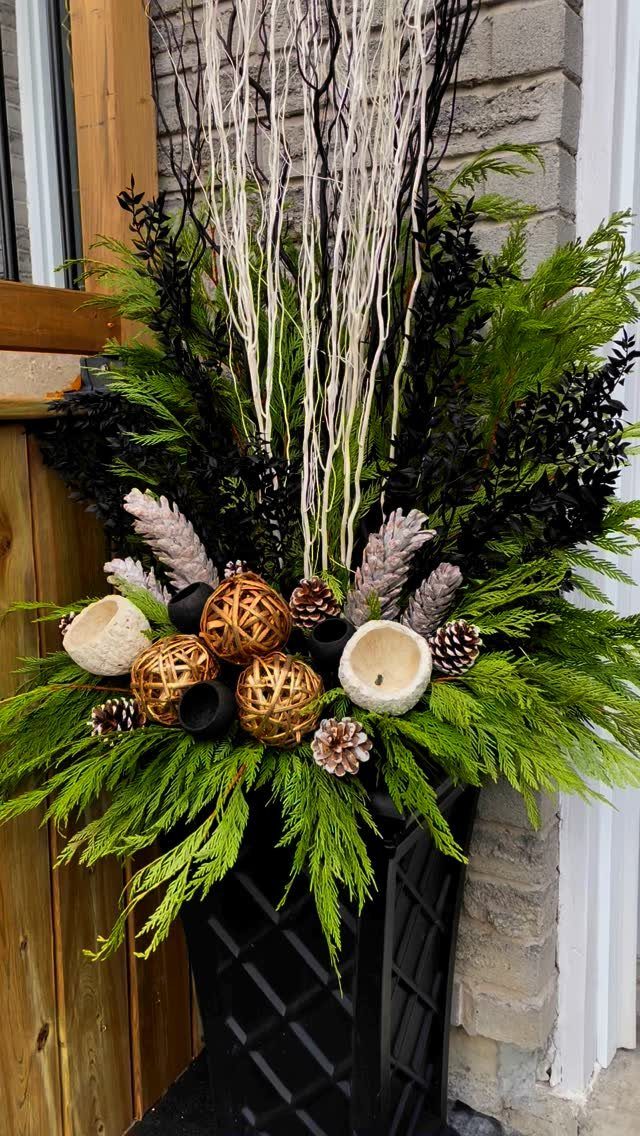
Evergreen branches in a planter give you structure that lasts from January through March without any red or green Christmas signaling.
Mixing live needles with white birch twigs and a few pinecones gives you a winter arrangement that avoids the holiday-leftover look; the twigs matter more than the woven spheres, which are optional.
Before you buy, check whether your porch or entryway stays below freezing. Live evergreen cuts turn brittle and drop needles in hard cold; faux stems or preserved boxwood handle those spots better.
A black urn against brick works with almost any exterior paint, though I would skip it if your siding is already dark green or forest brown, where the whole thing disappears.
2. Chunky Knit Blankets
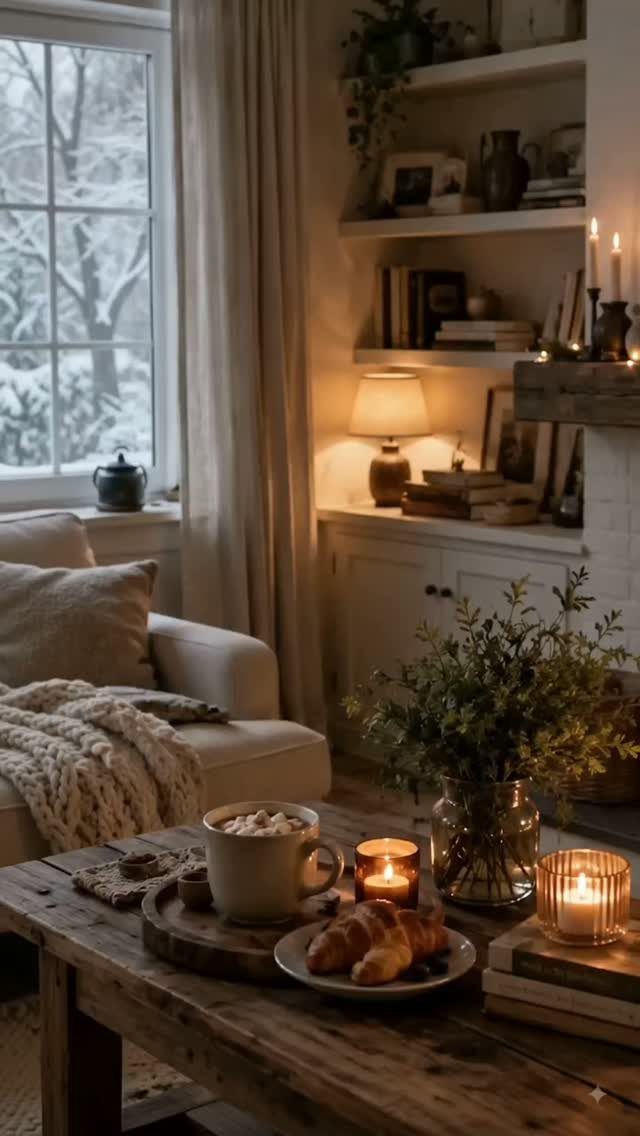
A chunky knit blanket is the fastest way to make a room feel like winter without touching a storage bin of Santas.
Throws come in standard sizes; measure your sofa first to know whether you want lap coverage or something that reaches your feet.
Acrylic knits wash in a machine; wool or merino blends need dry cleaning or a very gentle cold cycle, and the price jump reflects the material, not just the brand.
I would buy acrylic for a house with kids or dogs, and save the good wool for a reading chair that sees coffee and little else.
3. Twinkle Lights

Soft lighting keeps a room usable in late afternoon without turning on every overhead fixture and killing the mood.
Battery or plug-in both work here. Battery sets let you skip the outlet hunt but need regular battery swaps; plug-in stays lit but requires a nearby socket and a cord management plan.
I would choose battery for a window above a sink or a door wall where cords would dangle in the glass.
Check whether your set includes a timer; nightly runs on a short cycle stretch January batteries across most of the month.
4. Using Baskets
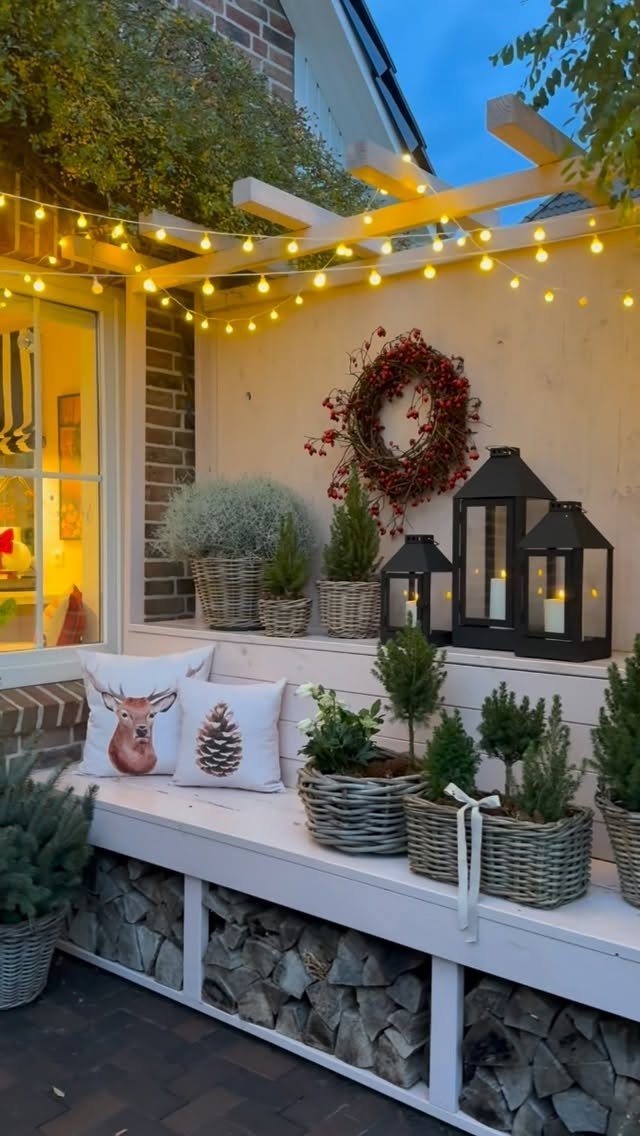
Baskets warm up winter decor faster than almost anything else because they bring in texture that reads as storage, not ornament.
Wicker or rattan handles moisture poorly, so these are best under cover on a porch with a roof, not open to rain and snow.
If your bench sits exposed, seagrass or polypropylene woven baskets survive the wet season and cost about the same for a medium size. Either way, tuck a plastic saucer inside to catch drainage and save the wood surface beneath.
5. Plush Bedding
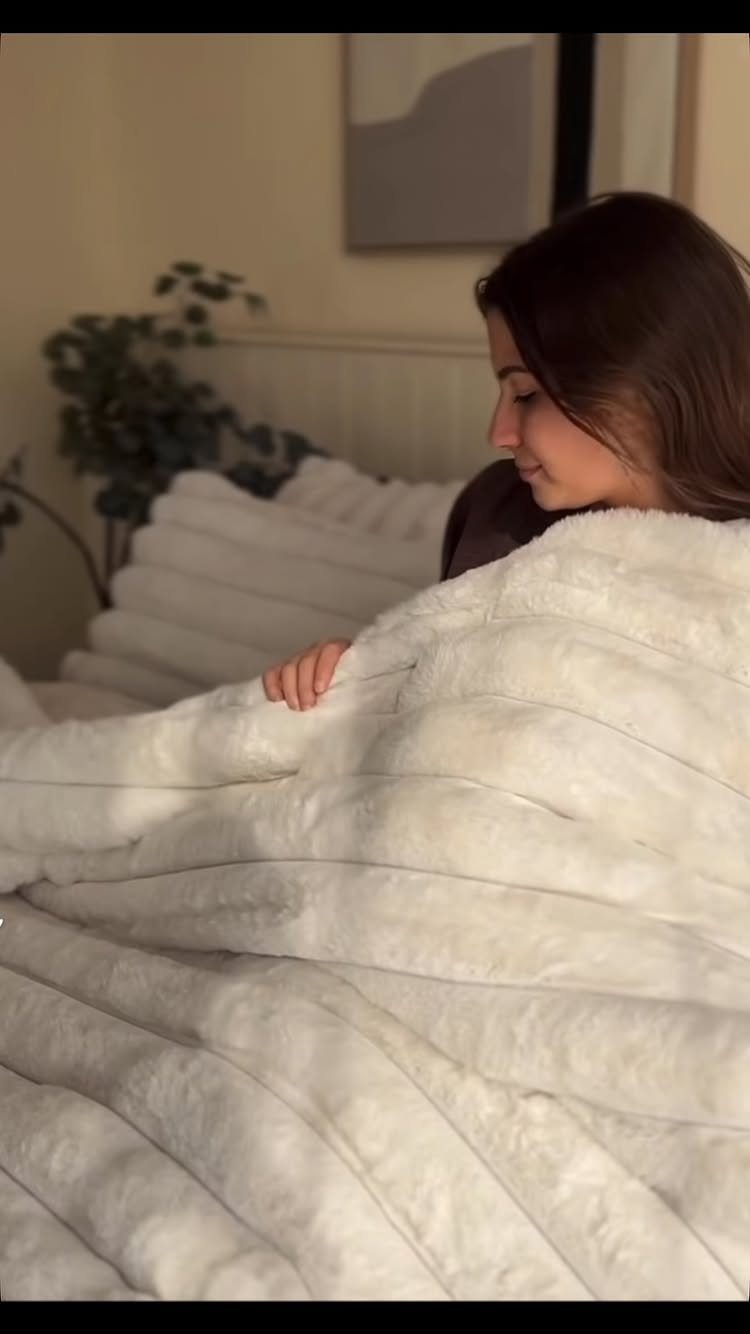
Plush bedding makes the most sense in winter because you are actually in it longer, dark mornings and early evenings included.
A ribbed or channel-stitched plush layer over your regular duvet lets you add or subtract warmth without swapping the whole setup.
Most faux fur or sherpa throws come in queen-sized coverlets; the weight is what matters, and enough heft to feel tucked in without trapping too much heat is the balance to hit if your bedroom runs warm.
I would skip the white if your household includes makeup, coffee, or pets with outdoor access, and go for charcoal or camel instead.
6. Winter Wreath

A winter wreath carries your door through January without the dated look of leftover holly and jingle bells.
Grapevine dries stiff and holds its shape in cold humidity better than foam bases, which crack after a few freeze-thaw cycles.
Faux snow on the greenery is fine outdoors but sheds indoors; if you want this inside on an interior door or above a mantel, I would choose the unfrosted version or spray your own with a fixative to cut the fallout.
Most grapevine wreaths this size come bare or finished; the bare ones let you build your own, while finished versions save the afternoon but cost more.
7. Natural Elements
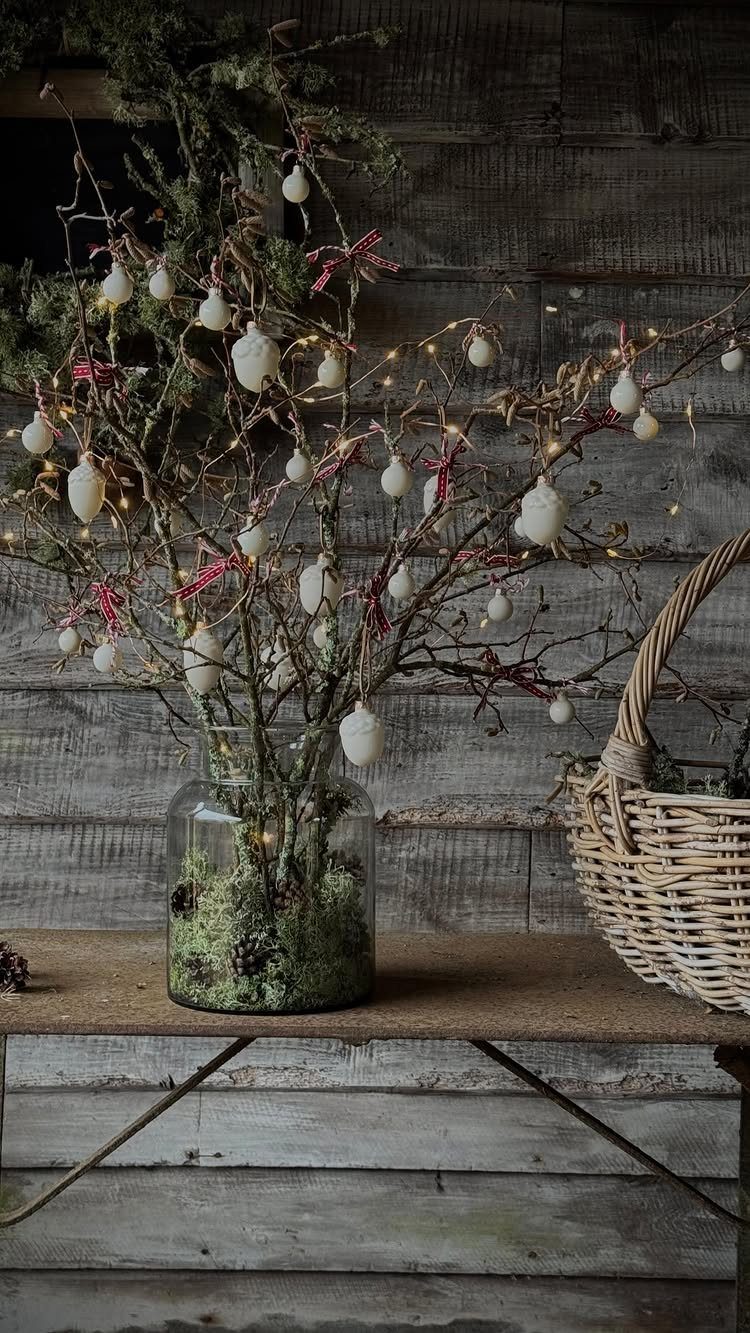
Moss, bare branches, and pinecones in a glass jar give you winter texture without the holiday color scheme.
The white ornaments and fairy lights add just enough polish to keep it from looking like something gathered from the yard, though it basically is.
I would use a wide-mouth jar so the branches stand without crowding; a narrow neck tips everything toward a bouquet shape that fights the loose, gathered look.
Check that your branches are fully dry before adding the moss, or the damp transfers and grows mold in the glass by February.
8. Cozy Nooks
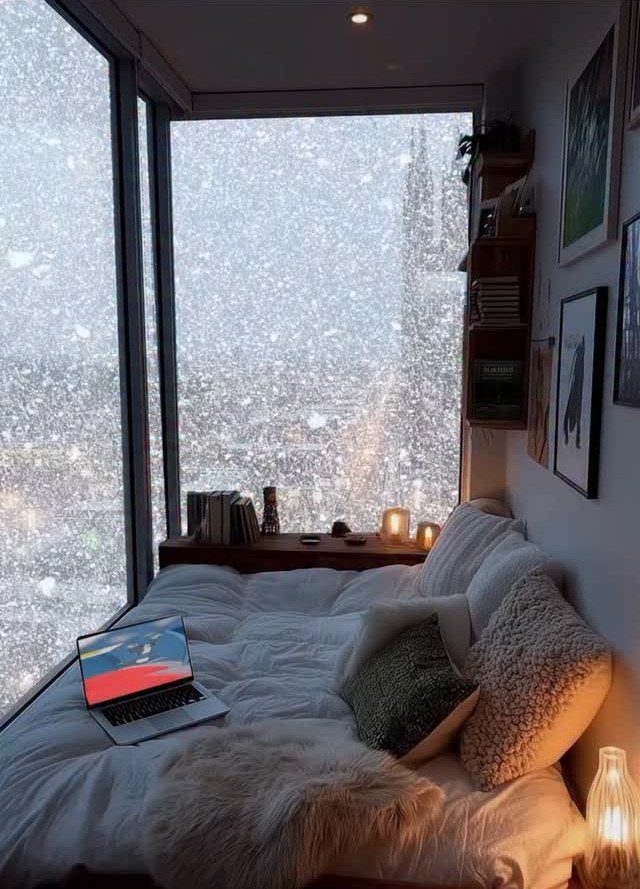
A floor bed against a window turns the coldest months into the best reading season, snow falling behind glass included.
A daybed mattress or even a thick futon on a low frame reads as temporary, which is the point: it moves back out when the light returns.
Multiple pillows matter more than matching ones; layer what you already own.
Candles on a nearby surface need a stable base and distance from the bedding; I would choose battery-operated tapers here since a dozing reader and open flame make me nervous.
A tray table or low console is the piece that matters here; the laptop that sits on it is optional.
9. Dried Flower Kitchen Countertop Arrangement
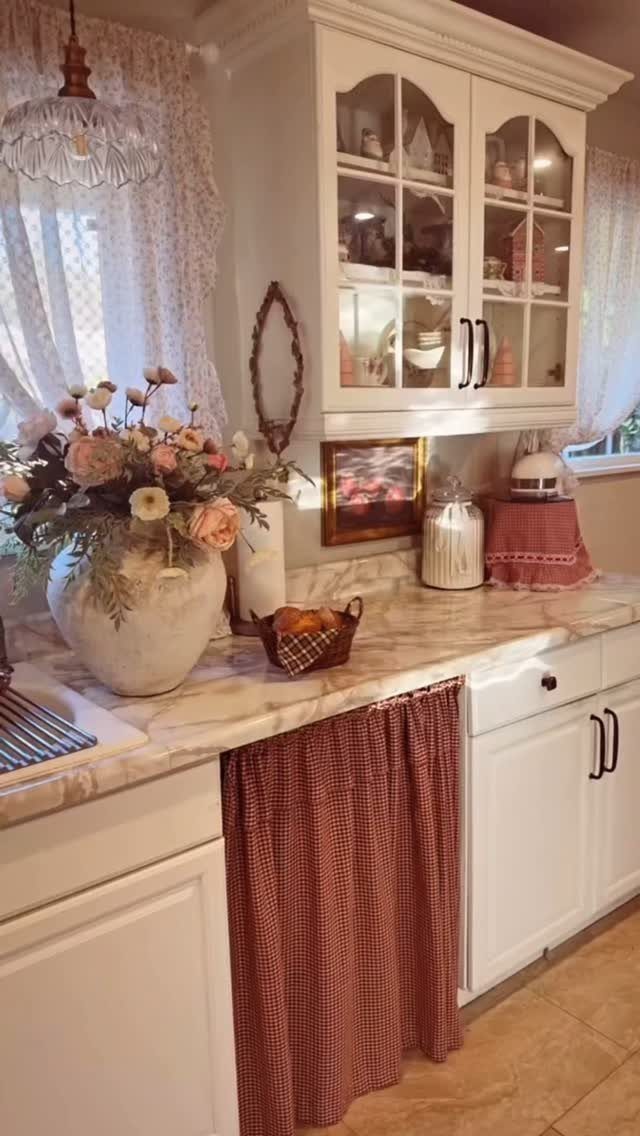
Dried flowers in a ceramic vase on a kitchen counter keep color through January without the maintenance of a living arrangement.
Stems chosen for height and muted tones read against marble without competing; that pairing does more work than the flowers alone.
A ceramic vase with some weight to it stays put when someone bumps the counter reaching for the bread basket. I would avoid anything too tall here, since a kitchen is a working space and sightlines across it matter.
The small basket and glass canister nearby show the trick: the flowers are part of the counter’s ordinary life, not a staged moment.
10. Snowy Landscape Wall Art

A snowy landscape painting above a console table gives you winter atmosphere that lasts past the season without reading as holiday decor.
A blue wall makes white and gray tones stand out; on a neutral wall I would look for a frame with some warmth so the whole thing does not go cold.
2 small plants in metallic bowls below echo the frame and keep the scene from feeling too northern or too spare.
Gold reads warmer than silver against snow tones, though either works if you carry it through the frame or another object nearby.
I would hang this at seated eye level, not standing; a console table is a place you pass, not a wall you face.
11. Metallic Winter Accents

Metallic branches and candleholders reflect light during the shortest days of the year, which is their real function; the glamour is a side effect.
The photo mixes gold, silver, and crystal without matching, which keeps it from looking like a single store display.
Mirrored surfaces multiply whatever light you have, but they also show every fingerprint and dust speck. I would place a mirrored sideboard away from high-traffic paths, or resign myself to weekly wiping.
The ceramic vases in white break up the metallic enough that the room does not read as costume jewelry; without them, the look tips toward hotel lobby.
Battery candles in the holders solve the dripping wax problem and read fine behind glass.
12. Snowflake Accent Pillow
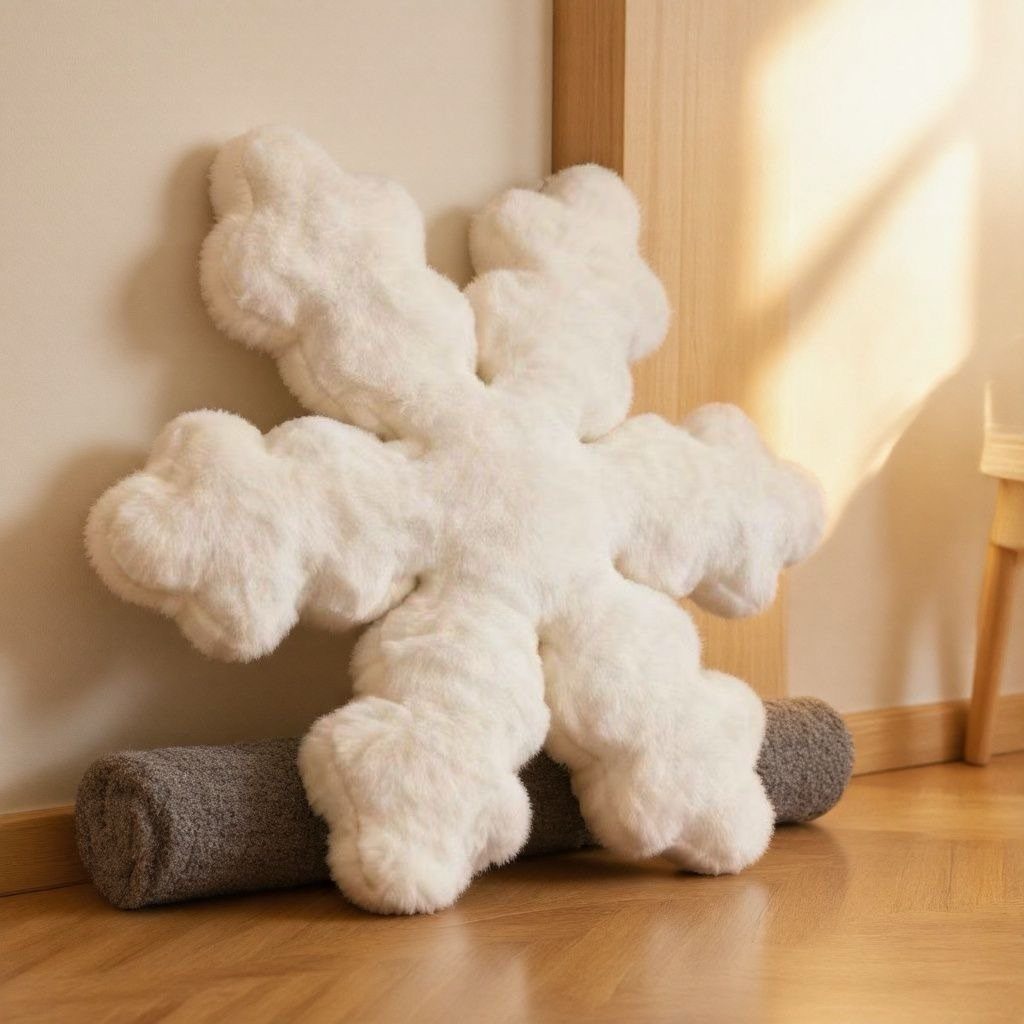
A snowflake-shaped pillow in thick plush reads as texture first and motif second, which is why it works after Christmas.
A pillow this large works as floor seating; propped against a wall or doorframe it becomes a casual lounging spot for a household that does not take its decor too seriously.
White plush shows wear fast, so this is a better choice for a guest room or a corner that sees occasional use than for a sofa that gets daily traffic.
I would shake it outside weekly to keep the pile from matting, and spot-clean only unless the tag says otherwise.
The gray rolled blanket or throw nearby gives you the practical color for actual napping; the snowflake is the visual interest.
Transitioning Decor
I would start with the Christmas-specific pieces that read as holiday no matter what: anything with Santa, reindeer, or printed greetings comes down first. Red and green together signal Christmas more than either color alone, so those pairings go next.
What stays is anything that already reads as winter woods: bare branches, white tones, wood textures, pinecones without velvet ribbon.
Flocked trees slip from Christmas to winter with nothing more than removing ornaments; I have seen this work in entryways where the tree shape itself carries January through February.
The same pieces that looked festive in December read as quiet texture in January if you strip the glitter and metallic accents.
The gradual part matters less than the order. One afternoon of sorting gets you there; the slow introduction of winter-specific replacements is optional.
Most of us do not need more stuff. We need the holiday stuff to stop shouting so the room can settle.
In fact, the weeks after the holidays are the perfect time to lean into a different kind of cozy—one that feels calm, peaceful, and seasonally inspired without a single ornament or strand of tinsel in sight.
Maintaining Warmth
Warmth in winter is mostly light and weight. Overhead fixtures at full brightness feel clinical at 4:30 PM; dimmed lamps and the twinkle sets from earlier entries do the heavy lifting.
I would keep a consistent bulb temperature across a room, mixing warm and cool white makes the space feel broken rather than layered.
Scent carries more than we admit. Vanilla, cinnamon, and cedar read as winter rather than Christmas once the tree is gone; a single candle on a kitchen counter does what a room spray cannot.
Anything labeled as holiday-specific I would skip, reaching instead for the plain versions of those same notes.
Textiles across rooms need to talk to each other.
A chunky knit in the living room and a plush layer on the bed share the same purpose; if the tones are related, the house feels intentional rather than decorated room by room.
Shop sales for the coordination, not the individual piece.
Budget-Friendly Tips
Post-Christmas sales run from December 26 through early January, and the winter-neutral stock goes last. Flocked garlands, white ornaments, and bare-branch wreaths sit on shelves while the red and green clears; that is your window.
I would check craft stores and home chains in the first week when return volume is highest and the markdowns are deepest.
The pieces that transition save the most money.
A flocked tree purchased for Christmas becomes your winter greenery once the ornaments are boxed. Pinecones gathered before the first snowfall cost nothing and dry stable; the same ones in a bowl in December stay through March.
Buying anything specifically labeled winter decor makes little sense if a Christmas version already exists in more neutral tones.
A DIY wreath built from branches and wire costs next to nothing and reads as winter rather than leftover holiday. Grapevine bases, birch twigs, and dried stems are available year-round at craft supply prices.
Frequently Asked Questions
What are some good winter decorations that are not Christmas?
Evergreen branches mixed with white birch twigs and pinecones give you structure through March without any holiday signaling. Chunky knit blankets, plush bedding layers, and baskets in seagrass or polypropylene add warmth through texture rather than color.
I would keep the palette to whites, grays, wood tones, and muted greens; anything that reads as winter woods rather than wrapped presents.
What to replace Christmas decor with?
Start by removing anything with Santa, reindeer, or printed greetings, then pull out red-and-green pairings since those two together signal Christmas more than either alone.
A flocked tree slips into winter decor just by boxing up the ornaments; the tree shape itself carries January through February.
What do you decorate for in January?
January decorating is about making a home feel settled after the holiday noise, not about a new theme.
Layer neutral textiles like chunky knits and woven throws, add warm light through dimmed lamps and twinkle sets, and bring in natural elements such as evergreen wreaths or bare branches.
I want quiet texture that lets the room breathe, not a replacement holiday.





