
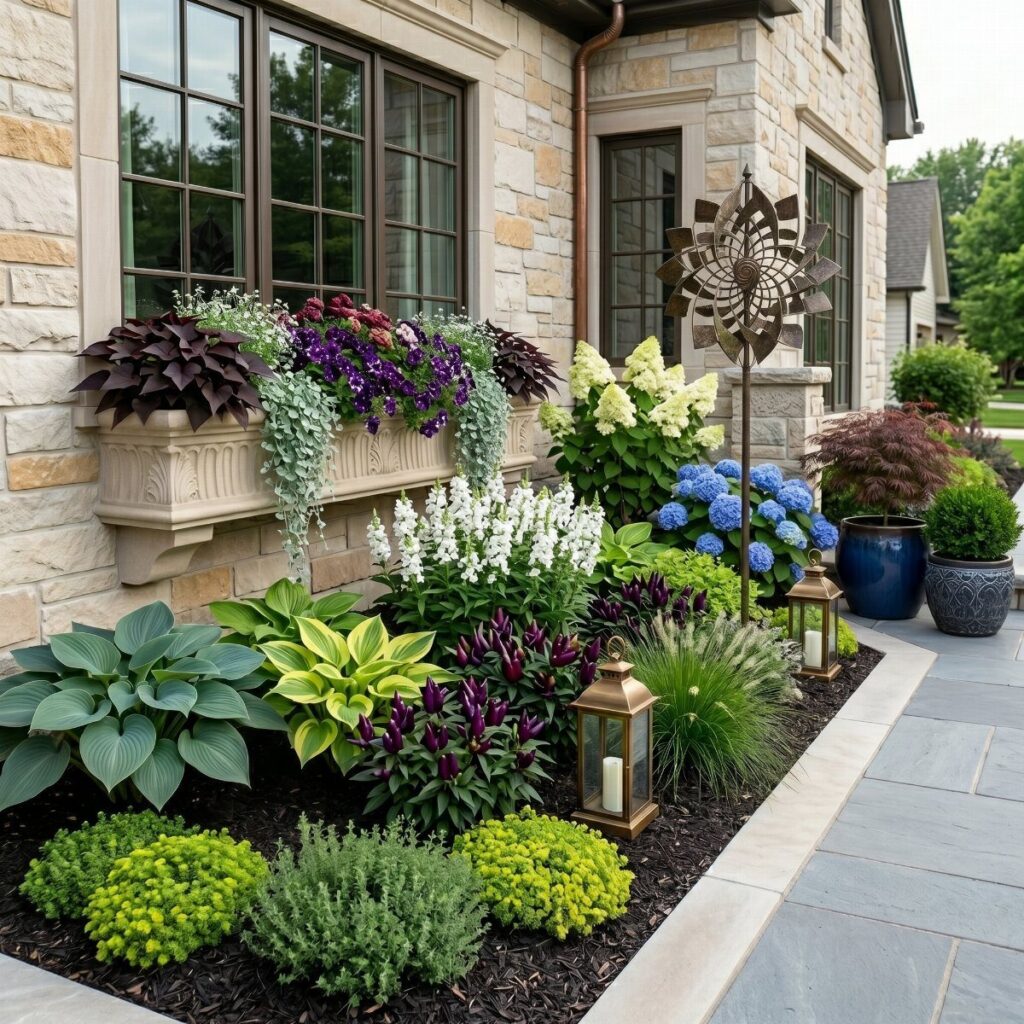
A front flower bed can run from a weekend with a shovel to a mason’s timeline, from a few pots flanking a door to mortared stone at seat height, and the ideas below cover every stop along that range.
What decides which idea belongs in your yard is whether you’re working with existing soil or building above it, since raised beds, containers, and masonry walls each solve a problem that planting straight in the ground cannot, and this list includes all three.
[link-whisper-related-posts]1. Low-Maintenance Native Plants Flower Bed
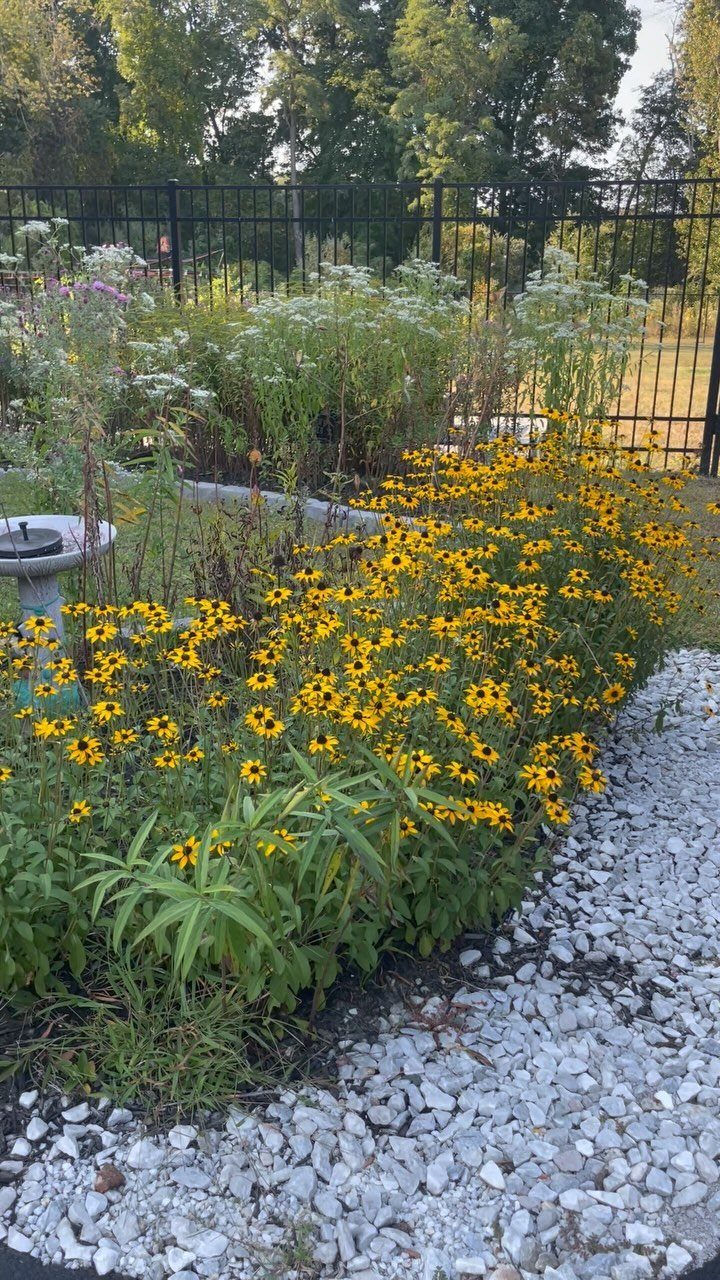
Native plants mean less watering, less feeding, and less replacing what winter killed. I check my county extension’s plant list before I buy; what counts as native in one state can struggle in the next.
Black-eyed Susans handle most of the Midwest and Northeast without fuss, and they reseed enough to fill gaps by year three.
A gravel edge works as a simple border that keeps lawn grass from creeping in. Limestone chips are what I reach for here; they stay put and the pale color reads clean against dark soil.
Check whether your municipality requires a barrier cloth underneath; some do, and skipping it means weeding gravel out of your soil later.
2. Layered Planting
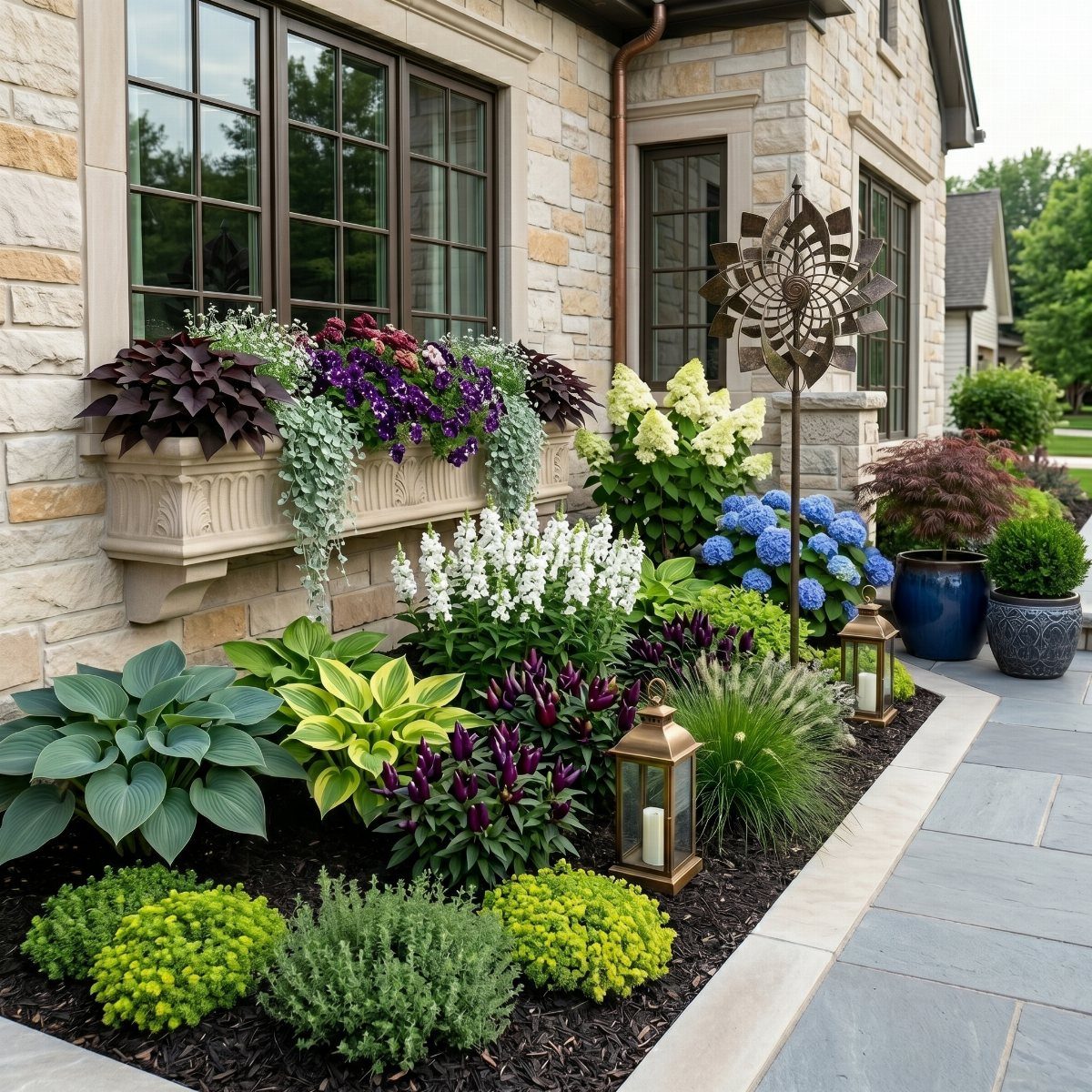
Layered planting borrows from forest edges: short plants in front, medium in the middle, tall at the back. For three clear tiers, a bed needs depth front to back; less and the layers blur together into one flat mass.
This suits a reader with a weekend and a shovel more than one with a tiller and a truckload of soil.
The stone house gives a neutral backdrop that makes green foliage read as color; on painted siding I would push for more flowers and less leaf, since the contrast works harder.
Solar lanterns stake in after planting and need no wiring; I find them at hardware stores in the garden aisle.
3. Flower Bed to Support Pollinators
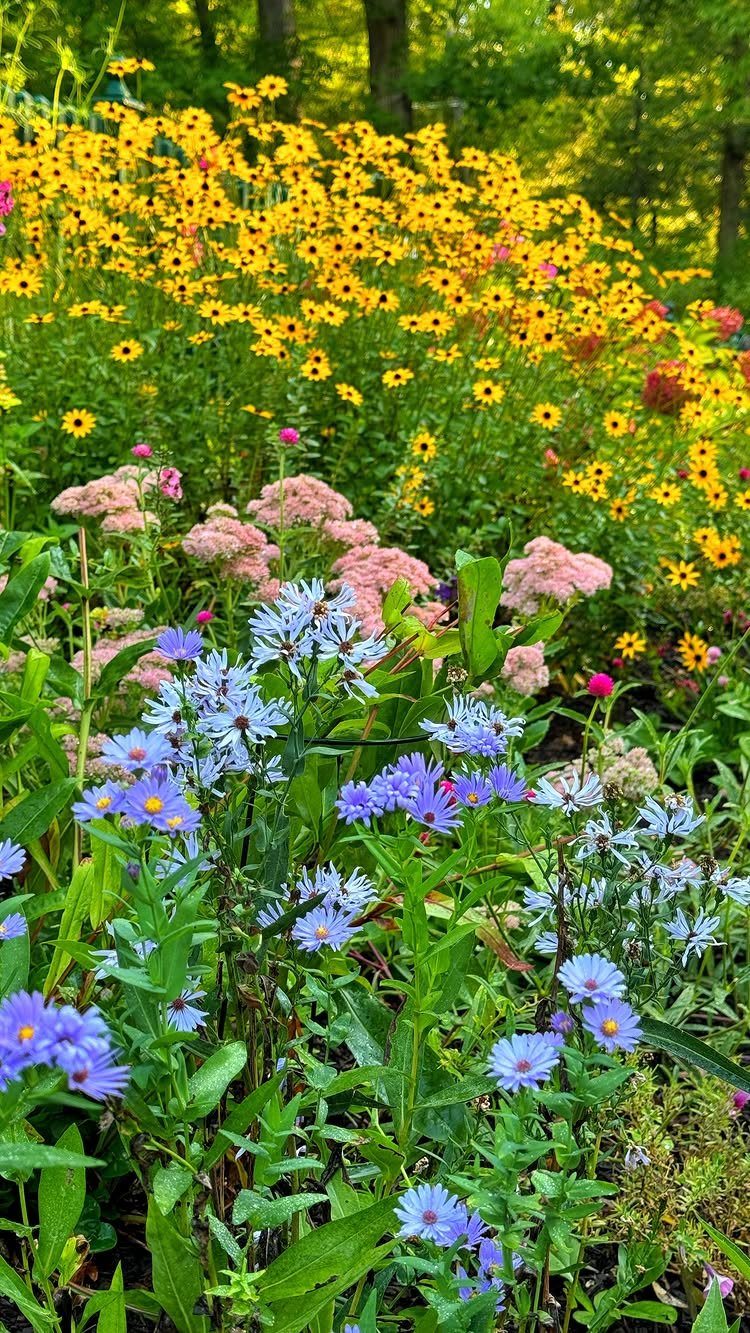
A pollinator bed runs on succession blooming, so something feeds bees and butterflies from April frost to October freeze.
The asters, sedum, and black-eyed Susans above hit late summer into fall together; I would swap in early-season columbine or penstemon for spring coverage, since a bed that only flowers in August misses the first hatch.
Single-flower varieties work better than doubles; the dense petals of a double bloom hide the nectar and pollen insects need.
I buy from local growers when I can; they usually stock the straight species that pollinators recognize over the bred-for-color cultivars.
This bed asks more planning than maintenance, which fits a beginner with a notebook better than one with a spreader full of fertilizer.
4. Flower Bed Around a Tree
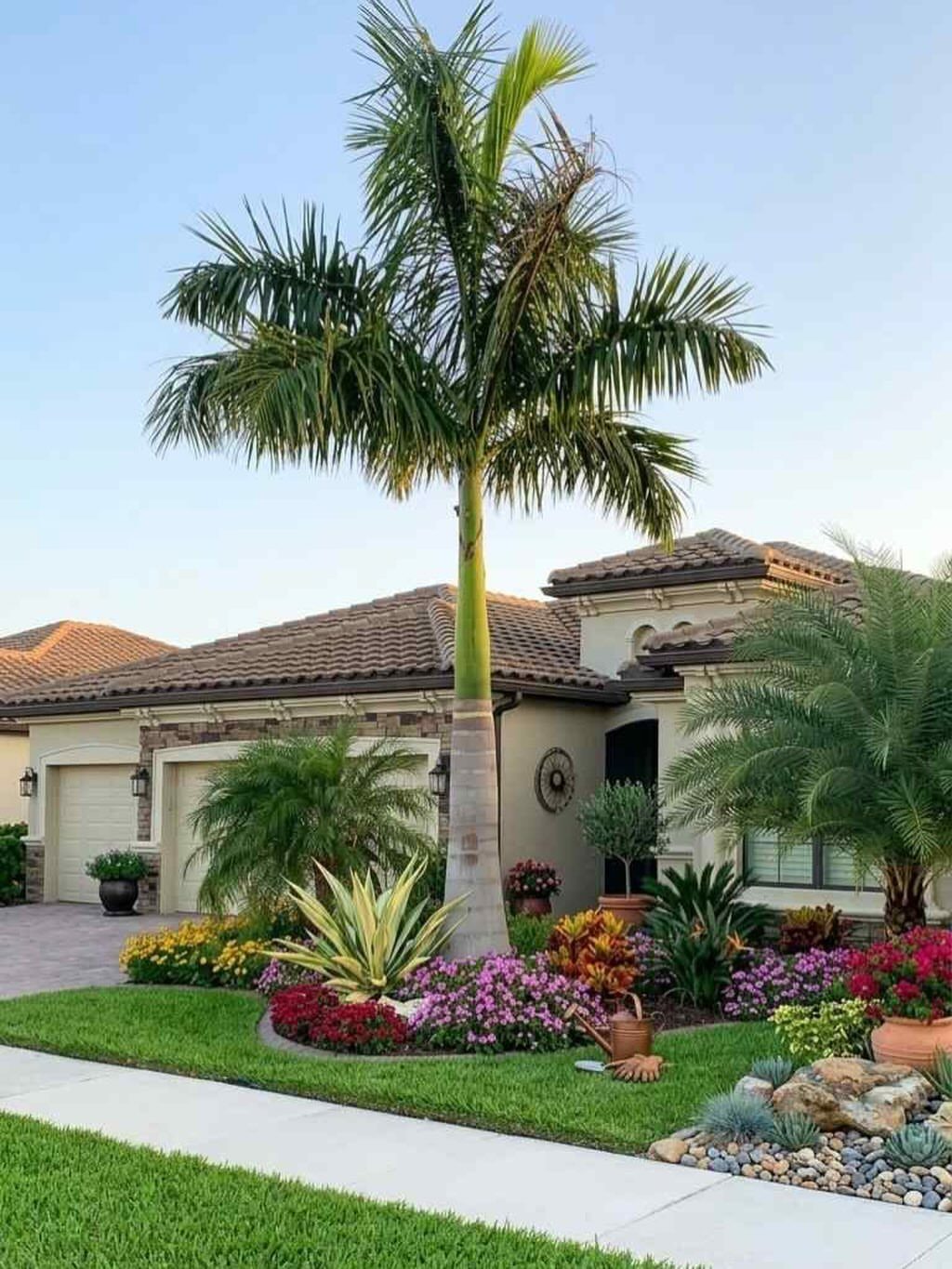
Ringing a tree with flowers sounds simple until you check what the tree needs.
Palms and most trees hate root disturbance; shallow digging within the drip line and small, shallow-rooted annuals beat perennials that need dividing. The curved bed sits outside the trunk by enough distance to respect that limit.
I match the water needs of the bed to the tree, not the other way around.
A palm wants steady moisture; pair it with impatiens or caladiums that do too. Under a drought-tolerant oak, I would run sedum or lavender and skip the irrigation entirely.
I would keep lawn outside the bed edge every time; grass growing up to the trunk competes and hides decay that a visible root flare would show.
5. Cottage Garden Look
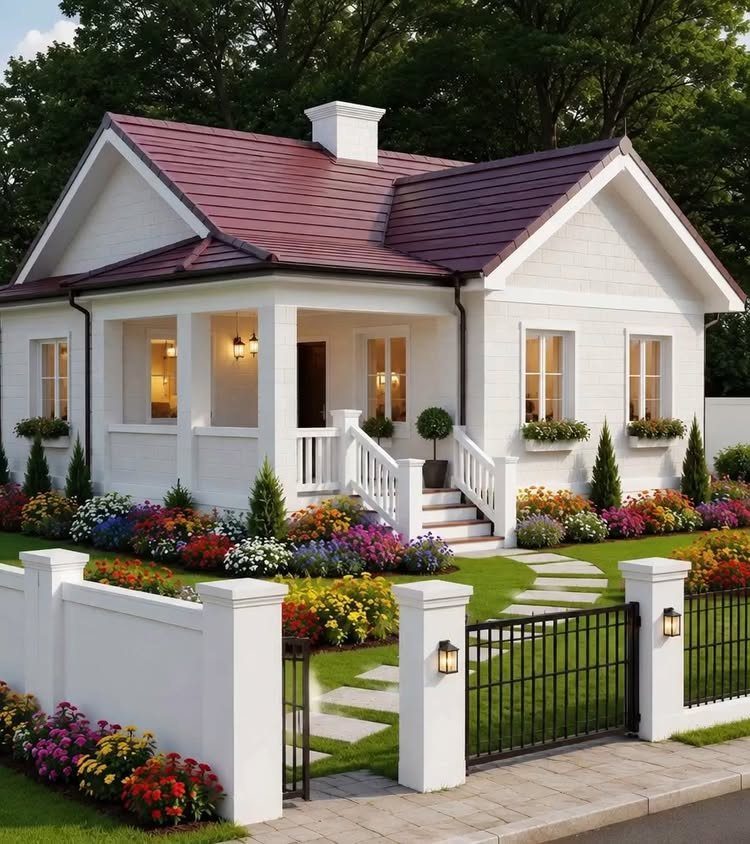
Cottage garden reads as happy accident, but the density comes from tight spacing and self-seeders left alone. I plant at half the tag distance and let things collide; gaps get filled with annuals like cosmos or zinnias until perennials mature.
The result is fuller faster, though it costs more in plants up front and reads as messy to some neighbors.
A white fence and stepping stone path give the eye a place to rest; without hard structure, this much color becomes visual noise.
I would not try this where drainage runs fast or soil stays soggy, since dense planting needs consistent moisture without sitting in water.
A maroon roof is a detail I would notice before choosing flower colors; orange and red clash with it, while blue and white settle in.
6. Raised Flower Beds
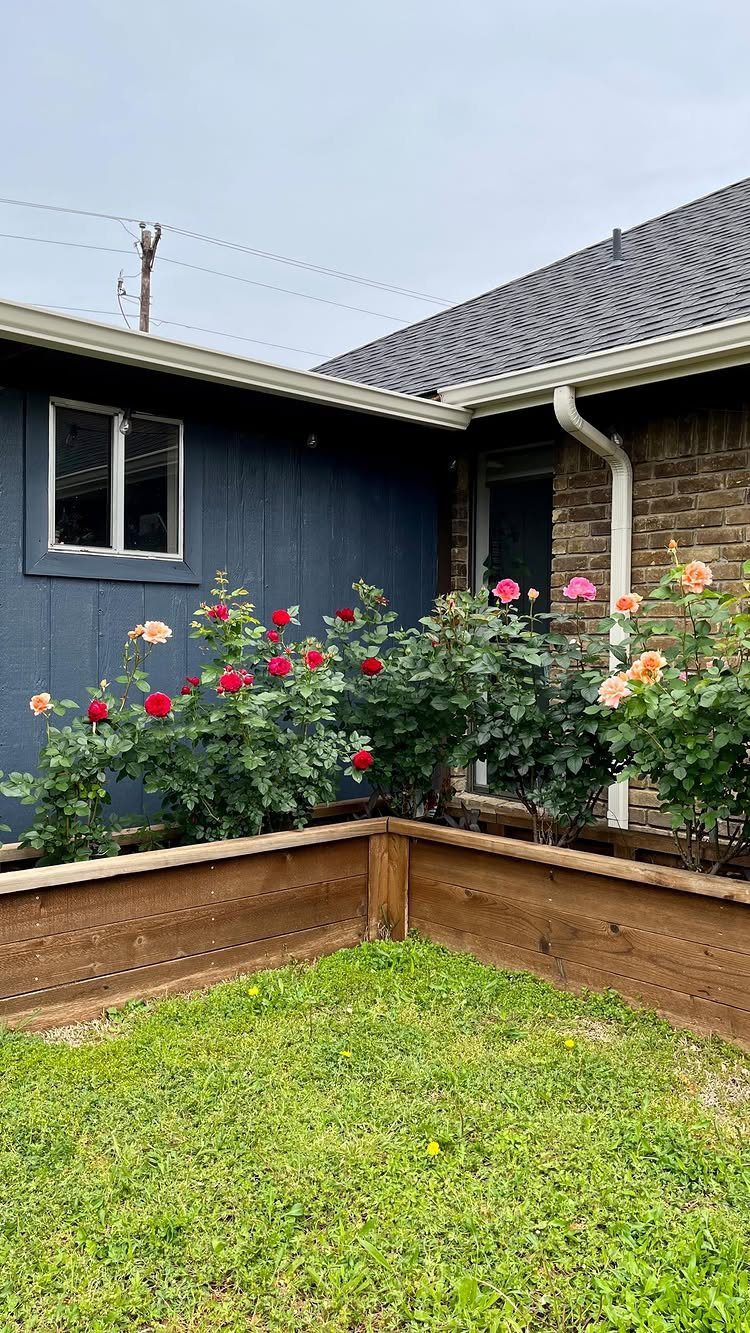
Raised beds warm faster in spring and drain better in clay, which matters for roses that rot in wet feet.
That wood frame is likely cedar or a rot-resistant composite; standard pine in ground contact softens at the corners sooner than I want, and I factor replacement cost into the build.
My perennial beds go lower, while shrubs like these roses want more height and more soil volume to match.
Deeper means more soil to buy; a delivery load runs more than I like to spend at once, so I sometimes build in stages or fill the base with cheaper fill and cap with good growing mix.
The brick house behind this bed gives reflected heat that roses appreciate; on an open northern exposure I would choose hardier varieties or accept fewer blooms.
7. Flower Bed with Brick Edging
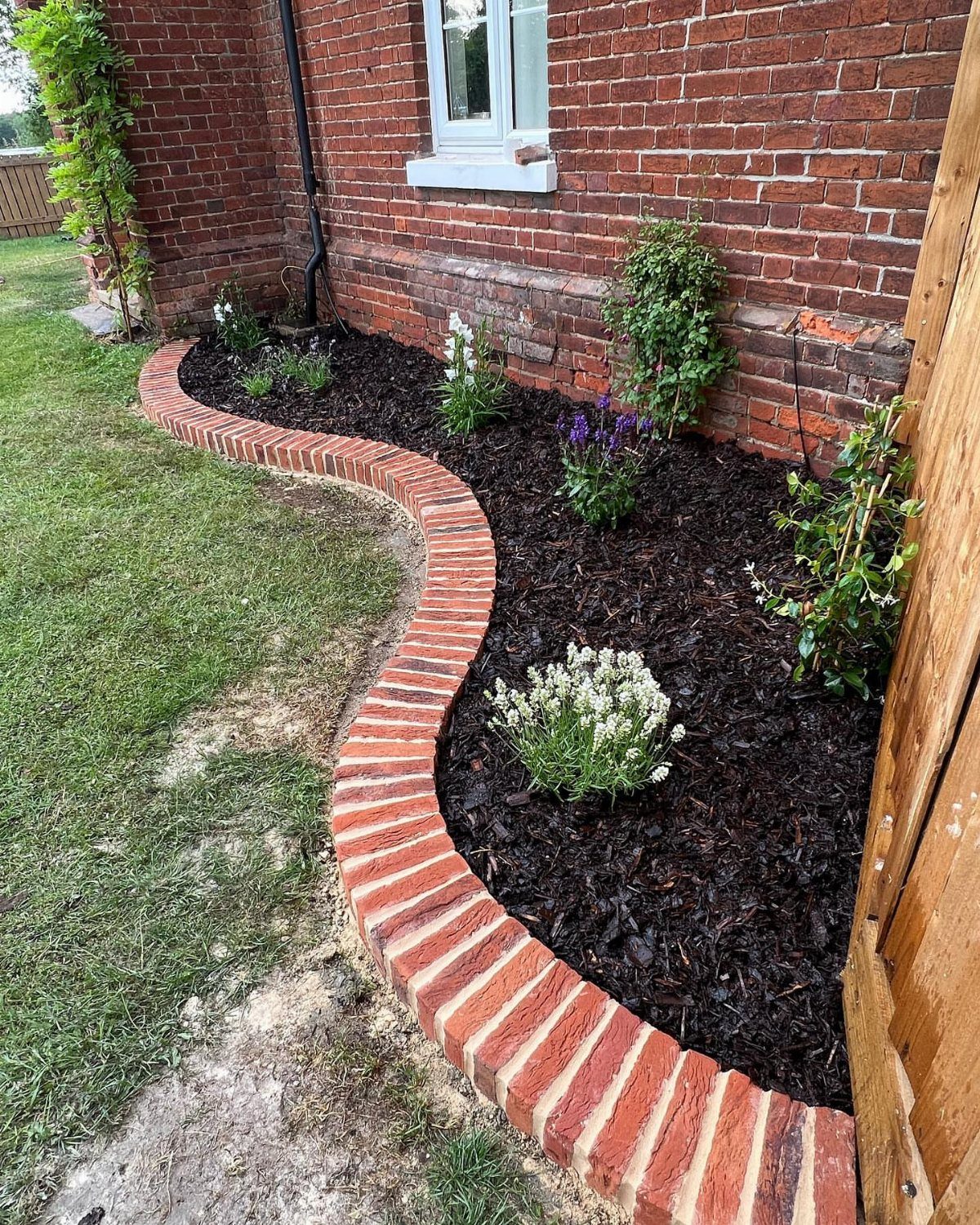
Brick edging gives a bed a clean collar that separates mulch from lawn and stays put for decades.
The curve here is laid flat, bricks in a header or stretcher row, which is the cheaper way to edge and still holds the line against a mower.
I would run a sand base under them, not dirt; sand drains and lets you tap the row level without fighting clay.
Match the brick to the house when you can. Red against red brick reads as intentional; a clashing tone would look like a repair that landed in the wrong yard.
8. Container Gardens
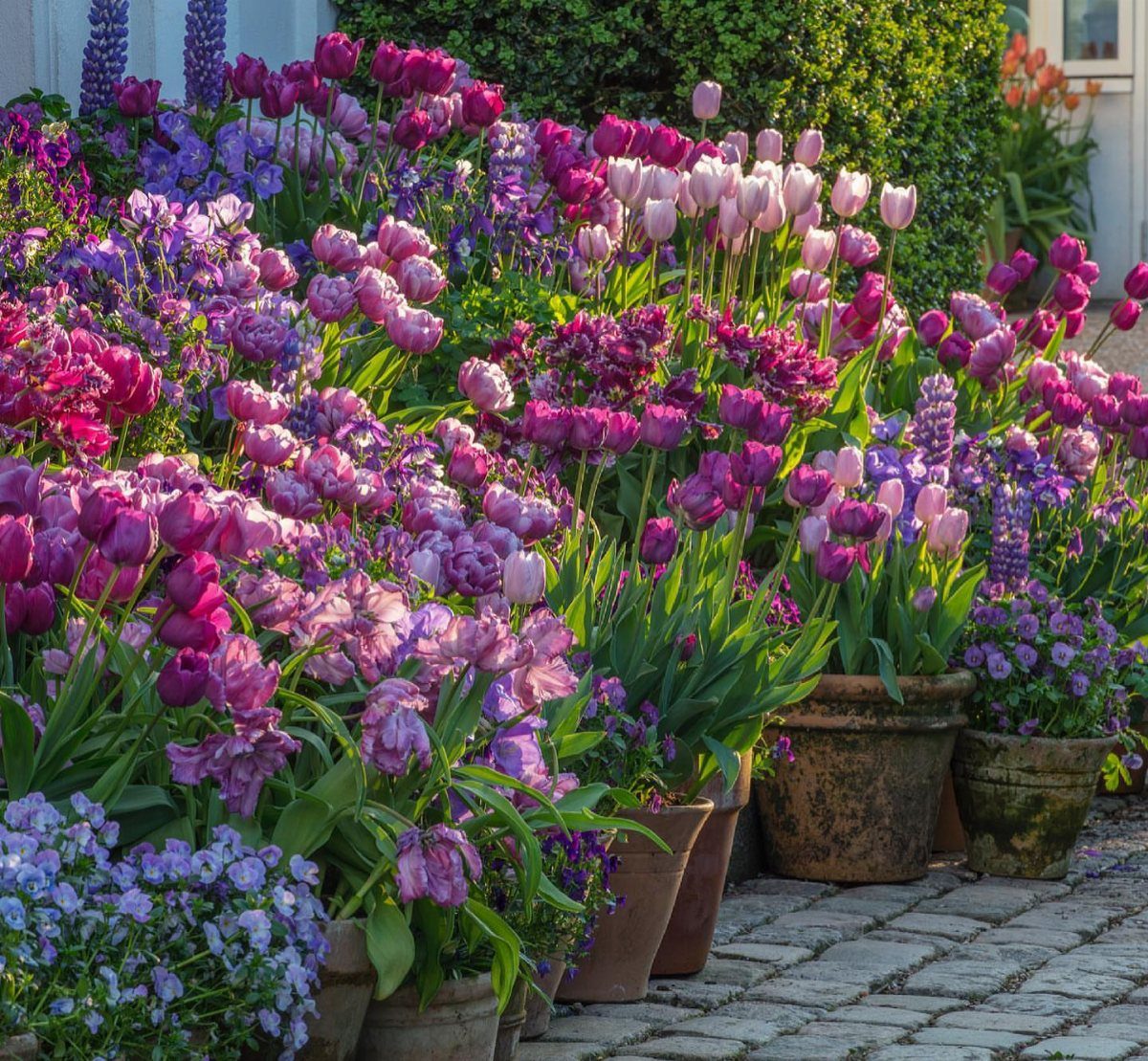
Pots move where beds cannot: onto paving, up steps, flanking a door that has no soil.
Terracotta breathes, which roots prefer, and it weathers to a softer color than the day you bought it. The downside is weight; a pot filled with damp soil and tulips takes 2 hands to shift.
I cluster in odd numbers, three or five, and vary the height so the eye travels.
Drainage holes are non-negotiable; I have lost more plants to drowned roots than drought. A saucer under each pot saves the stone from stains if that matters for your walk.
9. Drought-Tolerant Plants Flower Bed
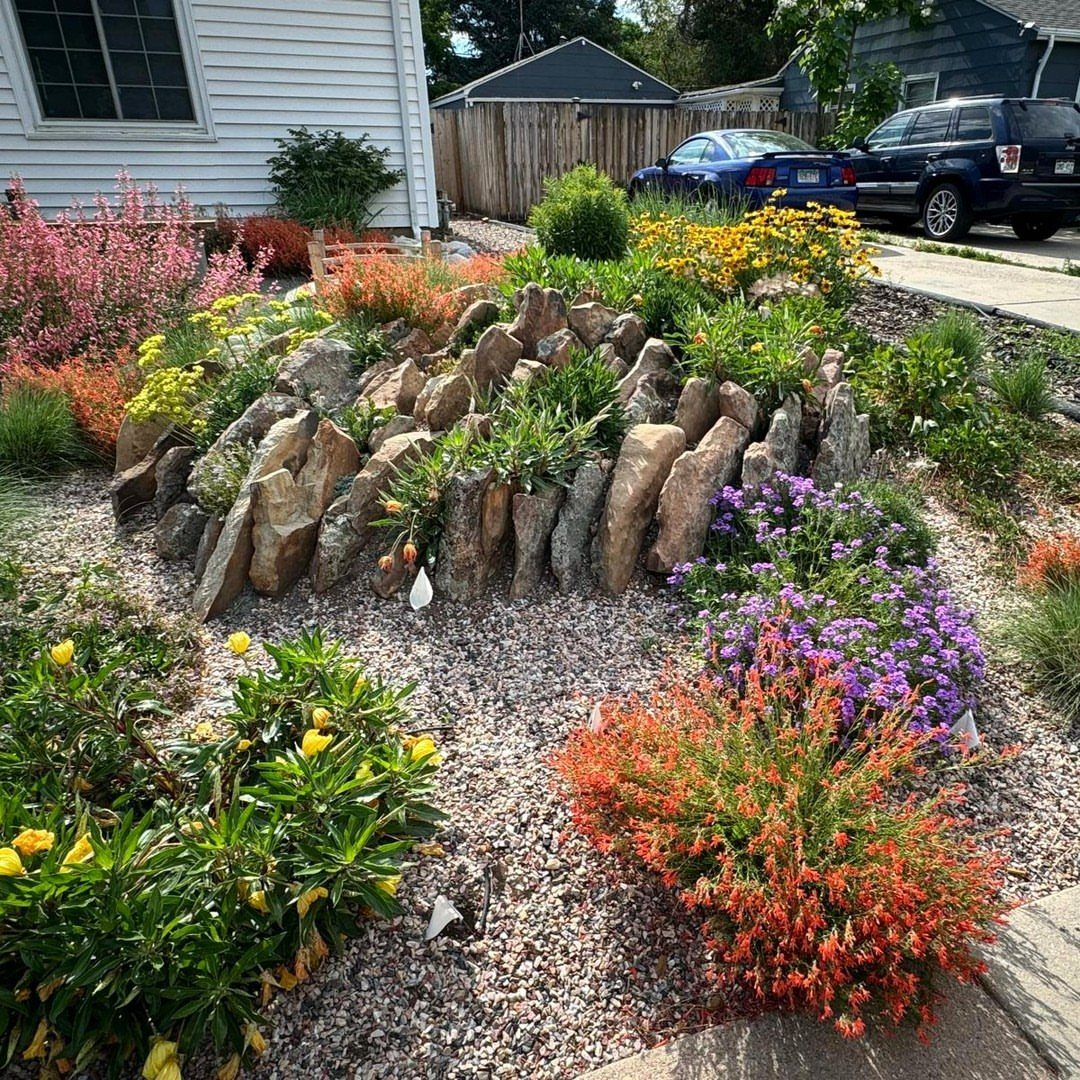
Gravel mulch and vertical stone slabs make a front bed that never needs a sprinkler timer. The rock holds heat that warms the soil in March and bakes it by July; plants here must handle both.
I would check my soil before I planted. True desert lovers want lean, fast-draining ground; if your base is clay, the gravel top fools you into thinking drainage is solved when it is not.
Succulents and lavender both want dry feet, but lavender wants more air movement than a walled bed gives. A sloped site or open edge helps.
For ground cover plants, creeping thyme, rock rose (Helianthemum) and Potentilla x tonguei will flourish in full sun and provide foliage and flowers at the front of your border.
10. Vertical Gardens
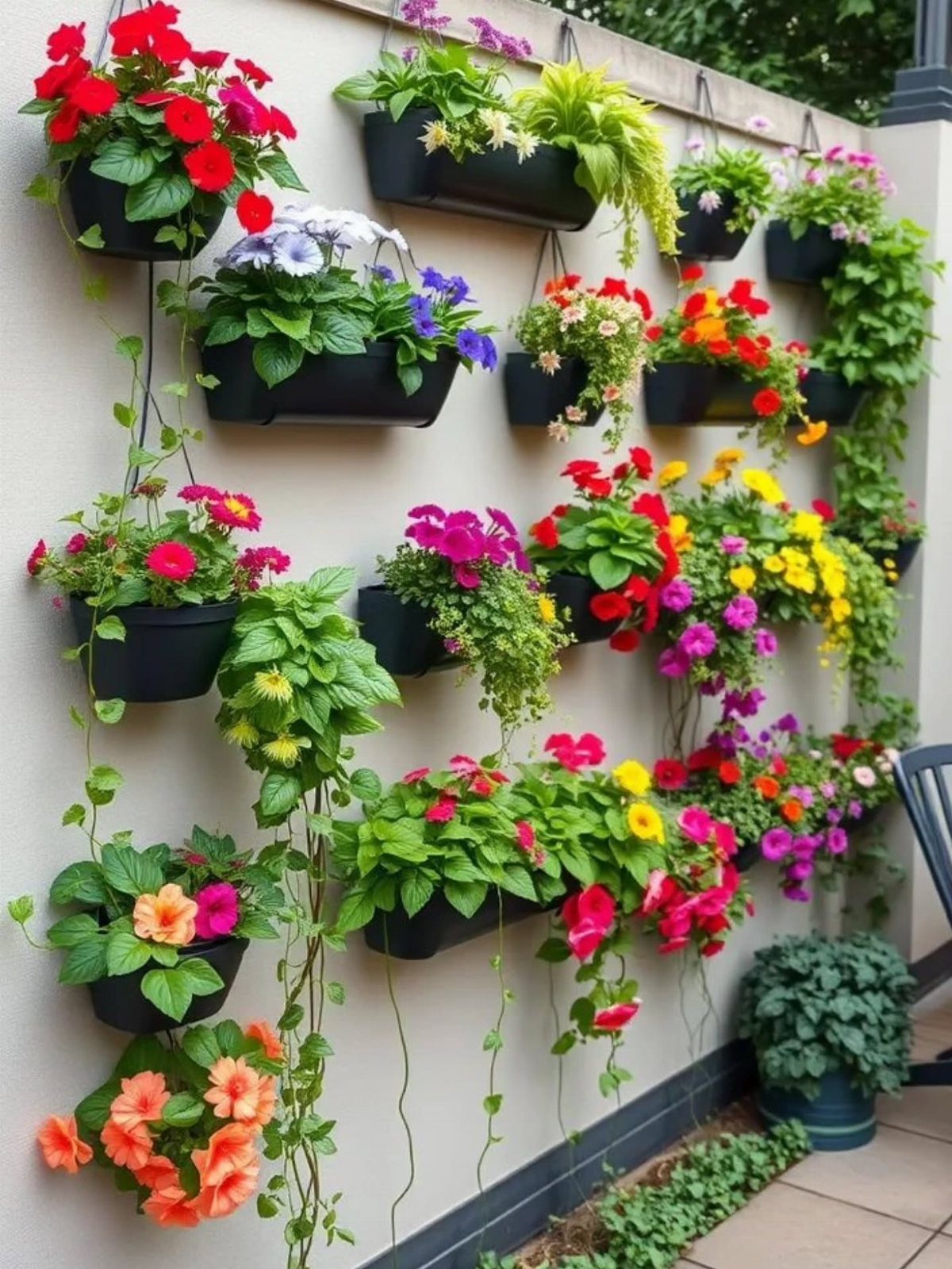
Wall-mounted planters turn a blank fence or house side into growing space where ground is pavement or shadow.
Black boxes like these are likely a modular system with a reservoir; without one, the top row dries out before the bottom gets its share.
Weight is the calculation I would run first. Saturated soil is heavy, and a multi-planter column adds up fast.
I would mount into studs or masonry, never siding alone. Full sun on a south wall cooks roots faster than in the ground; I would choose trailing annuals like calibrachoa over fussy perennials and replace them seasonally.
11. Flower Bed with Masonry Walls
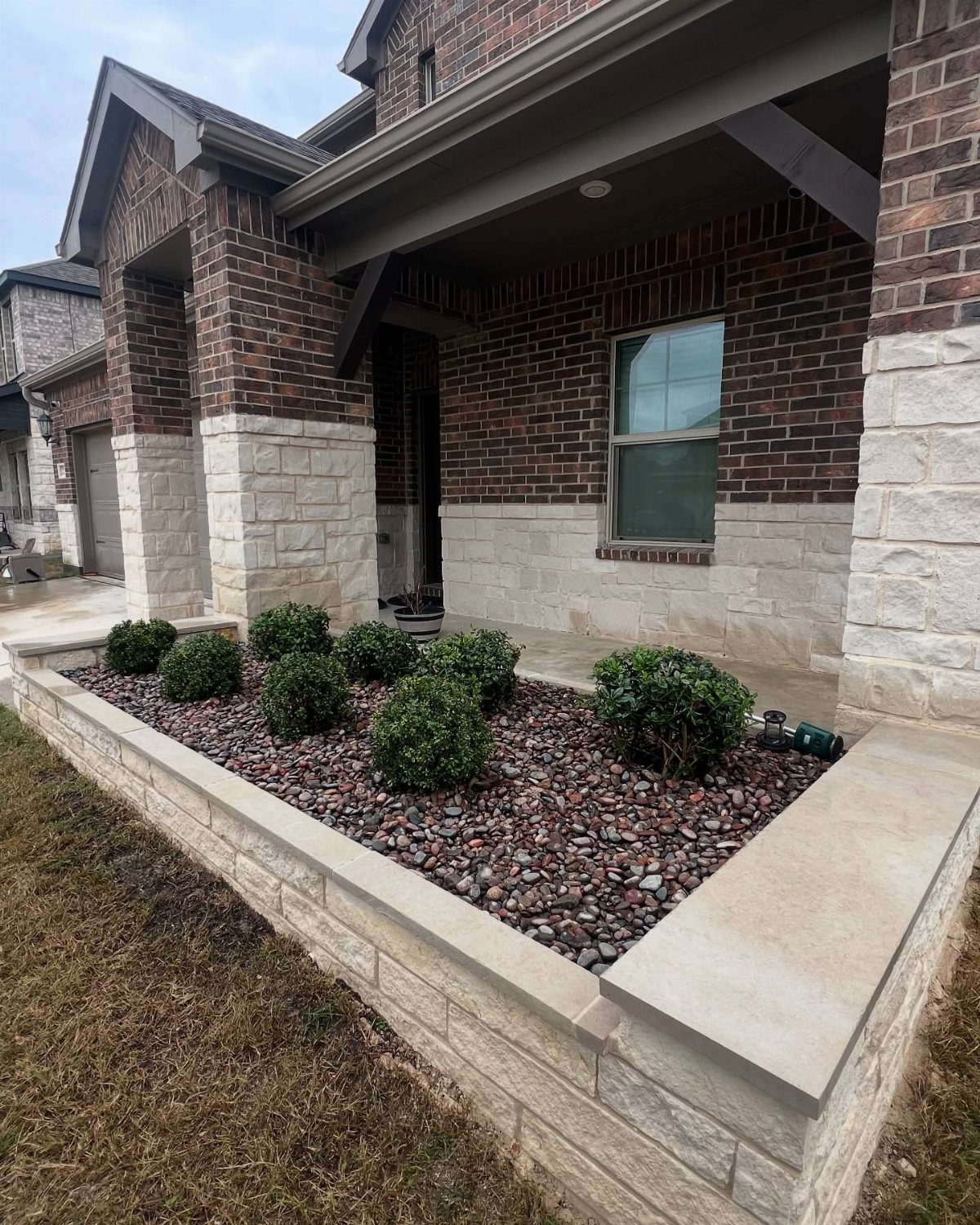
A mortared stone wall raises a bed to seat height and gives the front yard architecture that wood or edging strip cannot match. Pebble fill is decorative; roots still need soil behind it, or the shrubs will starve.
Cost is the barrier. Dry-stack stone runs less, but dressed block with tight joints means a mason’s time, not a weekend with a level and gloves.
I would build in one go rather than in sections; stopping mid-wall leaves a joint that never matches. The pale stone reads cooler against dark brick; I would not repeat it against another light facade.
12. Flower Bed Around Mailbox
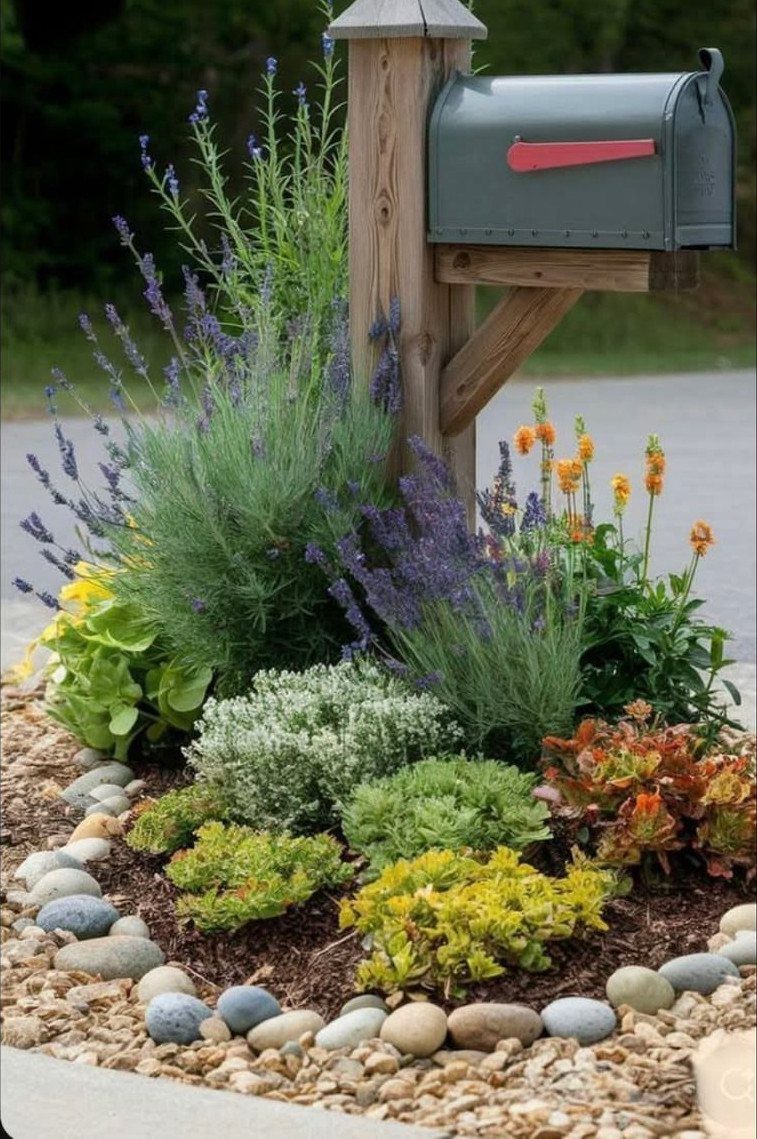
A mailbox bed is a small commitment with outsized curb appeal, since it sits at eye level for every passerby. The river rock edging here is smooth enough to string-trim against without chipping a blade; rough fieldstone would scatter.
Scale matters more than in larger beds.
A few plants fill the space; too many read as clutter from the street. I would repeat the lavender or choose one other low perennial and let it mass, since a dozen different small plants lose impact from the curb.
The wooden post will rot at the soil line eventually; I would keep mulch back from it to slow that.
13. Flower Bed Around a Lamp Post
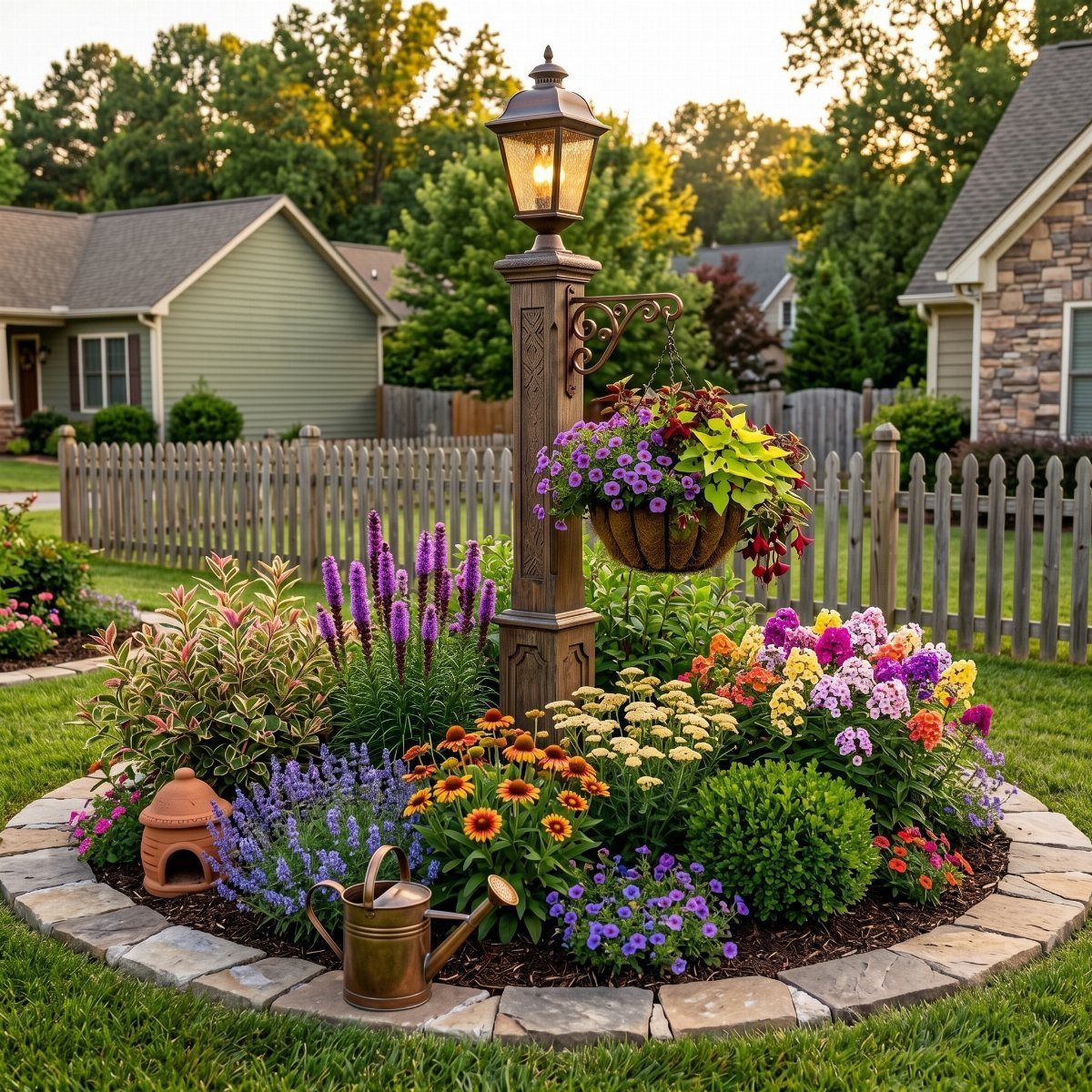
A lamp post bed frames the fixture instead of letting it stand alone in grass. The stone ring needs width enough to mow around without clipping the border; I would give it enough room to swing a mower through comfortably.
The central basket hangs above the bed, so the plants below should stay low enough not to compete.
Low annuals keep sight lines open so the lamp post stays visible from the street. I would check whether the post base is wired; digging for edging stones near conduit is a mistake you make once.
14. Curved Flower Bed Border
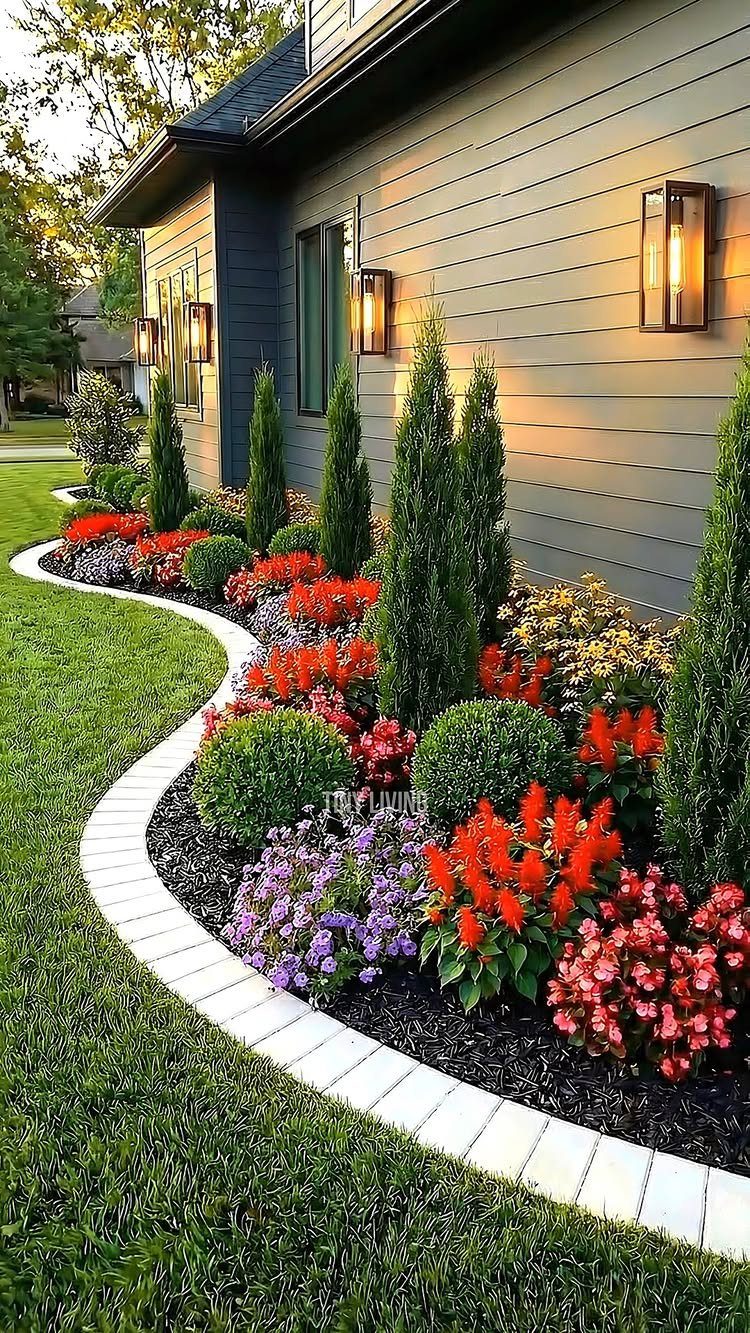
Curved beds soften a foundation line that straight edging would make boxy.
The white stone border here is laid as a visible edge, not buried; that means more weeding along its face than with sunken brick, but the contrast against dark mulch reads sharp from the street.
Foundation beds this deep let you push the curve; shallower strips flatten out and lose the gesture.
I would run the line in hose first and view it from the sidewalk before cutting sod. Columnar evergreens give winter structure; without them, the bed reads empty half the year.
15. Japanese Maple Focal Point Bed
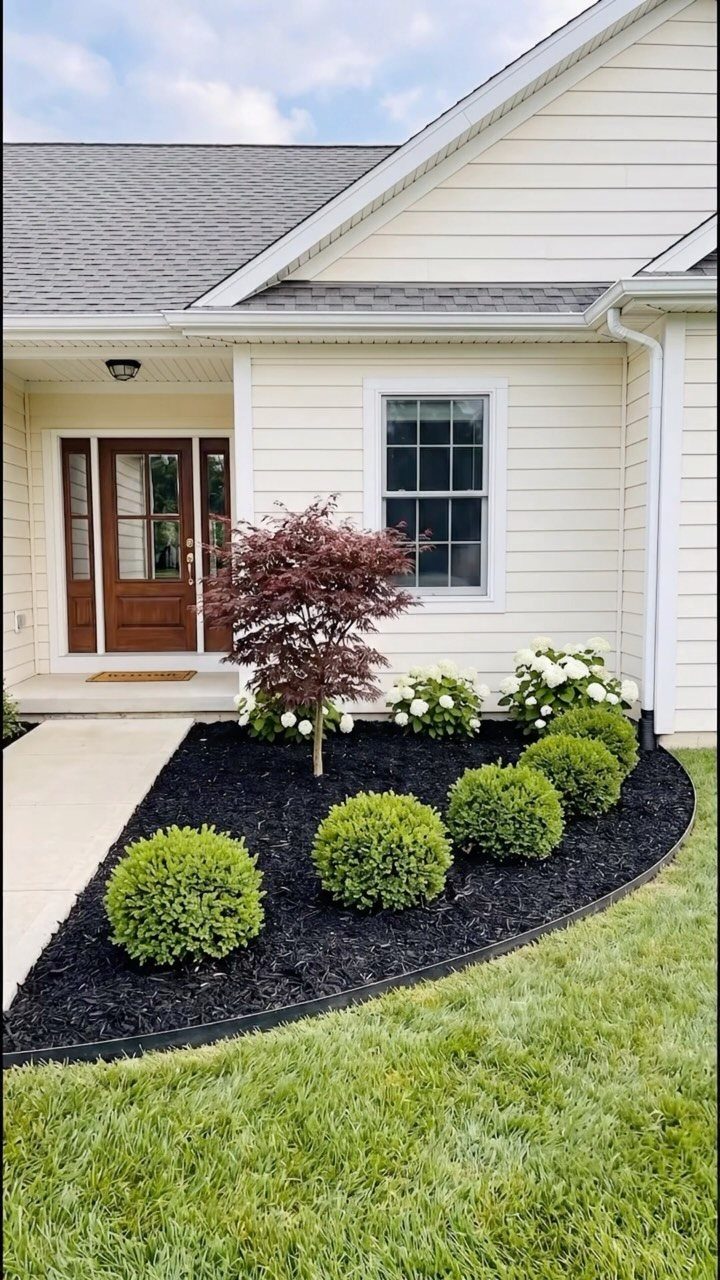
A Japanese maple anchors a bed with color that shifts from spring red to summer bronze without any bloom needed.
The cultivar here looks like a dissectum type, low and spreading; I would place it off-center, not middle, so the branch architecture has room to develop against the house.
Dark mulch makes the foliage pop, but it also heats in August sun; I would keep the root zone topped up and avoid piling it against the trunk.
White flowers read as neutral, letting the maple stay the star. This suits a northern or eastern exposure; afternoon sun in the South burns the leaves.
16. Flower Bed Along a Fence
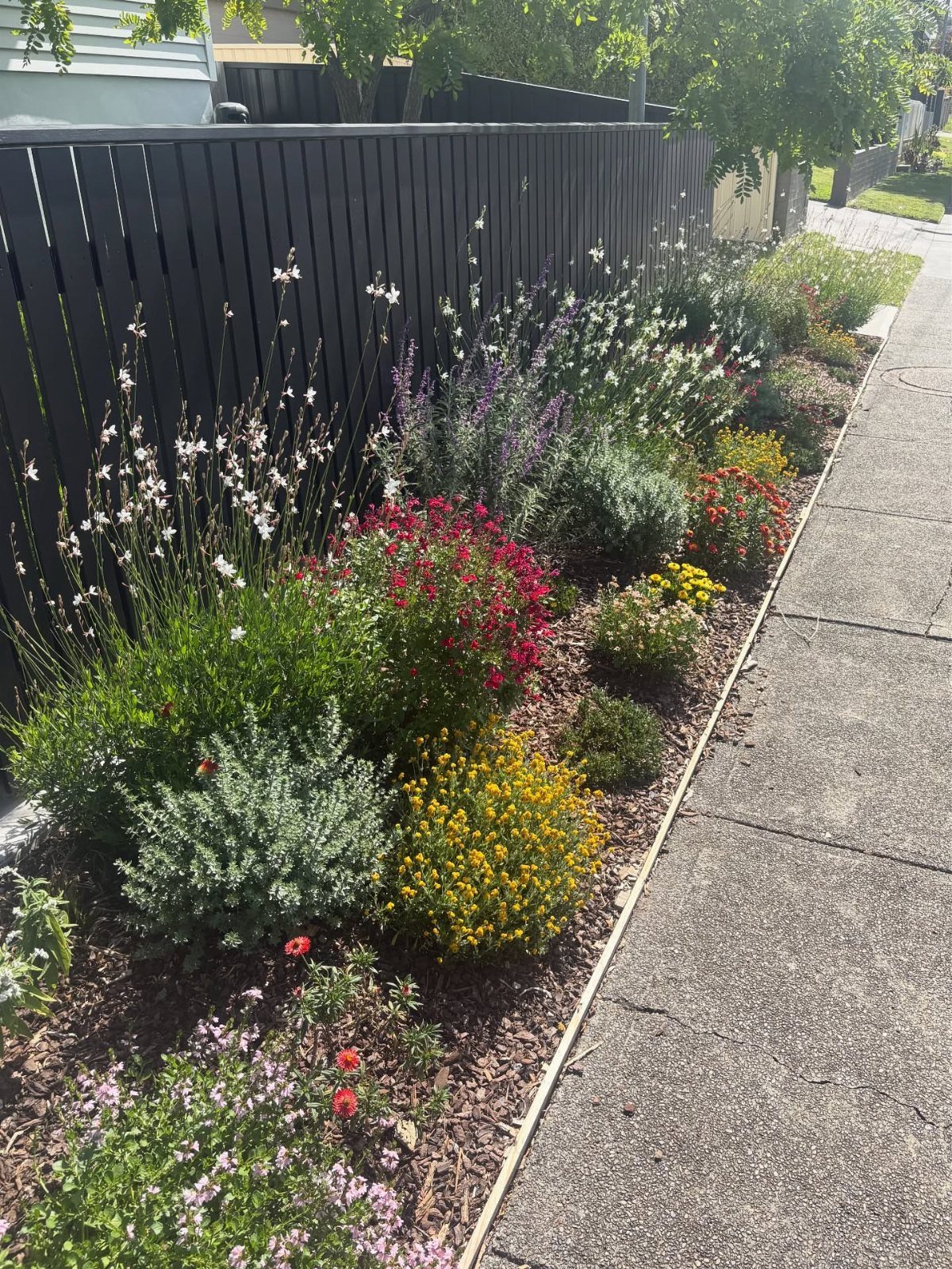
Narrow beds along a fence are where you plant what the sidewalk side cannot fit.
A dark fence behind flowers acts as a backdrop that makes warm colors advance; I would lean into that with reds and yellows rather than pale pinks that wash out.
Soil compaction is the hidden problem; fence lines get walked during construction and never recover.
I would fork the bed before planting, not just turn it with a shovel. Perennials here want spread control; a tall aster or bee balm will lean across the sidewalk by August if not staked or chosen dwarf.
17. Pebble and Rock Flower Bed
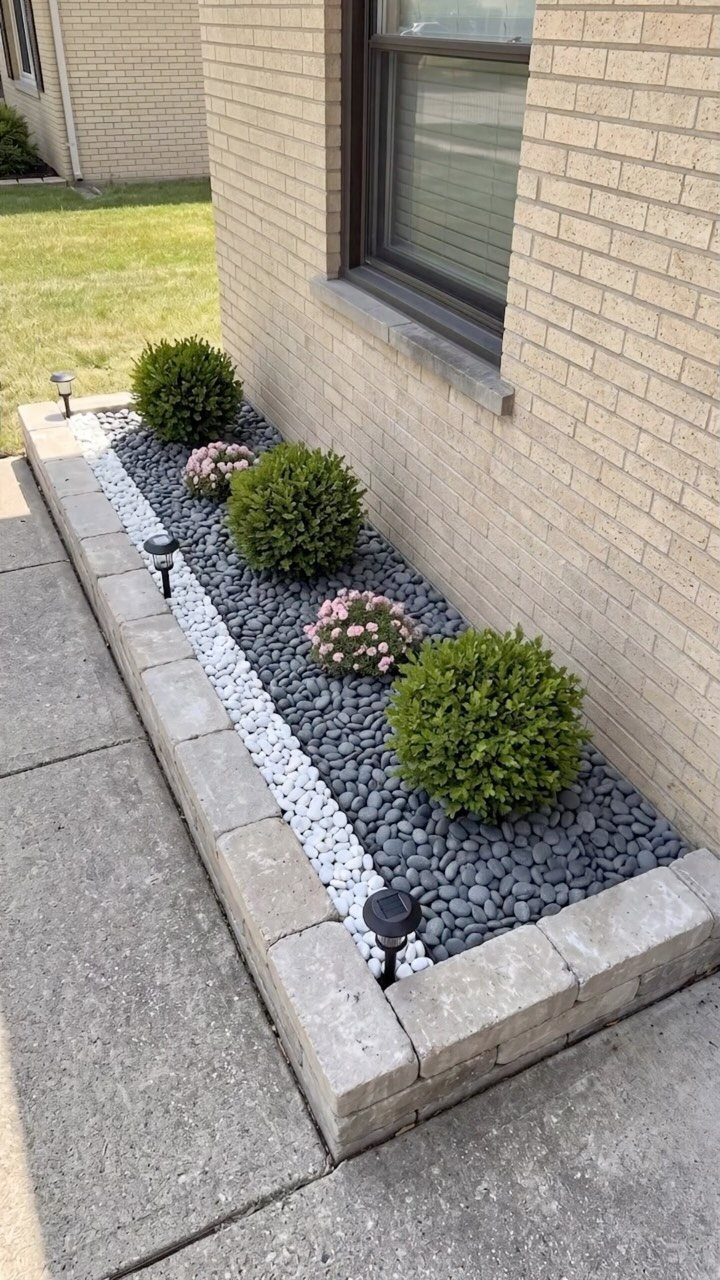
Pebble mulch stays put in rain that would float bark away, and it suits modern facades where organic textures look out of place.
The grey and white mix here is likely river stone in a medium size; smaller migrates into soil, larger looks like a construction site.
I would lay landscape fabric first, or weeding becomes picking pebbles off dandelion roots.
Solar lights stake between shrubs and charge without wiring; warm white reads better against stone than blue-toned LEDs. This bed trades away the soil-building that mulch provides; I would plan on feeding shrubs more often.
Soil Preparation Tips
Clear the bed before you plant, not after. Weeds left in the soil resprout through mulch and compete with new roots for water.
Compost is the amendment I add when the soil needs it; clay or sand both improve with organic matter worked in.
This matters more for perennials and shrubs than for annuals, since good structure pays off across years of root growth rather than one season.
I do not test every bed, but I do dig down and squeeze a handful. Soil that holds its shape like putty drains too slowly; soil that falls apart needs more organic matter.
The compost goes on top of the weeded ground and gets forked through the topsoil, not left as a layer on the surface.
Maintenance Advice
Black-eyed Susans and purple coneflowers both settle in and spread to their mature size; give them that room at planting and you skip the pruning later.
Drip irrigation suits drought-tolerant beds better than sprinklers, which wet foliage and invite mildew on plants like lavender and sage.
A timer on the line automates the schedule, though I still check the soil with my finger before I assume it needs water.
Mulch or small stones between plants slow weeds and keep moisture from evaporing in summer heat.
In xeriscape beds, I add hardscaping for structure: a boulder or a gravel path defines the space and breaks up the planting so the eye has places to rest.
A birdbath or a bench gives the eye a place to land without adding anything to your weekly to-do list.
Seasonal Planting Considerations
A front bed faces the street every day of the year, so winter structure matters as much as summer color. Compact evergreens like Mahonia ‘Soft Caress’ or a clipped Pittosporum hold the shape when perennials die back.
Spring bulbs go in before the ground freezes; crocus and scilla push through late snow and carry the bed until perennials fill out. For late summer, helenium and Allium sphaerocephalon extend the season into September.
Autumn foliage comes from shrubs that turn before they drop.
Cotinus ‘Grace’ or Physocarpus ‘Little Devil’ give color after the annuals are pulled. Containers and window boxes help here too; they let me swap in seasonal plants without disturbing the bed structure.
I think of the calendar in layers: evergreen bones, spring bulbs, summer flowers, fall foliage. Each layer covers the gaps left by the last.
Frequently Asked Questions
What flowers are good for the front yard?
Black-eyed Susans, asters, sedum, and lavender are solid choices that handle most conditions without fuss. Pollinator-friendly single-flower varieties beat dense doubles, and local growers usually stock the straight species that insects recognize.
What is the 70/30 rule in gardening?
This rule suggests planting 70% perennials and 30% annuals for a balanced garden that returns each year without full replanting. That ratio keeps the workload down while still allowing seasonal color where you want it.
What is the cheapest way to landscape my front yard?
Start with native plants from your county extension list and handle the labor yourself over a weekend.
I build in stages when soil delivery runs more than I want to spend at once, filling raised bed bases with cheaper material and capping with good growing mix.
Which plant gives 12 months of flowers?
No single plant flowers year-round in every climate, so I plan the calendar in layers instead.
Evergreen bones like compact Mahonia or Pittosporum hold winter structure, spring bulbs carry through snowmelt, summer perennials peak in July, and fall foliage from shrubs like Cotinus extends color after annuals are pulled.





