
The right gardening tip for a beginner depends on how much weekend time you actually have.
Start with a 100-square-foot plot, roughly ten by ten feet, and you will learn watering and weeding rhythms without turning a hobby into a second job.
Purdue University puts it plainly: beginners go overboard because they do not yet know how much work waits in the soil.
[link-whisper-related-posts]1. Start Small and Focused
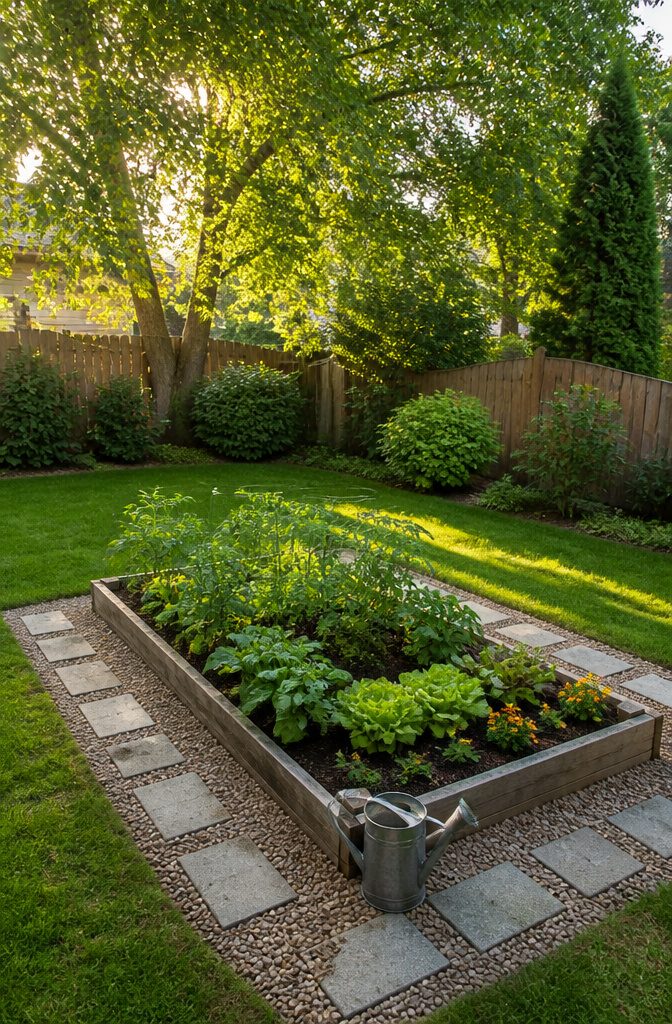
A 100-square-foot plot gives you enough room to grow real food without turning your weekends into a second job.
Purdue University puts it plainly: beginners go overboard because they do not yet know how much work waits in the soil. Starting small lets you learn the rhythm of watering, weeding, and watching before the scale gets away from you.
Beginners tend to go overboard, not realizing how much work lies ahead. It’s best to start out small and gradually add to your patch each year as needed. A 100-square-foot plot should be plenty for your first venture.
That means roughly ten by ten feet, or a 4 by 8-foot raised bed with a little walking space around it.
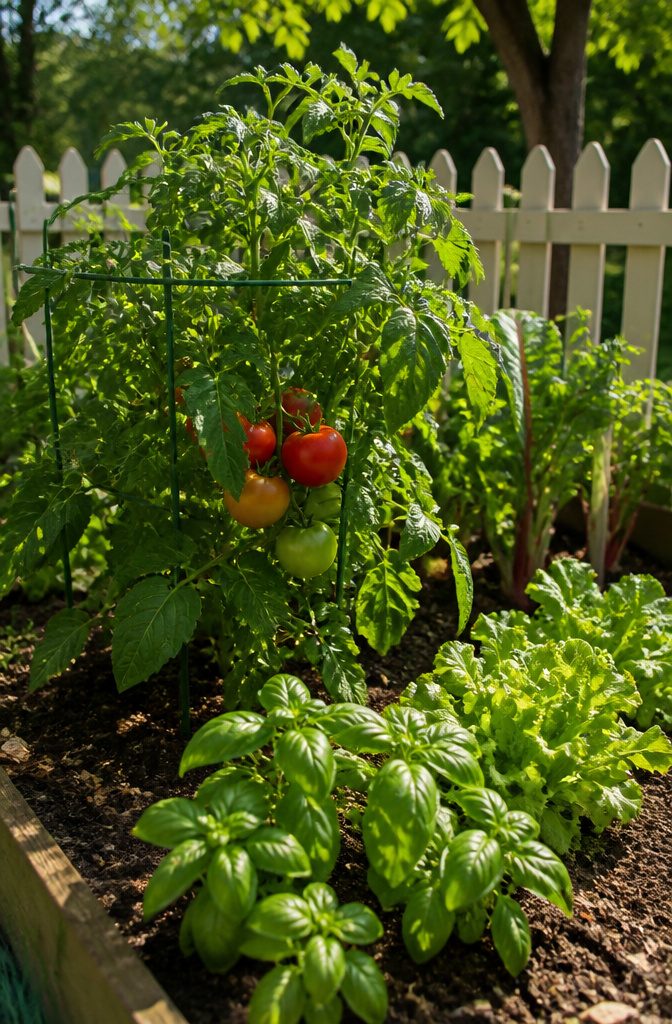
I would pick three or four plant types that I actually eat, not the whole seed-rack rainbow. Tomatoes, basil, and lettuce will teach you plenty.
Master those, and the garden grows as your confidence does. Skip the urge to try everything at once; scattered effort turns into scattered failure, and one rough July can sour you on a hobby that should last decades.
2. Right Location and Sunlight
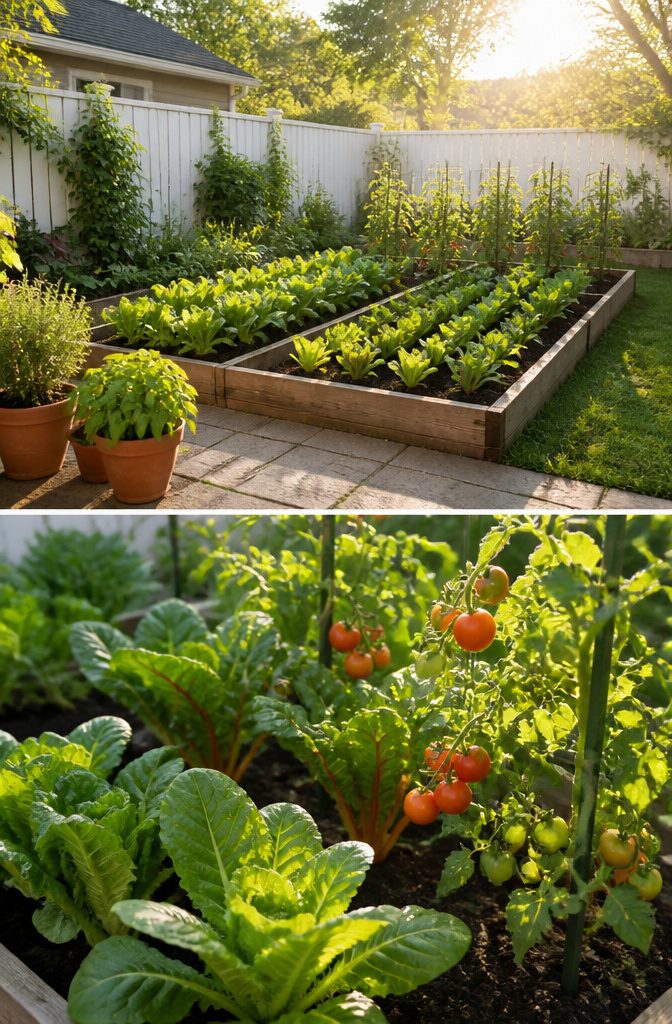
Most vegetables and flowering plants need 6 to 8 hours of direct sunlight daily to produce well.
Leafy greens like lettuce and spinach are the exception; they manage on 4 to 6 hours. The common mistake is planting where noon sun looks perfect, then watching afternoon shade creep across the bed by 3 p.m.
I would spend one weekend morning through afternoon actually tracking light across the yard, not guessing from a single glance.
"Partial shade" on a seed packet means something specific for vegetables: those 4 to 6 hours of direct sun, ideally in cooler morning hours with protection from harsh afternoon exposure.
An east-west bed alignment helps capture south-facing sun for the longest stretch possible.
Where sun is scarce, raised beds or containers on a sunny patio or balcony solve the problem without fighting tree roots or poor drainage.
I would skip trying to force an in-ground garden into a spot that demands heroic measures. Keep water access in mind while you are standing there; a spigot within hose reach saves hundreds of trips later in the season.
3. Know Your Soil
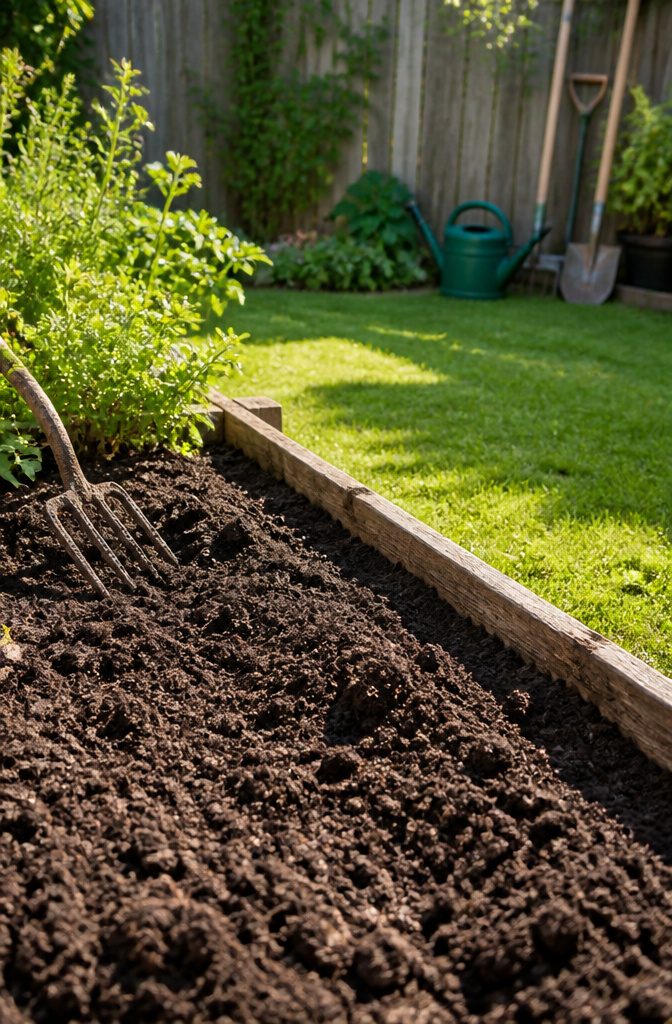
Soil needs to be worked at least 6 inches deep before you plant anything. Wait until it passes the squeeze test first: grab a handful, and if it crumbles away easily, you are clear to start.
If it sticks together in a muddy ball, hold off. Working wet soil damages the structure you are trying to build.
A soil test tells you what you actually have.
Home kits give you pH and the N-P-K numbers (nitrogen, phosphorus, potassium), or you can send a sample to your county extension office for a fuller read. pH around 6.5 suits most vegetables, and low N-P-K means your soil is hungry regardless of how dark it looks.
Clay-heavy soil drains poorly and stays soggy; sandy soil drains too fast and dries out.
Either way, the fix is the same: compost, chopped leaves, or rotted manure worked in. It takes several years of spring and fall applications to really change things, so start now and stay patient.
4. Plants for Your Climate
The USDA Plant Hardiness Zone map splits the country into 11 zones based on the lowest average winter temperature each area sees.
That number, printed on every nursery tag and seed packet in the country, is the difference between a plant that survives April and one that turns to mush.
A seed packet tells you two things that matter: the zone range and the frost dates. "Plant after last frost" is not a suggestion.
Tomatoes, peppers, and basil are warm-season crops that die at the first cold snap. Lettuce, peas, and most herbs are cool-season crops that bolt to seed when July heat hits.
Planting a warm-season crop too early kills more beginner gardens than any pest will. The packet also lists days to maturity, which is how you know whether your growing season is long enough for that variety.
The beginner standbys make sense because they are forgiving within their right window. Tomatoes need that last-frost wait.
Lettuce goes in early, even before the soil feels warm. Herbs like cilantro and parsley prefer the shoulder seasons and will sulk through peak summer.
Match the plant to the conditions you have, not the garden you wish you had. That part-shade corner will not grow tomatoes no matter how much you want it to.
The nursery in March will sell corn seedlings that your zone will not support for another two months. The tag is a contract with reality; read it before you buy.
5. Quality Tools Worth Owning
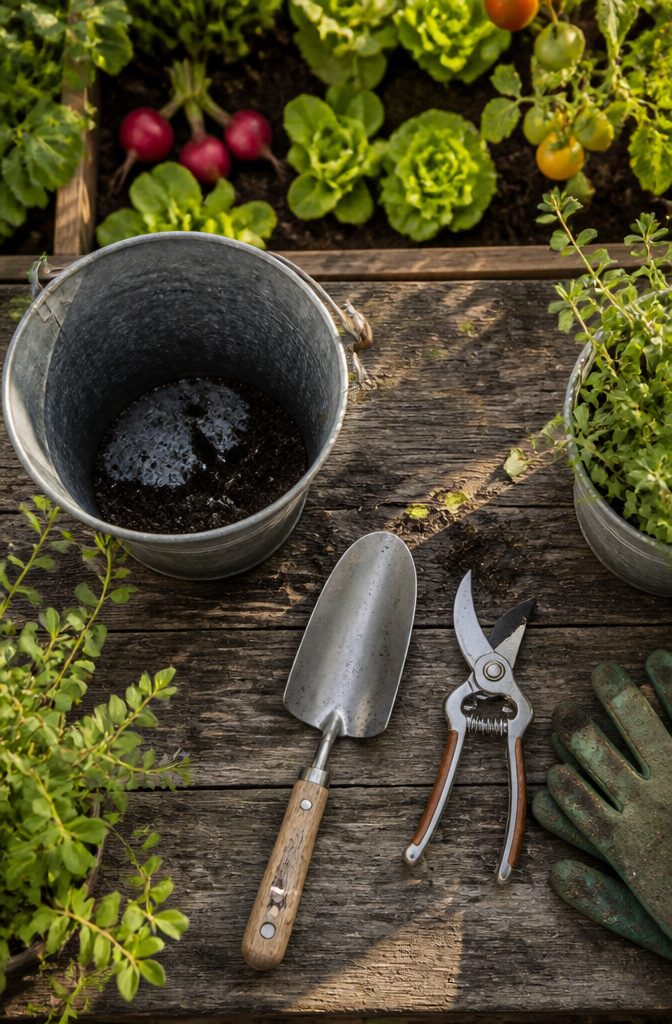
A metal trowel with a riveted wooden handle runs about $12 and will outlast three plastic ones. The blade flexes less, which matters more than you’d think when you are levering out a root-bound seedling without snapping the stem.
Pruners are where I would spend money; the cheap ones with stamped steel blades dull in a season and tear stems instead of cutting them. For gloves and a watering can, borrow or buy the house brand.
A five-gallon bucket holds the whole kit between sessions, and if you rinse the trowel before it goes back in, that $12 tool will still be flat and sharp a decade from now.
6. Water Right and Consistently
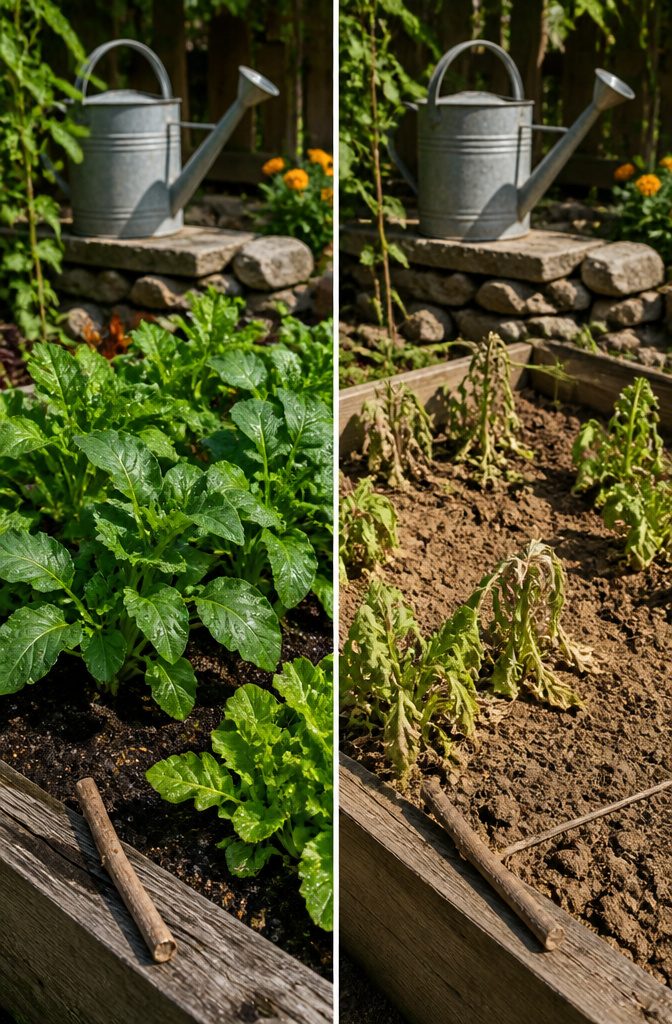
The knuckle test saves more beginner plants than any gadget on the shelf. Stick a finger straight into the soil, and if it comes out dry to your second knuckle, water.
If it still holds moisture above that line, wait. Your soil’s condition tells you when to water, not the calendar date printed on your phone.
Water in the morning, when the roots have time to drink before the sun climbs high. Evening watering leaves leaves damp overnight and invites the problems you’re trying to avoid.
Drip irrigation beats overhead watering for keeping foliage dry and putting moisture exactly where roots can reach it. Overhead sprinklers are cheaper to set up, but they waste water on leaves and encourage rot.
That rot is what trips beginners up. Root rot shows above ground as wilting and yellowing, the same symptoms as drought stress.
The instinct is to add more water, which finishes the job. When a plant looks thirsty but the soil feels damp, suspect roots first.
Underwatered soil pulls away from the pot edge and turns pale.
Overwatered soil smells sour and stays dark. Learn to read the dirt, not the leaves, and you’ll stop killing plants with kindness.
7. Watch and Learn
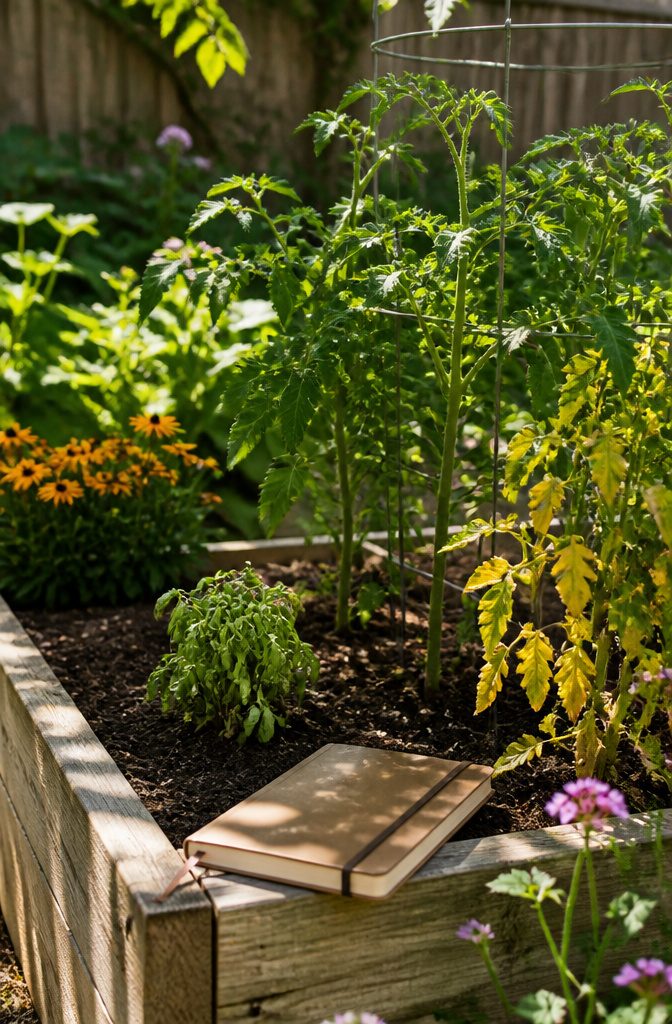
Yellow leaves usually mean too much water, while wilting points to not enough. Holes in foliage signal insects have arrived, and a sudden slowdown in growth often traces back to nights that dipped below what the plant can handle.
These details only become obvious when you check the garden daily, not once a week.
The hardest habit for a beginner to break is loving plants to death. Most people kill plants by overwatering rather than underwatering, and the urge comes from watching too closely.
Stick a finger into the soil; if it is damp past the second knuckle, step away. Water the soil, not the leaves, and let the roots do their work.
Confidence in gardening looks like leaving a plant alone long enough to see whether it resolves its own problems. A sick plant often recovers without sprays or fertilizers.
I would rather watch and wait, learn what the garden is actually telling me, and intervene only when the pattern stays clear for several days. That restraint saves money and teaches more than any app notification.
8. Keep a Garden Journal
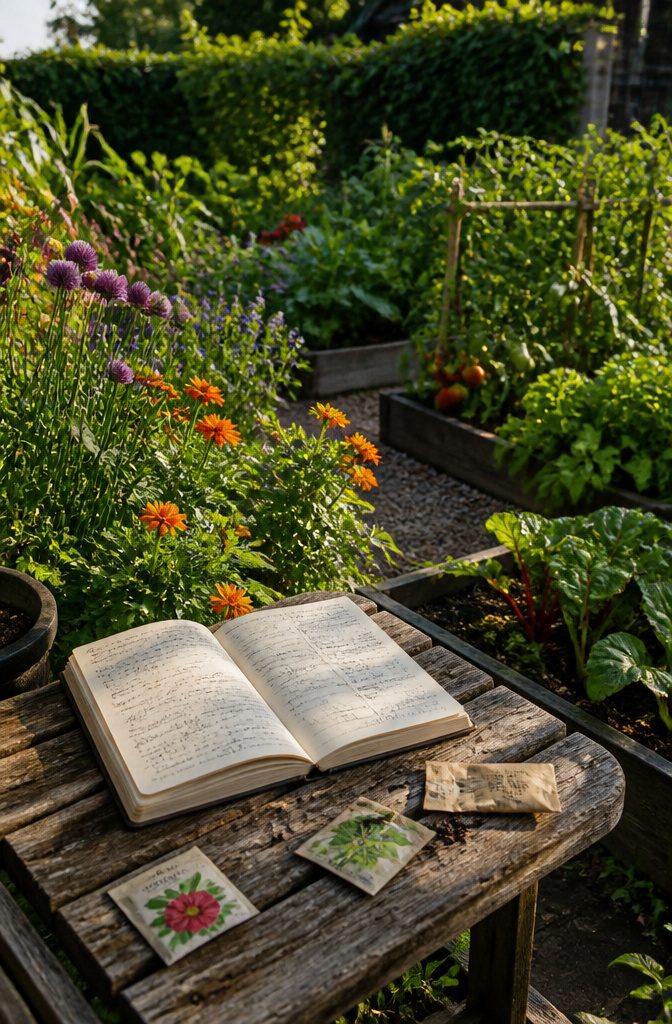
A garden journal sounds like homework until you realize it is the cheapest tool for not repeating your mistakes.
I write down planting dates, varieties, and daily weather, then add a blunt note at season’s end: the Sungold tomatoes thrived, the zucchini got powdery mildew, the basil planted too late never sized up.
The value is not the record itself but the forcing function of paying attention. You start noticing which corner of the yard dries out first, which morning the peppers finally take off.
A notebook works. So does a phone note or a simple spreadsheet.
You need to write things down in the moment, because details blur fast and hindsight is no help. I track first and last frost dates, germination times, and which seed companies send viable stock.
I have learned to stop bothering with precise yield weights and soil pH logs; the former flatters my ego, the latter I test once and rarely need again.
The journal pays off when February arrives and I can plan from actual memory, not optimism, about what that shaded bed behind the garage can support.
9. Beginner Mistakes to Sidestep
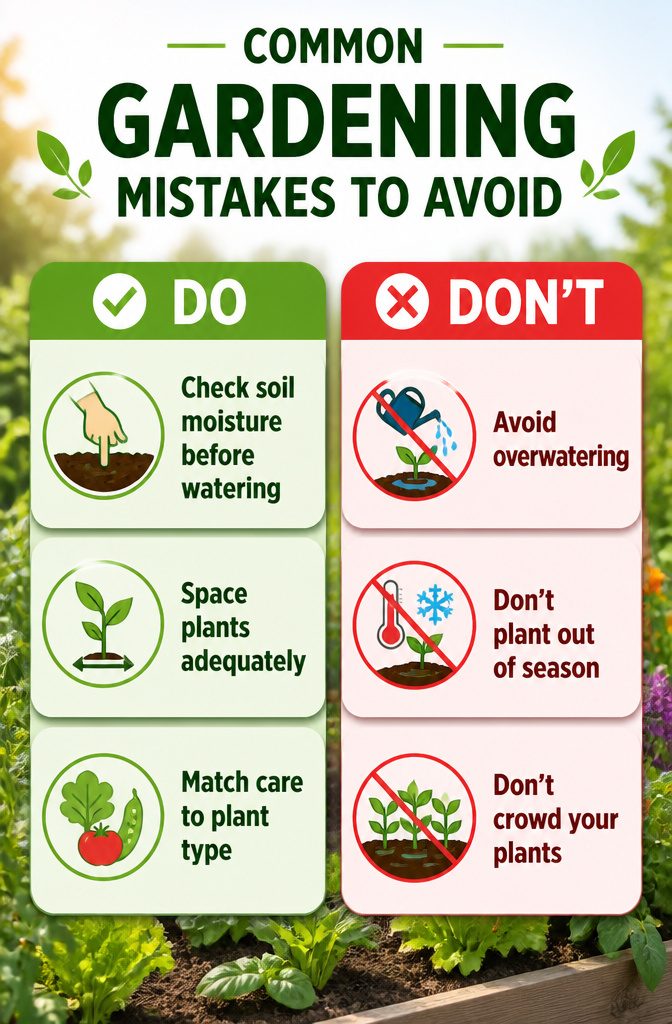
The five mistakes I see most often in new gardens all come from the same urge: wanting to help the plant along. Overwatering is the first.
Roots sitting in wet soil stop pulling oxygen and start rotting; the fix is to check the top inch with your finger and only water when it feels dry. Planting out of season follows the same pattern.
Cool-season crops like lettuce belong in early spring or fall, while tomatoes and peppers need to wait until after the last frost, and putting them out early buys you a stunted plant that never recovers.
Spacing is where enthusiasm really costs. A single tomato needs 1 square foot to itself; crowd it and you get disease, not abundance.
Overfeeding runs parallel. A bag of 10-10-10 or 5-10-5 looks like insurance, but without a soil test you are guessing blind.
The general rule is to test first, then feed only what is missing. Treating every plant the same is the last trap.
Lettuce can tuck under taller neighbors; squash vines through gaps; peas and cucumbers want a trellis to climb. Match the care to the plant, and the plant takes care of the rest.
10. Experiment and Stay With It
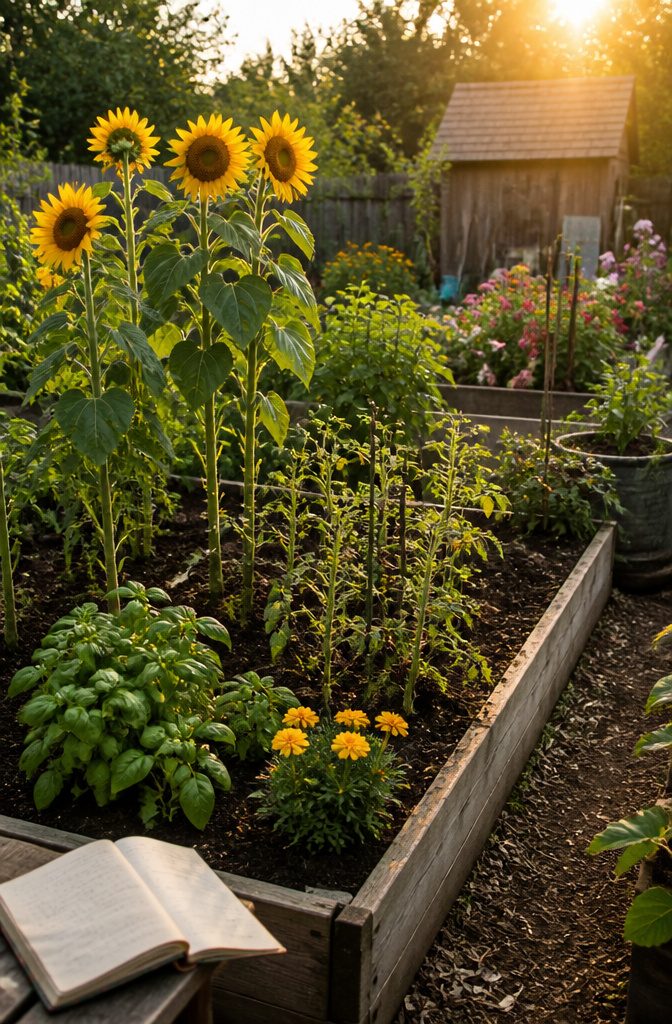
Your first garden is for learning, not harvesting. Every plant that bolts early, every seedling that dampens off, every tomato with blossom end rot is data you will use.
The second year brings compound interest: you know where the sun lingers past 4 p.m., which corner stays soggy after rain, how often you actually remember to water.
I still keep a simple notebook, nothing fancy, with dates and what I planted where. The notes save me from digging into a perennial that is late to emerge, and they remind me which varieties earned a second try.
I changed three things in year two. I stopped crowding seeds because I finally believed the spacing on the packet.
Track the varieties that actually taste best to you; memory alone gives you a muddled record. And I quit taking the flops personally, which took longer than the other two combined.
Year eight, I am still changing. Last season I finally admitted I will not maintain the raised bed behind the garage and moved the herbs to pots by the kitchen door.
The garden you plan is never the garden you keep. The difference between a beginner and a longtime grower is not fewer failures; it is faster recognition of what the failure is trying to teach you.
Raised Beds and Containers
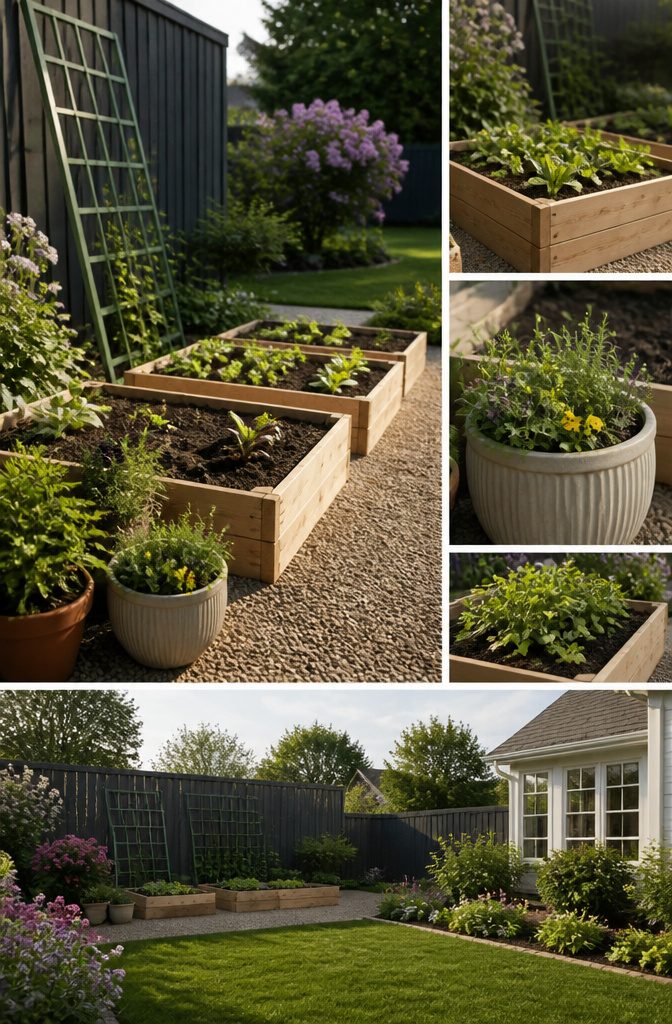
Raised beds solve two problems at once: lousy soil and no soil at all. A bed 3 feet wide lets you reach the center from either side without stepping in, which keeps the structure intact and your back intact.
Build a 4-by-4 box from cedar or fir and you’re out maybe a weekend and under $100, less if you catch a sale on boards.
Containers work when the only dirt you own sits in a pot on a balcony. Drainage holes matter more than the pot’s looks; roots rot fast in standing water.
Skip the garden soil bag and buy potting mix with fertilizer and organic material mixed in. It holds moisture better and won’t compact into concrete by July.
Plants that stay small and bushy forgive cramped roots. Look for compact varieties, bush tomatoes, or flowers under 3 feet tall.
I pair a taller thriller with something that spills over the edge, but only if the container has room left after the roots establish. In a small pot, one well-chosen plant beats three crowded ones every time.
Companion Planting Basics
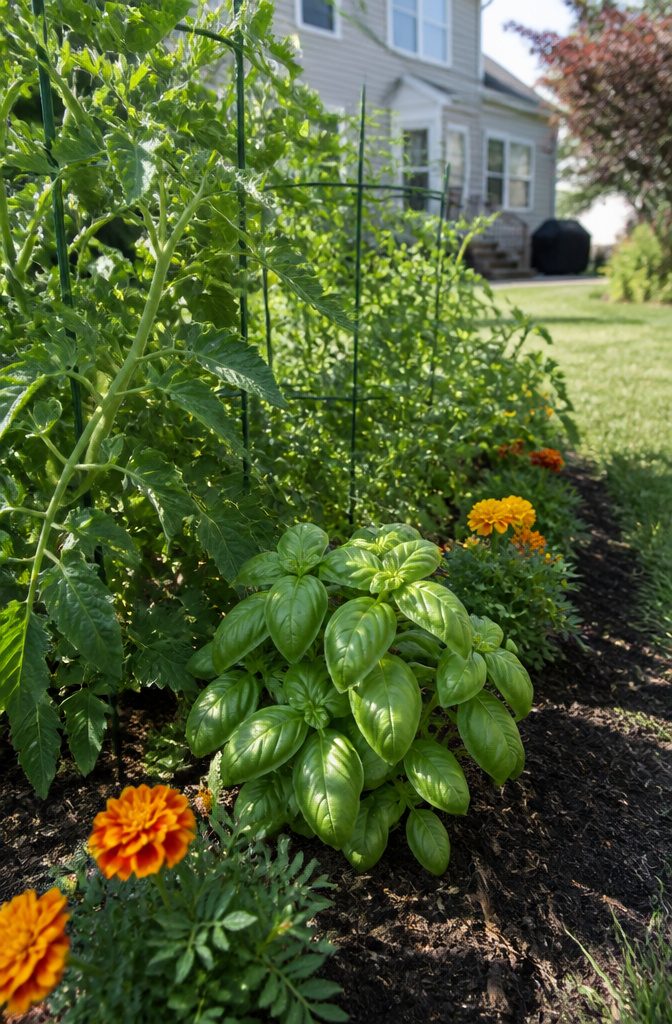
Tomatoes and basil are the pairing most beginners hear about first, and the research actually supports it.
The aromatic oils in basil may repel some pests that bother tomatoes, and the two plants share similar sun and water needs without competing for root space. I would plant them together in a bed without hesitation.
The three sisters method, corn and beans with squash as living mulch, is another combination with real backing. Beans fix nitrogen in the soil that corn demands, while squash vines spread to suppress weeds and shade the ground.
The squash vines among and under neighboring plants is how this traditionally functions, though I think the method works better at scale than in a small starter bed where the squash can overtake everything.
What I would skip is the endless folklore that gets passed around without evidence.
Marigolds do not magically protect all vegetables from all pests. Companion planting has enough solid combinations that beginners do not need to chase rumors.
Start with tomatoes and basil, or the three sisters if you have the room, and let the rest go until you have seasons of observation behind you.
Attracting Good Wildlife
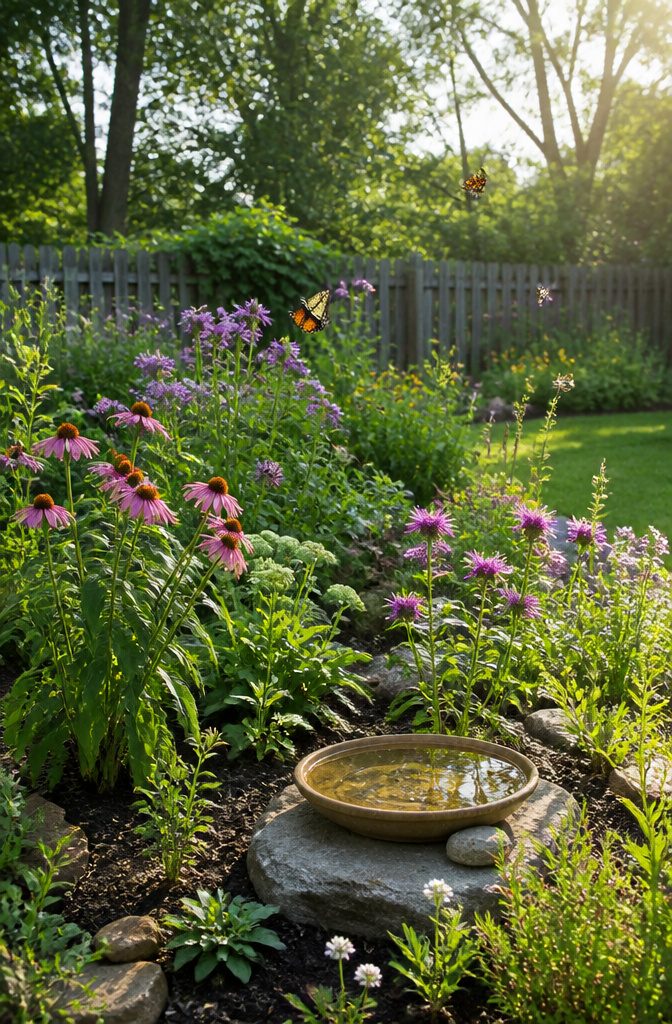
A sterile garden fights harder than it helps. Pesticides, insecticides, and fungicides wipe out the pest predators and pollinators that would have done the work for free, and once those allies are gone, the problems multiply.
Birds, lacewings, and parasitic wasps keep aphids and caterpillars in check, but only if they have reason to stay. A shallow dish of water, refreshed every few days, brings more beneficial insects than any purchased lure.
Native plants draw the strongest pollinator traffic because they have grown naturally in a particular area over hundreds or thousands of years and are well adapted to their native growing conditions.
Cultivars bred for bigger blooms often sacrifice the nectar and pollen bees actually need.
I plant purple coneflower, wild bergamot, and narrowleaf milkweed, and I have watched bumblebees and sweat bees pass over fancier double-petaled varieties to bury themselves in the plain species instead.
Some caterpillar damage means butterflies later. That is the trade-off.
Swallowtail larvae will chew through dill and fennel; monarch caterpillars strip milkweed bare. The plants recover, and the butterflies that emerge do more for the garden than any spray.
What to Plant When
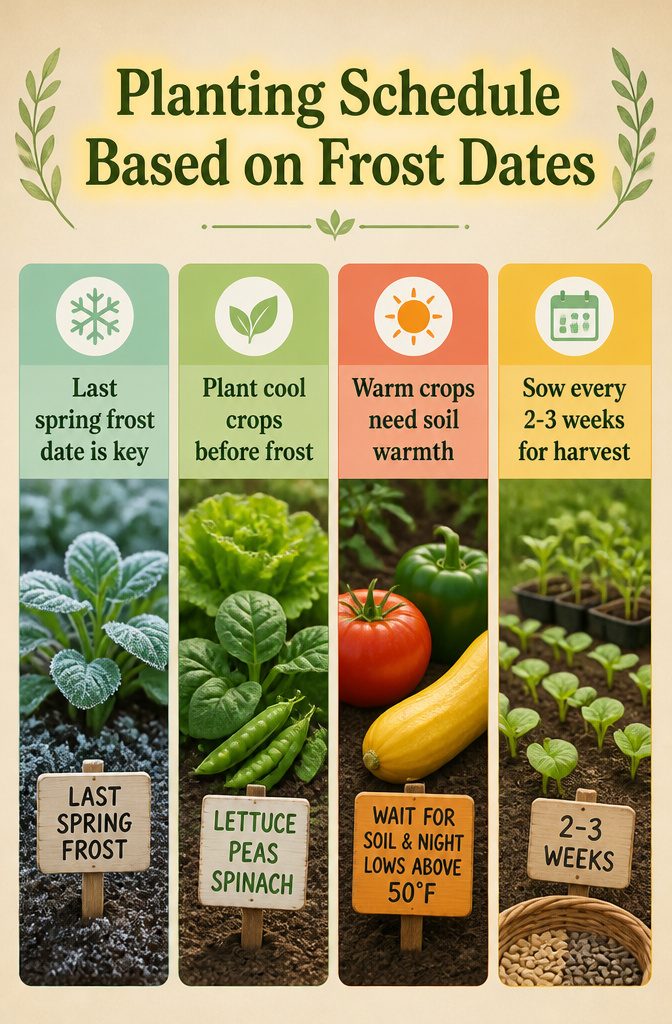
Your local frost dates are the only calendar that matters.
Find your last spring frost date and count backward: cool-season crops like lettuce, peas, and spinach can go in the ground several weeks before it, when soil is workable and daytime temperatures hold steady in the 50s.
They tolerate light frost and even taste better for it.
Warm-season crops, tomatoes, peppers, squash, need soil that has actually warmed and all danger of frost past.
Planting them early does not give them a head start; it stunts them or kills them outright. I wait until nighttime lows stay above 50°F and the soil feels warm in my palm.
Succession planting keeps the harvest continuous rather than one overwhelming glut. Sow the same crop every two to three weeks, or replace early peas with mid-summer beans in the same spot once the peas finish.
The timing is loose and responsive: when one crop looks tired, the next seedling or seed goes in.
Fertilizer Numbers and How to Read Them
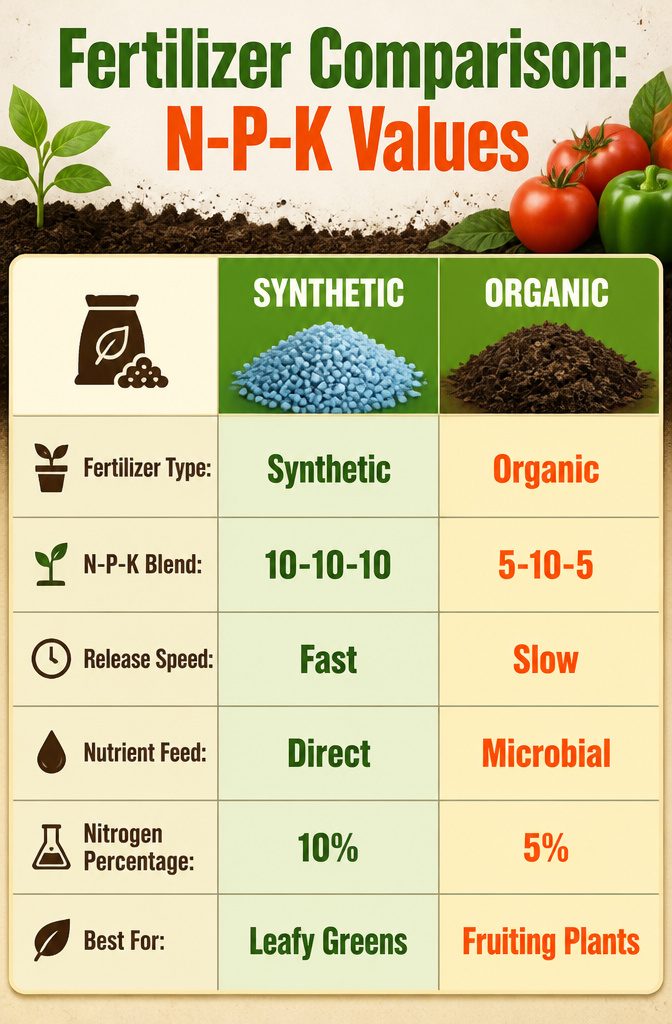
Every bag of fertilizer displays three numbers, and those numbers are the only thing standing between your plants and a chemical burn.
N-P-K means nitrogen, phosphorus, and potassium, in that order. A 10-10-10 blend carries equal parts of each, which sounds balanced but often delivers more nitrogen than a vegetable garden actually needs.
Leafy greens love that nitrogen push; tomatoes and peppers set more fruit when phosphorus runs higher, which is why a 5-10-5 formula exists for the fruiting stage.
Synthetic fertilizers release nutrients fast, sometimes within days, and that speed can override the slower work of soil biology. Organic options, like compost or worm castings, feed microorganisms first and let the soil feed the plant second.
I default to organic for beds I plan to use season after season, because synthetic salts can accumulate and suppress the very biology that makes soil self-sustaining.
Before I feed anything, I test. A basic soil kit reads pH and the major nutrients for under twenty dollars, and it saves me from guessing whether my problem is too little nitrogen or too much.
Last season my lettuce bed read high on nitrogen already; adding 10-10-10 would have produced lush, bitter leaves with no crunch. I sidedressed with composted manure instead and pulled sweet heads six weeks later.
Frequently Asked Questions
What are the best plants for beginners?
Tomatoes, basil, and lettuce are forgiving standbys that teach you plenty without demanding expert skill.
Pick three or four plant types you actually eat, master those, and expand as your confidence grows. Warm-season crops like tomatoes need to wait until after the last frost; lettuce and most herbs prefer the cooler shoulder seasons.
How do I know when to plant my garden?
Plant by your local last spring frost date, not the calendar on the wall. Cool-season crops like lettuce, peas, and spinach can go in several weeks before that date, when soil is workable and days hold steady in the 50s.
Warm-season crops like tomatoes and peppers need nighttime lows above 50°F and all frost danger past; planting them early stunts or kills them.
What tools do I need to start gardening?
A metal trowel with a riveted wooden handle, a quality pair of pruners, gloves, and a watering can will handle almost everything.
A five-gallon bucket holds the whole kit between sessions. Spend money on the pruners; the cheap ones dull in a season and tear stems instead of cutting clean.
How often should I water my plants?
Water when the soil is dry to your second knuckle, not on a schedule. Stick a finger straight in; if it comes out dry at that depth, water.
If it still holds moisture above that line, wait. Water in the morning so roots drink before the sun climbs high, and put moisture on the soil, not the leaves.
What common mistakes should I avoid as a beginner gardener?
Overwatering kills more beginner plants than any pest; roots sitting in wet soil rot and show the same wilting as drought.
Planting out of season, crowding plants too close, and guessing with fertilizer instead of testing soil round out the big five.
Check the top inch of soil with your finger, read the seed packet for spacing, and test before you feed.
How do I prep my garden for planting?
Work the soil at least 6 inches deep, but only after it passes the squeeze test: grab a handful, and if it crumbles away easily, you are clear to start.
If it sticks in a muddy ball, hold off. A soil test tells you pH and N-P-K numbers so you know what you actually have before anything goes in the ground.
Does baking soda help plants grow?
Focus on compost, chopped leaves, or rotted manure to improve soil structure and fertility over time.
What is the 3-hour gardening rule?
Track your actual yard’s sun exposure across a full day instead; most vegetables need 6 to 8 hours of direct sunlight, and a single glance at noon light will mislead you about what that spot really gets.
What is the most common mistake of first time gardeners?
Overwatering, by a wide margin. The urge to help the plant along backfires when roots sit in soggy soil and stop pulling oxygen.
The symptoms look identical to drought stress, so the instinct to add more water finishes the job. Check with your finger before you pour.





