
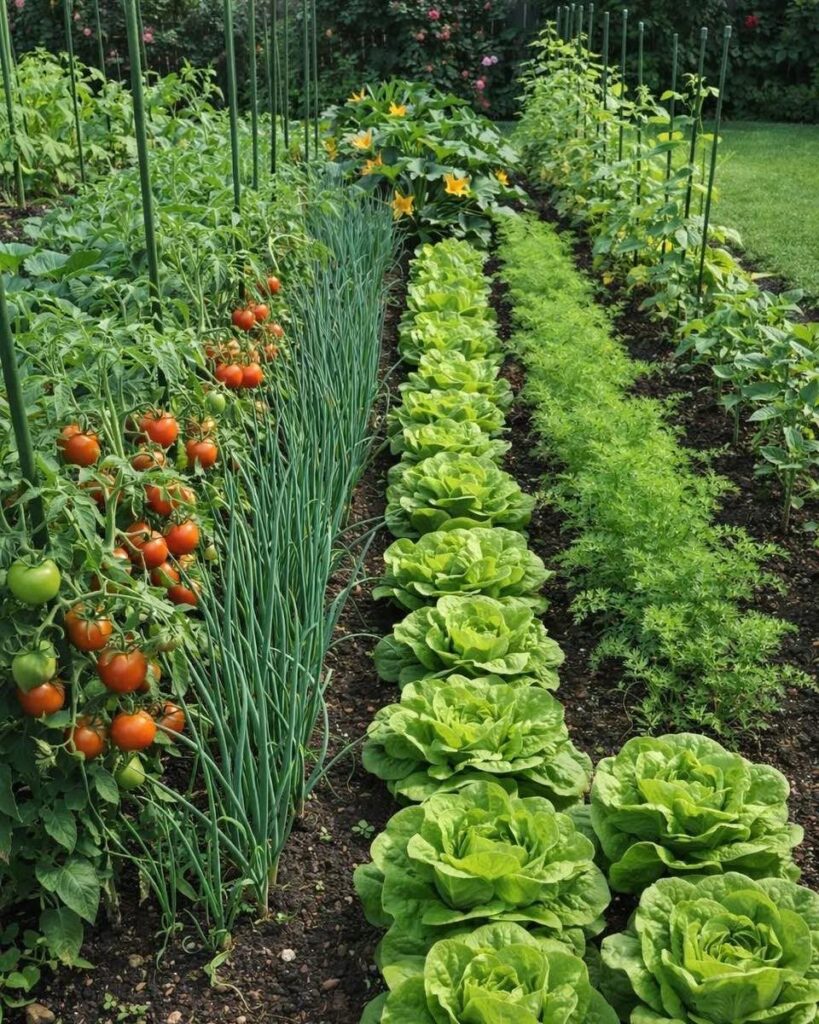
These veg garden ideas range from a free ladder leaned against a wall to a raised bed with its own greenhouse top, and from an hour of setup to a full weekend of building.
Your space and surface decide what works: a balcony with no soil gets a wall garden or hanging PVC pipes, while flat open dirt suits straight rows or raised beds.
Wall-mounted frames need real structure behind them; soil, water, and full-grown plants get heavy in a hurry.
[link-whisper-related-posts]1. Construct Raised Beds
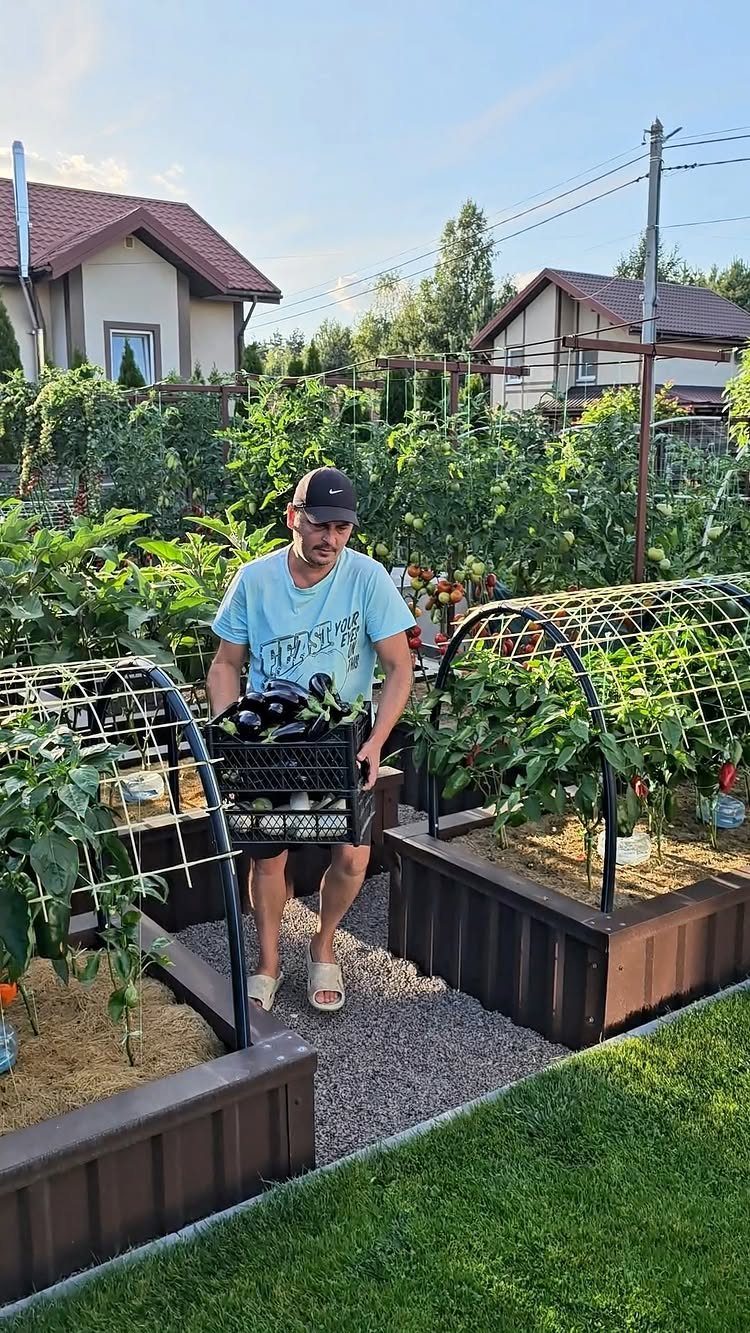
Raised beds give you control over soil from day one, which matters when ground-level dirt is compacted clay or full of roots.
Corrugated metal and wood both work; I’d pick corrugated for longevity, though it costs more up front and heats up faster in summer sun.
A 4 ft width is the practical limit for that. Depth depends on what you grow: tomatoes want deep soil, lettuce manages with far less.
2. Straight Rows
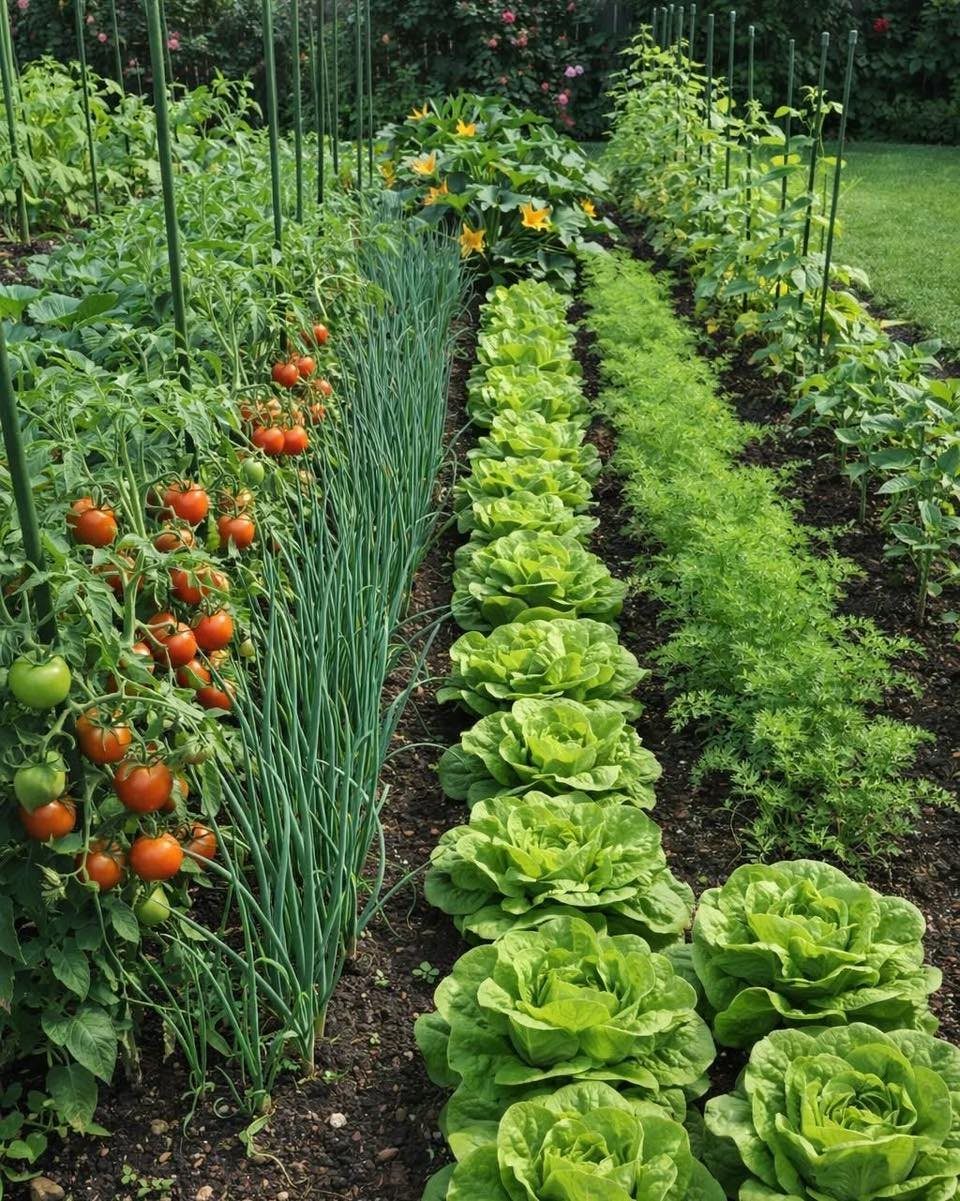
Straight rows suit anyone with a flat, open stretch of ground and a preference for visible order.
They waste more space than intensive layouts, since you need walking paths between every row, but they also let you run a hoe or tiller down the middle without hitting roots.
Stake your lines with string before you plant; the visual neatness happens in that prep step, not after. I’d skip this in a small space, where block planting or raised beds feed you more per foot.
3. Mount a Wall Garden
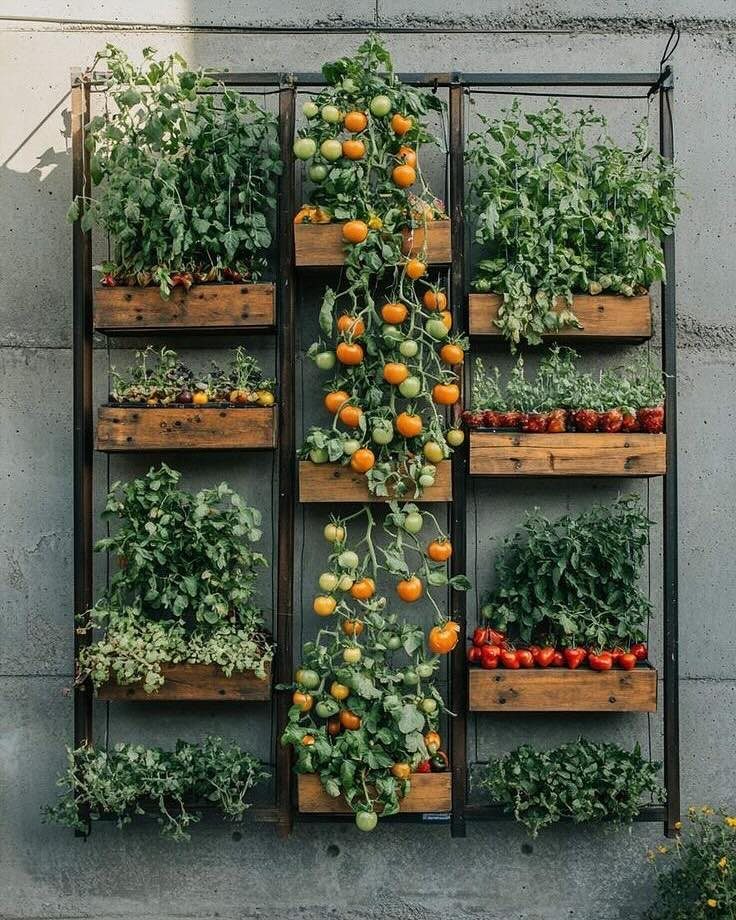
A wall-mounted frame with individual planter boxes turns vertical concrete into growing space, which is the main option when floor space is a balcony, a narrow side yard, or a shared urban lot.
I’d want cedar or a rot-resistant hardwood for the boxes in a wall garden, since standard pine will soften after a few seasons of watering.
Weight is the constraint: soil, water, and mature plants add up fast, so anchor into studs or masonry, not siding. Tomatoes in the upper boxes need the most depth; herbs and greens can manage shallower lower ones.
4. Use Window Boxes
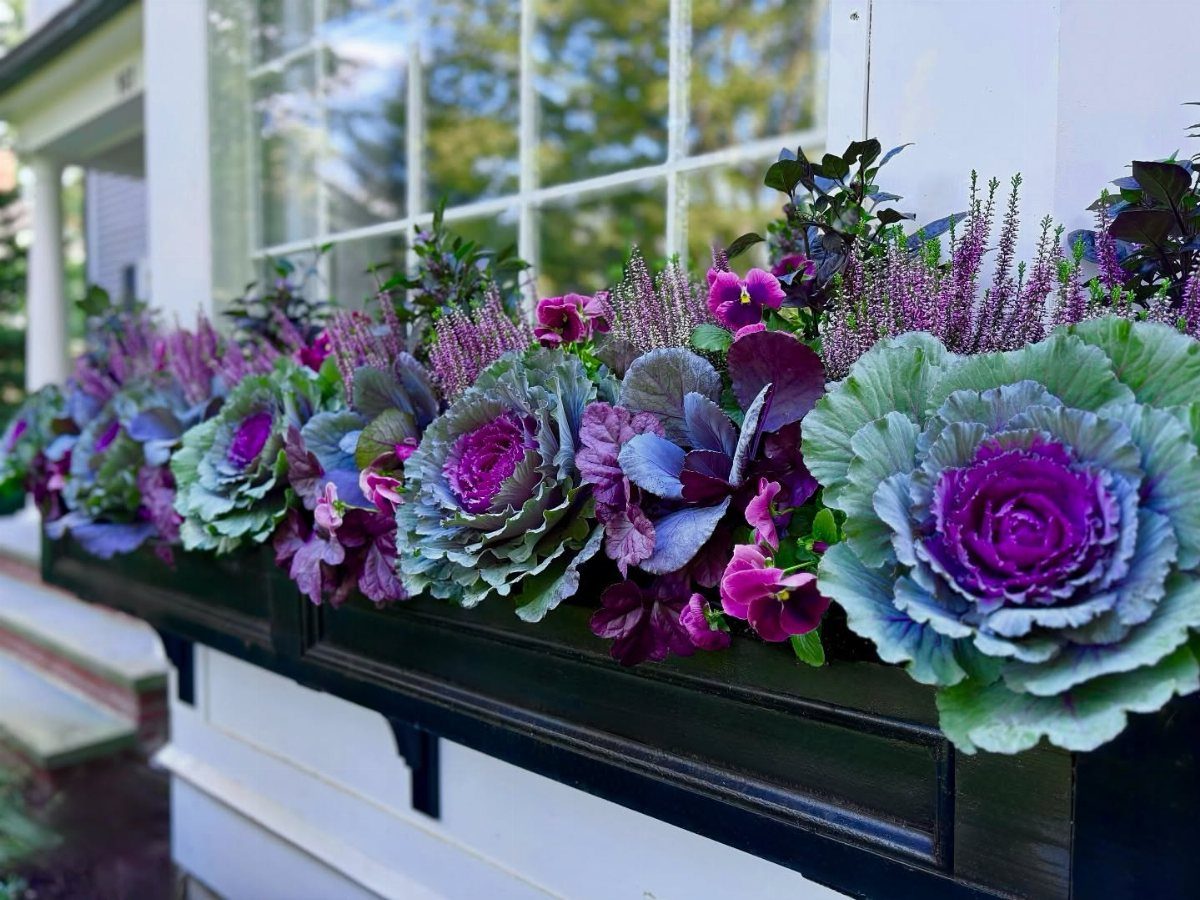
Window boxes put edibles at arm’s length and give a kitchen wall something alive to look at. Ornamental cabbage, violas, and heather handle cool weather and some shade, which makes them a bridge-season choice rather than peak summer production.
I’d treat a box like this as accent planting, not calorie counting; the volume is small and the soil heats and dries fast under a window’s reflected light.
Check that your brackets and the box itself can handle the weight when wet; soil and water add up fast. A south-facing box in summer needs daily water, sometimes twice.
5. Indoor Vegetable Garden
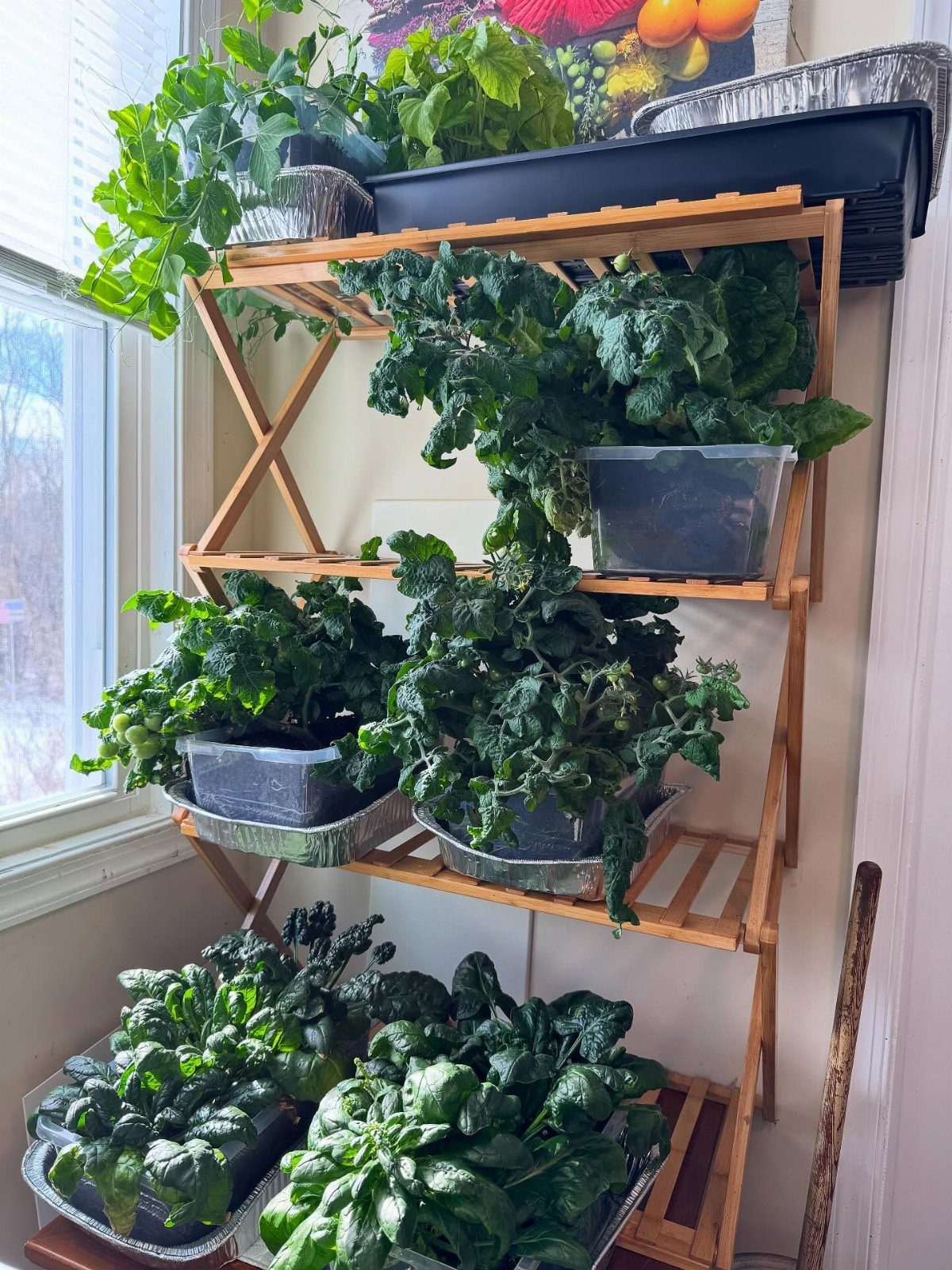
Growing vegetables indoors on tiered shelving extends the season to all year, though what you can grow is limited by light and space.
Foil trays and plastic containers work for starting out, but I’d switch to proper pots with drainage if I planned to keep plants more than a few weeks.
A south-facing window gives some light; most leafy greens and dwarf tomatoes need supplemental grow lights to fruit well. Heat from radiators or vents nearby will stress roots, so I keep shelving a few feet away.
6. Outdoor Kitchen
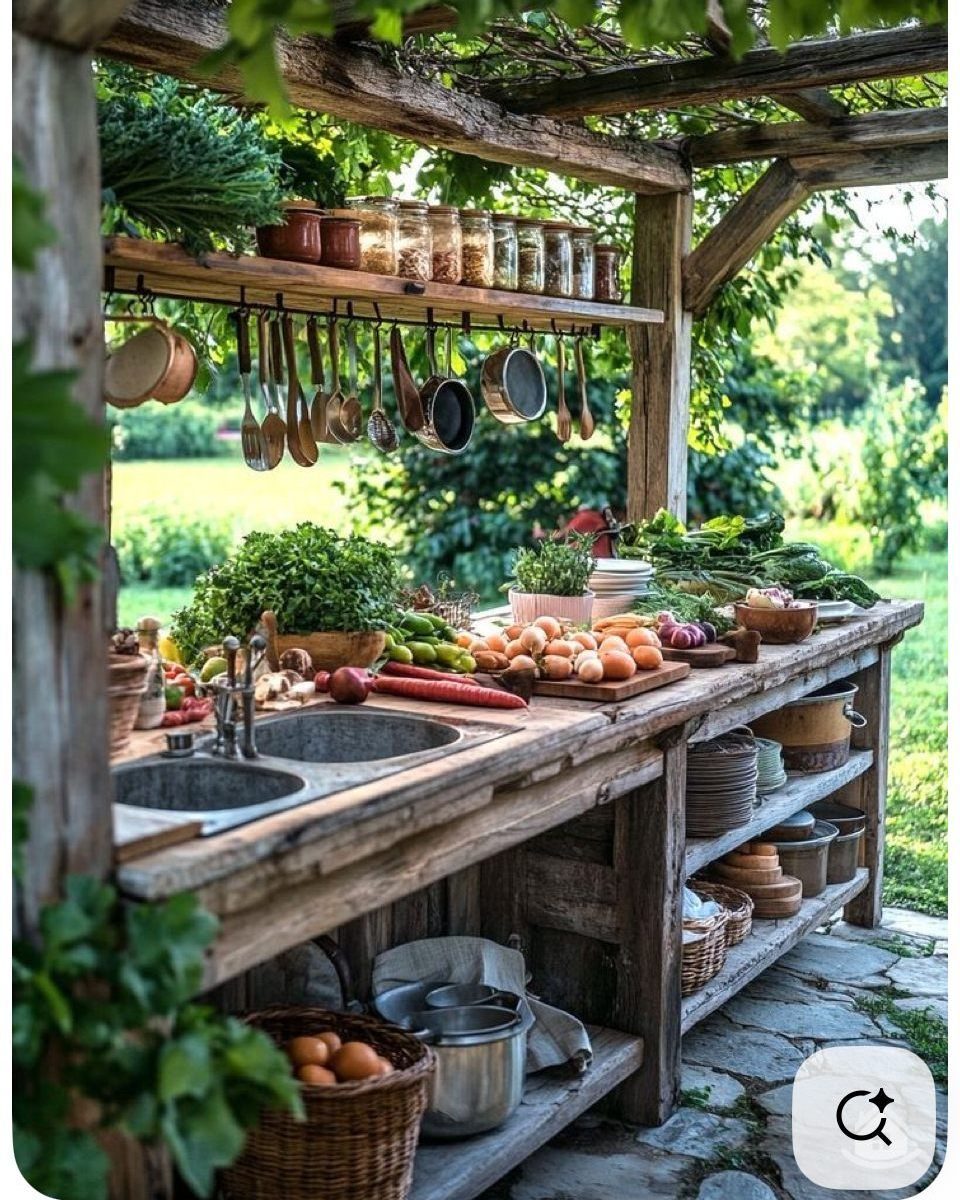
An outdoor kitchen under a pergola is about workflow, not just cooking: harvest, wash, prep, and serve without carrying baskets back inside.
A rustic wood counter with sinks assumes a water line and drainage, which is the hard part; I’d build around what my yard already offered rather than trenching in new plumbing. Hanging utensils and open storage suit dry climates.
In humid ones, I’d want cabinets or at least covered bins for anything metal that rusts. This is a project for a long weekend and serious lumber and fixture costs if you do the labor yourself.
7. Gravel Paths Between Garden Beds
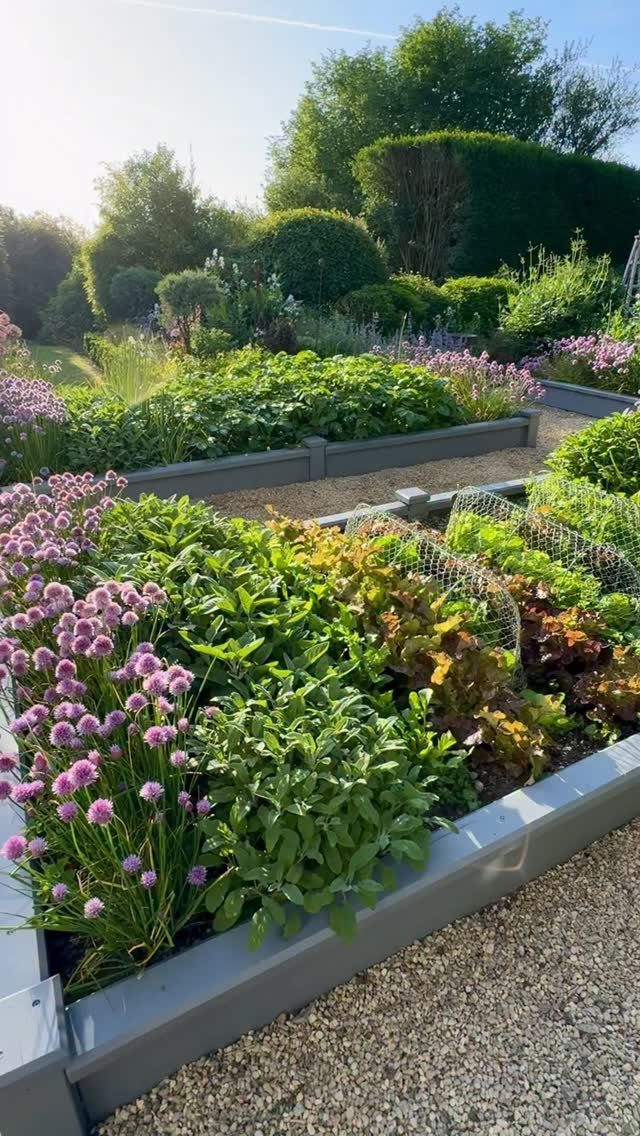
Neat gravel paths keep your boots clean and your lines straight between raised beds. I’d want landscape fabric underneath to slow the weeds; without it, you’ll be picking stray grass from white stones by midsummer.
The crunch underfoot is satisfying, but gravel migrates, so edging of some kind is worth the extra hour. This suits anyone who likes the look of a French potager and has level ground to spare.
8. Vegetables by Color
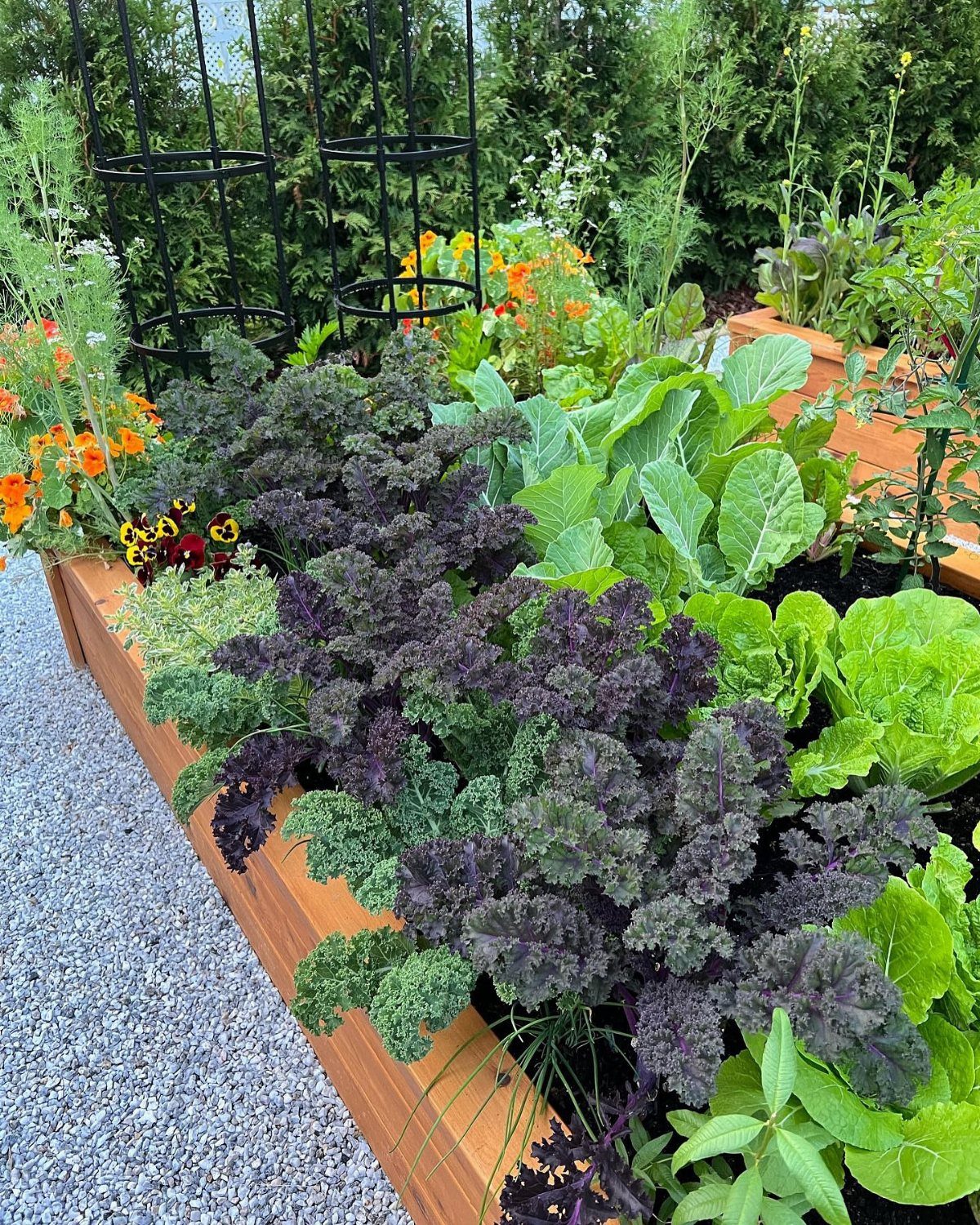
Planting by color turns a functional bed into something you want to look at from the kitchen window.
Purple kale against green lettuce gives you the contrast without sacrificing harvest; I’d add a row of red-veined soror something orange just to break it up.
This is not the most efficient use of space if production is your only goal, but it costs nothing extra and makes the work more pleasant.
9. Fenced Garden
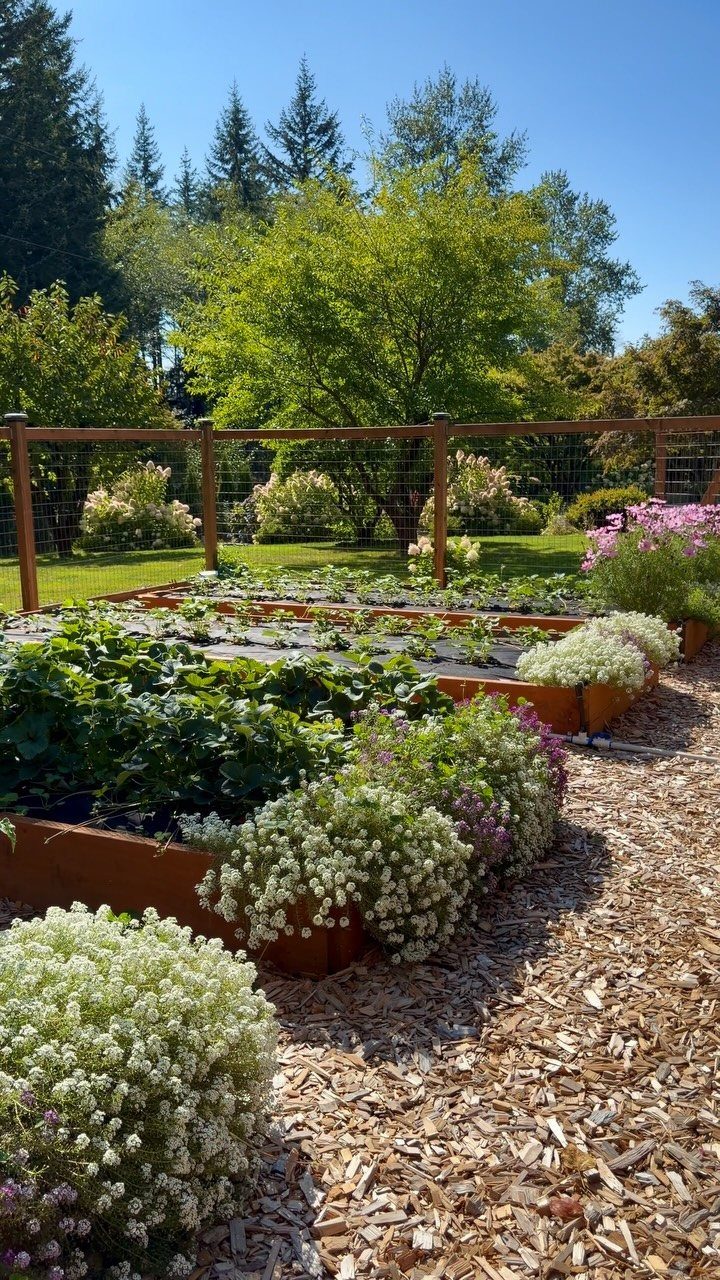
A low wire-and-wood fence marks the boundary without blocking the view, and it slows rabbits at knee height. Wood chips inside the fence line keep mud down and define the space; I’d refresh them yearly since they break down fast.
The alyssum at the bed edges is a nice touch for pollinators, though it is not doing the structural work. This scales to any yard that needs a clear edge and some pest defense.
10. Prop Up a Ladder Garden
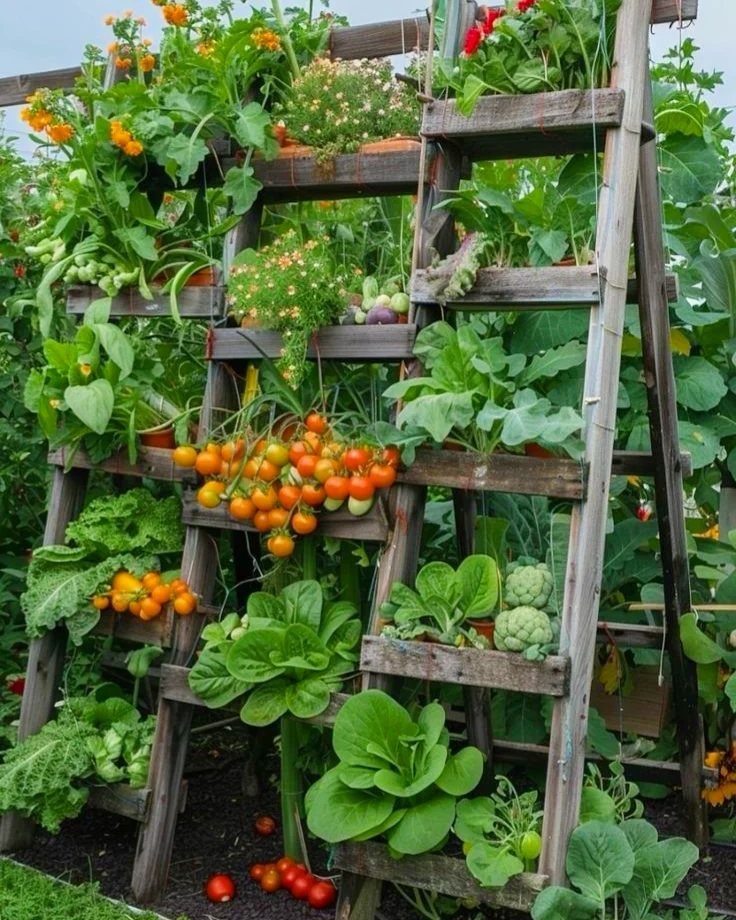
An old wooden ladder becomes vertical real estate when floor space is tight.
I’d check the wood for rot before I trusted it with wet pots; a split rung loaded with damp soil is a mess in waiting. The angle matters: too steep and pots tip, too shallow and it eats walking space.
Lean it against a wall that gets morning sun, and use the deeper rungs for tomatoes, the shallow ones for herbs. This is a Saturday project with zero cost if the ladder is already in your garage.
11. Cucumber Arch
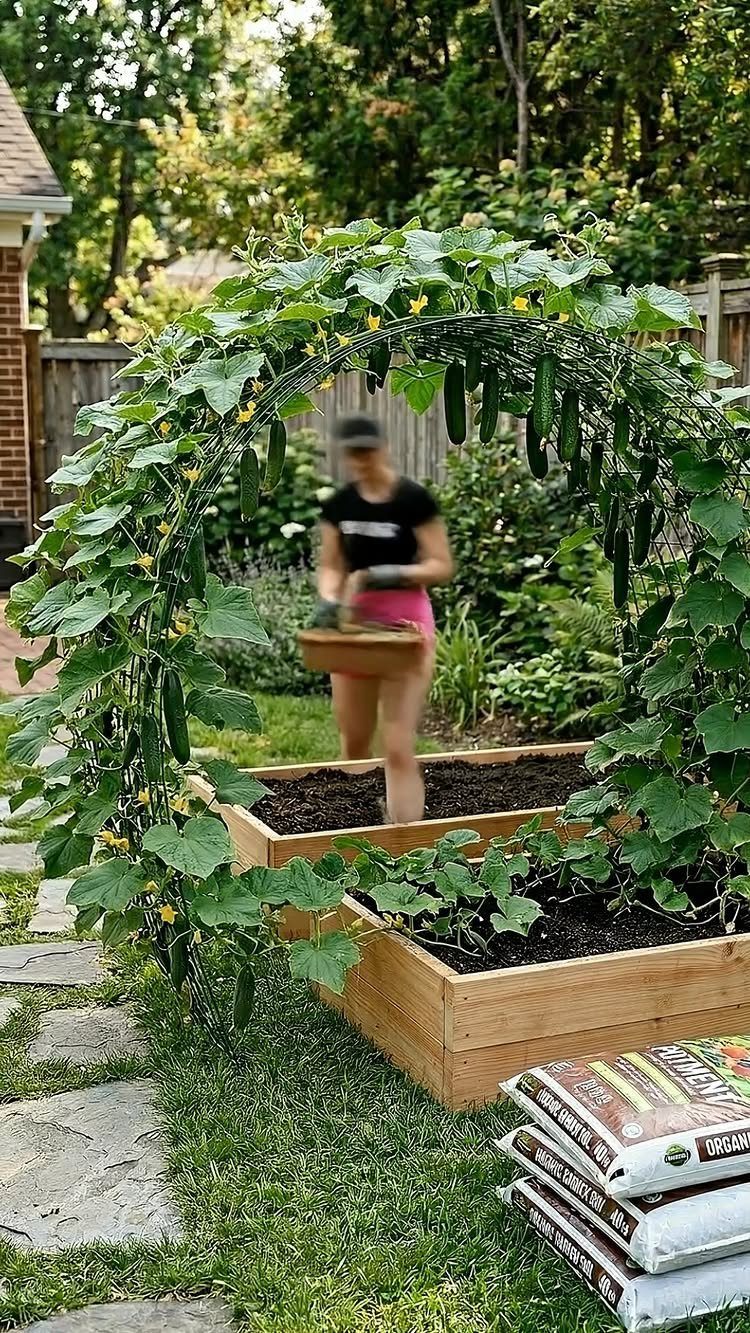
A wire arch between 2 beds gives cucumbers something to climb and you a tunnel to walk through. I’d sink the legs deep enough that the wind cannot twist it once the vines load up and catch the breeze.
The harvest hangs at eye level, which saves your back; the structure itself is simple cattle panel or heavy gauge wire bent to shape.
Build it wide enough to step through comfortably; a narrow arch looks fine early in the season and turns into an obstacle course once the plants fill out.
12. Hand-Drawn Garden Layout Plan
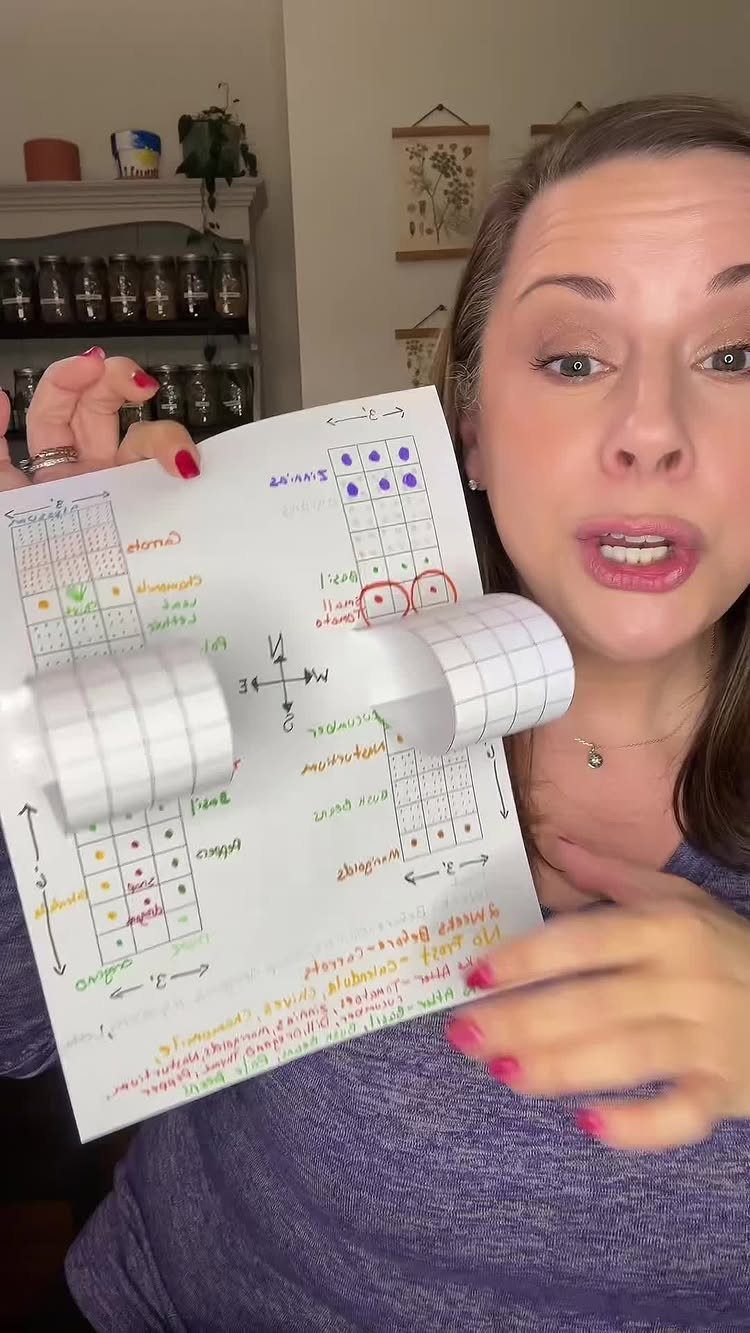
Grid paper keeps your spacing honest before you commit seeds to soil.
One square per foot is the standard scale; color dots for plant families help you rotate crops next season without guessing. I’d sketch paths at full width, not the skinny lines I always wish I’d allowed for.
The plan is only as useful as the measurements you put into it, so pace the actual beds first. This step takes an evening and saves you from crowding tomatoes against beans in May.
13. Hanging PVC Pipe Planters
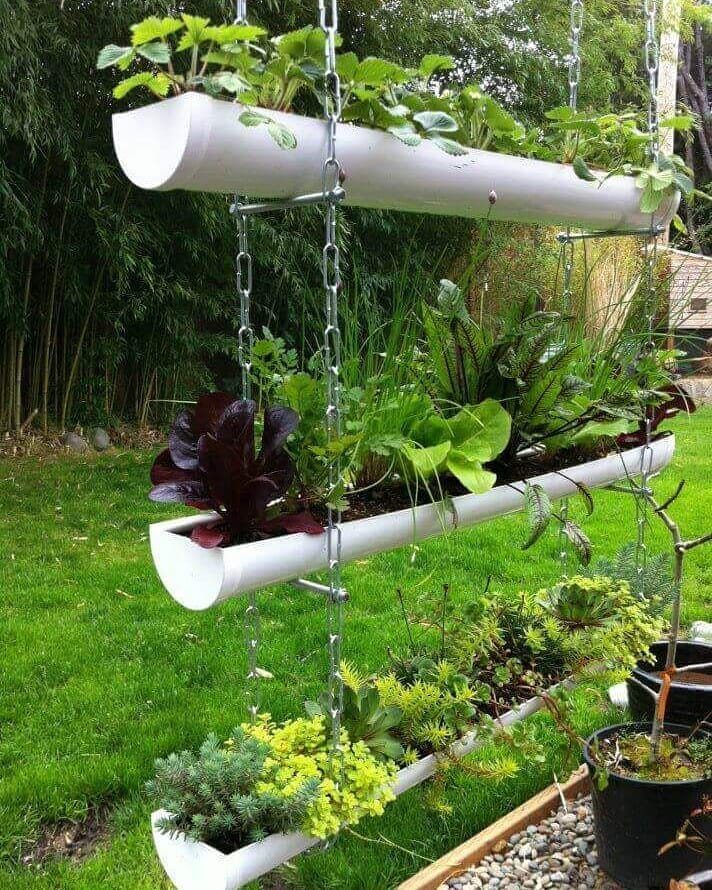
Hanging PVC planters turn fence lines or porch posts into vertical salad columns when ground space is basically a sidewalk. I’d drill drainage holes before filling, since standing water in a sealed tube rots roots fast.
Chain length sets your sun exposure; stagger the tiers so upper pipes do not shadow lower ones. Strawberries work well here, their runners draping over white plastic like a green waterfall.
Leafy greens handle the shallow soil depth better than rooted crops. I’d call this a renter-friendly weekend build, everything unhooks when the lease ends.
14. Trellis Against a Wall
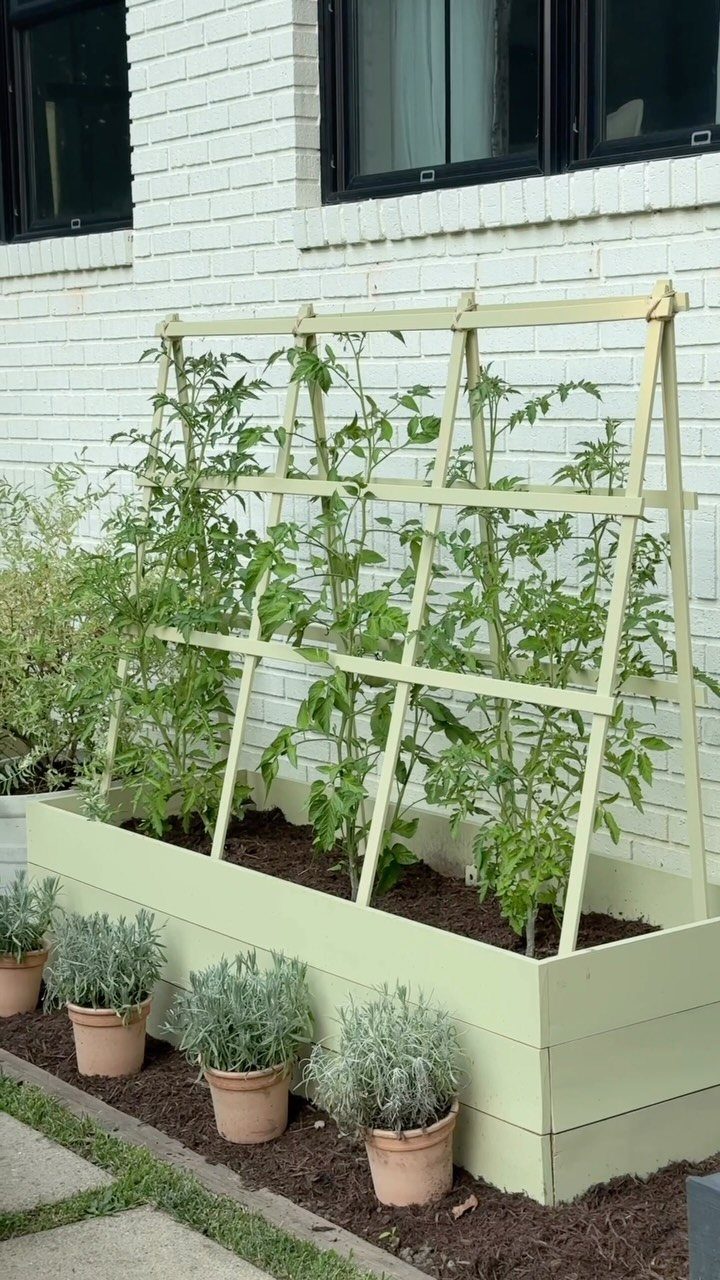
A trellis fixed inside a raised bed against brick gives tomatoes the height they want without the staking fuss.
The pale green paint on both bed and lattice is a choice, not a requirement; raw cedar weathers to gray and lasts longer without maintenance.
I’d set the trellis back from the wall so air moves behind the leaves, which cuts down on blight.
Tomato roots stay in the deep planter soil while the vines climb the lattice; that separation keeps fruit cleaner than ground-crawling plants. The potted line below is optional staging space.
15. Garden Pergola for Vines
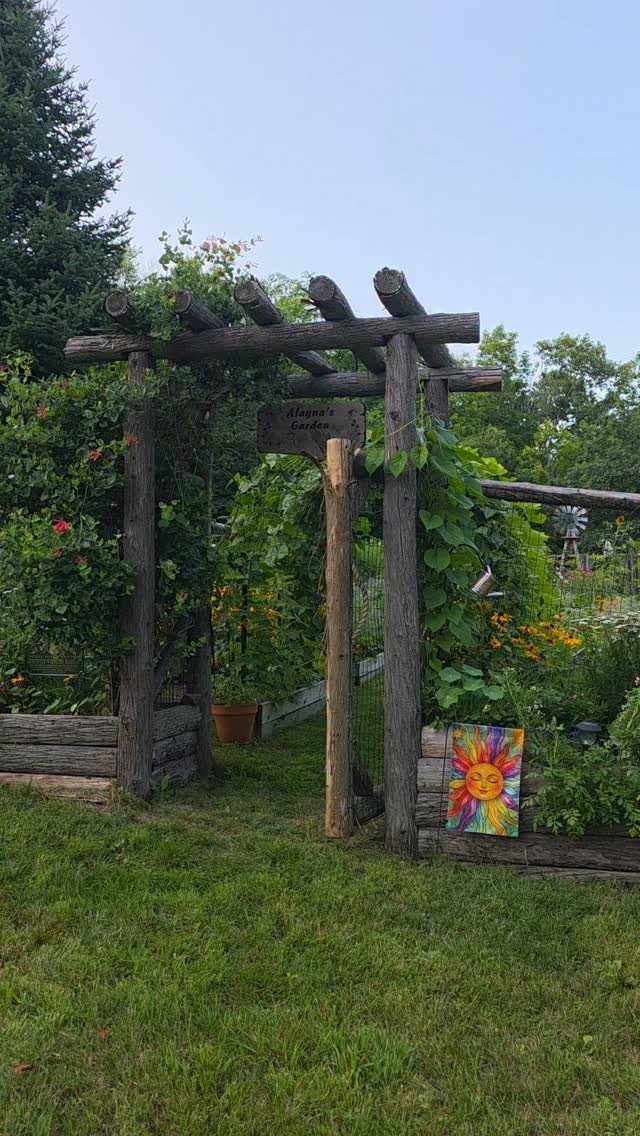
A rough-log pergola planted in the bed itself becomes the trellis, with beans or squash climbing the posts instead of a flat wall.
Sinking the legs in concrete below the frost line is the only way I trust a pergola to stay upright long term; otherwise lean into the rustic look and replace a rotted post when it comes.
The sign and sun plaque are personal touches that make the structure read as a garden room, not just hardware.
Vines fill out fast enough to shade the path by midsummer; plant north of the walkway so the growth catches southern light.
16. Fabric Grow Bags on Rooftop
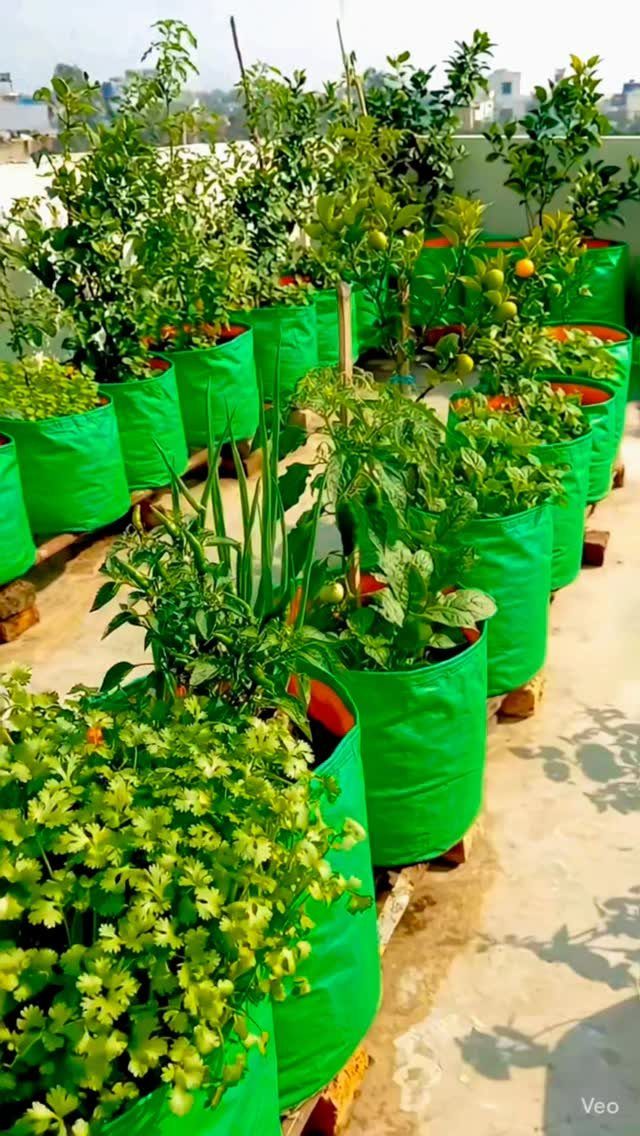
Fabric bags on a roof solve the weight question that sinks most garden dreams above ground level.
Elevating them on bricks and slats buys drainage and air circulation, which the porous sides already help with. I’d expect to water more often than in-ground beds, fabric heats fast and dries out on a July afternoon.
The green color is a manufacturer’s choice; I’d buy whatever weight of felted fabric was cheapest, since functionally they all breathe and drain the same. Romans in rows are easiest to tend, reach every bag from a single path.
17. Raised Bed Greenhouse Enclosure
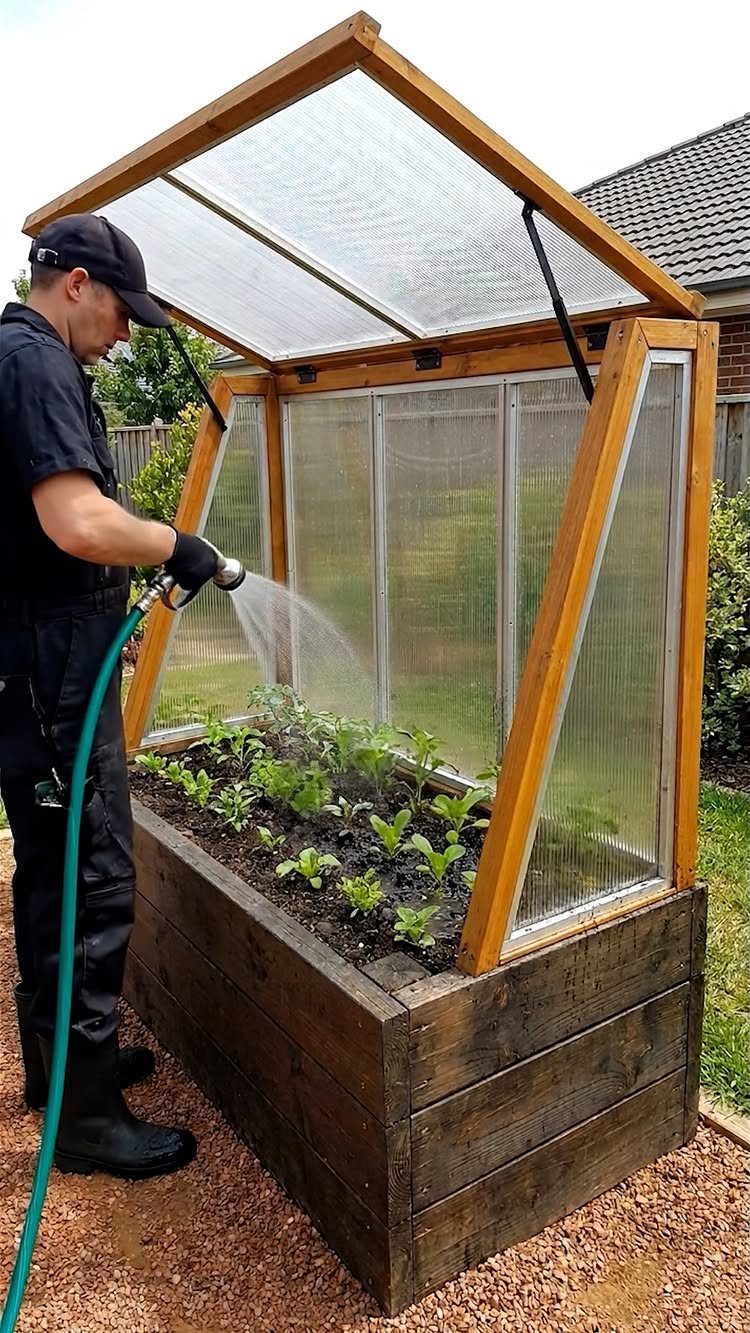
A cold frame top on a standard raised bed stretches salad season by 6 weeks on either end, which is the cheapest season extension I know.
Propping open the top panels on sunny days keeps you from cooking the seedlings underneath. Watering inside matters more than outside, the enclosed air dries soil fast and the roof blocks rain.
I’d build the lid on a hinge or with hooks so I could remove it entirely once nights stay warm enough. One person handles the panel alone if it is framed in lightweight aluminum, not glass.
Planning Your Garden Layout
Sunlight matters more than anything else on paper.
Spend a morning watching where the light actually hits, then put your tomatoes and peppers in the spots that stay bright longest and tuck lettuce and spinach where the edge of the shadow falls.
Height and spread decide whether plants cooperate or compete. Tall tomatoes belong on the north side so they do not shade out shorter neighbors.
Raised beds and containers are the practical choices for front-yard growing, where drainage and soil control matter more than they do out back.
In-ground rows work fine where the soil is already decent and the yard is flat enough to walk.
Airflow between plants cuts down on mildew pressure; cram them tight and you trade harvest volume for fungal problems.
Leave room for your own boots, too. Paths drawn at full width on the plan save you from tiptoeing through mud by July.
Maintaining Your Garden
Regular care is what turns a planted bed into a producing one. Watering, weeding, and pest checks belong on a schedule, not a crisis basis.
Water early in the day so leaves dry before evening; wet foliage overnight invites problems.
Weeding is easier when the ground is damp and the weeds are small. Let them set seed and you are managing next year’s problems too.
Pest management starts with looking.
Check leaf undersides for eggs, watch for chewed edges, and catch the issue before the population explodes. Healthy plants withstand pressure better than stressed ones, so the maintenance tasks stack in your favor when you keep up with them.
The basics of starting or planting a vegetable garden can be achieved in six simple steps: Planning; site selection; soil preparation; planting your seeds; maintaining your garden; and harvesting.
Soil Preparation
Test your soil before you amend it. A basic pH test tells you whether you are working with acid or alkaline ground, which decides whether lime or sulfur enters the picture.
Compost is the amendment that almost every garden needs.
Work it in to improve structure and feed the soil life that makes nutrients available to roots. How much depends on what you started with; thin, sandy ground takes more than loam that already holds together.
Drainage is the other half of the equation. Roots drown in waterlogged soil, so observe where puddles form after rain.
Raised beds solve this by lifting the root zone above the problem; in-ground planting may need grit or organic matter worked through the top layer to open air spaces.
I want soil that stays damp to the touch without holding a puddle, and when I squeeze a handful it falls apart in soft chunks instead of sticking together or streaming out dry.
Frequently Asked Questions
What veggies can you grow in your house?
If you are growing inside, stick to lettuce, spinach, and compact tomato varieties; the tomatoes will need a grow light to set fruit, but the greens handle normal window light fine.
Herbs adapt easily to windowsill life and are the safest starting point. I’d keep shelving away from radiators and vents; heat stress on roots is the silent killer of indoor vegetables.
How do I layout my vegetable garden?
Draw your beds with the tallest crops, like tomatoes or pole beans, along the northern edge so they do not steal sun from shorter plants; group peppers and eggplant together where they will get six to eight hours.
Spend a morning watching where sun falls before you commit anything to paper.
Give yourself paths you can actually walk down with a wheelbarrow; skimp on width and by midsummer you are stepping on plants to reach the tomatoes, which invites disease and costs you yield.
What veggies like to be planted by each other?
The old 3 sisters pairing still works: corn stands first, beans climb that stalk instead of a pole, and the squash spreads underneath to block light from weeds.
The beans also add nitrogen back into the soil the other two will draw out. I’d add that this is a space and fertility strategy, not magic; the plants still need their basic requirements met.
For smaller beds, pairing deep-rooted carrots with shallow lettuce makes sense since they are not competing for the same soil layer.





