
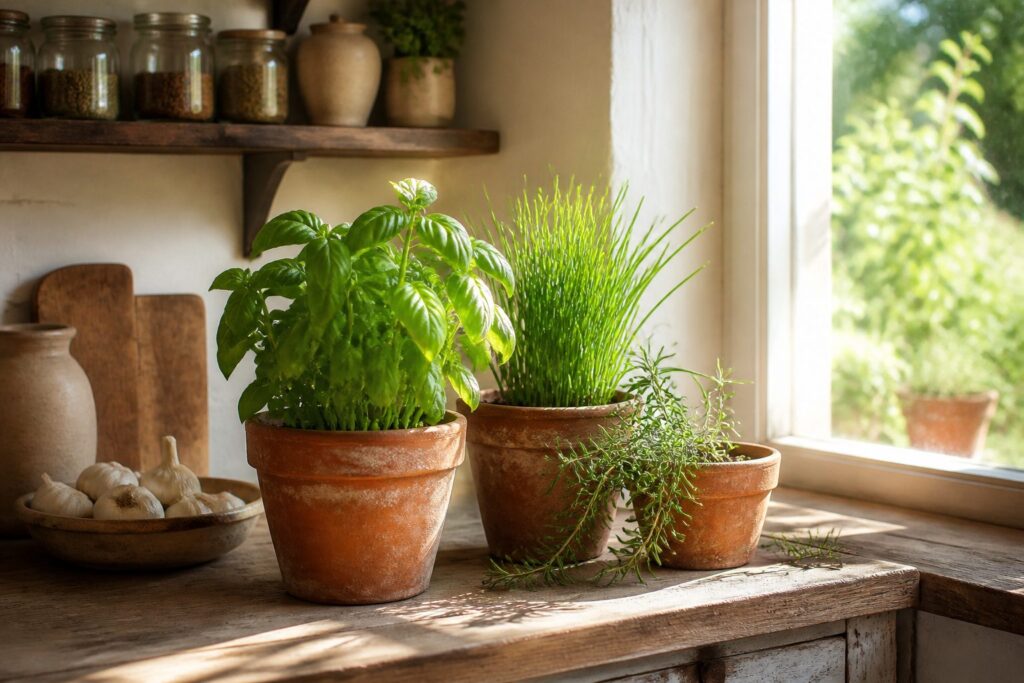
Growing indoor herbs means managing container conditions that outdoor plants handle on their own.
Root rot arrives fast when water cannot drain, which is why a 6-inch terra cotta pot with a real drainage hole outperforms anything sealed or made of plastic.
The same soil that feeds garden tomatoes will suffocate roots in a pot; only a soilless indoor mix with perlite keeps the air pockets alive.
[link-whisper-related-posts]Select Proper Containers
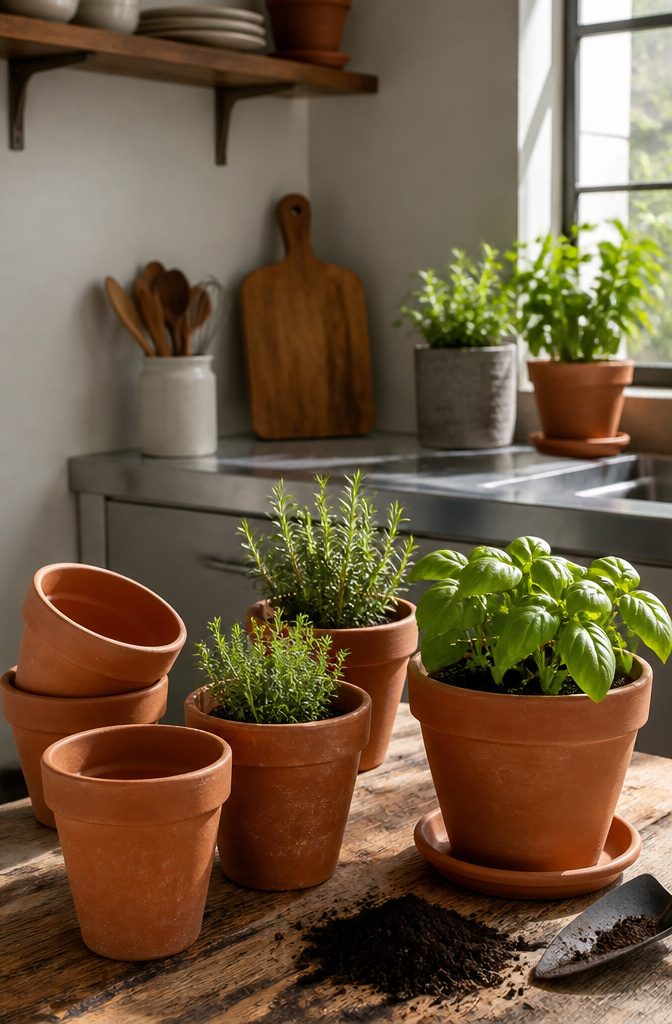
A pot without a drainage hole is a pot I would skip every time. Root rot sets in fast when water has nowhere to go, and indoor herbs already struggle with slower evaporation than outdoor ones.
Most herbs that grow well inside carry shallow root systems, so a container around 6 inches deep handles them without leaving excess soil to stay wet.
Terra cotta clay earns my preference here. The material pulls moisture away from the roots, and the pots usually arrive with a single generous drainage opening rather than a pinhole that clogs.
Cedar and steel work too, though I check for labels like "food grade" and "untreated" before planting anything I plan to eat.
Plastic holds water longer, which means you are managing against mold more often. For a saucer underneath, I like something with a slight lip that catches runoff without looking like an afterthought on the kitchen counter.
Use Quality Potting Mix
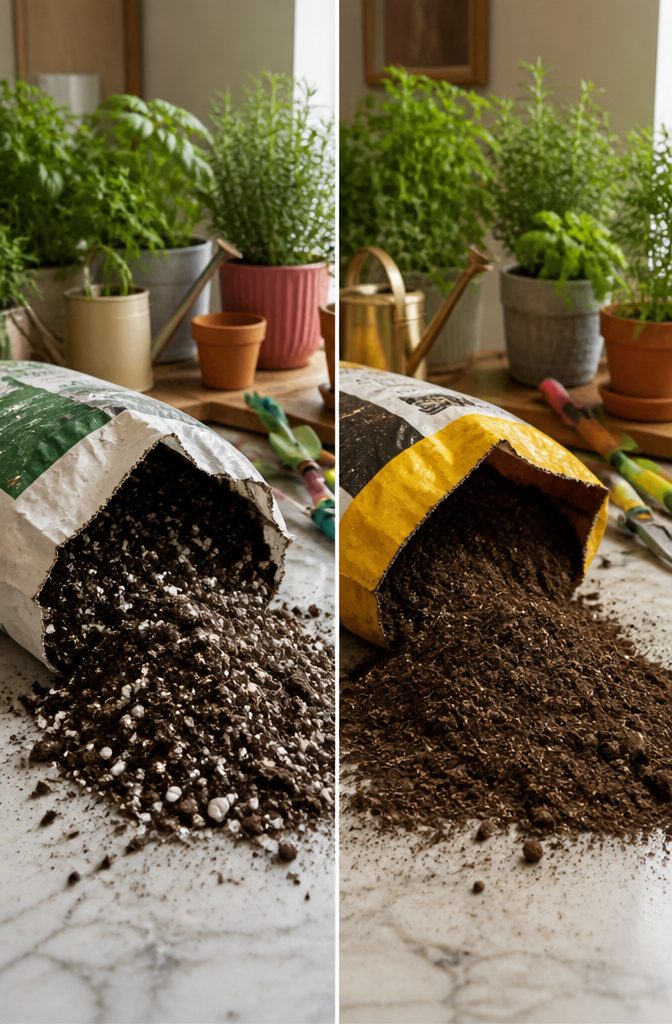
Outdoor garden soil fails indoors for a simple reason: it is not built for a pot. In the ground, soil organisms and deeper layers handle drainage and aeration, but a container has none of that backup.
The same soil that grows tomatoes in your backyard will compact in a pot, trapping water around herb roots until they rot. That is why regular garden soil is not suitable for indoor herbs.
A quality indoor potting mix is soilless and structured to drain fast while still holding enough moisture for roots to access.
Many gardeners improve it further by mixing two parts potting mix with one part perlite, or building a custom blend of one-third potting soil, one-third organic matter like peat moss or compost, and one-third perlite.
The perlite matters; it creates the air pockets that keep roots from sitting wet.
I would skip any bag labeled "garden soil" or "topsoil" for indoor use, even if it is cheaper. The drainage problem is not fixable with a careful watering hand, because the soil structure itself works against you.
A sterile, soilless potting mix is the safer starting point, and the few extra dollars are cheaper than replacing a batch of drowned basil.
Position Herbs for Sunlight
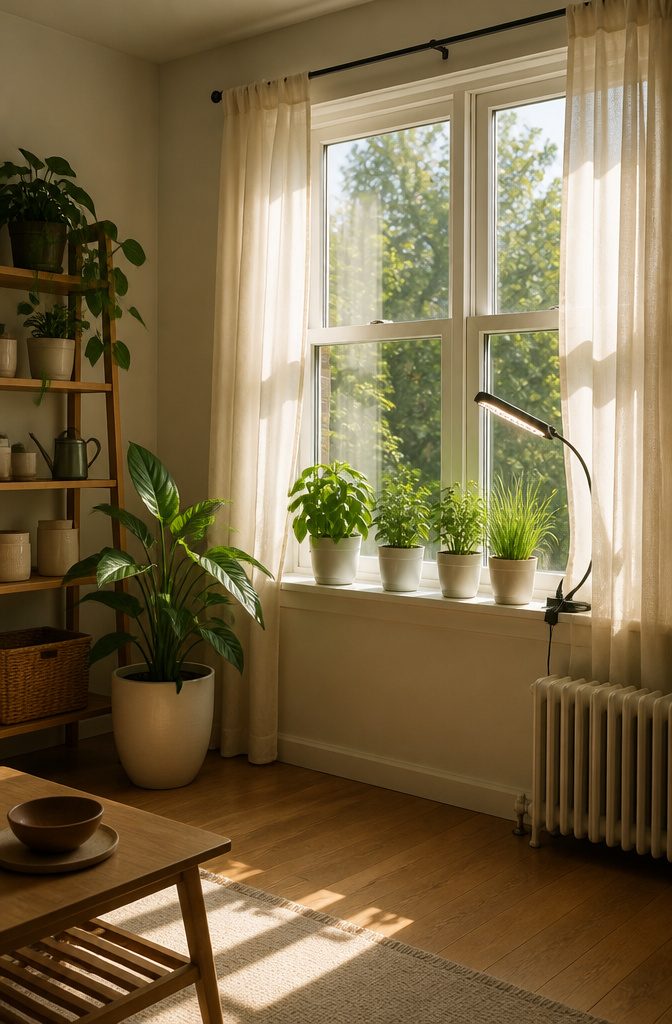
Most herbs want 6–8 hours of direct sunlight each day, and a south-facing window is usually your best bet for hitting that mark.
East or west windows can work for herbs that tolerate partial shade, but a north-facing window will leave them leggy and weak.
If your space falls short, a full-spectrum grow light changes the equation.
Run it for 12–16 hours daily, positioned 6–12 inches above the plant tops. I would go with a timer or smart plug; herbs need consistency, and forgetting one evening sets growth back.
Clip-on lamps, hanging bars, or tabletop fixtures all work, as long as the light covers the whole plant and you rotate the pot every few days to keep growth upright.
LED full-spectrum models are the default choice now, though compact fluorescent bulbs in basic task fixtures still handle a few plants if that is what you have.
The gap in my own setup is the cost difference; prices shift too fast by retailer and season to pin down here.
What I can say is that even a plug-in 4-foot LED shop light from a hardware store will keep a small collection alive through a dim winter, and that is the route I would take before investing in a dedicated system I was not sure I would stick with.
Water and Rotate Regularly
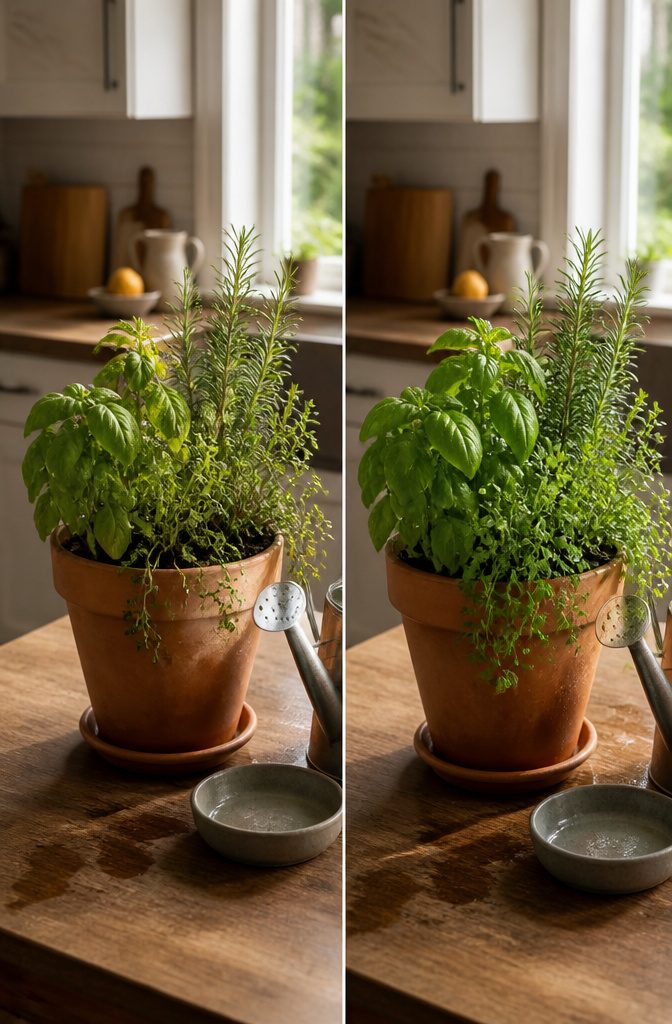
The top inch of soil drying out is your signal to water, not a calendar date. Herbs need less water than most people think, and overwatering is the mistake that kills more indoor herbs than underwatering ever does.
Roots sitting in soggy soil rot fast. When you do water, soak the pot until water runs out the drainage hole, then empty the saucer within 15 minutes so the roots are not marinating.
Light hits the window side of the plant hardest, so the stems lean and the leaves crowd one direction. A quick rotation every couple of days keeps growth even and the plant from getting lopsided.
I skip the fussy tracking apps and just turn the pot when I water, which is frequent enough to matter and easy enough to stick with.
Fertilize Lightly
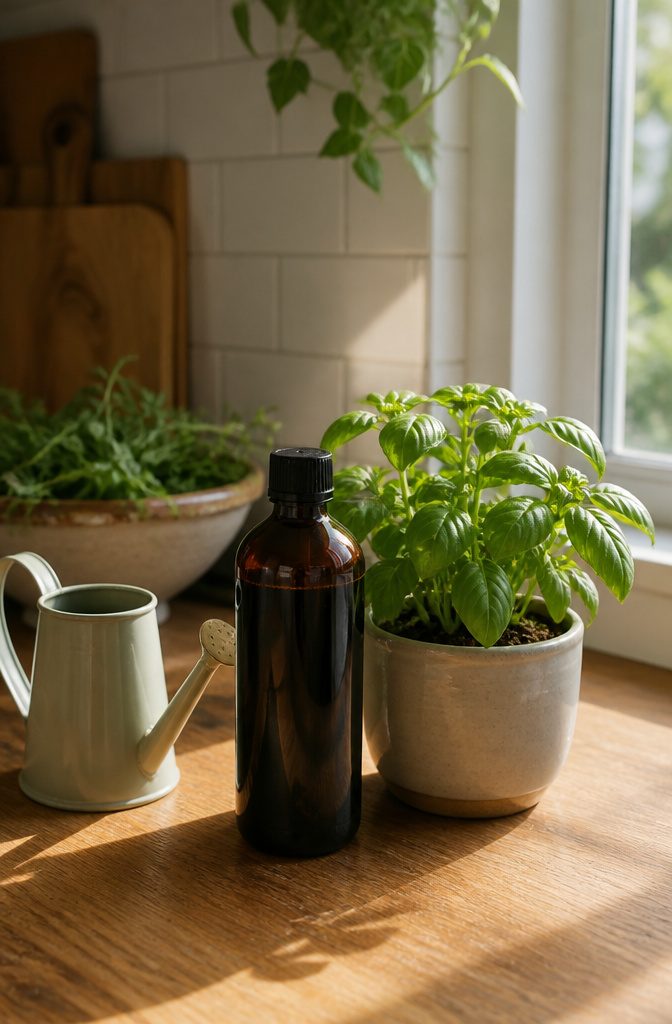
Diluted organic fertilizer every four to six weeks is enough for herbs under grow lights or on a windowsill.
I cut the strength to half what the label says, sometimes a quarter for seedlings or slow-growing plants like thyme, and apply it only when the soil is already damp. Dry roots take up nutrients too fast and burn.
Heavy feeding hurts herbs more than it helps. Nitrogen pushes soft, leafy growth that smells weak and tastes flat; the oils that make basil taste like basil concentrate when the plant works a little harder.
Penn State Extension notes that over-fertilized herbs lose aroma and flavor, and that is why you are growing them.
A weak fish emulsion works fine if you do not mind the smell.
Some organic blends carry a sharp manure or fish odor that lingers in living room air, so I would check the label before buying, or skip them for indoor pots entirely.
Liquid kelp at half strength is what I would reach for instead: the minerals are there, the scent is not, and a bottle lasts most of a year for a few pots.
Harvest Properly
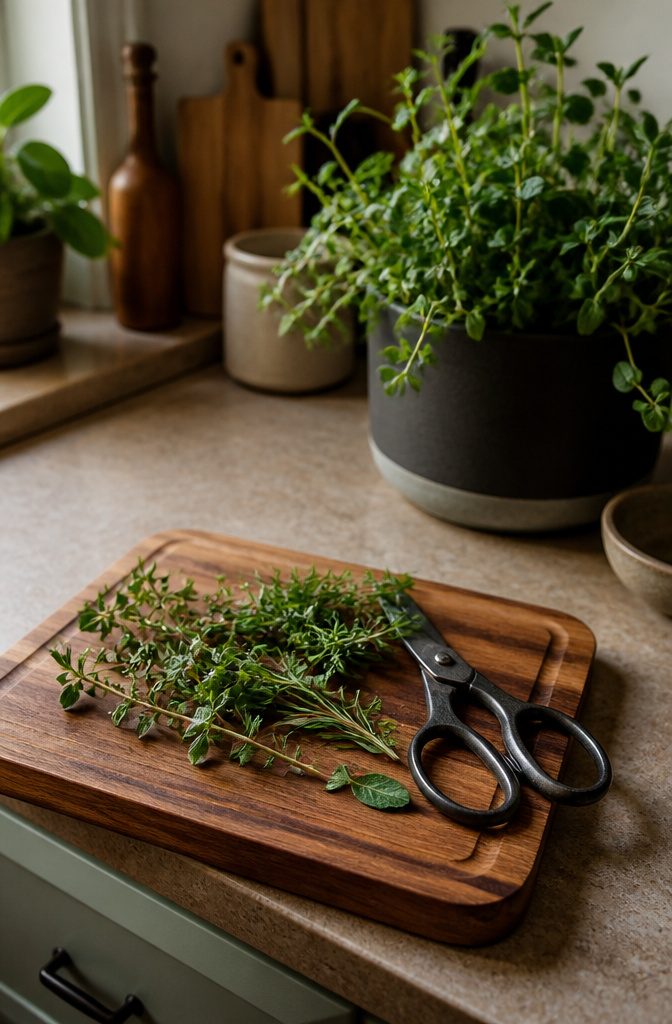
The first thing to check before your scissors touch the stem is height.
Most herbs need to reach 6–8 inches tall before they can handle a harvest, though a few will be ready closer to 4–6 inches if they have several strong stems already.
Height matters because a plant that is too young will not recover well.
Cut just above a leaf node, the point where new leaves form.
This is the detail that decides whether your plant fills out or thins out. A clean snip there tells the stem to branch in two directions instead of continuing one single line upward.
The one-third rule is non-negotiable: never remove more than a third of the plant at once.
Overcropping stresses the herb and can kill it. I treat this as a hard ceiling, not a suggestion, because the plant needs enough leaf surface left to keep photosynthesizing and pushing out new growth.
Regular harvesting is what keeps an indoor herb from going leggy. The plant responds to trimming by growing bushier and more compact, which means more leaves in the same footprint on your windowsill.
Morning is the best time to cut if you want peak oil content and the strongest flavor in what you gather.
Indoor Herbs That Grow Well
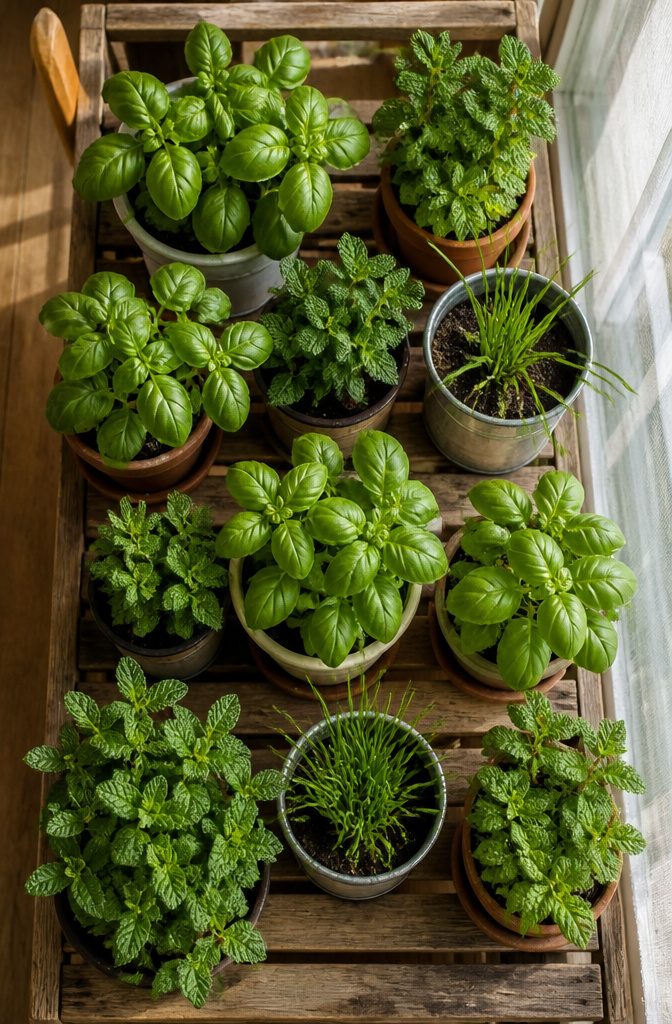
Basil wants warmth more than anything else indoors.
Keep it out of the cool air near a window, because its leaves droop and fade fast below 70 degrees. That same heat makes it a fast grower with deep roots, so give it space and its own pot.
Mint is hardy enough for lower light, but its aggressive roots mean it needs a solo container no matter what.
Parsley and chives both handle cooler indoor temperatures and adapt without fuss. Chives in particular reward repeat snipping, which keeps the plant productive.
Thyme, oregano, and chives share similar light and water needs, so they can live together in one planter.
Oregano brings bold aroma to Italian cooking, while thyme stays compact and pairs well with roasted meats. Rosemary also likes its own space, being woody and large, and it tolerates dryness between waterings better than most.
Cilantro sits with parsley in preferring cooler temperatures and moist soil, but it bolts quickly in warmth, so a cooler windowsill works in its favor. Sage tolerates some dryness too, though it can attract pests more readily than the others.
For a first indoor garden, I’d start with basil, mint, parsley, and chives. They ask for less and give more while you learn.
How Much Light Each Herb Needs
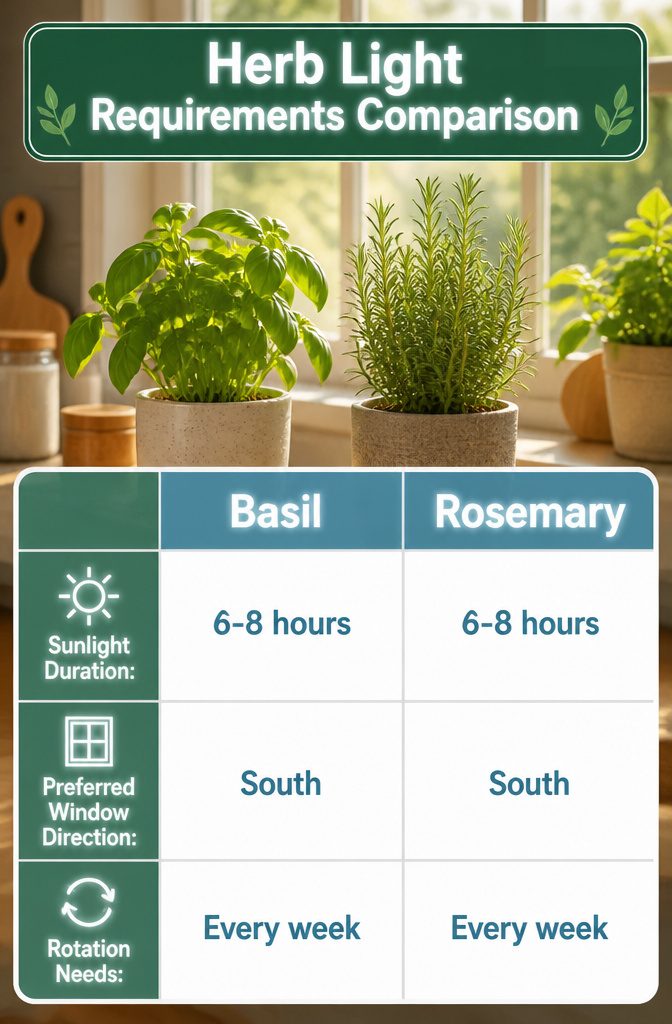
Most indoor herbs need 6–8 hours of sunlight daily to stay compact and flavorful.
Basil and rosemary sit at the hungry end of that range; mint, parsley, and thyme will manage with a little less, which makes them the safer bet for a west-facing window that only catches afternoon sun.
Direction matters more than how bright the room feels overall. A south-facing window delivers the steadiest light, while north-facing ones usually fall short entirely.
East or west can work for the more forgiving herbs, though I would still rotate the pots about twice a week so growth stays even instead of leaning toward the glass.
If your best window still leaves plants stretching for light, a grow light fills the gap.
Keep it close, roughly 12 inches above the leaves, and run it 12–16 hours on a timer. It is not a perfect substitute, but it beats watching leggy seedlings collapse under their own weight in December.
"Provide as much direct sunlight as possible (about 8+ hours daily)… rotate the plant about twice a week so all sides receive adequate light."
That rotation step is easy to skip, yet it is what keeps a windowsill herb from turning into a one-sided shrub.
When and How Much to Water
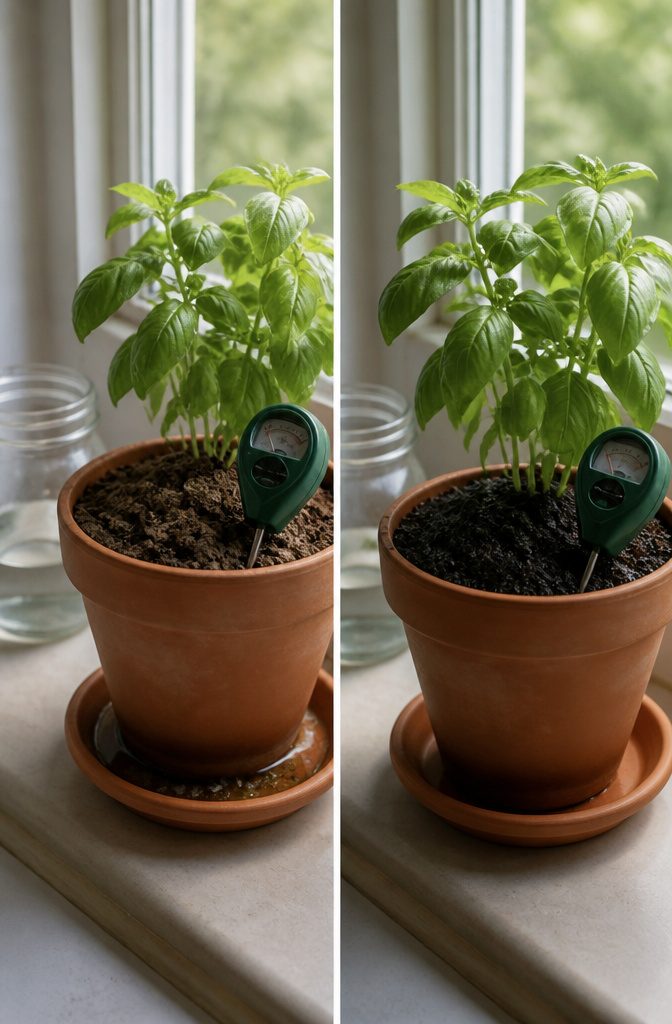
The top inch of soil is the only thermometer you need.
When it feels dry to your finger, water thoroughly until it drains from the bottom hole, then let the pot sit in the sink for fifteen minutes so the roots are never left standing in water.
Herbs recover faster from a missed watering than from soggy roots, and most varieties prefer that brief dry spell between drinks.
Seasons change the math more than people expect. Indoor air dries faster in winter with the heat running and slower in summer when humidity lingers, so a weekly rhythm that worked in March may drown your plants by December.
I check more often in January and less in July, and I still get surprised.
Basil, cilantro, and dill want moisture more consistently, while rosemary and sage can handle a longer stretch between drinks.
The signs of trouble look similar from opposite causes: drooping leaves mean both overwatering and underwatering, so the soil check decides it, not the plant’s posture.
Yellowing leaves and a dropping habit usually point to root rot from standing water, not thirst. A moisture meter takes the guesswork out if your finger is unreliable, though I find the finger test covers most mornings just fine.
Soil and Fertilizer for Potted Herbs
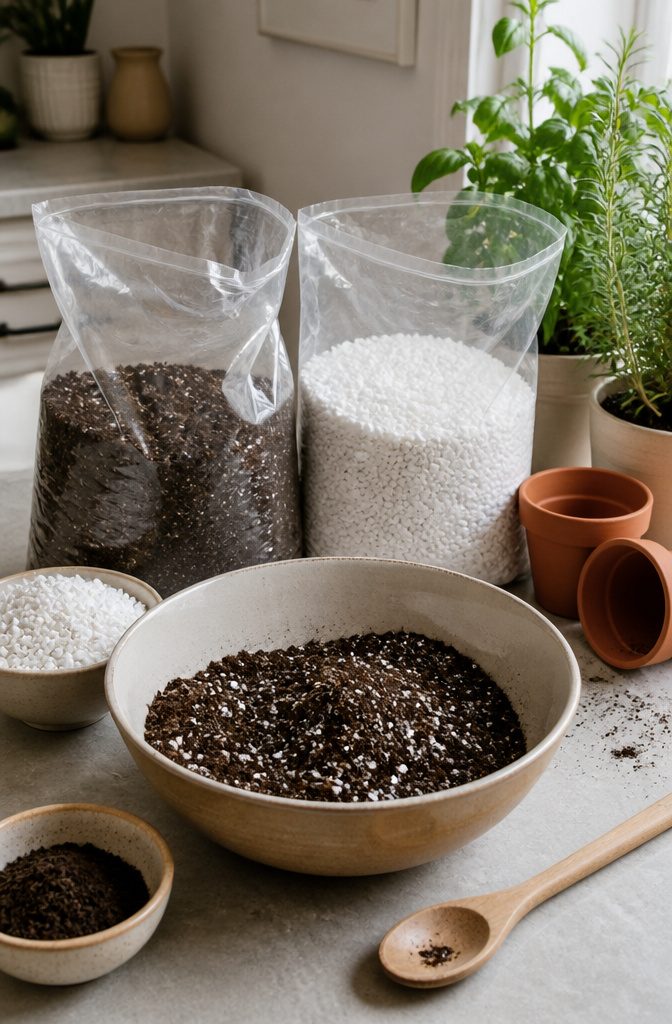
The mix you pot herbs in matters more than the pot itself.
A blend of two parts soilless potting mix to one part perlite drains fast enough for Mediterranean herbs like rosemary and thyme, which rot in anything that holds moisture.
Straight potting soil is too dense; it stays wet too long and roots suffocate.
I would skip outdoor garden soil entirely. It compacts in a container, and it brings in pests and pathogens you do not want living on a windowsill.
Most herbs need so little food that overfeeding becomes the real risk.
Too much nitrogen grows lush leaves with hardly any flavor. A liquid houseplant fertilizer at half the label strength, applied every 4–6 weeks through spring and summer, keeps plants productive without pushing them past what tastes good.
I would put the fertilizer in already-moist soil; dry roots take it as a shock. Fish emulsion at that same weak concentration works if you prefer an organic route.
Either way, stop in fall. Indoor herbs slow down enough that extra nutrients just sit there unused.
Pests That Show Up Indoors
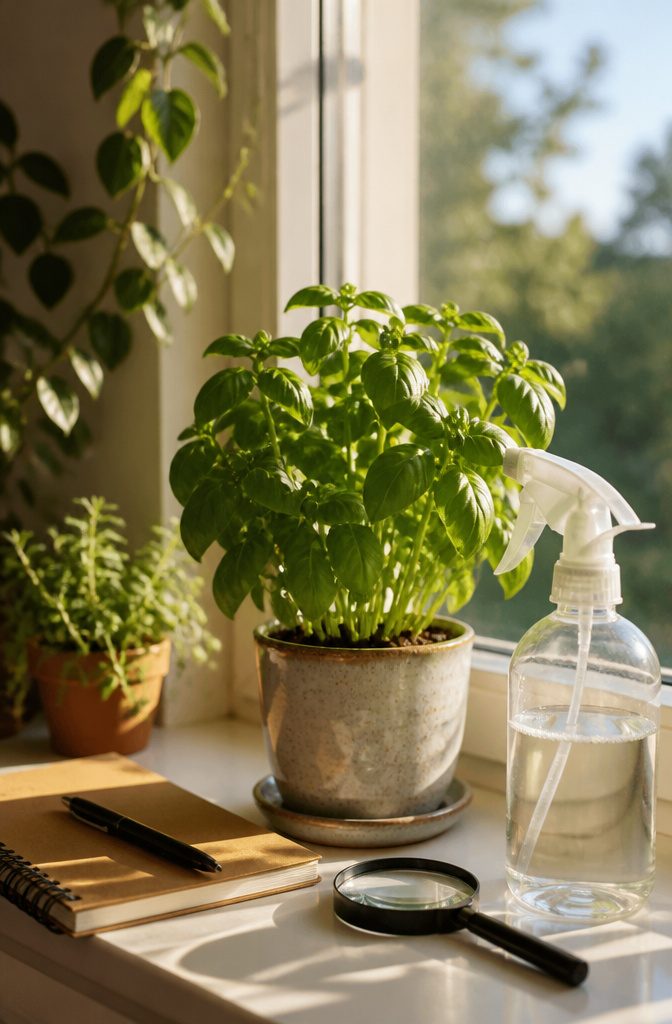
Aphids and spider mites are the two pests that actually matter when you grow indoor herbs. Aphids turn up more often when plants sit too close together, while spider mites love the dry air most heated homes run in winter.
I check the undersides of leaves every few days because catching them early is the difference between a quick rinse and a real problem.
A soapy spray of 1–2 tablespoons mild dish soap per gallon of warm water, applied once a week while you can still see pests, handles both species without much fuss.
Plain water sprayed at regular intervals also knocks spider mites back, since they thrive on dryness.
Insecticidal soap works for aphids and spider mites on most herbs; woody types like rosemary or lavender may need horticultural oil if scale or mealybugs show up, though those are less common indoors.
Always wash treated leaves before cooking with them.
Some herbs arrive with hitchhikers from the greenhouse. A quick dip in cool, sudsy water followed by a rinse and air-dry before placing near your other plants saves a lot of trouble later.
If one plant stays buggy despite treatment, I would rather discard it than risk the rest of the windowsill.
Temperature and Humidity Indoors
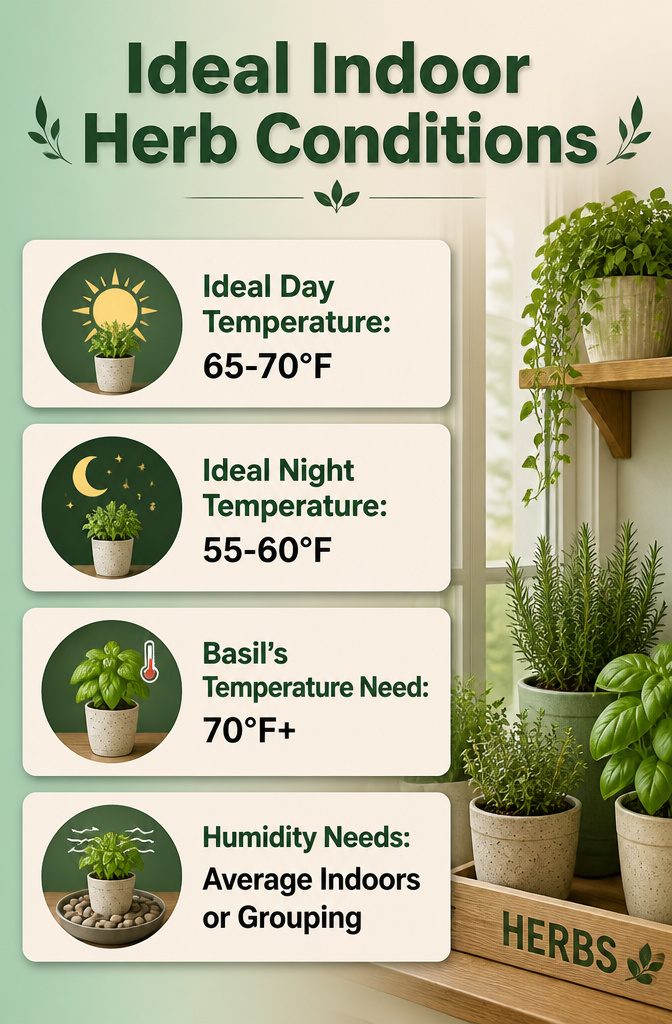
Most herbs settle right into the same temperatures that keep people comfortable. 65 to 70°F during the day and 55 to 60°F at night hits the mark for thyme, oregano, rosemary, and the rest of the Mediterranean crew.
Night temperatures near a window often drop into that range naturally, which suits them fine. Just keep the foliage from touching the glass, or a cold snap can nip the leaves.
Basil breaks the rule.
It wants steady warmth, day and night, up in the 70s. A cool windowsill in winter will leave the leaves drooping within days.
I would keep basil off the sill entirely and park it on a counter or shelf away from the glass, or accept that some herbs are better bought at the store until spring.
Humidity is the lighter concern. Dry forced-air heating in winter can crisp leaves that like a little moisture in the air, and basil again leads that list.
Grouping pots together, setting them on a pan of moist pebbles, or running a small humidifier nearby handles it without fuss. For most herbs, though, average indoor air does the job.
Starting Herbs from Seeds or Cuttings
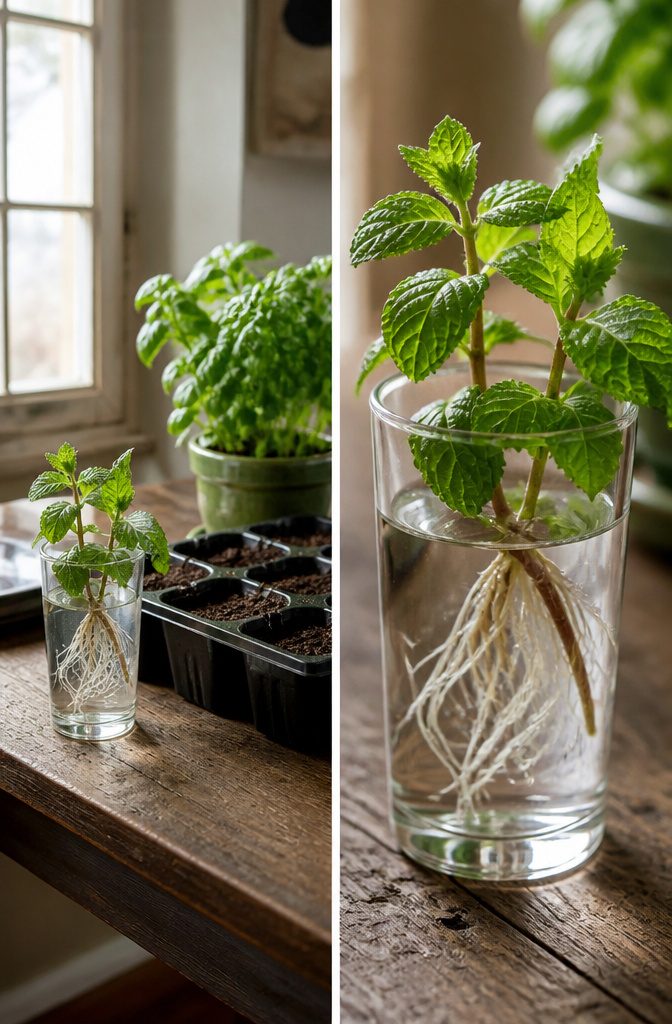
Basil and mint are the two herbs I would start with if I were learning to grow indoor herbs for the first time, and each has a clear best path to get it going.
Basil is simple from seed. The seed packet matters here: some varieties want to sit on the surface because they need light to germinate, while others go a quarter-inch deep.
A humidity dome and a heat mat underneath the tray speed things up noticeably, and once the seedlings pop, the dome comes off for air circulation.
Cuttings skip that wait entirely if you already have a healthy plant. Snip a 2–4 inch piece from just below a leaf node, drop it in water on a sunny windowsill, and swap the water every few days.
Roots form in a week or two, then you plant it in loose soil and water it in.
Mint behaves almost the same from cuttings, which is why I would never buy a second mint plant. One mature plant gives you endless starters.
The catch with mint is that it needs its own pot. Left with other herbs, it will crowd them out fast.
Seeds win on cost and timing.
You start them when you want, and a packet runs cheap. Cuttings win on speed and the satisfaction of watching roots develop in a glass of water on the sill.
For basil, I would keep both methods in my back pocket. For mint, I would go straight to the scissors.
Frequently Asked Questions
What herbs can I grow indoors?
Basil, mint, parsley, chives, oregano, thyme, cilantro, rosemary, and sage all grow well indoors. For a first indoor garden, start with basil, mint, parsley, and chives since they ask for less and give more while you learn.
Avoid herbs with large taproots like horseradish or fennel, and skip tarragon if you have pets because it is toxic to dogs and cats.
How much light do indoor herbs need?
Most indoor herbs need 6–8 hours of direct sunlight daily to stay compact and flavorful. A south-facing window is usually your best bet.
If your space falls short, run a full-spectrum grow light 12–16 hours daily, positioned 6–12 inches above the plant tops. Basil and rosemary sit at the hungry end of the range, while mint, parsley, and thyme manage with a little less.
How often should I water my indoor herbs?
Water when the top inch of soil feels dry to your finger, not on a calendar schedule. When you do water, soak the pot until water runs out the drainage hole, then empty the saucer within 15 minutes.
Herbs recover faster from a missed watering than from soggy roots, and overwatering kills more indoor herbs than underwatering ever does.
Can I use regular garden soil for indoor herbs?
No. Regular garden soil compacts in a pot, trapping water around roots until they rot.
Use a sterile, soilless potting mix instead, and improve drainage further by mixing two parts potting mix with one part perlite. Skip any bag labeled garden soil or topsoil for indoor use, even if it is cheaper.
Can I grow herbs indoors all year?
Yes, you can grow herbs indoors all year with the right setup. A south-facing window and consistent watering carry most herbs through winter, and a grow light fills the gap when daylight shortens.
Indoor air dries faster in winter with heat running, so check soil more often in January and less in July.
What is the best indoor herb grower?
A simple plug-in 4-foot LED shop light from a hardware store will keep a small collection alive through a dim winter, and that is the route to take before investing in a dedicated system you are not sure you will stick with.
Any clip-on lamp, hanging bar, or tabletop fixture works as long as the light covers the whole plant.





