
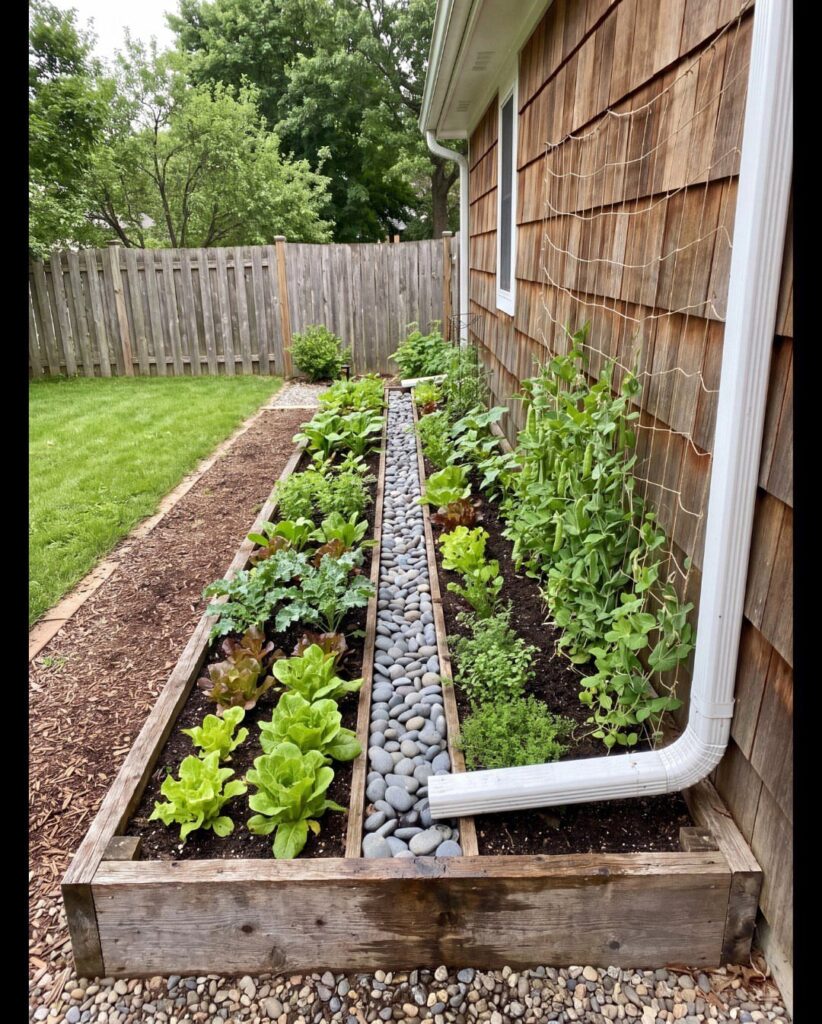
The 9 layouts below range from a Saturday afternoon stack of cinder blocks to a multi-bed build with gravel paths and joined brick-and-wood edging, so the deciding factor is how much time and lumber you want to commit.
What separates one choice from another is usually a single practical limit: whether you can step into the bed to reach the center, whether you have the footprint for a U-shaped walk-in, or whether your soil drains fast enough to skip the hardpan work.
The 4-foot width rule shows up again and again because that is the reach that keeps you out of the growing soil and off the plants.
[link-whisper-related-posts]1. Block Vegetable Garden Layout
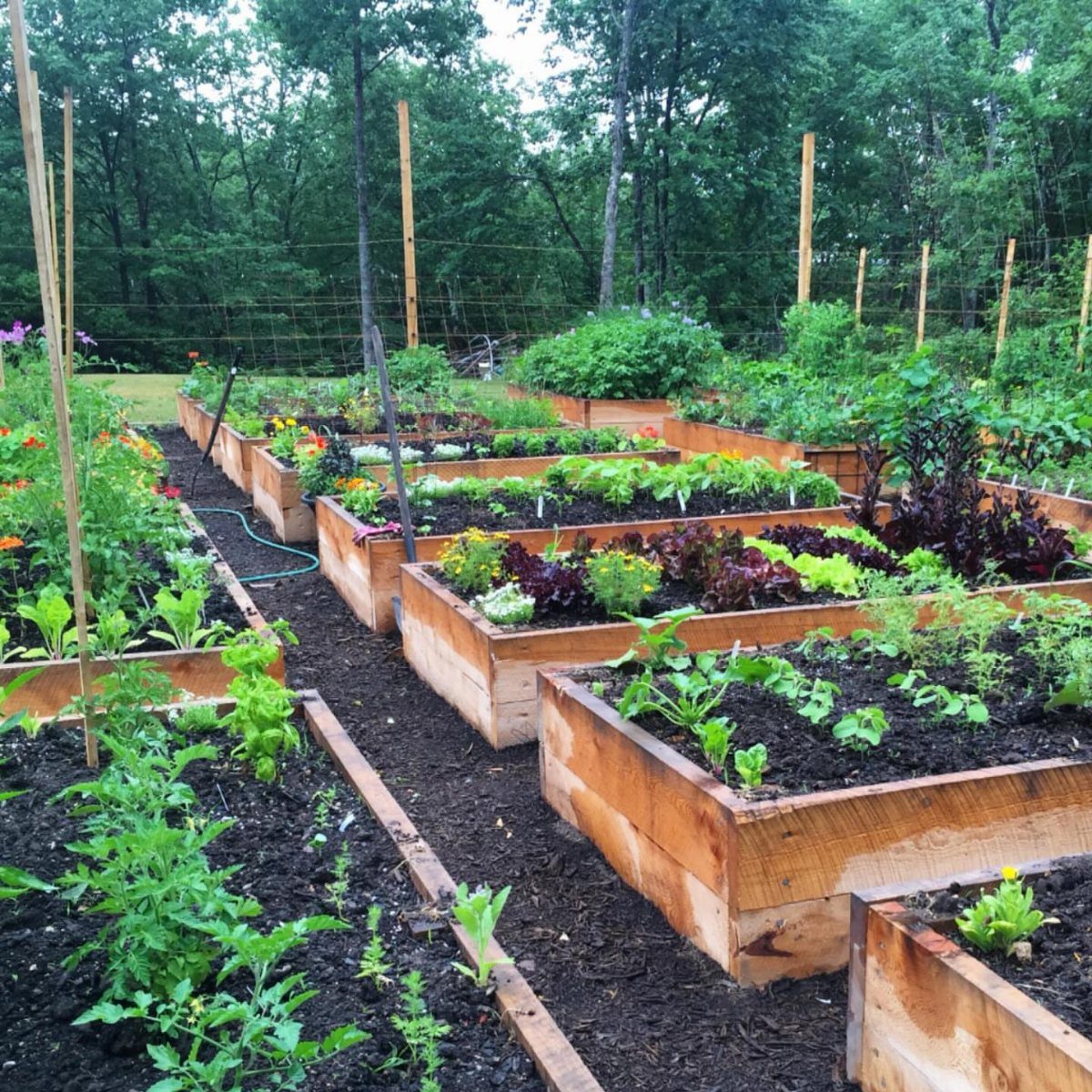
A block layout groups plants in solid rectangles rather than stretching them into rows you walk between. That means more growing space per bed and fewer paths to maintain, which suits a small yard well.
I would check the reach before building: keep each block no wider than 4 feet so you can tend the middle from either side without stepping into the bed.
Dark mulch paths are a practical choice; they suppress weeds and stay neat through a season of traffic.
2. U-Shaped or H-Shaped Layout
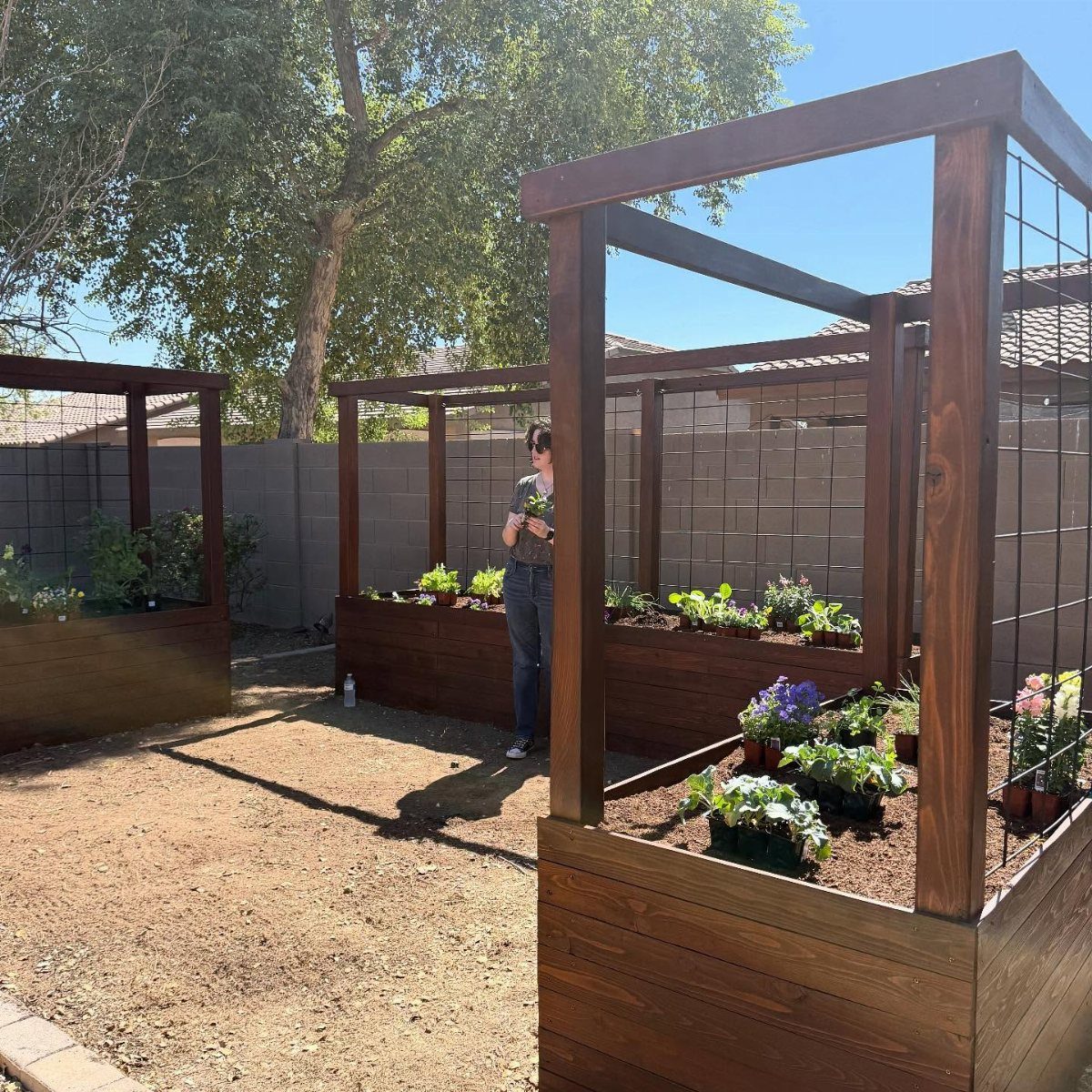
Standing inside the growing space changes how you work.
The U-shape puts every plant within arm’s reach from the center, and overhead frames suggest how I’d add vertical crops without sacrificing that access. Wire mesh over the frame supports tomatoes, beans, or cucumbers while you stay on the ground.
This layout asks for more lumber than a straight bed, and it commits a fixed footprint, so I would measure twice and be sure the center platform is wide enough to turn around in with a basket.
3. Vertical Gardening Techniques
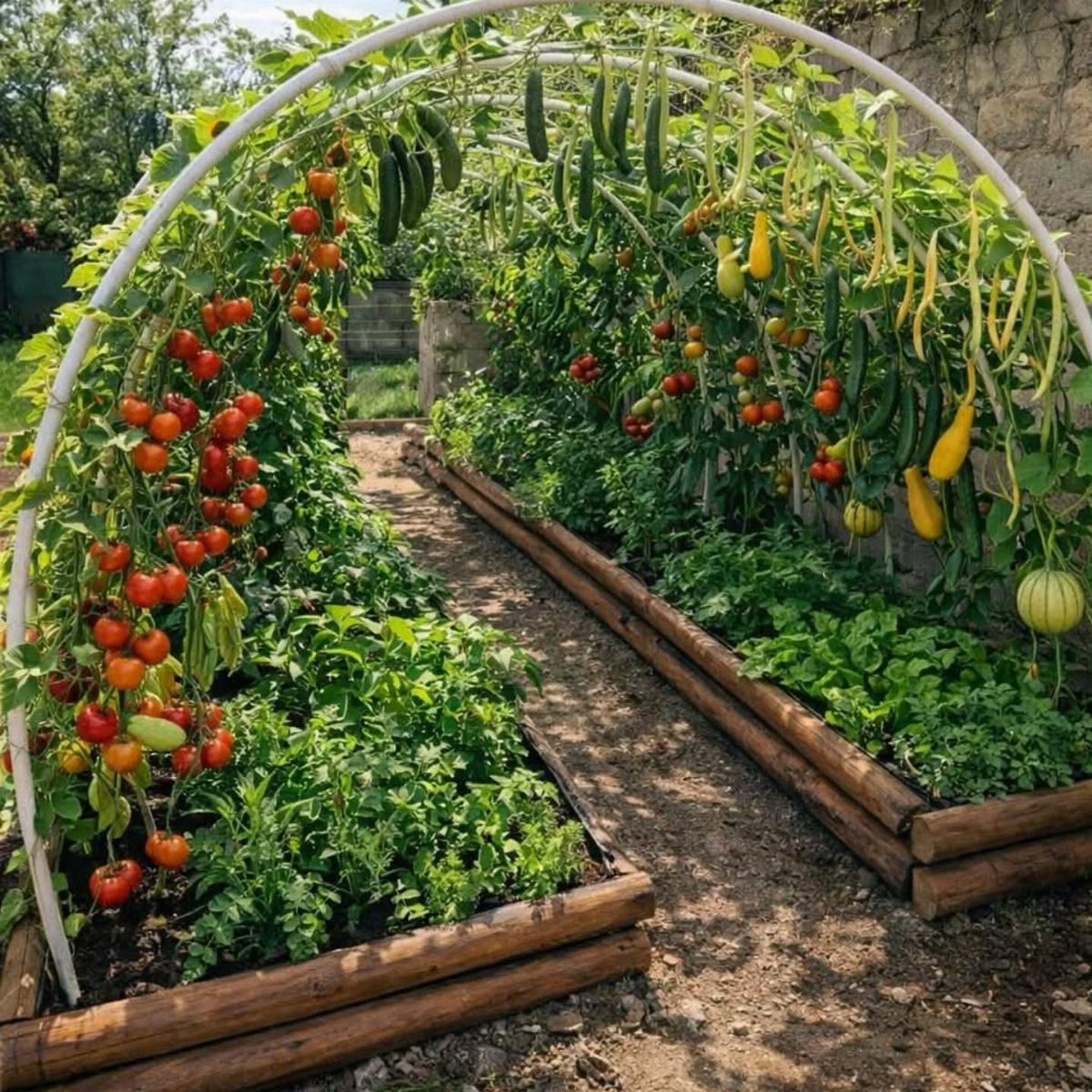
Arched trellises between 2 beds turn the path itself into growing space. White supports carry tomatoes, cucumbers, and squash overhead, which frees the soil below for lower crops like lettuce or herbs.
I would use cattle panel or sturdy wire for the arch; climbing vegetables get heavy by August. The height matters for harvest comfort: enough clearance at the center lets most people walk through without ducking.
This setup shines where ground space is tight, though it does shade the beds somewhat, so I would orient the arch running north–south to keep both sides in light through the day.
4. Square Foot Grid Layout
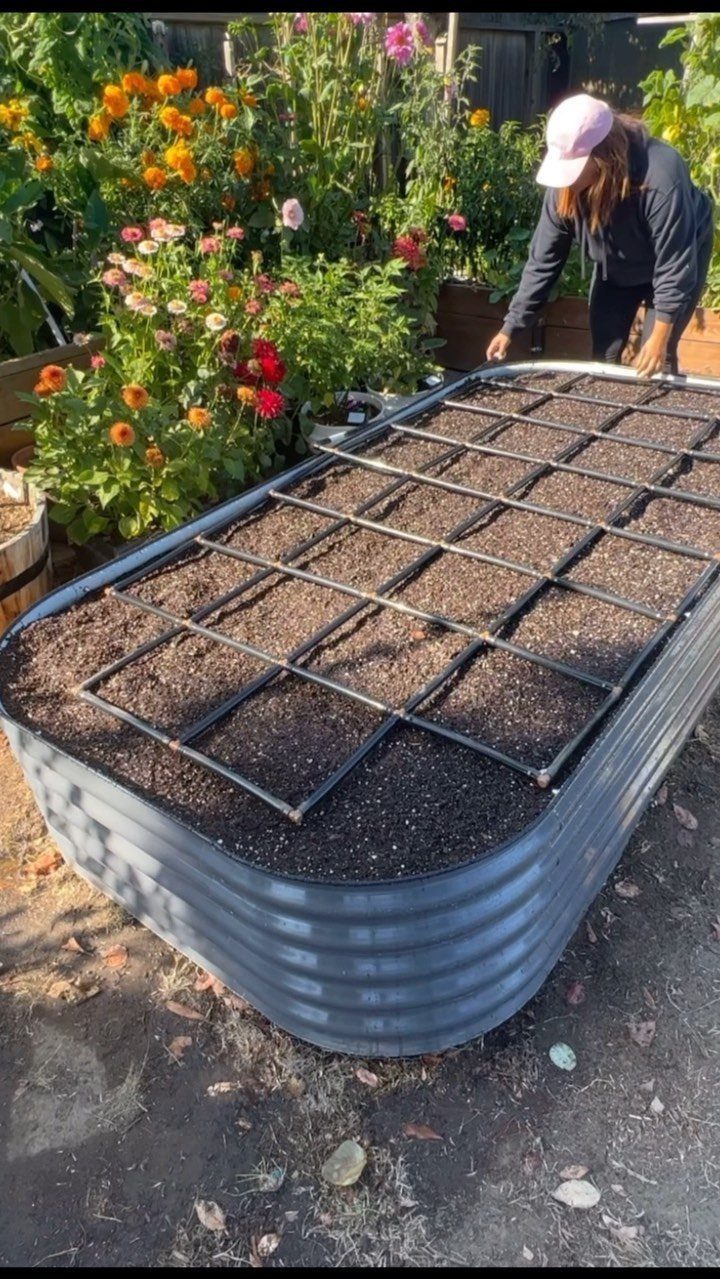
A square foot grid divides one large bed into manageable patches, each 12 inches square, so you plant by area instead of row spacing.
The black grid and irrigation system keep order and water both precise; I like that the metal bed won’t rot out.
For a beginner, this layout removes the guesswork of how many seeds to sow, with clear spacing rules for each crop type.
The grid itself can be wood lath, twine, or a purchased system; what matters is that it stays visible after plants sprout so you don’t overplant in a flush of spring optimism.
First, take a photo of your garden area and measure its approximate size. Using a ratio of 1 foot = 1 box on the graph paper, sketch the beds and containers you plan to use, leaving enough space between them to push a wheelbarrow.
5. Parallel Rows with Gravel Paths
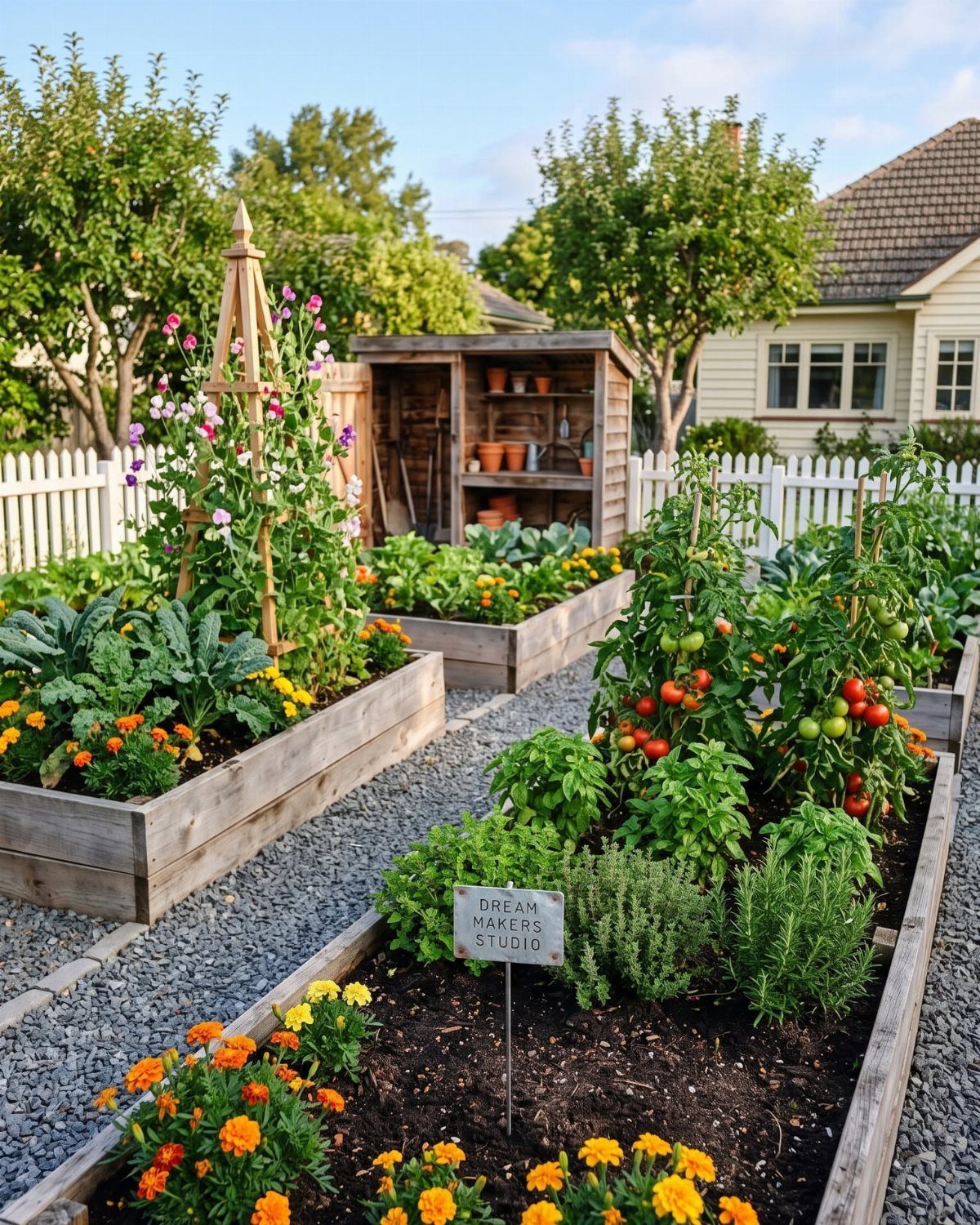
Gravel between beds drains fast and stays clean underfoot, which I appreciate after muddy springs.
Parallel rows keep the geometry simple: build, fill, plant, repeat. I would lay landscape fabric under the gravel to block weeds; without it, you will be pulling from the paths by June.
The marigolds visible at the bed edges are a smart companion-planting move, though the layout itself does not require them.
This arrangement scales easily, so I would start with two or three beds and add more once I knew my spacing habits.
6. Brick and Wood Bordered Beds
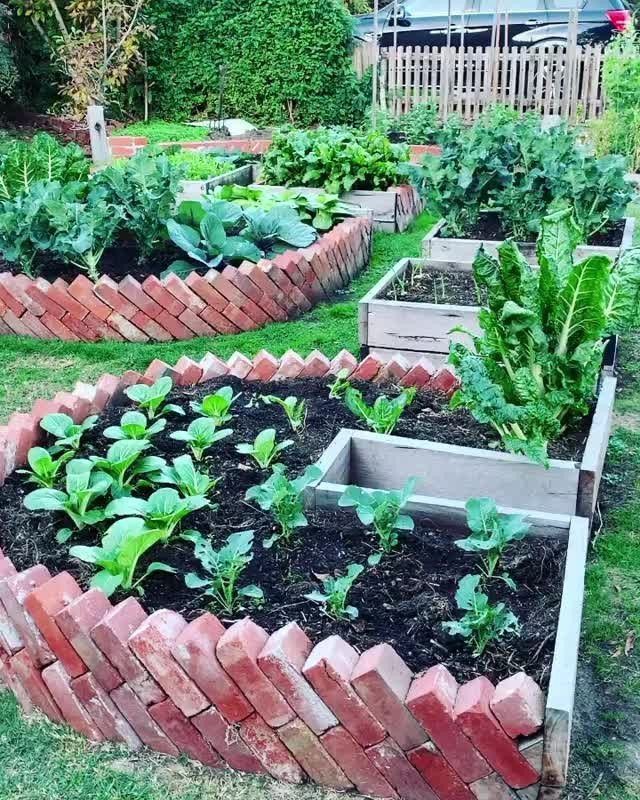
Angled brick edging holds soil against the lawn while the boards contain the depth; I would set the brick slightly below grade so mowing passes cleanly.
This mixed construction suits a yard where you want the beds to read as garden rather than carpentry.
This takes more assembly than a single-material bed, and frost will test the joint between rigid brick and flexing wood over seasons. I would plan to replace the boards before the brick needs resetting.
7. Circular Segmented Bed
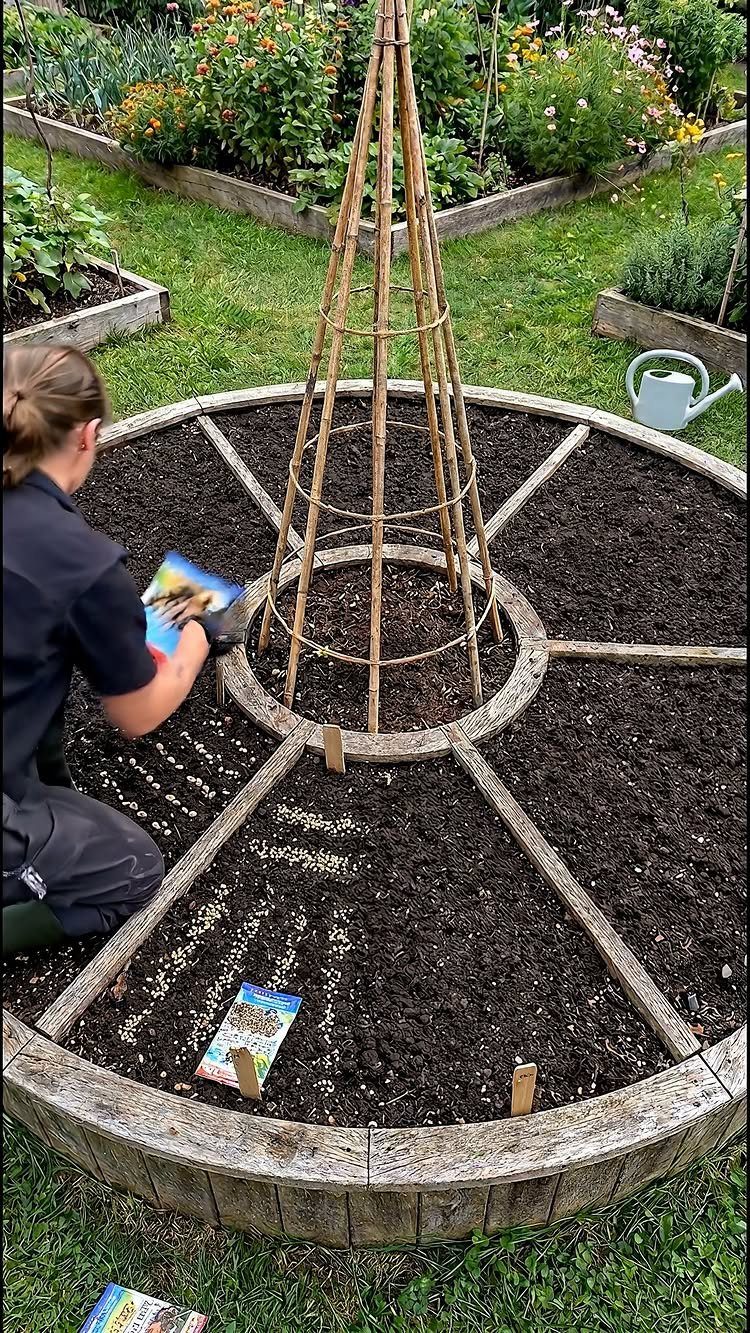
A round bed divided into wedges changes how you move through the garden; you kneel at the edge and everything spins into reach.
The bamboo teepee in the center is the climber’s share, and I would use it for beans or peas that finish before the lower crops need the light.
Each wedge is its own planting zone, which helps with rotation from year to year.
Joinery at the hub needs to hold against soil pressure, so I would check that the center post is sunk deep or braced, not just resting on grade.
This shape fills a corner or anchors a lawn island better than it lines a fence.
8. Companion Planting in Cinder Blocks
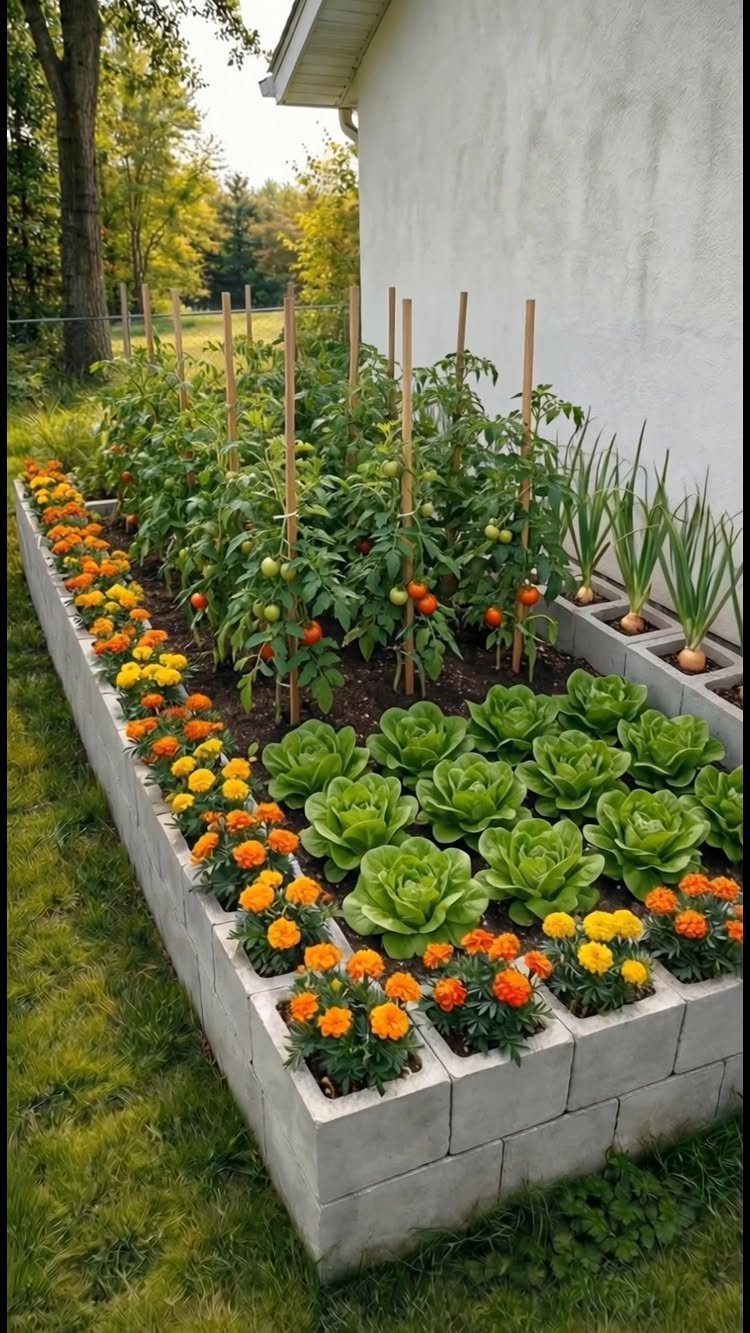
Cinder blocks give you two zones for the price of one: the open bed for rooted crops and each block cavity for shallow growers like the onions and greens visible at the edges.
The marigolds threaded along the perimeter are doing pest duty, not just color, and I would keep that pairing.
Block beds warm fast in spring and drain well, which suits tomatoes, though the lime in concrete can raise soil pH over seasons.
I would test every other year and add sulfur if the reading climbs past where my crops like it. No cutting or fastening, just stacking level and filling; this is the fastest raised bed you can build on a Saturday.
Soil Quality and Preparation
I build my raised bed soil in thirds: roughly one part topsoil, one part compost, and one part organic matter like aged leaf mold or rotted straw.
That mix drains better than straight topsoil and holds nutrients longer than compost alone.
The native soil beneath the bed still matters. Roots will eventually reach down, and compacted clay or sand underneath creates a perched water table that drowns roots from below.
I loosen the ground with a fork before filling, just to break the hardpan so the new soil can drain and roots can push through.
Organic matter breaks down fast in a raised bed, faster than in ground soil because the bed warms earlier and drains better.
I add a layer of compost each spring before planting, worked into the top few inches rather than left on top. That steady feeding replaces what the previous season consumed without starting from scratch each year.
Frequently Asked Questions
What vegetables work well together in raised beds?
Marigolds pair well with tomatoes and onions for pest control, as seen in the cinder block and companion-planting layouts. I would also keep shallow growers like greens and onions in the block cavities while rooted crops take the open bed.
Similar water and light needs matter more than the specific pairing; the block and row layouts both group plants by those requirements.
What is the 70/30 rule in gardening?
The 70/30 rule is not something I use or cover here, so I will not invent an answer.
How deep does a raised bed have to be for vegetables?
A 12-inch depth handles most vegetables, herbs, and flowers fine. I would go taller for carrots, potatoes, or if I wanted to bend less; deeper beds also hold more moisture and buffer temperature swings.
What is the best vegetable garden layout for beginners?
A square foot grid gives beginners a built-in spacing guide, so you know exactly how many seeds belong in each small section.
Each 12-inch square gets one plant type, and the visible grid keeps you from overplanting in spring. Metal sides last longer than wood, and a drip line threaded through the bed puts water right where roots need it.
How do I determine the spacing for my vegetables?
The seed packet lists spacing; when two numbers appear, I use the tighter one and thin later if seedlings crowd each other.
In a square foot grid, divide the 12-inch square by the spacing inches to find how many plants fit.
Can I mix different vegetables in the same garden layout?
Yes, as long as they share similar growth needs. The block layout groups plants by matching requirements in solid rectangles, and the cinder block setup puts rooted crops in the open bed while shallow growers like onions fill the cavities.
Space them equally in both directions so nothing competes for light or water.





