
These 10 ideas run from a $100 afternoon with PVC pipe and plastic sheeting to glass-walled builds that climb into thousands and need permits.
The lean-to works for seedlings through spring, while a wooden greenhouse or shed-greenhouse combo gives you a permanent structure that changes how you garden year-round, so your choice depends on which of those jobs matters more.
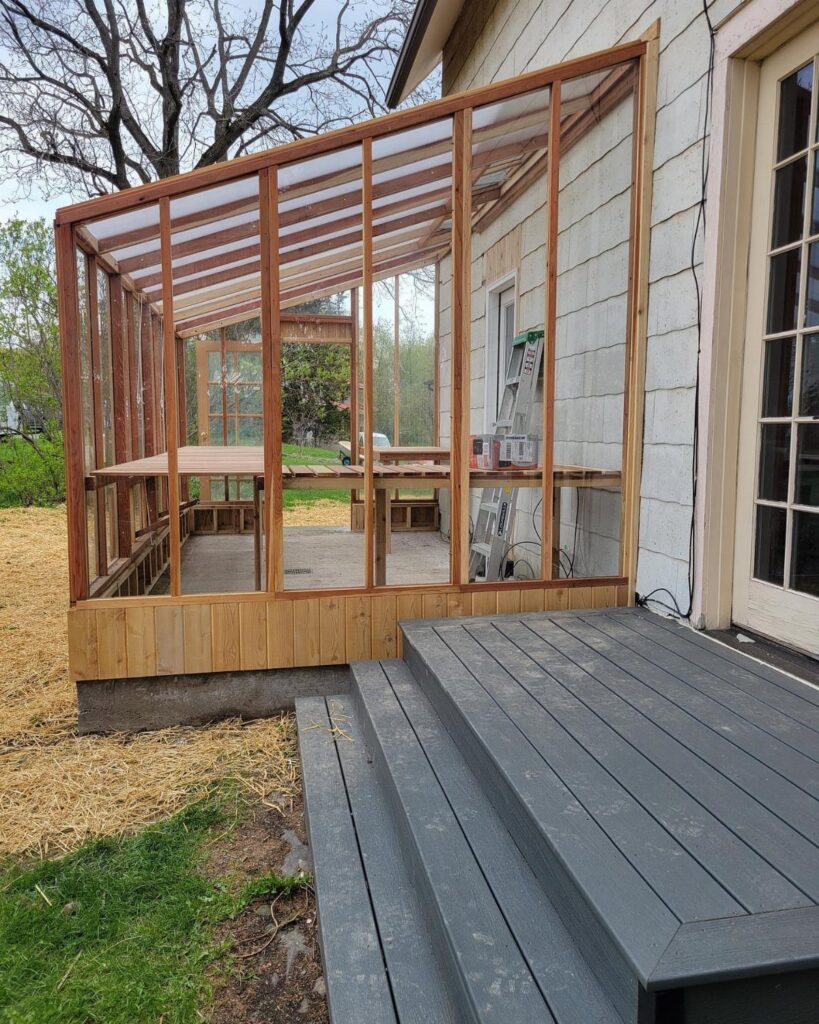
A lean-to greenhouse with glass on the south face and polycarbonate overhead handles both light and hail without the weight of an all-glass roof, which is why I would pick that split for any wall-mounted build.
[link-whisper-related-posts]1. Lean-to Greenhouse
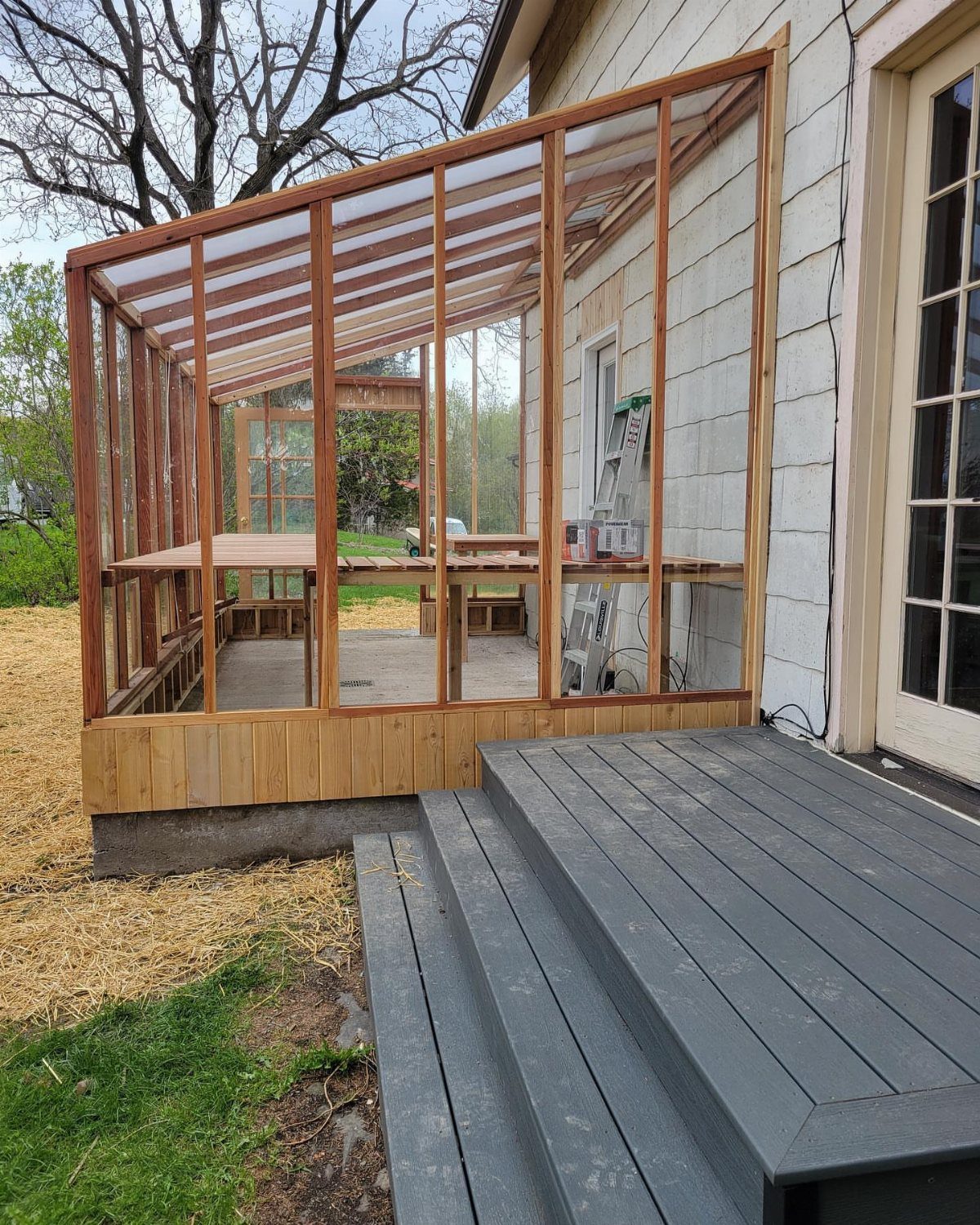
A lean-to greenhouse borrows your house wall as its fourth side, which cuts both materials and the footprint in half.
The versions I like best use a mix of glass and polycarbonate panels; glass on the south-facing slope where light pours in, polycarbonate on the roof where hail hits.
Before you build, check that wall for downspouts, vents, or windows you’ll need to work around, and confirm your siding can handle the moisture that collects where the roof meets the house.
2. Greenhouse Made from Reclaimed Windows
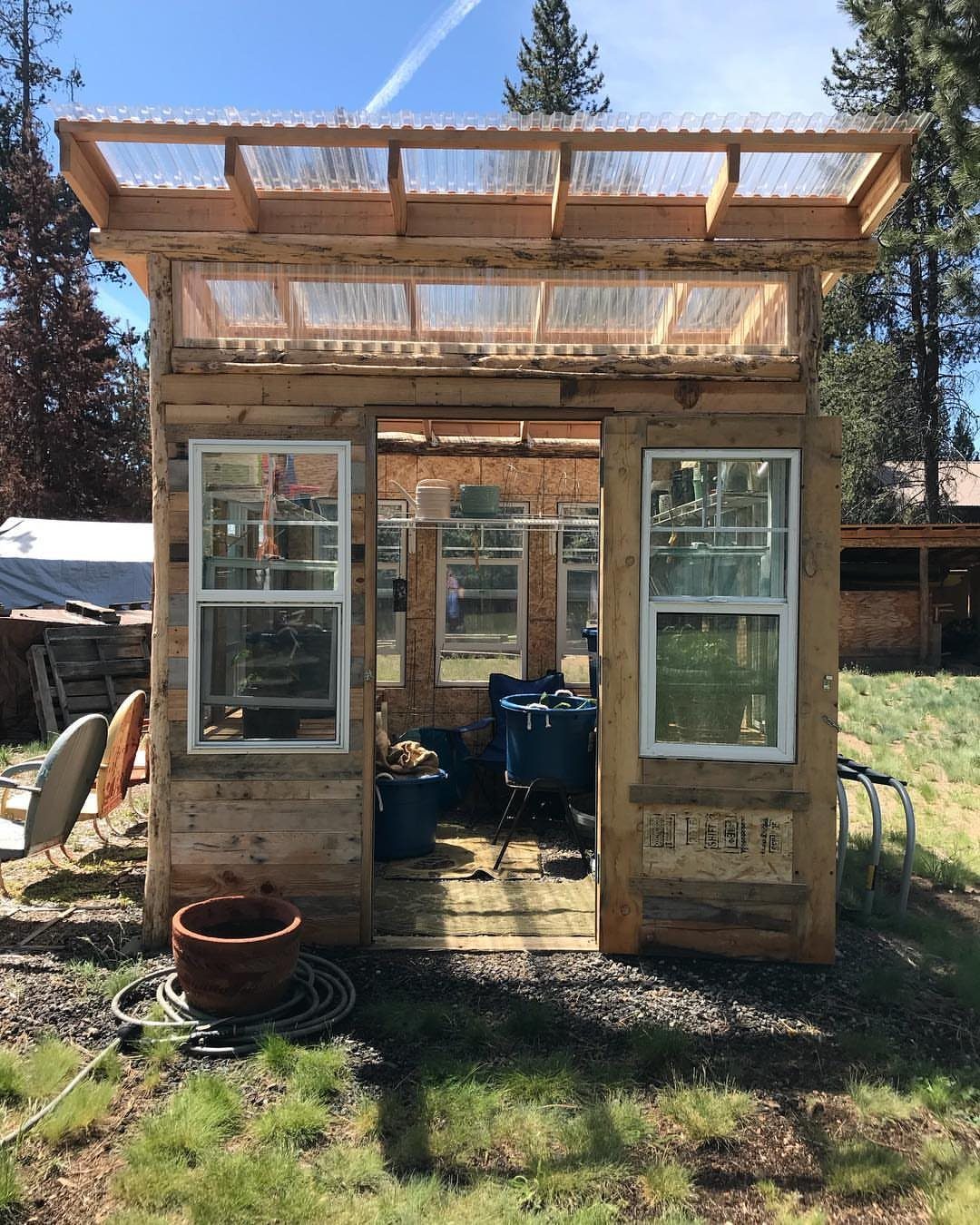
Old windows with their grids still intact give a greenhouse instant character no new material matches. Elizabeth Bloodworth built hers from scratch using mismatched reclaimed frames and a corrugated plastic roof, which is lighter and cheaper than glass overhead.
If you try this, collect windows first, then frame to fit them; buying frames to match windows you already own is backward and frustrating.
Check each pane for cracks and each sash for rot before you haul them home, and budget for new hardware since rusted hinges fail fast in greenhouse humidity.
3. Dome-shaped Greenhouse
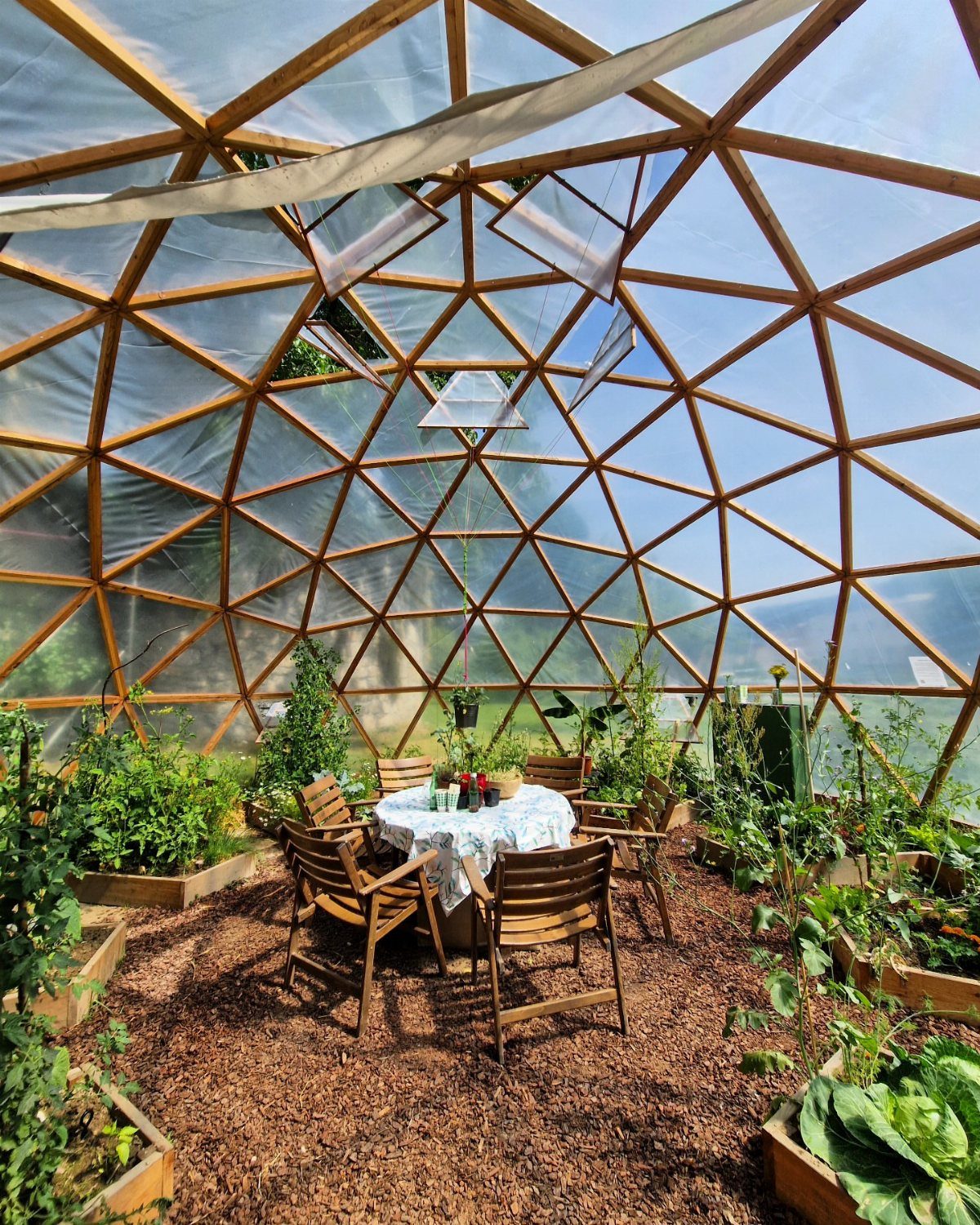
The geodesic shape sheds snow and wind better than any flat wall, and the interior space feels surprisingly open once you are inside.
What I notice in builds like this is the wood mulch floor; it drains well, stays soft underfoot, and costs a fraction of poured concrete. The overhead panels open for summer ventilation, which matters because dome greenhouses heat up fast.
This is not a beginner weekend project; the angles are fussy and the hubs must be precise. If your carpentry is still basic, I would get comfortable with a simpler frame first.
4. Small-space Greenhouse for Patios or Balconies
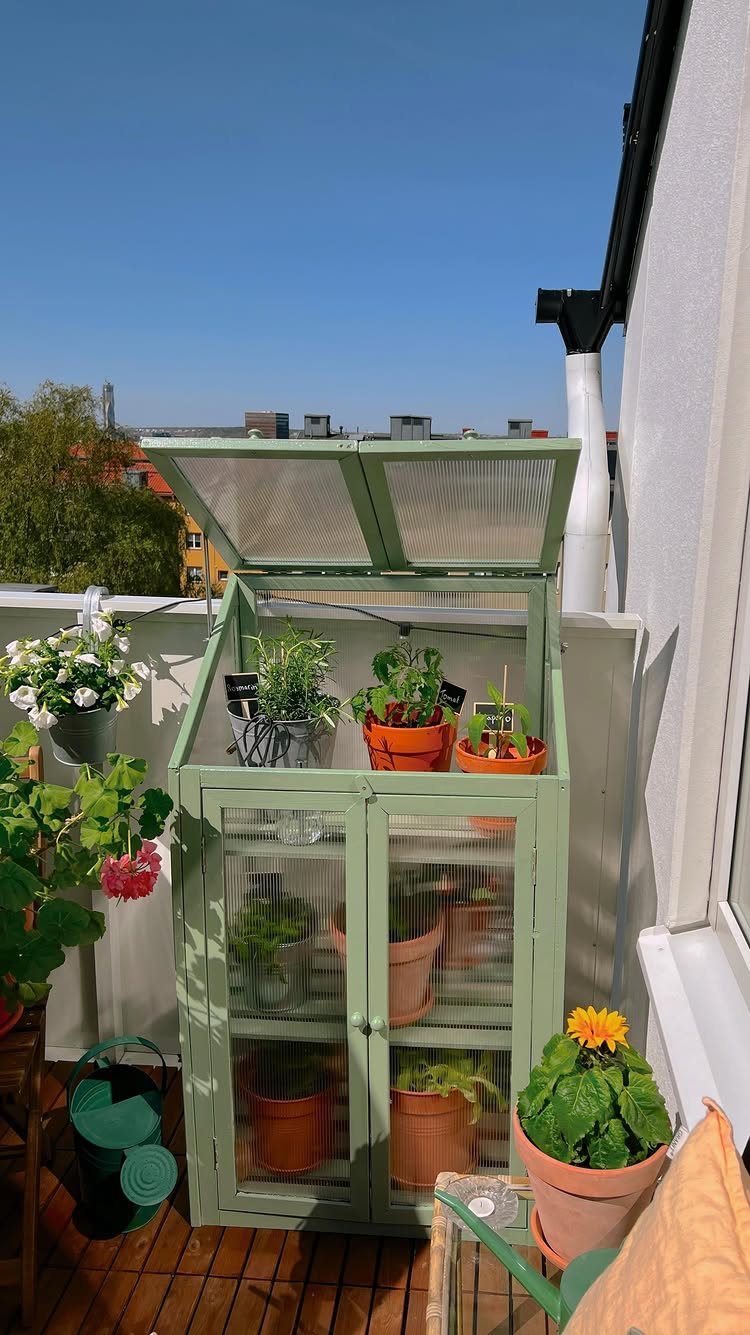
A mini greenhouse on 3 shelves turns a balcony railing or a patio corner into a seed-starting station from March through May.
The Gardenline version from Aldi uses sustainable fir wood with lifting lids, which is the detail I care about most; fixed glass cooks seedlings on sudden warm April days.
Place it where morning sun hits for most of the day, and weight the base if you are above the first floor, because wind catches those lids like sails.
5. DIY Raised Garden Bed Greenhouse
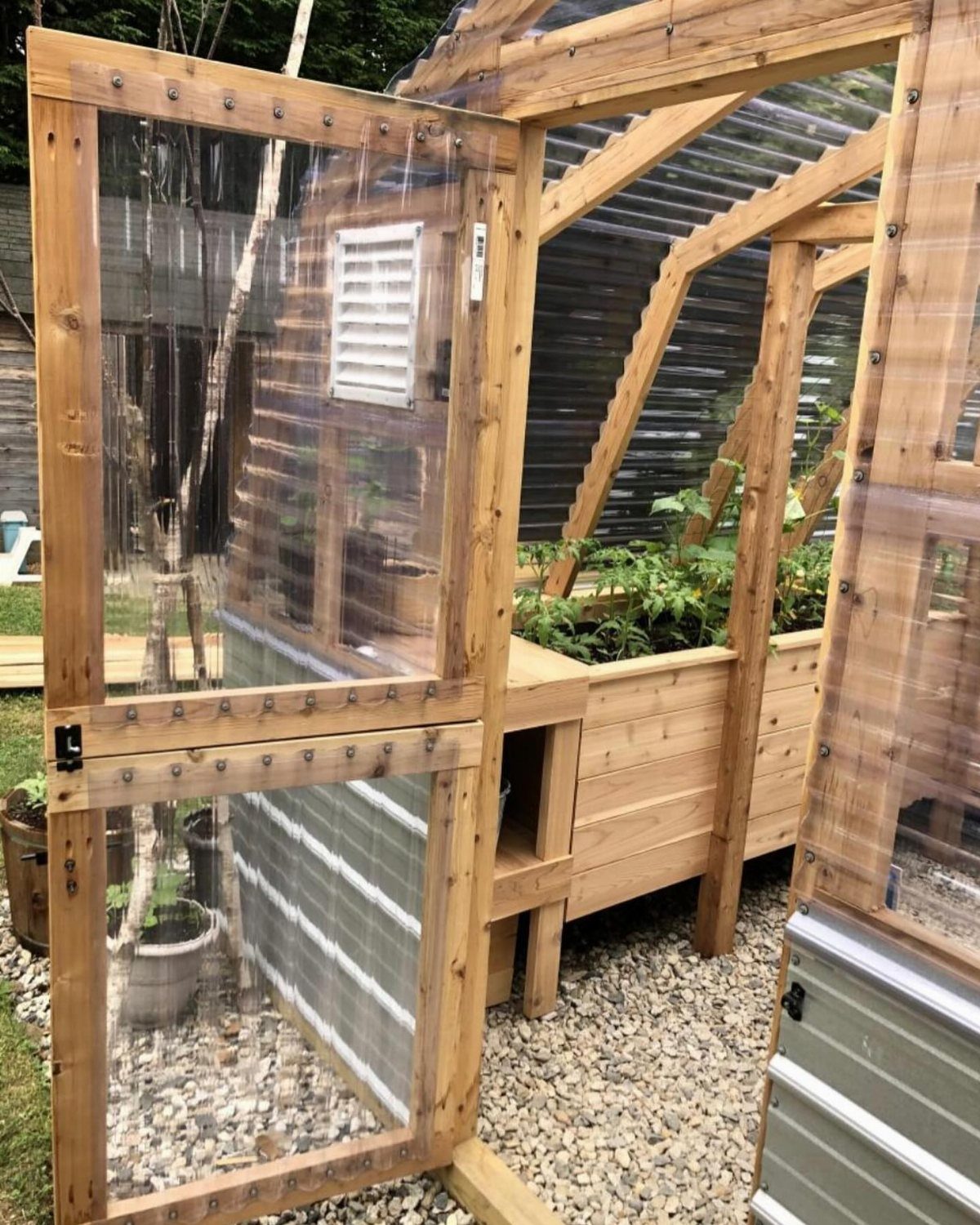
Raising the beds inside the greenhouse saves your knees and improves drainage, especially over gravel like the 3 Dogs in a Garden build shows.
Cedar holds up to moisture without seeping chemicals into your soil, and plexiglass doors slide or hinge lighter than glass at this scale.
I would plan the door height to clear your tallest tomato cage with room to spare; ducking gets old fast.
6. Cold Frame Greenhouse
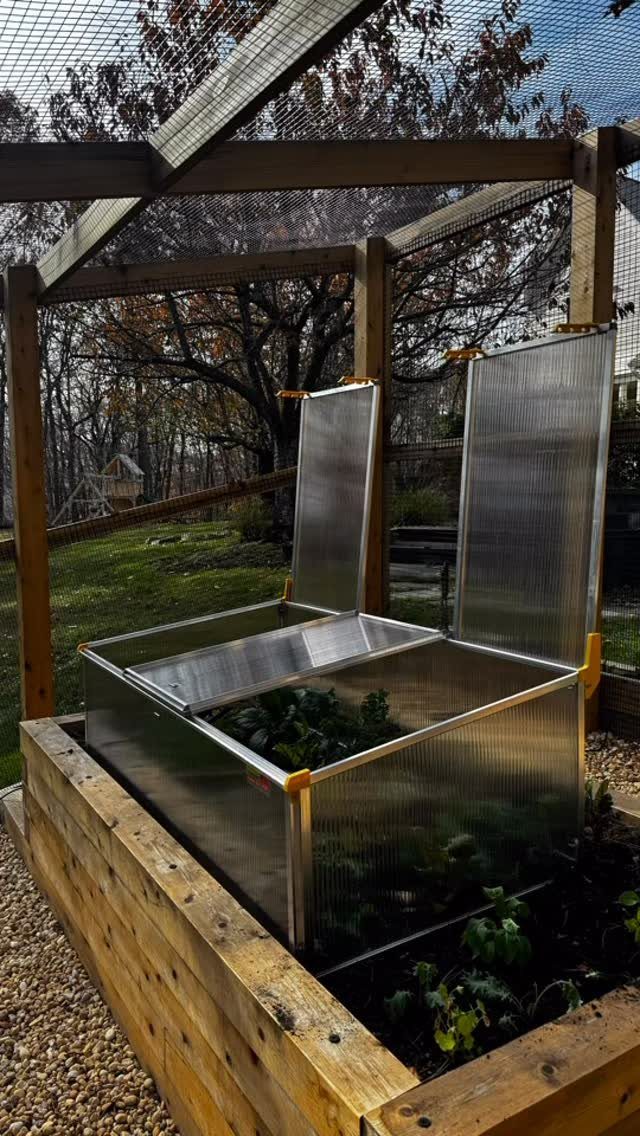
I use mine to harden off seedlings in April and to keep kale alive into December.
It extends the season by weeks on either end, which is not a full greenhouse replacement but covers the gap most home gardeners actually need.
7. Wooden Greenhouse
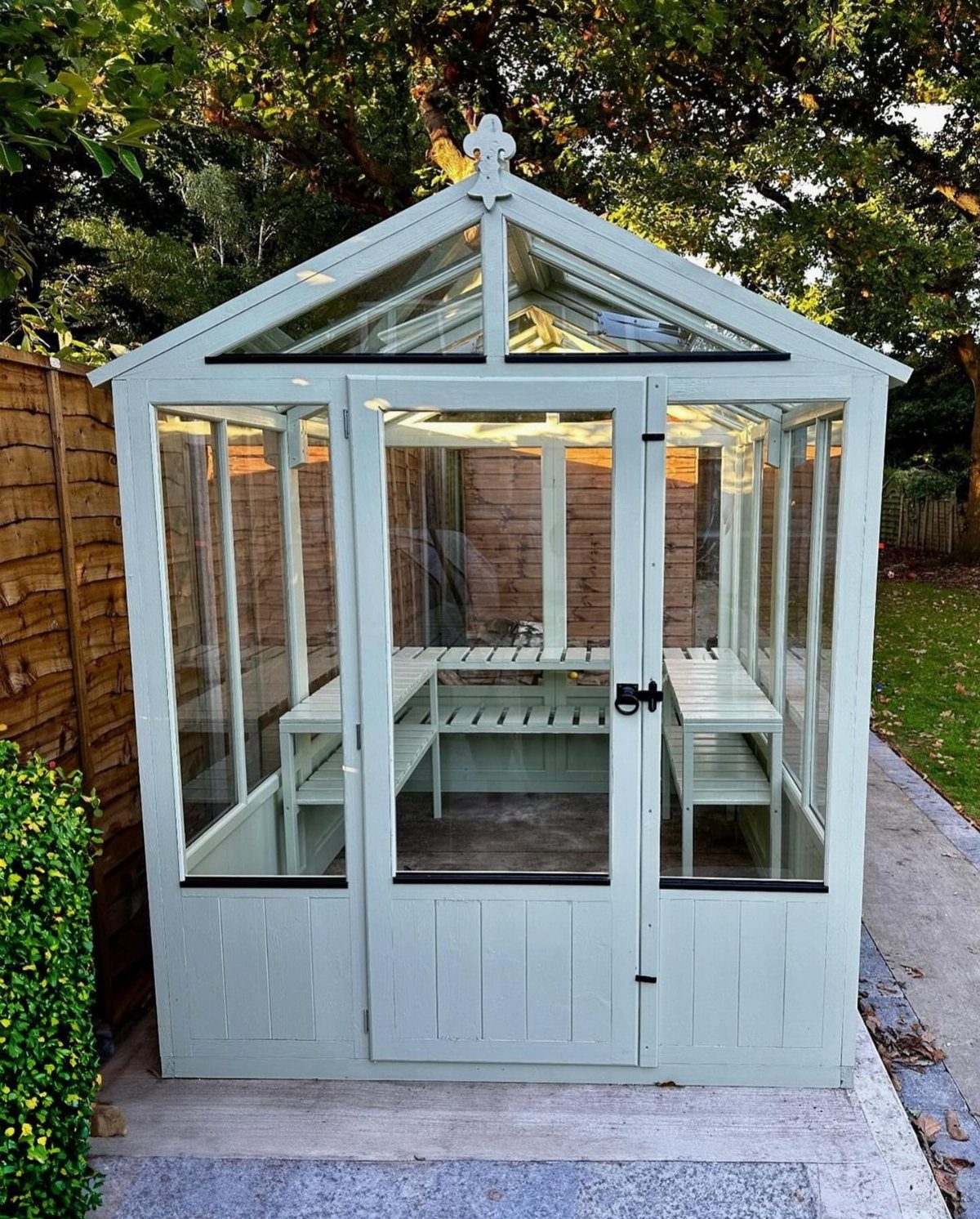
Painted wood and glass panels give this greenhouse a shed-like feel that fits a cottage garden without fighting the fence line behind it. I like the slatted benches inside; they let water drain through instead of pooling under your pots.
Before you build, decide between cedar, which lasts decades untreated, or pine with exterior paint, which costs less but needs redoing every few years.
Check that your paint is rated for greenhouse humidity; standard exterior latex peels fast in that environment.
8. Shed-greenhouse Combo
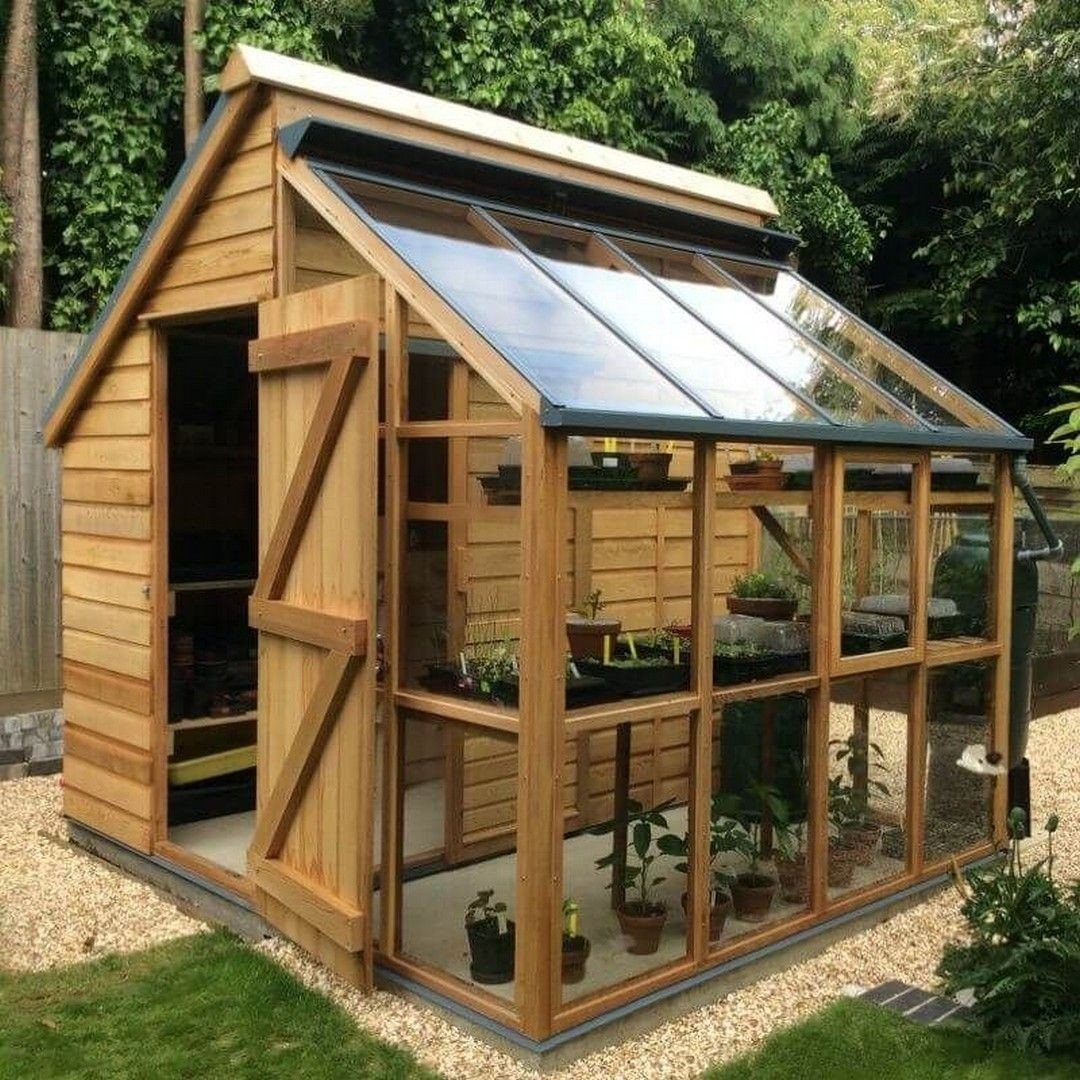
Gravel underfoot and a shared wall between shed and greenhouse make this two jobs in one footprint.
The storage side holds tools and potting mix dry and close, while the glass side starts seedlings steps from where you will plant them.
The split matters for framing; shed walls carry weight differently than greenhouse walls meant to pass light.
I would build the greenhouse bay first, then tie the shed roof into it, not the other way around. That keeps the glass panels square, which they must be to seal.
9. DIY Plastic Hoop House
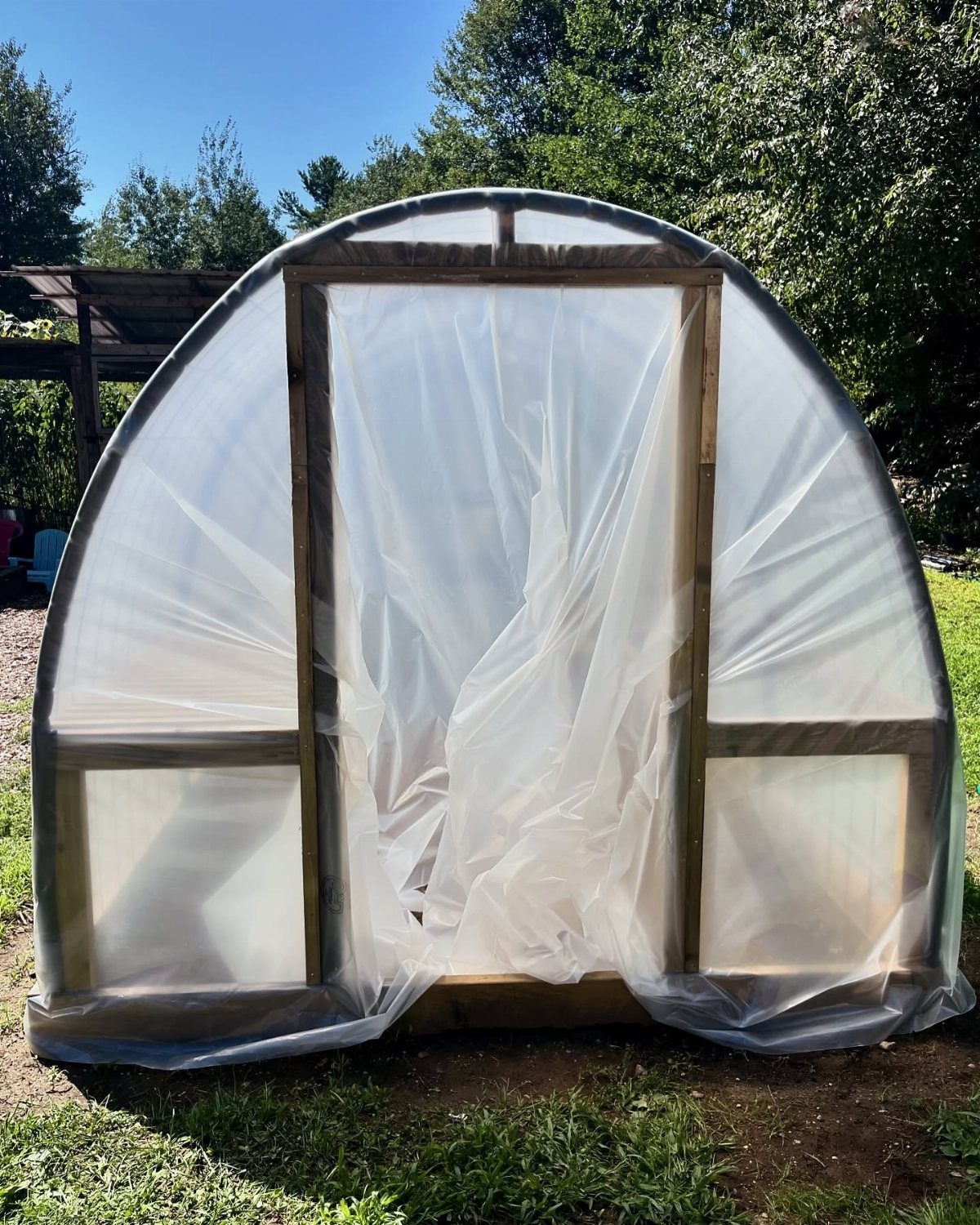
PVC or bent electrical conduit over a wooden base makes this the cheapest season extender you can build in an afternoon.
The plastic sheeting is the cost decision; 6-mil greenhouse film lasts one season, woven poly lasts four and survives a brush with the weed whacker.
Anchor the hoops well. Wind lifts the whole frame like a parachute if the base boards are not staked or weighted.
I sink mine with rebar driven through drilled holes, then replace the sheeting each spring; the plastic sheeting is cheap and worth doing fresh every year.
10. Indoor Acrylic Greenhouse Cabinet
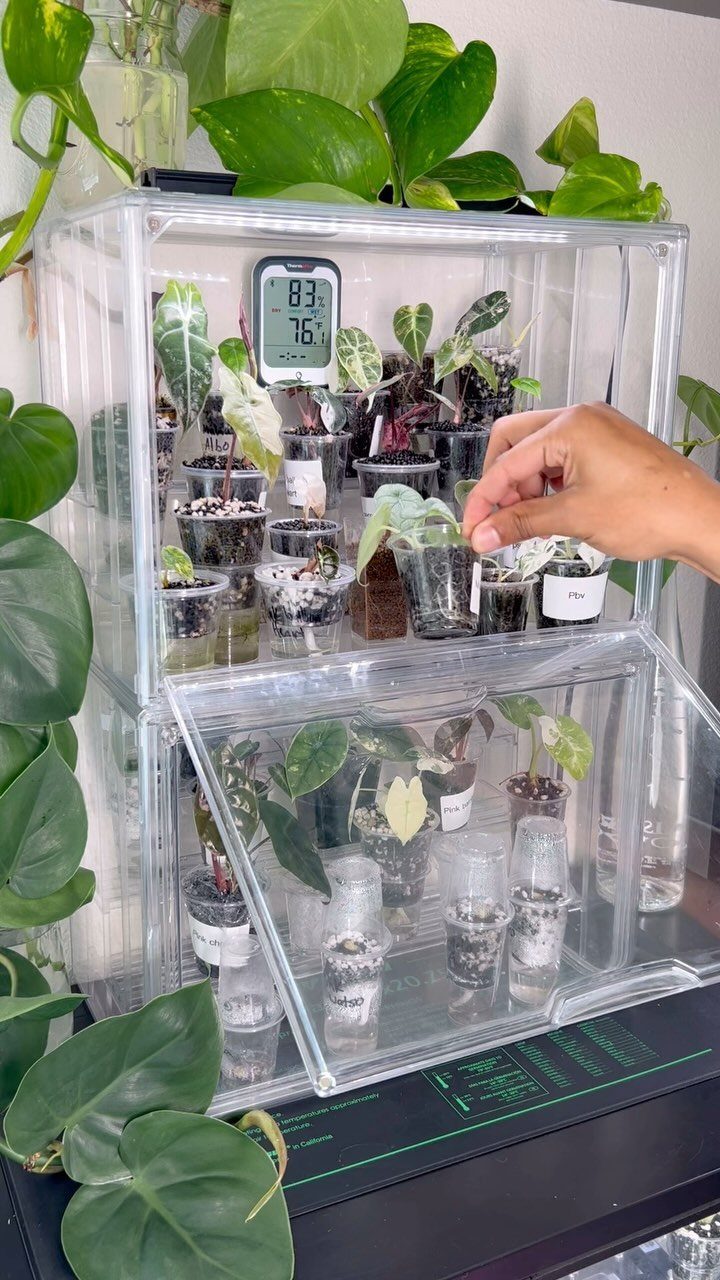
Clear acrylic boxes stacked into a cabinet let you root cuttings on a kitchen counter or in a corner that never sees sun, as long as you add a small grow light above.
Start with 2 boxes to learn the rhythm of venting and misting before you build higher. I would drill small holes near the top of each box, not leave them sealed; without airflow, mold arrives fast.
Tips for Building a Greenhouse
Siting matters more than framing. A flat spot in full sun keeps the structure level and your plants growing straight; shade from a neighbor’s tree in July is not fixable later.
I would walk the yard at midmorning and again at midafternoon before committing, since winter sun angles differ from summer ones.
Ventilation is where first-time builders skimp and later regret it. Fixed panels cook seedlings on warm spring days; plan for openings you can adjust, whether lifting lids, sliding panels, or vents at the ridge and base.
If you are new to framing, start smaller than the space you have.
A manageable build teaches you the cuts and joins without the panic of a half-finished wall when weather turns. Detailed plans with photos cut errors more than any tool does.
Nail guns discharge accidentally more often than most admit; polycarbonate panels throw debris when cut. Protective eyewear is not optional for either job.
Old windows and salvaged lumber cost a fraction of new stock and leave a greenhouse looking like something built over decades, not ordered in a box.
Thrift stores, vintage shops, and demolition sites carry stock that shifts with the season; collecting before you plan beats hunting for a specific size afterward.
Materials for Greenhouses
I collect them before framing, not after, since matching a frame to an odd-sized sash is backward work.
Scrap 2×4s and leftover lumber finish the bones of the structure without a lumberyard bill. Exterior screws and framing nails you already own keep costs near zero for hardware; I rummage my bins before buying new.
Where glass is not available or too heavy, greenhouse plastic steps in. At small scales, PVC pipe and plastic sheeting are enough to get seedlings through spring.
Polycarbonate panels split the difference between plastic and glass.
They insulate better than either, take hail without shattering, and weigh less than glass for the span you must support. I use them on roofs where debris falls and on north walls where light matters less than keeping heat in.
Glass still wins for the view and the permanence, but it demands a heavier frame and a deeper foundation. Your structure must be sturdy enough to carry the load; that is the hidden cost in a glass build.
Cost Considerations
A simple hoop house with polyethylene sheeting can go up in an afternoon for around $100.
Pre-fabricated kits run higher but buy back your weekends.
Building from scratch with raw materials and free plans typically costs 40–60% less than a kit, though you will need the tools and the patience to fit parts that do not arrive pre-cut.
Complex structures with glass walls and Victorian detailing climb into thousands.
They also trigger permits, electrical work, and possibly a visit from the power company to run lines for heat and light. Check local requirements before ordering; paperwork delays a build more than weather sometimes does.
Heating, water, ventilation, and humidity control are costs the frame price does not show. Map them in early, since retrofitting is harder than planning.
Glass is heavy; the structure to hold it must be heavier still. That engineering adds money even before you buy the first pane.
Frequently Asked Questions
What plants grow well in a greenhouse?
Most vegetables and herbs do well in a greenhouse, but the structure itself is what makes the difference.
Good ventilation matters more than the plant choice; without it, heat builds up and stresses whatever you are growing. A simple fan or adjustable vents keep air moving so tomatoes, peppers, and leafy greens stay healthy through the season.
How to warm a small greenhouse?
Passive solar heating is the first and free method: site the greenhouse in full sun, with the long side facing south if you can. The structure captures daytime heat, and the real problem is keeping it from escaping too fast.
Polycarbonate panels insulate better than glass, and a wood mulch floor holds some warmth underfoot. For cold nights, a small fan moving air prevents cold pockets from settling on your seedlings.
Is it cheaper to build a greenhouse or buy one?
If you have some basic tools already, framing one up yourself with lumber and polycarbonate panels usually runs about half what you’d pay for a kit shipped to your door.
The savings come from your own labor and from skipping the markup on pre-cut parts.
Reclaimed windows and scrap lumber drop the price further, though you will spend more time fitting pieces that do not arrive sized to match. Kits buy back your weekends if your time is tighter than your budget.
How to build an easy DIY greenhouse?
A PVC hoop house with plastic sheeting is the fastest build: bend conduit or pipe over a wooden base, anchor it well, and drape 6-mil greenhouse film over the hoops.
You can finish it in an afternoon for about $100. For something sturdier, a cold frame of reclaimed windows set on a wood frame needs no bending and no hub fittings, and it still extends your growing season by weeks.





