
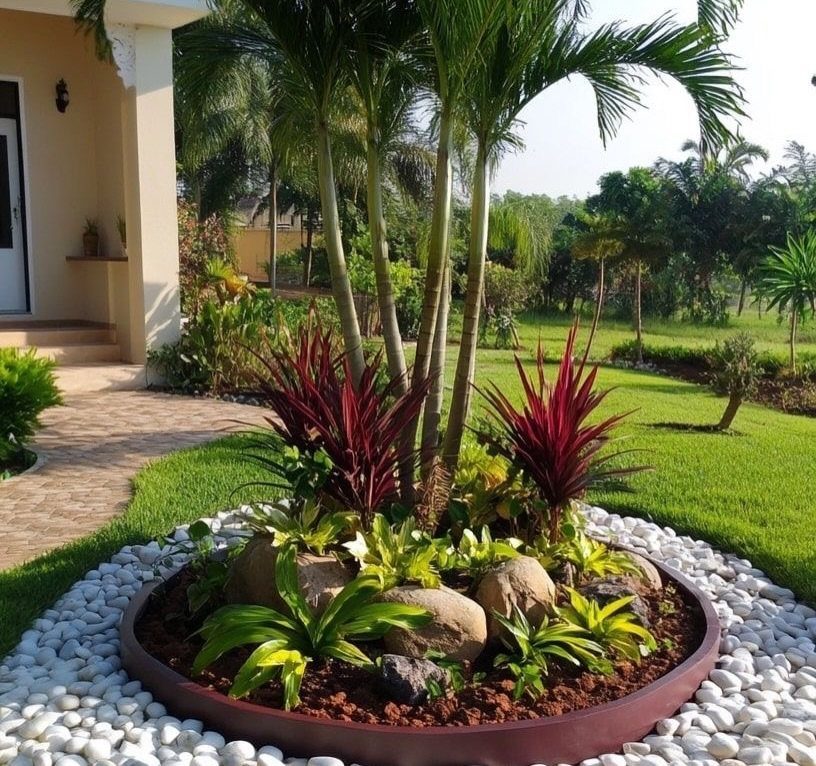
These ideas run from a bag of mulch to a weekend of concrete work and wiring, so the right one depends on whether your front lawn needs a quick refresh or a structure that lasts past the first frost.
Start with the state of what is already there; overgrown shrubs and cracked walks tell you to fix before you add, and that same test decides if solar path lights will do or if you are pouring pillar footings for lanterns at the entry.
The 2700K warm LED figure matters because the wrong color temperature turns a border of river rock into a gas station look after dark.
[link-whisper-related-posts]1. Stone Borders
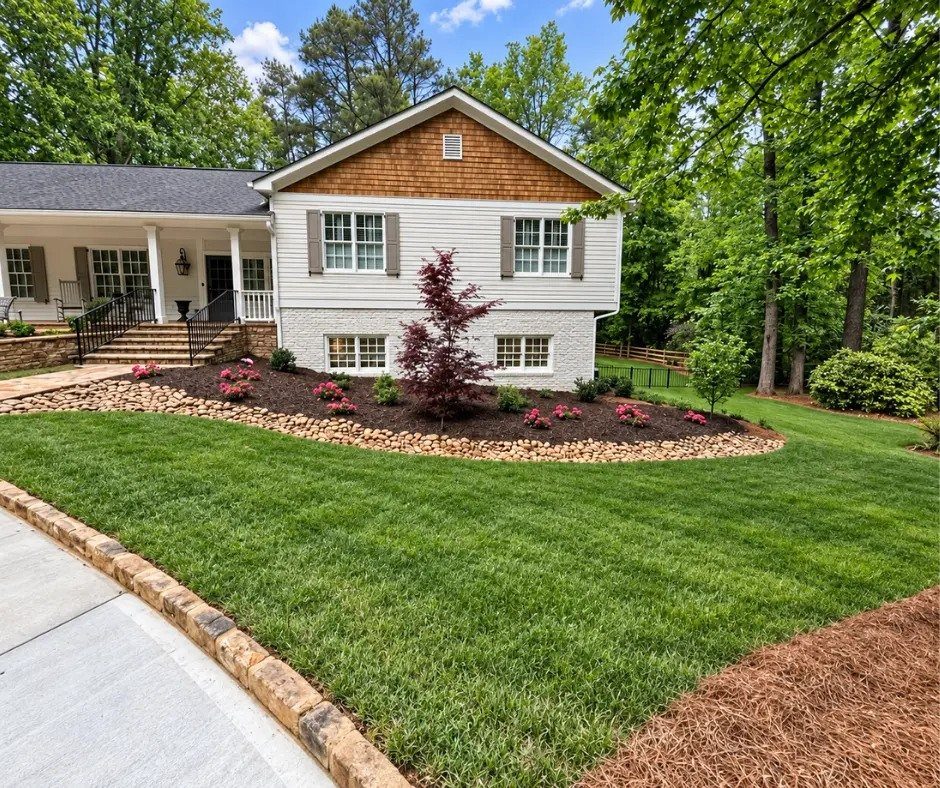
Stone borders give a garden bed a clean edge without the rigid look of commercial edging. I would check that the stones sit partly below grade so they do not shift every time the mower passes.
A curved line along the driveway is easier to lay out than a perfect circle: a garden hose on the grass marks the shape before you start.
Local stone or a pallet of river rock keeps the cost reasonable for a border project. Rounded stones are forgiving to fit; flat ones stack better but take longer to settle.
2. Path Lights
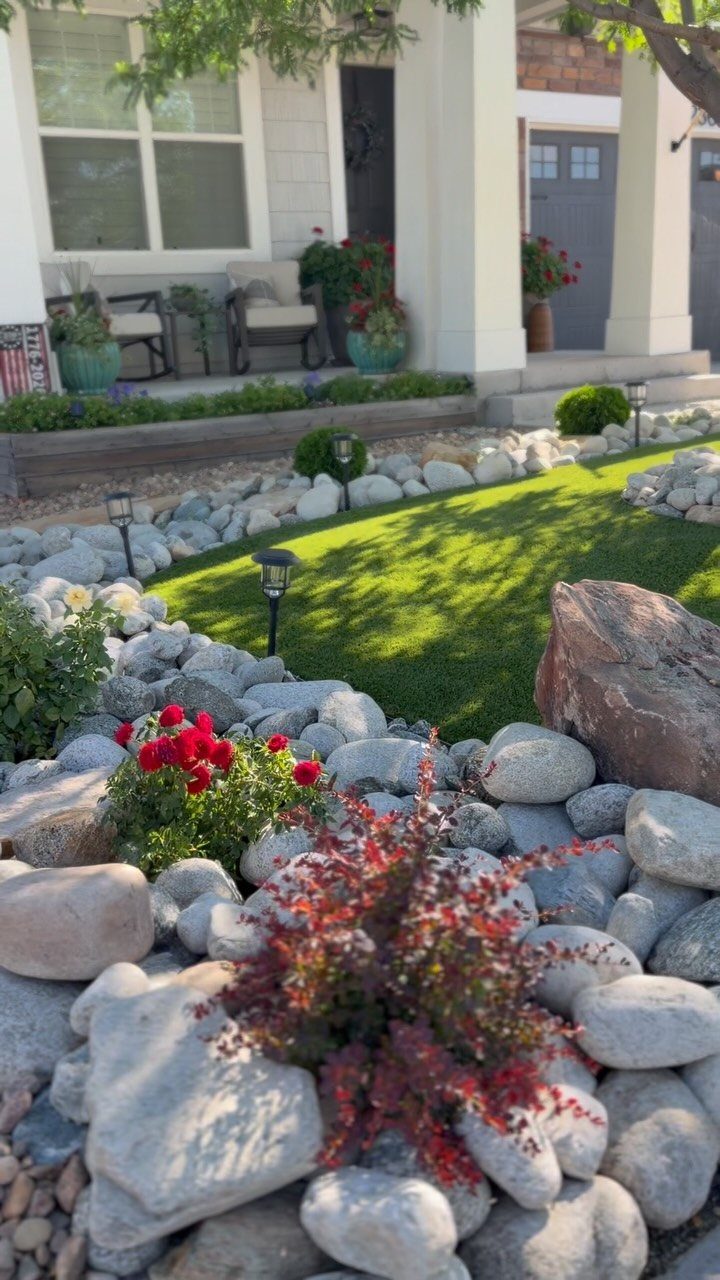
Solar path lights run on their own once you press them into the ground, so they suit a weekend project with no wiring.
I would buy a set with warm LEDs, around 2700K, rather than the bluish ones common at big-box stores; the amber tone reads softer against greenery.
Placement matters more than the light itself.
Spacing path lights far enough apart gives enough pools of light to walk by without a runway effect. The solar panel on top needs sun during the day, so I would keep them clear of shrub overhang.
3. Incorporate Perennials
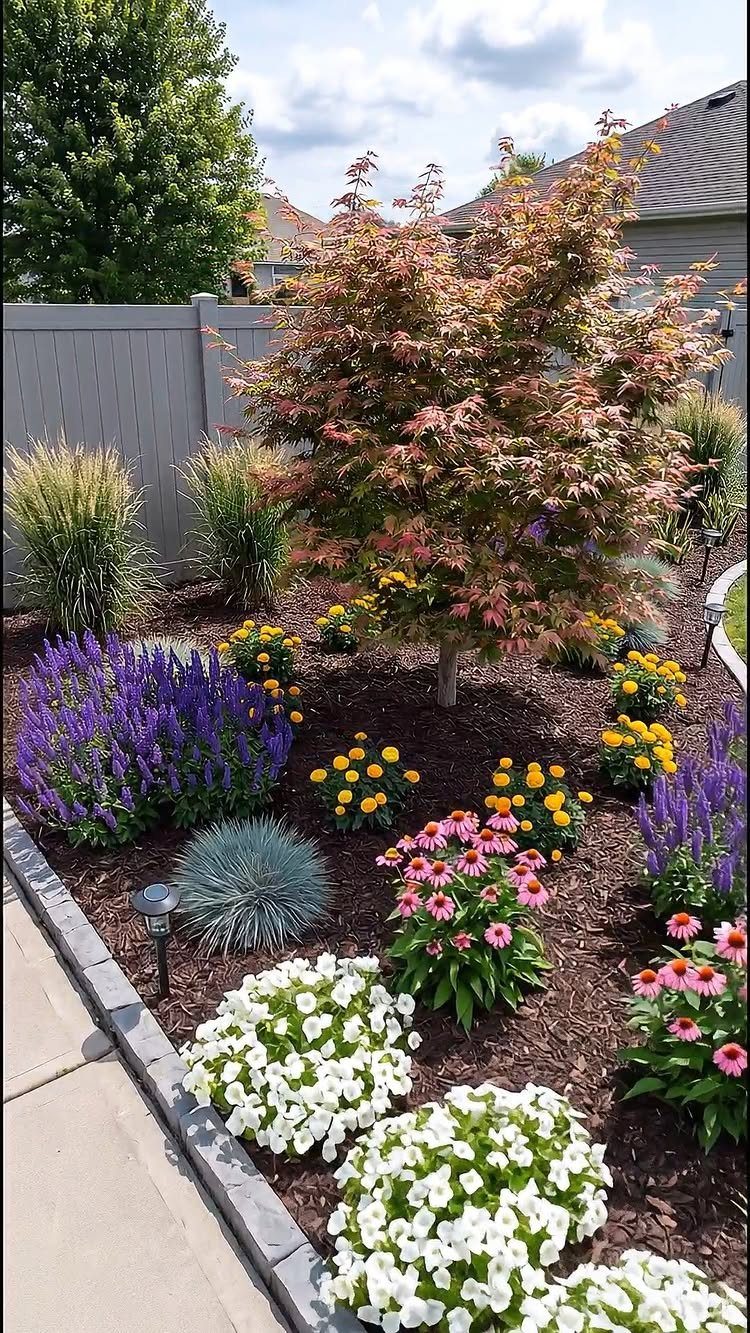
Perennials come back on their own, which is why I slot them in every bed I plan. Salvia and coneflower handle Midwestern heat without daily water once their roots set.
I would plant in odd groups, threes or fives, rather than singly; the clump reads fuller and you buy fewer individual plants.
A Japanese maple gives height in year one without the wait of a shade tree, though I would place it where afternoon sun will not scorch the leaves.
4. Invest in Flowering Trees
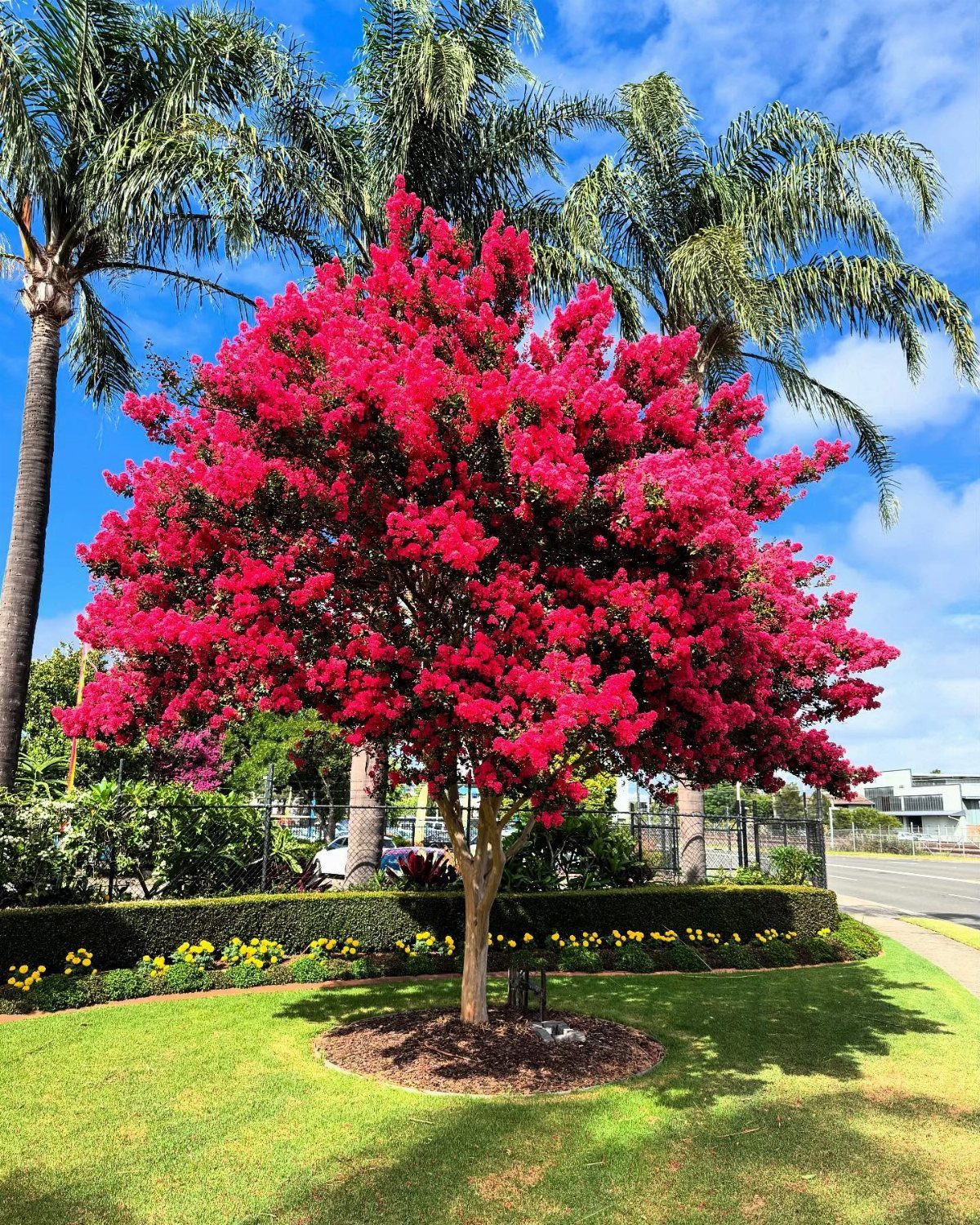
A flowering tree puts on a show for a short window and needs nothing from you that season.
Crape myrtle blooms on new wood, so any pruning is in late winter and light; I would skip it entirely for the first few years unless limbs cross the center.
Magenta blooms are striking, but I lean toward white or pale pink for a smaller lawn; dark petals tend to drop and stain concrete walks.
Mulch the root ring out to the drip line and keep grass back; the tree establishes faster without root competition.
5. Ornamental Grasses Are Easy
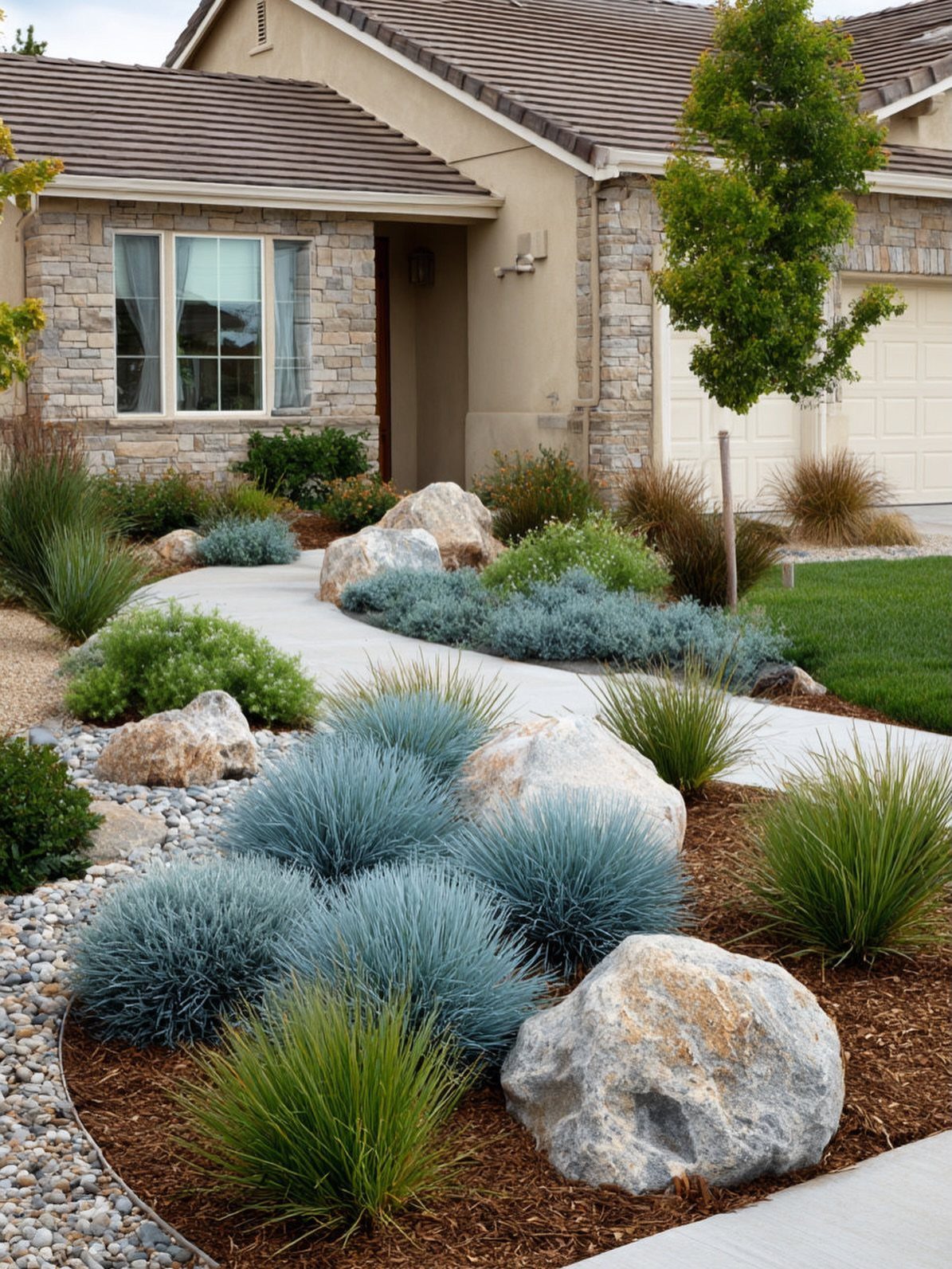
Blue fescue stays neat and compact, asking for no dividing or deadheading through the season.
I would plant it where the spiky texture shows against something smooth: boulders, a painted foundation wall, or a lawn edge it does not have to compete with.
Rock mulch around ornamental grass saves the yearly refresh bark needs; the contrast of grey stone and blue foliage carries the bed through winter when the grass has gone straw-colored.
I would set the root ball an inch above grade so water drains; wet feet rot these grasses fast.
6. Use Mulch
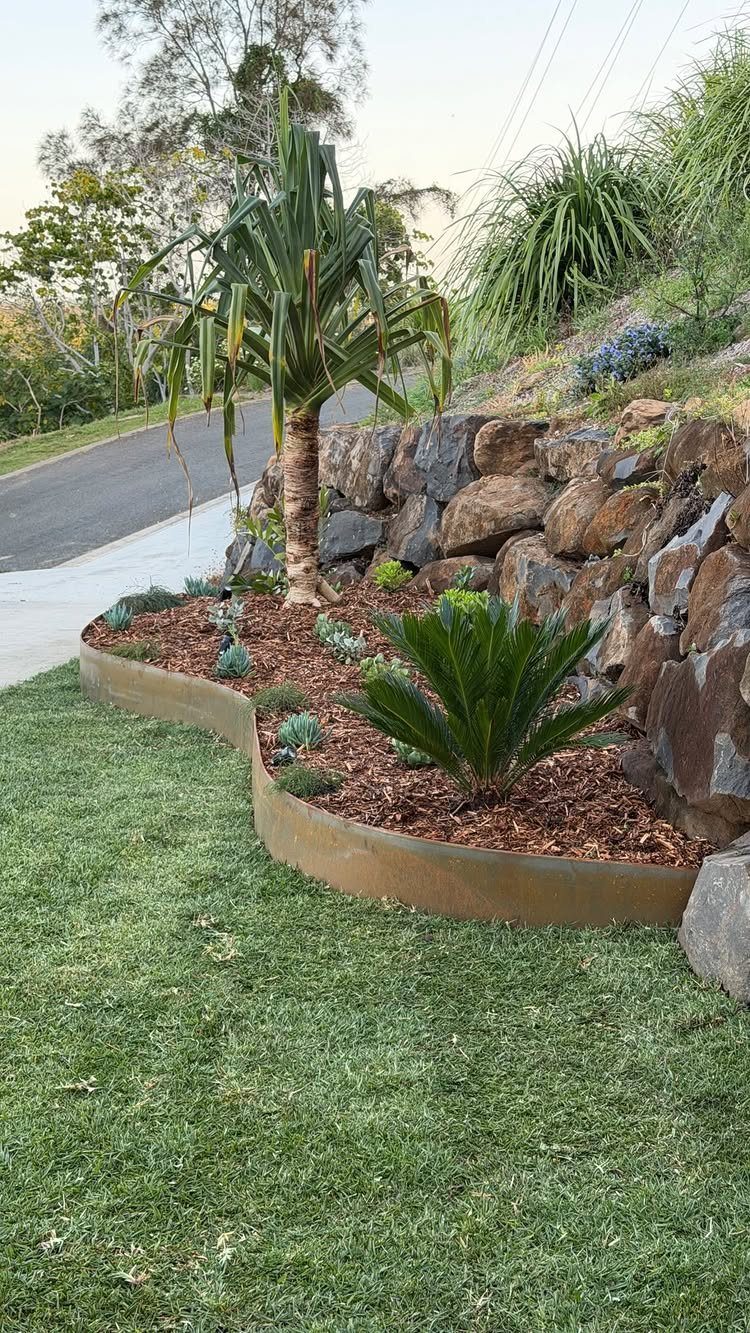
Mulch does 2 jobs that are hard to replicate cheaper: it blocks light from weed seeds and it keeps soil moisture from swinging.
Brown hardwood mulch is the standard I would pick; dyed red or black looks unnatural against most house colors and fades unevenly.
I would lay enough mulch to suppress weeds without suffocating the soil underneath.
Metal edging, like the strip visible, keeps mulch from sliding onto pavement and gives a crisp line that lasts longer than plastic. Refresh the top layer every other spring; the original depth packs down and breaks into the soil.
7. Groundcovers, Medium-Height Shrubs, and Taller Plants
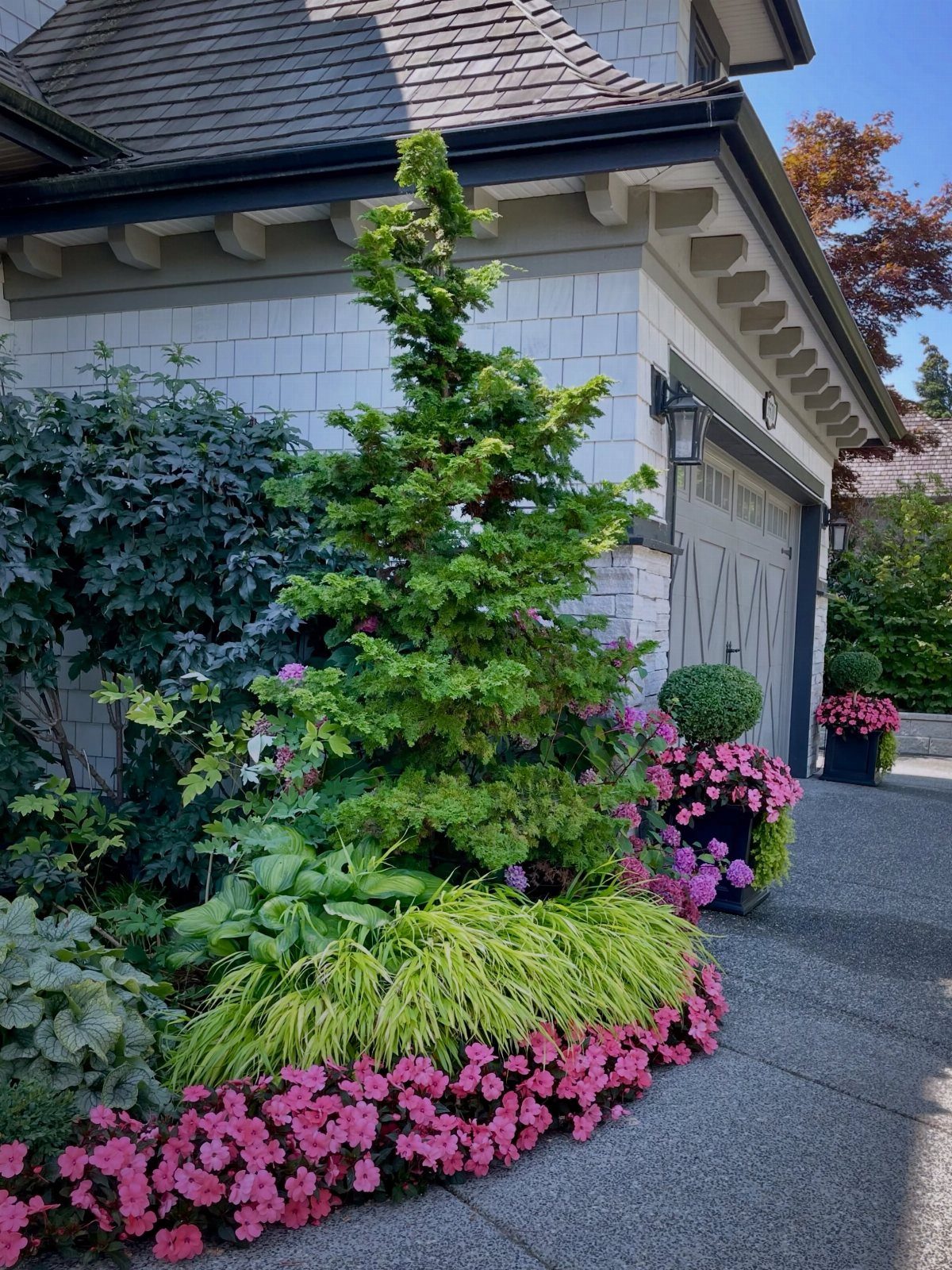
Layering plant heights turns a flat bed into something with actual depth without extra square footage.
Layer low groundcover in front, medium shrubs in the middle, and a single tall evergreen at the back to give a small front lawn clear structure without clutter.
I would check sight lines from the street before planting; a tall conifer placed dead center blocks the house, which most first-time owners regret.
Start with the tallest piece, then fill forward. 3 heights is enough; more than that starts to look busy on a standard suburban lot.
8. Use Color Thoughtfully
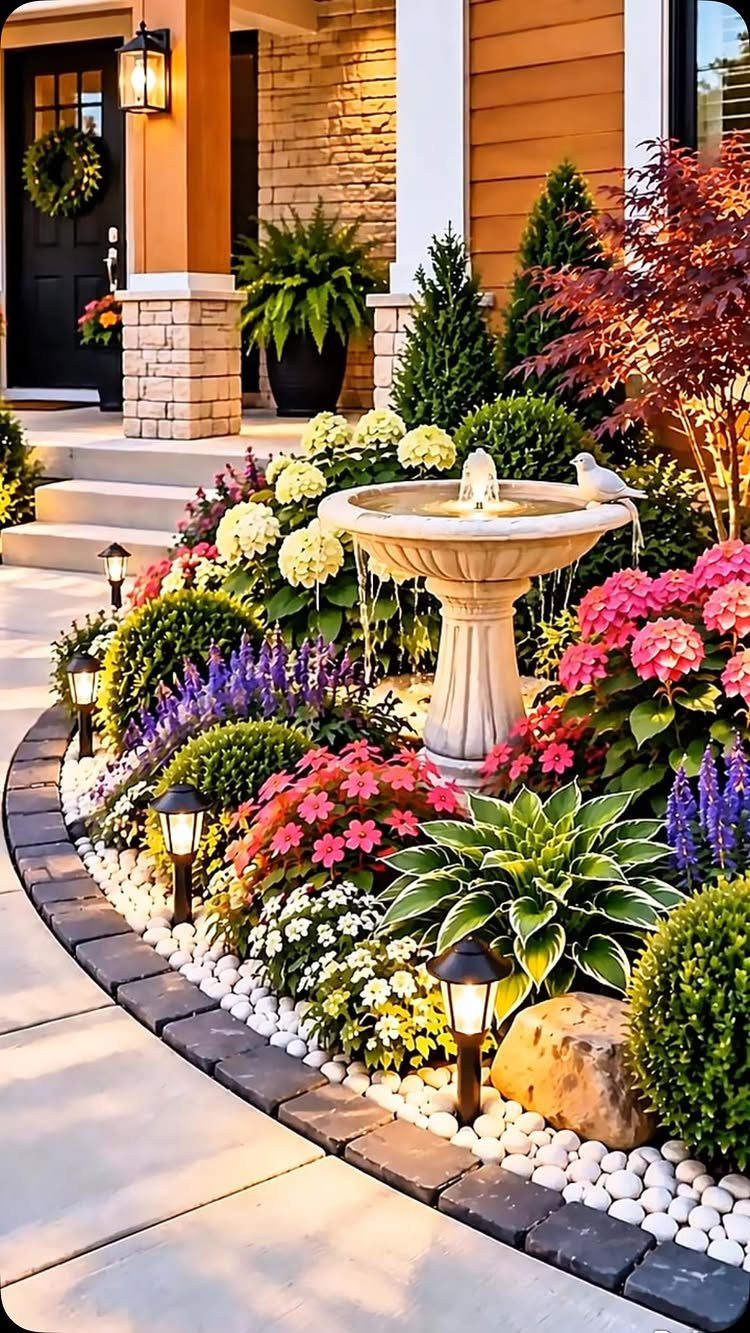
A front bed with white pebble mulch and a stone fountain already has a quiet palette, so the hydrangeas and mixed blooms carry the color load without shouting.
I would pick 2 main colors and let everything else stay green or neutral; the eye reads rest as luxury.
Pink and purple read soft against grey stone and white rock.
Red or orange would push too hard here. If your house is brick or warm-toned siding, swap the cool whites for cream or tan mulch so the flowers do not clash with the wall behind them.
9. Install a Walkway
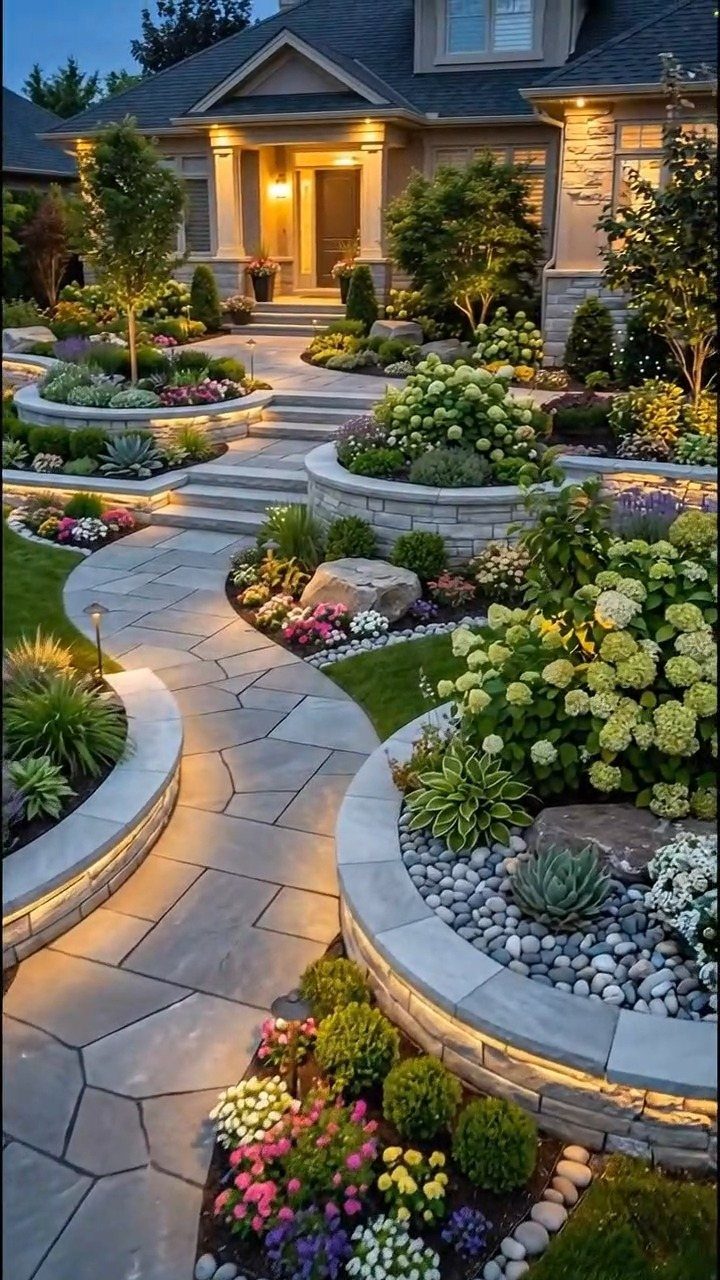
Flagstone set in curves slows the approach and makes a small front yard feel larger than a straight shot to the door.
Integrated lighting along a walkway is worth the extra cost if you entertain after dark; otherwise solar path lights at the edge do the same job for less.
I would set the stones with a slight crown so water runs off, not pools.
A sand base is forgiving to level; mortar locks them solid but cracks in freeze-thaw climates. Digging and laying a walkway yourself is a full-day project that rewards patience; rushed prep shows in uneven stones within a season.
10. Add a Water Feature
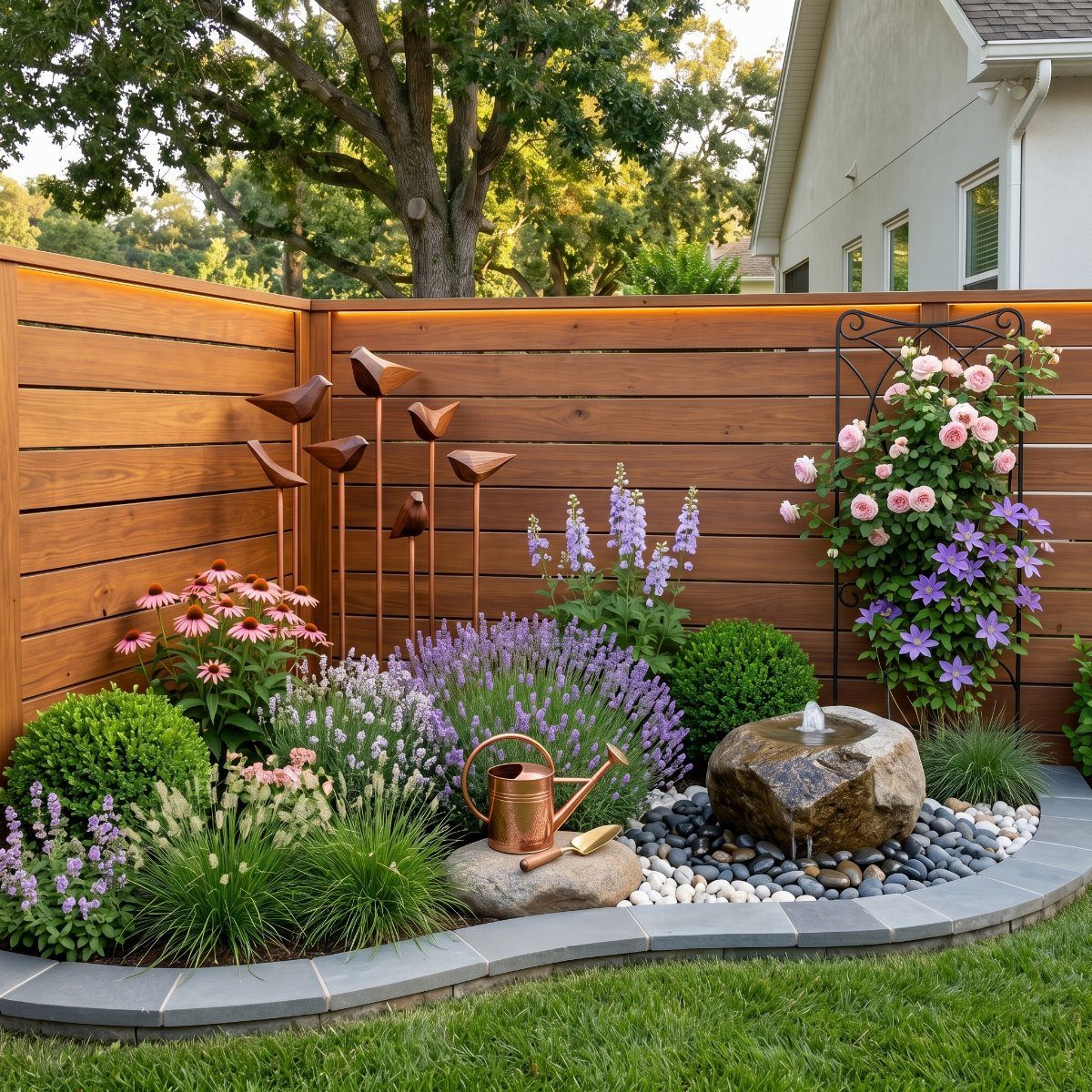
A bubbling stone fountain runs on a small pump and sits above grade, which means no pond liner or digging.
River rock around the base of a water feature hides the cord and gives a dry stream look that works even when the pump is off.
I would place it where you will hear it from a window or seat, not just see it from the street.
Lavender and coneflower nearby tolerate the occasional splash and do not mind the humidity. A GFCI outlet is non-negotiable; extension cords fail fast outdoors.
11. Incorporate Large Boulders
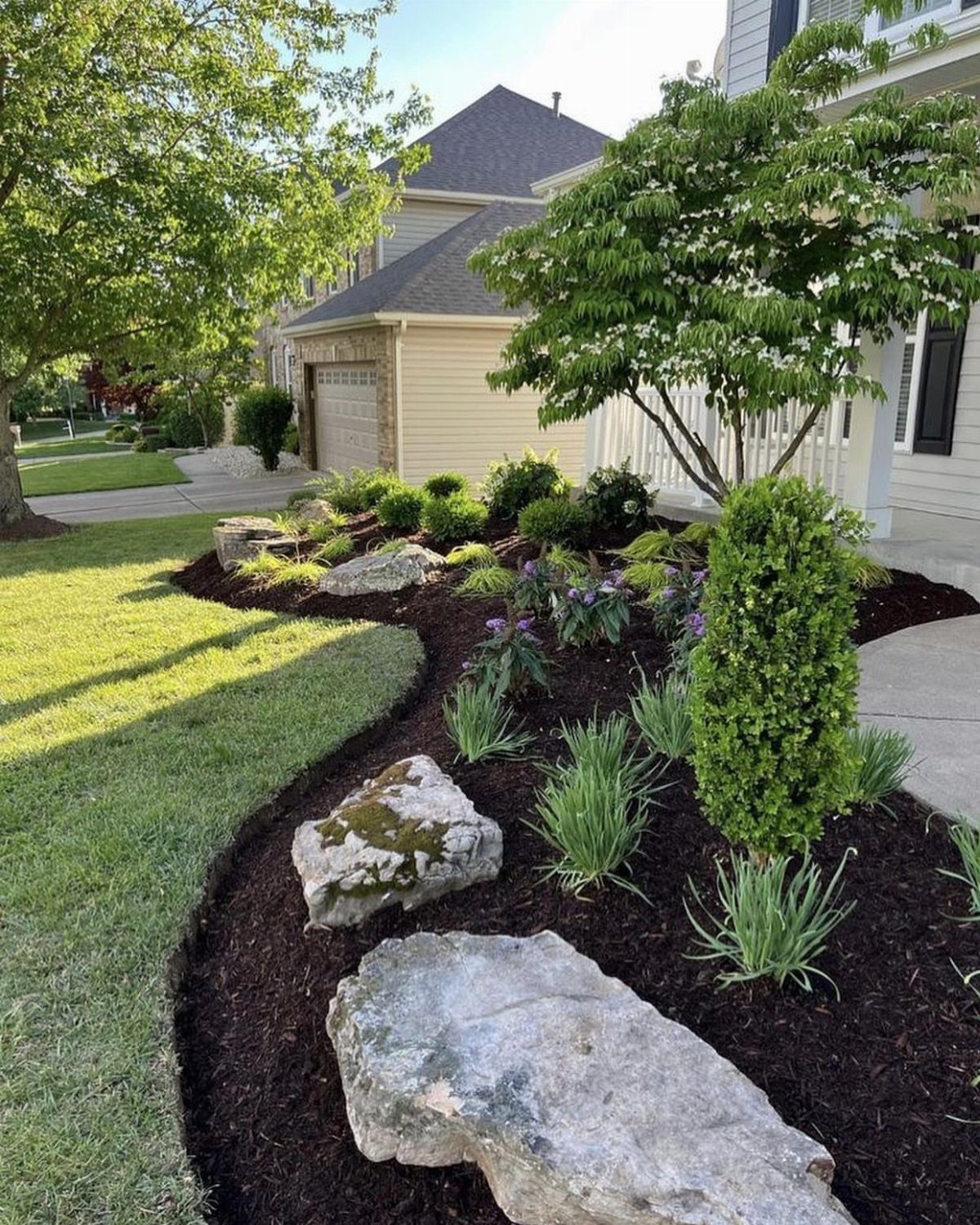
Grey boulders against dark mulch give a bed weight that shrubs alone cannot manage. One or two stones the size of a wheelbarrow read as deliberate; smaller rocks scattered everywhere look like leftover fill.
I would set each boulder so a third of it is below the mulch line; perched on top looks dropped there by a truck.
Purple flowers and green foliage show up well against the grey, and the contrast holds in winter when bloom is gone. Delivery is the main cost; a single pallet of stone and one boulder often fills a standard corner bed.
12. Sculpted Evergreen Hedges and Shrubs
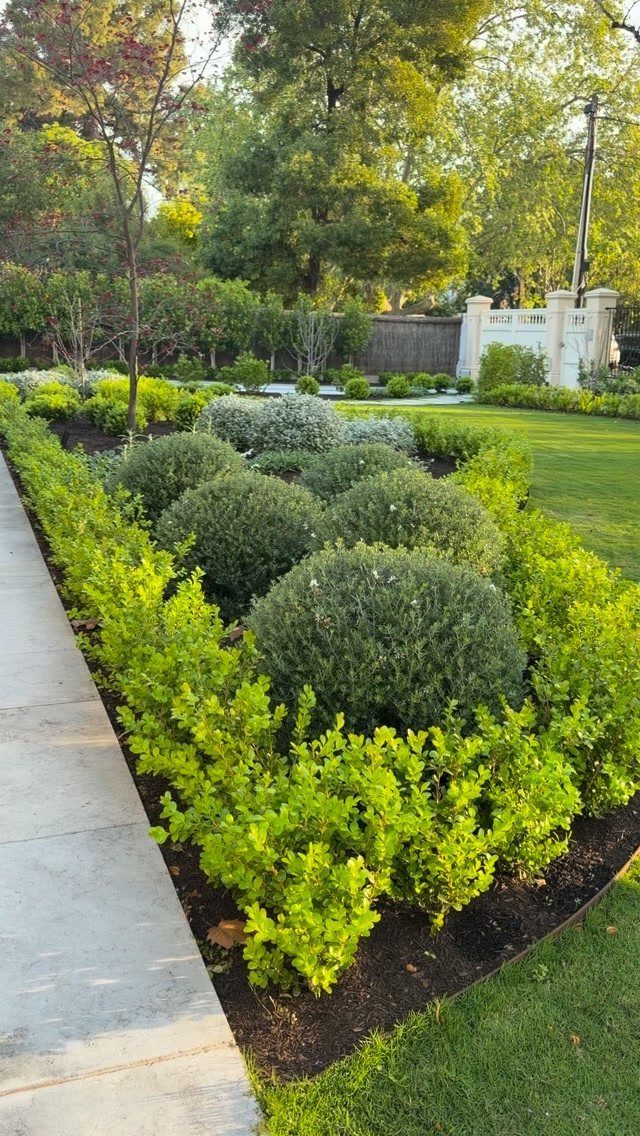
Rounded boxwood and sharp lime hedges give structure that lasts through every season, including the brown months when deciduous plants quit.
Sculpted evergreen hedges defining a walkway edge need room to grow; I would keep that line well back so growth does not narrow the path before you know it.
Shearing twice a year, late spring and late summer, keeps the crisp geometry.
Electric hedge trimmers handle the flat planes; hand shears do better on the rounded shapes where you are following a curve. This is not a low-maintenance choice, but it is predictable work on a set schedule.
13. Pillar Lanterns at the Entry
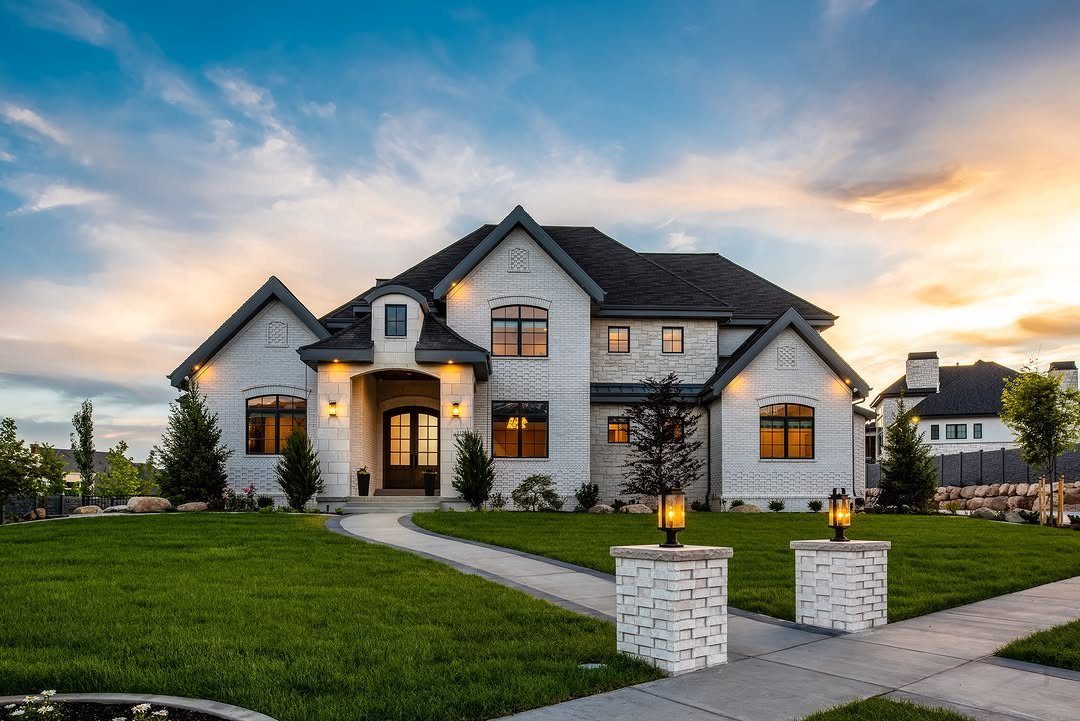
Pillar lanterns frame a walkway the way bookends frame a shelf: they give the approach a deliberate beginning.
Brick or stone pillars need footings below the frost line, which in most northern climates means a couple feet of concrete; without that base, frost heave tilts them within a couple winters.
I would size the lantern fixture to the pillar, not the door. A lantern too small looks like an afterthought; too large crowds the cap.
LED flame bulbs give the warm flicker of gas without the line run, and they last years on a dusk-to-dawn sensor. The wiring runs inside the pillar, so plan it before you build, not after.
Maintenance Tips
Native plants are the closest thing to autopilot once they settle in.
Creeping phlox and black-eyed susan in northern zones, liriope and coreopsis through the Midwest, frogfruit farther south: each is built for the rainfall and temperature swings of its region without demanding rescue watering.
Non-native plants can thrive too, but they usually need more intervention than a busy weekend allows.
Pre-emergent weed control in early spring stops crabgrass before it starts; pulling it by hand in July is far slower.
I would prune flowering shrubs right after bloom, not mid-season, so next year’s buds have time to set. Shear boxwood and hedge types in late spring and again late summer, no more.
Seasonal care is not about doing more work. It is about doing the right work at the right time so the yard matures rather than declines.
Planning Your Landscape
Cross the street and look at your house fresh, the way someone pulling up for the first time sees it.
Overgrown shrubs, cracked walks, and faded trim are what they see first; fix those before adding anything new. Power-washing the driveway and porch costs little and resets the whole appearance.
Next, decide what the front yard is actually for. A place to sit and talk with neighbors needs a different layout than a space you walk through fast.
I would rank priorities in order: seating, paths, privacy, color, or whatever matters to you. That list shapes where money and effort go first.
Map the yard out roughly, pacing width and length with your own steps. Mark what stays and what comes out; old stone or brick may replant elsewhere.
Then place the tallest element, usually a tree or a grouping of shrubs at the back of the bed, and fill forward from there. A single evergreen at the rear corner gives structure without blocking windows.
Working in stages keeps the budget intact and lets you adjust as you go. A neighbor’s dogwood that looked perfect in March may crowd your porch by August if you copied it without pacing the growth.
“All three of these design elements should be low maintenance so that your dreams of a beautiful landscape and the reality of how much time you actually have to work in your garden are in harmony.”
Budget-Friendly Upgrades
The mulch layer in existing beds probably needs a refresh every other spring. A fresh layer of brown hardwood mulch over the packed-down base revives color and restores weed suppression without replanting a single plant.
Matching pots flanking the door give instant symmetry without digging. Paint old planters if the finish is tired; a single color on both ties them together.
Fill with perennials from a garden center sale rack, three or five of the same variety in each, so they read as one mass instead of scattered individuals.
Decorative gravel around a birdbath or fountain base costs less than a paved pad and drains better. Layer gravel, then stone, then mulch for a bed that needs no yearly overhaul.
Frequently Asked Questions
How can I landscape my front yard cheaply?
Start with what shows first. Power-wash the driveway and porch, refresh mulch in existing beds, and paint tired planters instead of buying new.
Decorative gravel around a birdbath skips the cost and yearly labor of replacing pavers. These small fixes hit the visible areas where guests actually look.
What is the 3-5-7 rule in landscaping?
Plant in odd-numbered groups, threes or fives, rather than singles or pairs.
I use this for perennials like salvia and coneflower, and it works for matching entry pots too. Even numbers tend to look formal or accidental; odd groups look deliberate without trying hard.
What are the trends in front yard landscaping for 2026?
Low-maintenance designs built around native plants and sensible hardscaping continue to dominate. Homeowners want weekend projects that mature without constant rescue watering or shearing.
Brown hardwood mulch over dyed colors, solar path lights with warm 2700K LEDs, and gravel over thirsty lawns all point toward the same goal: less work for a yard that still looks intentional.
The trend is not a look; it is a realistic schedule.





