
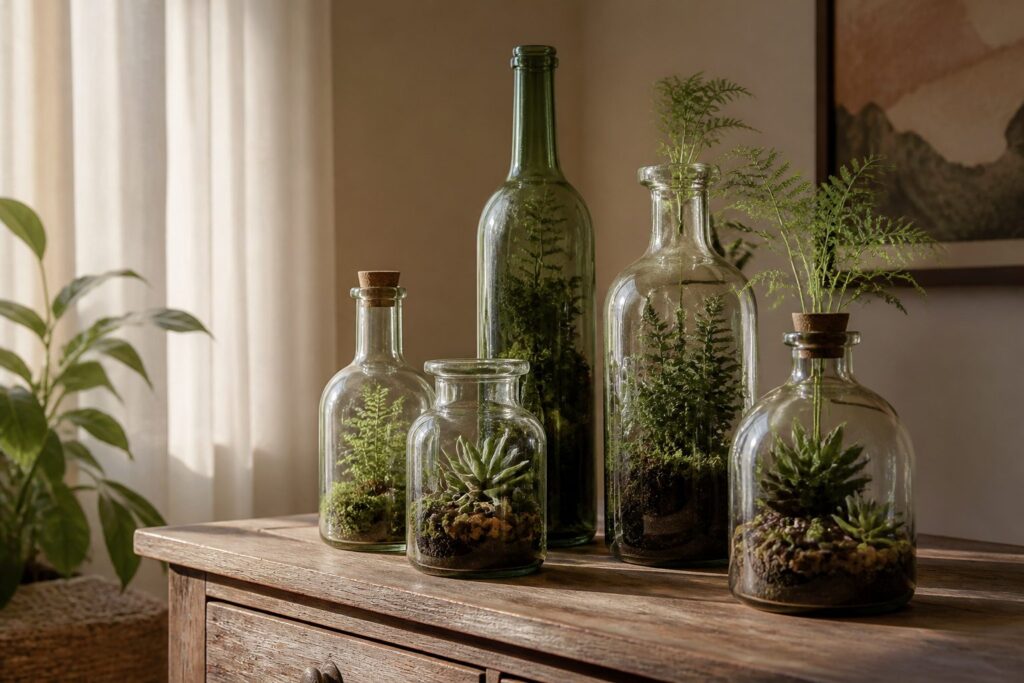
A bottle garden is a self-contained planting grown inside sealed or open glass, and the difference between success and rot comes down to one decision before you ever add soil: matching the bottle type to the humidity your plants actually need.
Closed bottles with lids or corks recycle their own water and can run for months untouched, but only ferns and other moisture lovers survive that trapped air; succulents need open containers or their roots decay.
The Victorians built these as miniature greenhouses, and the same rules still apply. A wide mouth makes planting possible, though wine bottles with narrow necks work if you own long tweezers and a funnel.
[link-whisper-related-posts]Choosing a Bottle
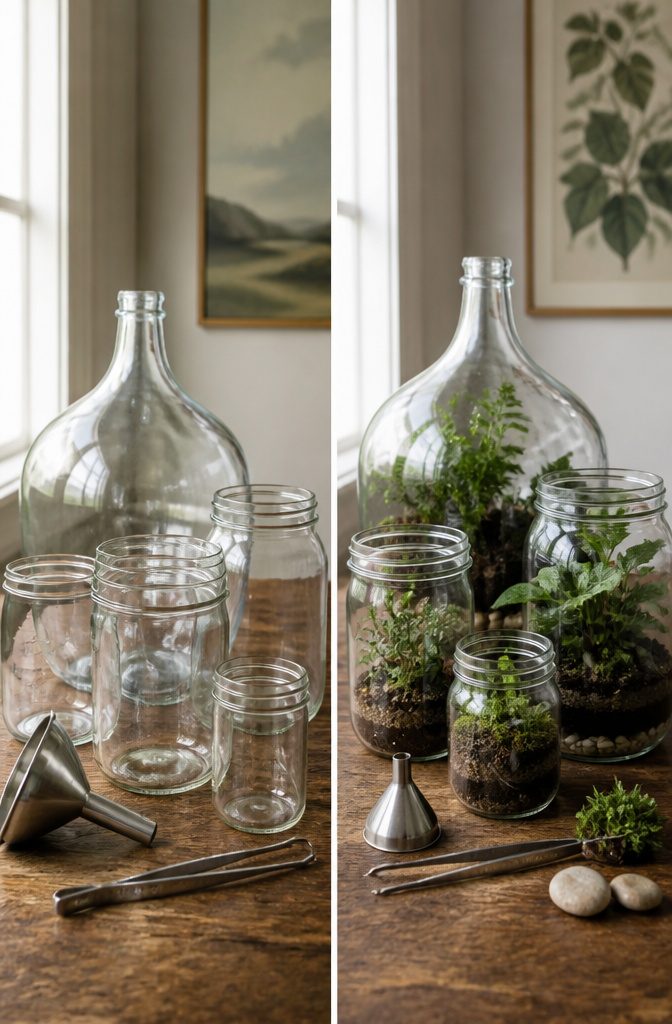
Clear glass wins over green or amber every time, because tinted glass blocks both the light your plants need and your view of the roots or soil line.
A wide mouth makes the actual planting possible, especially if you are working with tools inside the bottle rather than layering everything through a narrow neck.
Wine bottles, mason jars, and the old demijohn carboys all work, though the wide neck of a mason jar or a purpose-built terrarium kit will spare you the frustration of trying to position plants through an opening barely wider than your thumb.
The bottle should be clean and completely dry before you start, and large enough that your plants have room to grow without immediate overcrowding.
I would skip anything under a pint for soil plantings; water propagation can run smaller, but the same transparency rule applies.
Preparing the Bottle
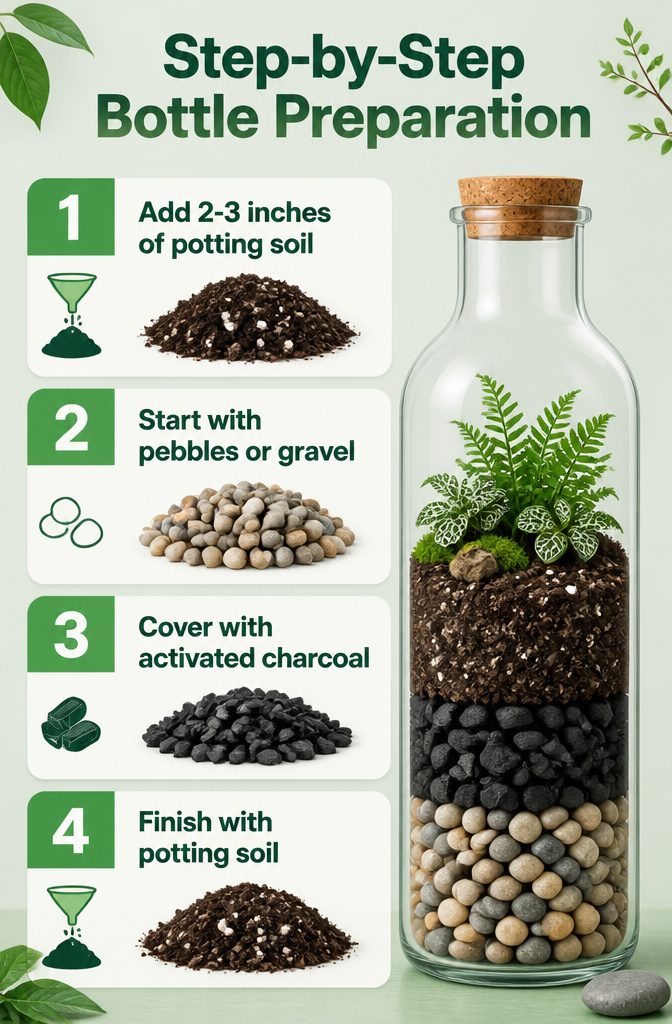
- Every bottle garden needs at least two to three inches of potting soil at minimum, though larger bottles with larger plants will need much more.
- Start with a layer of pebbles or gravel at the bottom. This lets extra water escape away from the roots so they do not sit wet.
- Cover the pebbles with a thin layer of activated charcoal. This keeps the environment clean and cuts down on odors that build up in a closed container.
- Add your potting soil last. All-purpose mix works for foliage plants; switch to a cactus or succulent mix if that is what you are planting. A funnel helps for all three layers, especially when the bottle mouth is too narrow to reach inside.
Selecting Plants
The biggest mistake with plants in glass bottles is mixing moisture needs in the same container.
Ferns want steady humidity; succulents want air that stays dry. Pair them together and one side loses.
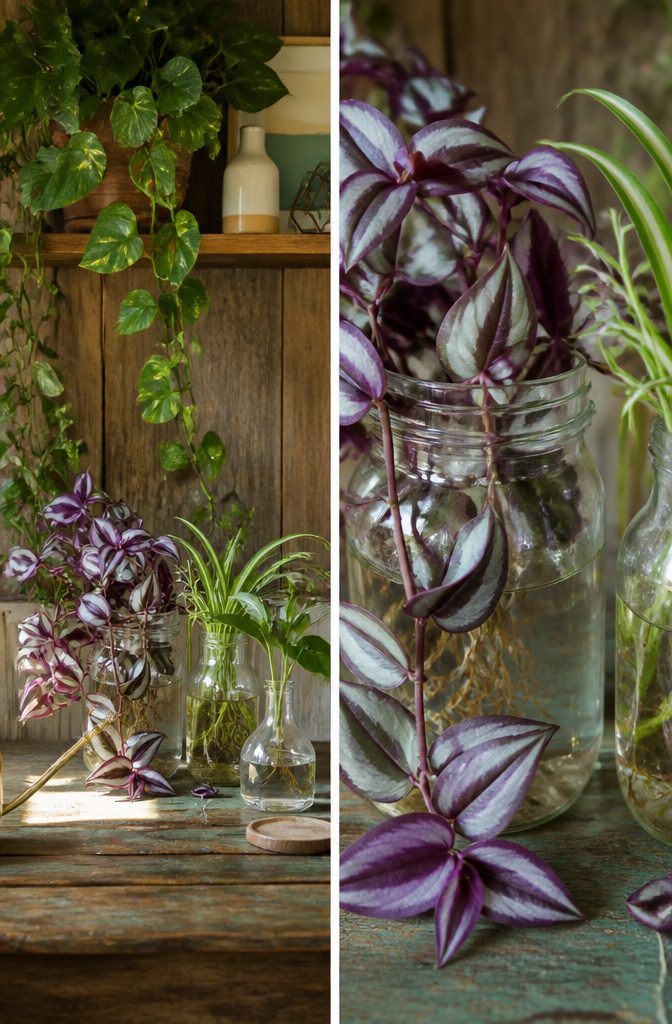
For a closed or high-humidity bottle, I would reach for small ferns, philodendrons, or a creeping Tradescantia zebrina (Wandering Jew).
Its striped purple-and-silver trails down the neck of a bottle in about two weeks from cuttings. Pothos (Epipremnum aureum) behaves the same way, and Spider Plant (Chlorophytum comosum) sends out arching stems with baby plantlets that look suspended in glass.
If you want an open, drier setup, succulents are the obvious call. But they need their own bottle, never shared with ferns.
For water propagation specifically, Sweet Potato Vine (Ipomoea batatas) roots in roughly two days and grows fast enough to need a larger jar, so plan the bottle size up.
Coleus gives the same quick payoff with leaf color that ranges from lime to near-black.
Both will live in water for months, though I would eventually move Sweet Potato Vine to soil if you want it to keep its energy long term.
Match the plant to the humidity you can commit to, then match every plant in that bottle to each other.
Planting
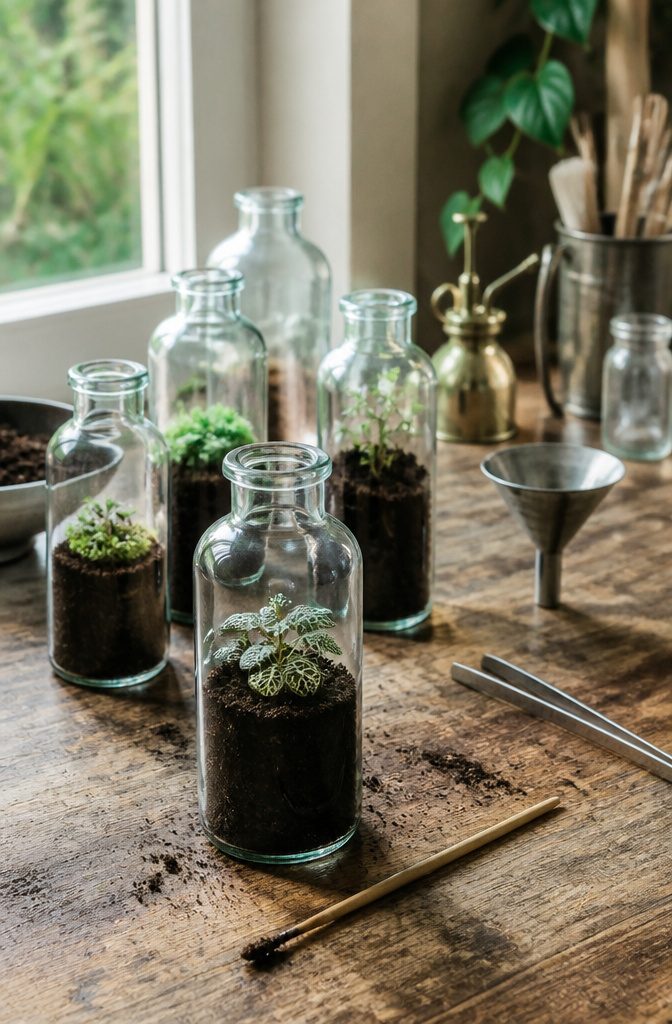
A funnel and long tweezers change bottle planting from frustrating to doable.
I start with the funnel to direct soil through the neck, building at least two to three inches at the bottom for small setups and more for larger bottles.
Then I make a hole in that soil with a bamboo skewer or the tip of my tweezers.
For narrow openings, the plant goes in root-first, guided by one tool while a second steadies it like chopsticks.
I work slowly here: excess soil on the root ball gets brushed off before the plant ever nears the bottle, or the whole assembly jams at the neck.
Once the roots sit in their hole, I use the back end of my tweezers to settle soil around them.
Space matters more than arrangement.
Each plant needs its own zone, and foliage should not touch the glass. Leaves pressed against the side stay wet, rot, and invite mold.
I leave a finger’s width of clearance all around, even when the final look feels sparse. The plants will fill in, and a cramped bottle is a maintenance headache I would rather skip.
Watering
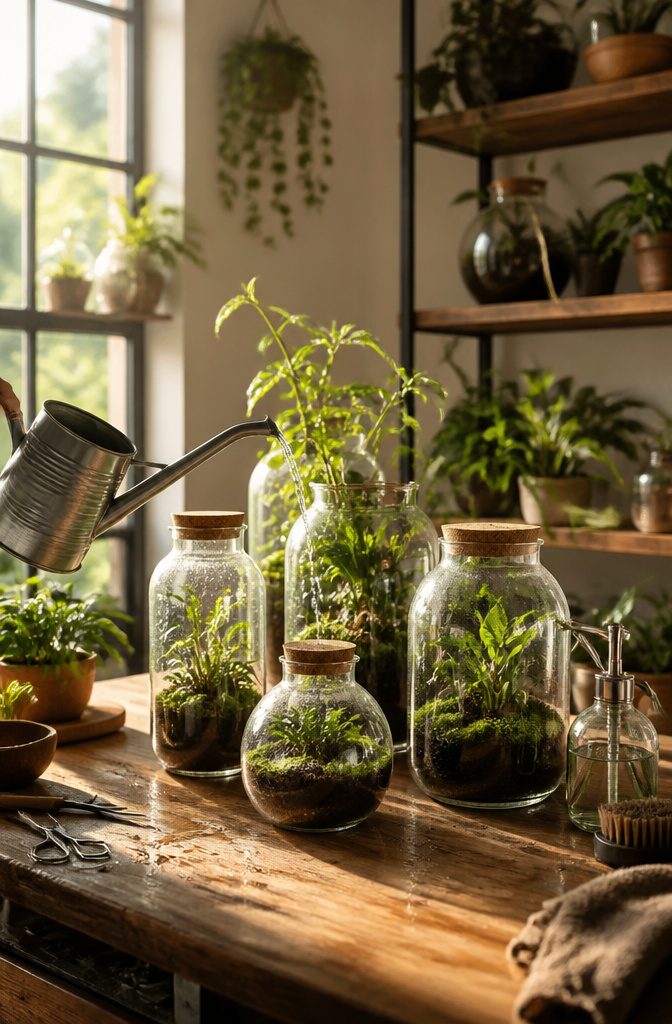
A narrow-spout watering can is the tool I would reach for, running a slow stream down the inside wall of the bottle so moisture spreads evenly without pooling at the bottom.
Rotating the bottle as you work gets every pocket of soil damp, and it knocks loose any dirt stuck to the glass. Root rot is the real risk here, since a bottle has nowhere for excess water to escape.
Going slow matters more than you might think: dry spots will balance out if you give them a few minutes, and adding more is simple enough, but pulling water back out is nearly impossible.
For water propagation, cloudy water is your cue to pour it out and refresh the bottle, though most cuttings do fine on a schedule of every few weeks.
I would rather stay on the sparse side and watch the plant than trust my guess at how much sits in soil I cannot see.
Sealing the Bottle
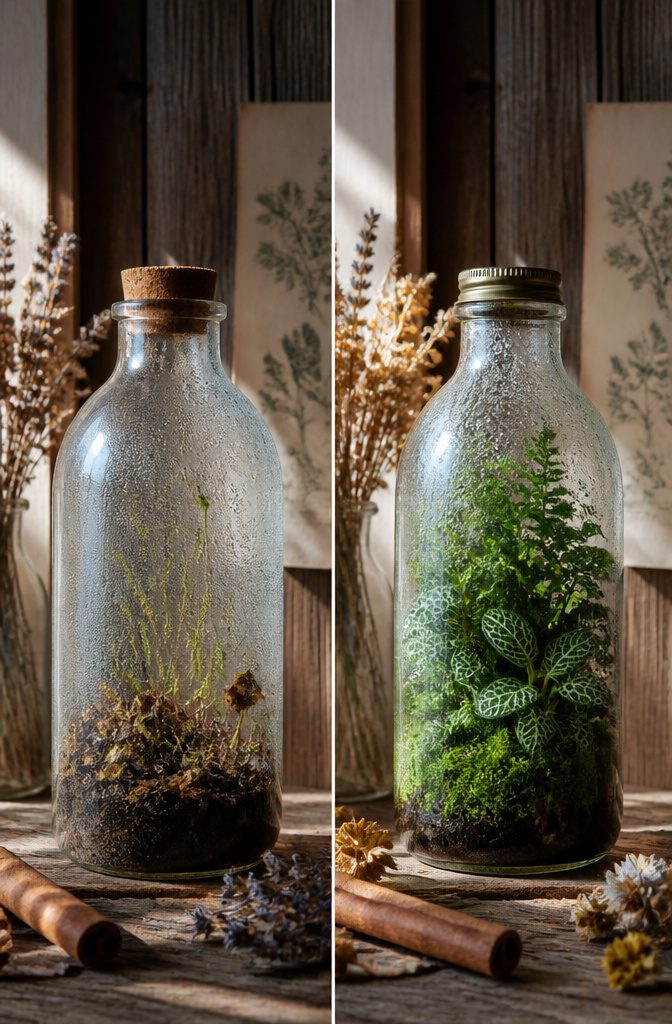
A sealed bottle with a lid or cork turns your planting into a self-sustaining system where water cycles from soil to plant and back again.
That closed loop can mean months without watering once the balance settles in, which is why I lean toward sealing when I want a weekend project that stays hands-off.
Moisture management is where this gets tricky. Some condensation inside is normal, but when droplets coat the entire glass and start running down the sides, the system is too wet.
Pull the lid for a day or two and let it dry out, or you risk fungal growth and rotting roots.
Open bottles skip that gamble entirely.
Air moves freely, so excess humidity escapes on its own, and the soil dries the way it would in any regular planter. The trade is frequency: an open bottle garden needs watering more often, closer to a standard houseplant schedule.
Closed setups suit moisture lovers like ferns that welcome the humidity; succulents and cacti do better open, since damp air and standing water will kill them fast.
For most renters and first-home owners, I’d seal the bottle if the plants inside match the environment, then watch it like a new appliance for that first week until the equilibrium holds.
Plants for Water Propagation
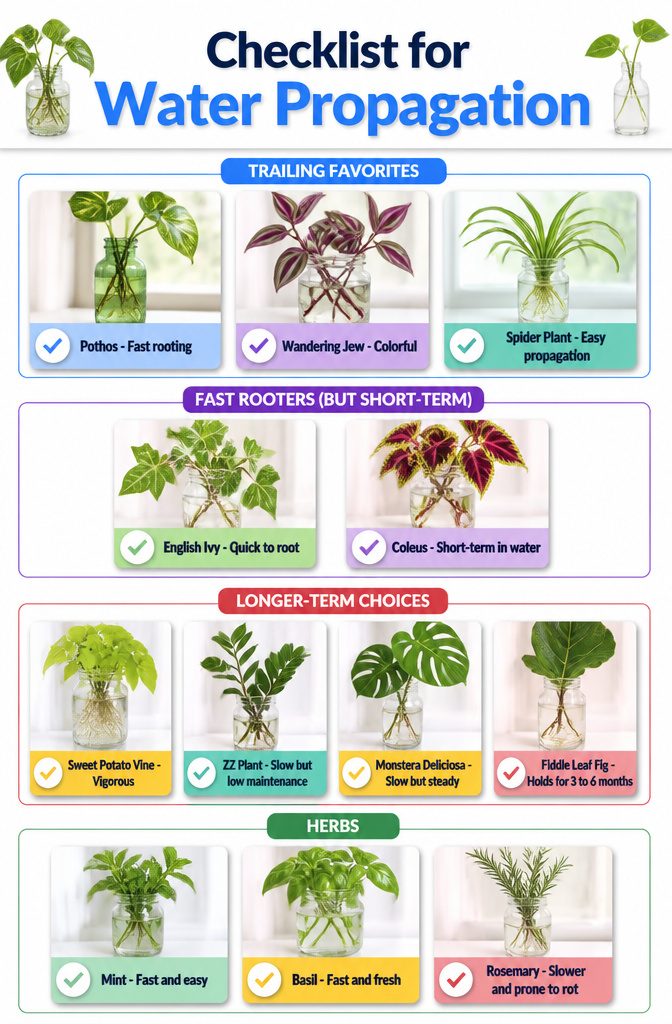
Some plants root so readily in water that a glass bottle becomes a permanent home, while others are better treated as a pit stop before soil.
Pothos is the one I would start with: it roots in days, tolerates low light, and a single stem in a tinted wine bottle looks intentional on a windowsill.
Wandering Jew and its purple cultivars add color that deepens with a little morning sun, though the stems can get leggy over time.
Spider Plant sends out its own babies; snip one, drop it in water, and roots appear before you have forgotten about it.
English Ivy and Coleus both root fast, but Coleus is a short-term water resident.
Its colors are vivid for a few weeks, then it flags. Sweet Potato Vine is the same: roots in as little as two days, drinks heavily, and needs a big jar, but it is too vigorous for water long term.
ZZ Plant and Monstera Deliciosa are slower to root and slower to grow, yet they survive in water for months with almost no attention.
Fiddle Leaf Fig cuttings will root and hold for three to six months, which is useful if you want the look while you decide where the eventual potted tree will live.
For herbs, mint and basil root fast enough to keep on a kitchen counter; rosemary is slower and more prone to rot if the water is not changed.
I would skip rosemary in favor of the others unless you are patient with stem selection.
Open Versus Closed Gardens
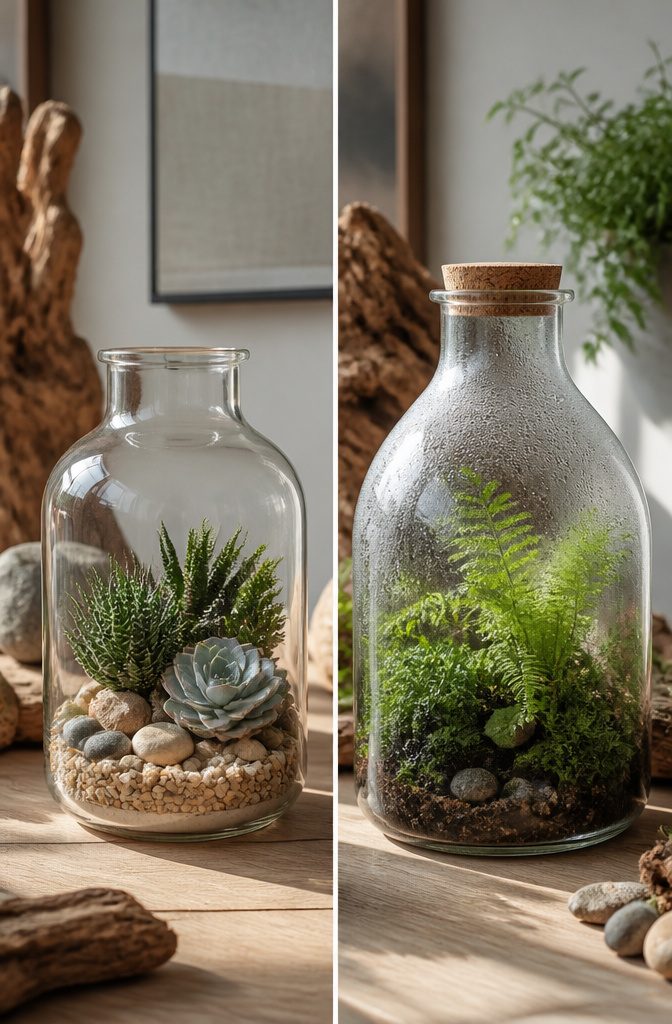
Open gardens let air move freely through the neck of the bottle, which means the soil dries out faster and you’ll reach for the watering can more often.
That same airflow is exactly what succulents and cacti want; sitting in damp soil rots their roots faster than almost anything else. I keep mine in shallow, wide-mouthed containers where the moisture escapes before it can settle.
Closed bottles work more like the miniature greenhouses the Victorians loved. Water cycles through condensation and evaporation, so the humidity stays high and the soil stays consistently damp.
Ferns and moisture-loving foliage do well here, though I watch for the warning signs of too much trapped moisture. If condensation never clears from the glass, the balance has tipped too far and the roots are sitting wet.
The choice between open and closed comes down to which plants you actually want to grow, not which bottle looked prettiest on the shelf. Match the container to the plant’s native conditions and the maintenance mostly handles itself.
Light and Placement
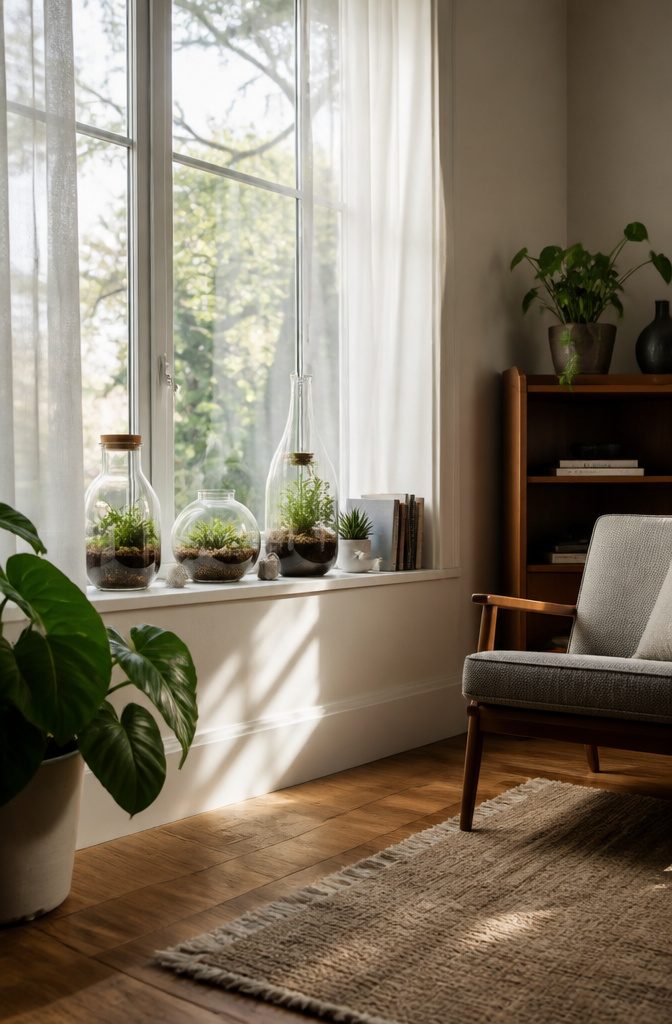
The glass around your plants works exactly like a magnifying glass on an ant: direct sunlight will scorch leaves and can even damage nearby fabric or furniture.
Indirect light in a brightly lit room is where most bottle gardens do best, giving plants what they need without turning the bottle into a solar oven.
I place mine a few feet back from south- or west-facing windows, or on a table that gets bright morning light without the afternoon blast.
East-facing windowsills work well too, though you may need to watch for leggy growth in winter if the light is weak.
If you want something in a sunnier spot, open bottles with succulents, stones and gravel are the exception.
The glass still intensifies light, but succulents tolerate it and the open top lets heat escape. Ferns and ivies go the opposite direction; a bathroom with indirect light suits them better than any windowsill.
Common Mistakes
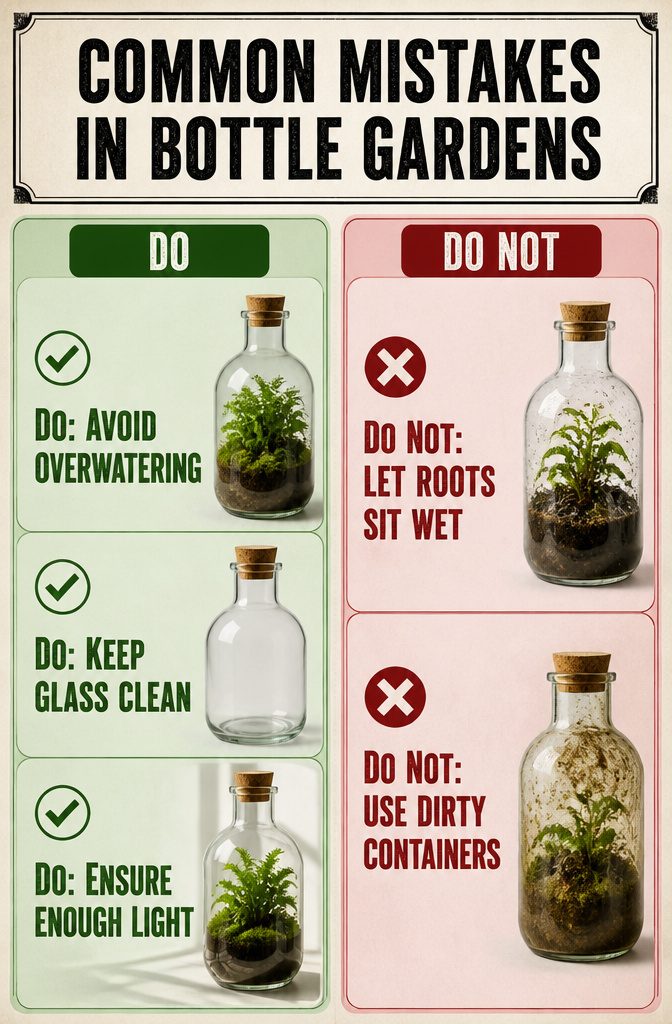
The three mistakes that kill bottle gardens fastest are overwatering, dirty glass, and too little light, and they usually happen in that order.
Overwatering is the big one: a sealed bottle has nowhere for excess moisture to go, so roots sit in wet soil and rot before you notice the leaves drooping.
I would rather start too dry and add a few drops later than mop up a failed terrarium.
Dirty containers matter more than most people expect. Residue from old wine or coffee oils gives off fumes and feeds mold, especially in narrow-necked bottles where you cannot wipe the interior clean after planting.
I wash every vessel with hot soapy water and let it air dry completely, even if it looks spotless.
Light is the limit people forget. Transparent glass helps, but a bottle on a dark bookshelf still starves the plant.
Ferns, ivy, and the small pilea or peperomia that fit well in bottles all need bright, indirect light to stay compact. Without it, stems stretch and leaves yellow, and by then the bottle is already on its way out.
Plant Care Tips
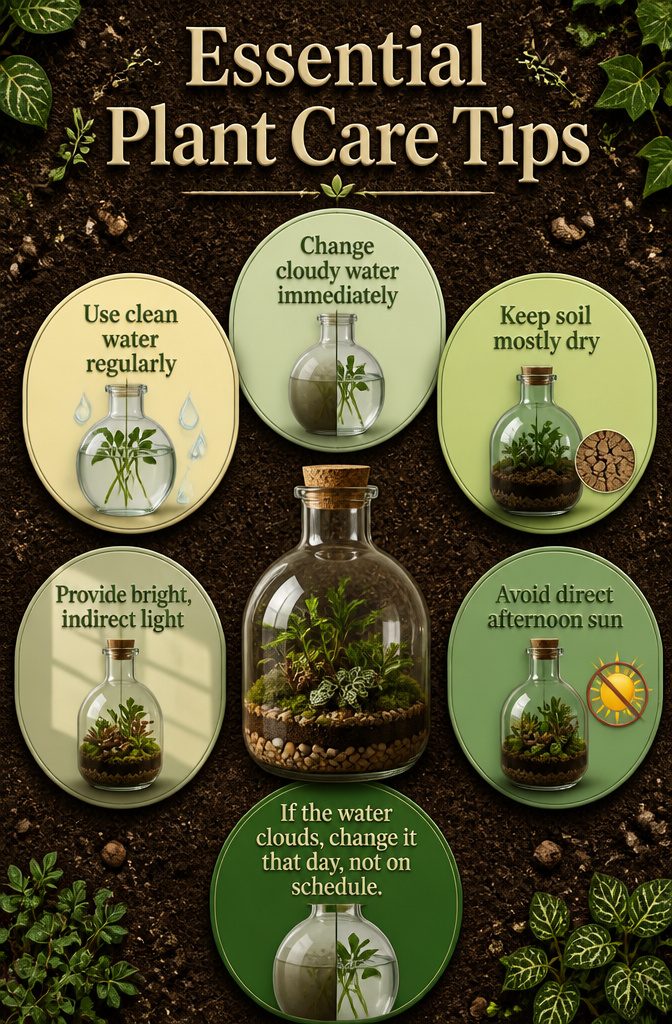
Clean water matters more than you might think for plants in glass bottles.
I change mine the moment it turns cloudy, or roughly every few weeks if it stays clear, because stagnant water breeds the bacteria that rot stems from below.
For soil-based bottle gardens, the glass walls are a gift and a trap: you can see exactly how wet things are, but that same visibility means algae grows fast on damp inner surfaces.
Let the soil dry most of the way before you add more water. Bright, indirect light keeps leaves from bleaching or stretching, though a few hours of morning sun through the glass works well for most succulents and herbs.
Direct afternoon sun can cook roots in a closed bottle, so I shift mine back from the window by late spring. If the water clouds, change it that day, not on schedule.
Container Types
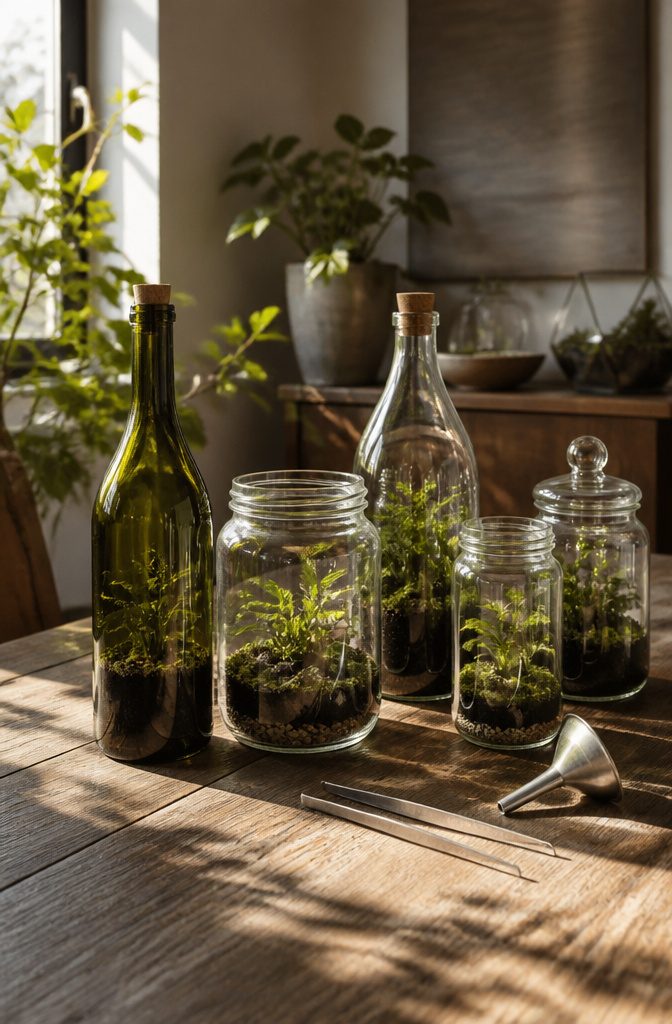
Wine bottles, mason jars, and terrarium kits each handle a different job, and the practical split comes down to mouth width and whether you plan to seal the thing.
A wine bottle’s narrow neck keeps humidity in and looks clean on a windowsill, but you will need long tweezers or a funnel to plant or prune inside.
The tinted glass also diffuses direct sun, which matters more than you’d think for water propagation; roots in clear glass can cook against a south-facing pane.
Mason jars sit at the other end: wide mouths mean you can reach in with your hands, rearrange soil, and swap plants without tools.
They work better for open, drier setups like succulents or herbs, where airflow matters and you want easy access for trimming.
Specialized terrarium kits usually come with a lid or a stopper, which turns the container into a closed system.
That is the only route for moisture-loving plants like selaginella, because the sealed glass creates its own water cycle and spares you daily watering.
You trade that for fungal risk; any spores you introduce stay inside, so the container has to be spotless and the growing medium sterile.
I would skip repurposed food jars for sealed builds unless I was certain I could sterilize them thoroughly.
Frequently Asked Questions
What types of plants can grow in water?
Pothos, Spider Plant, Wandering Jew, English Ivy, ZZ Plant, and Monstera Deliciosa all root readily and can live in water for months.
Some, like Coleus, Sweet Potato Vine, and Fiddle Leaf Fig, do better as short-term water residents and should move to soil eventually. Mint and basil also root fast enough for kitchen counter jars.
How often should I change the water?
Change the water the same day it turns cloudy, or roughly every few weeks if it stays clear. Cloudy water signals bacteria buildup that rots stems from below, so watching the glass matters more than keeping a calendar schedule.
Can I use any type of bottle for my garden?
Clear glass beats tinted because you need to see roots and soil lines, and the bottle must be clean and completely dry before planting.
Wide mouths make planting easier, especially for soil gardens, while narrow necks suit water propagation or humid, sealed setups. Skip anything under a pint for soil plantings.
What plants grow best in glass jars?
Match the plant to the jar’s humidity and light.
Ferns, philodendrons, and creeping Wandering Jew thrive in sealed, humid bottles, while succulents and cacti need open, wide-mouthed jars where air dries soil fast. Pothos and Spider Plant work almost anywhere and root so easily they often start in water.
Do plants grow well in glass containers?
Plants grow well in glass as long as you pair the container type to the plant’s needs and keep leaves from touching the sides, where trapped moisture causes rot.
Closed bottles create self-sustaining humidity cycles for moisture lovers; open bottles behave like standard planters and need more frequent watering.
What are plants in glass jars called?
Soil plantings in sealed glass are often called bottle gardens or terrariums, a style popular since Victorian times. Water-rooted cuttings in glass are simply water propagation setups, though many people keep them as permanent display pieces.





