
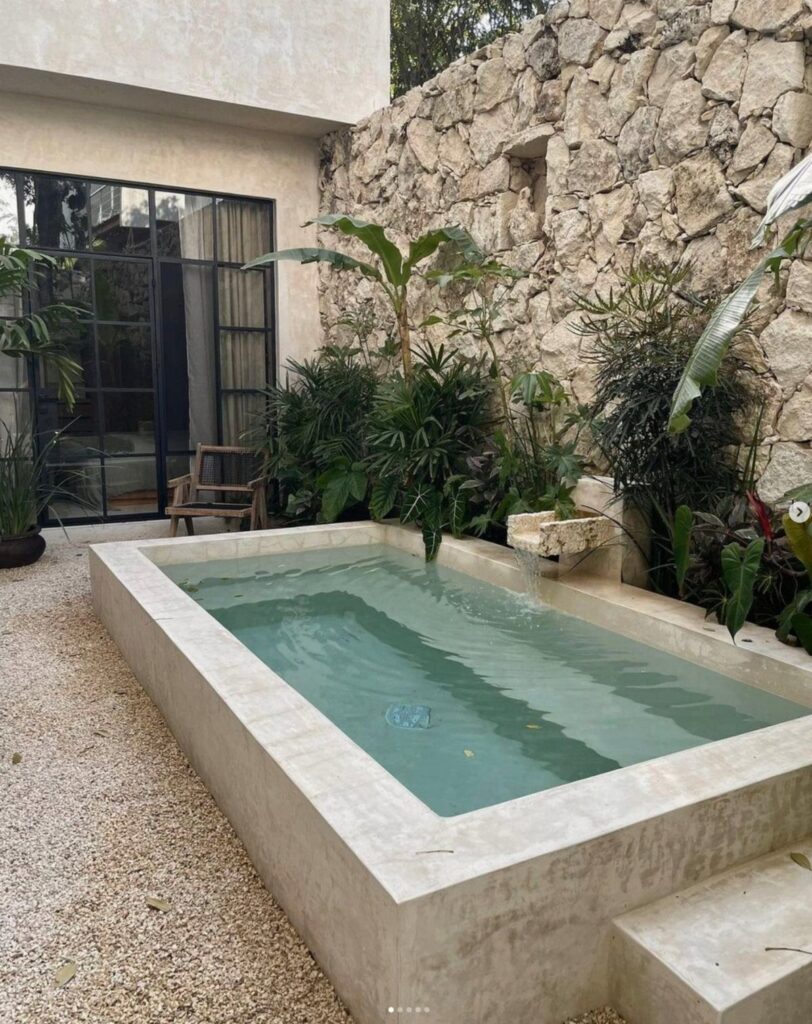
These 9 ideas run from pea gravel you can rake yourself to a full composite deck, and the right one depends on whether you need a permanent fix or something you can lift and take with you when you move.
The cheapest hardscape option by square foot is still plain poured concrete in light grey, but a partial platform around an above-ground pool lets you swim now and spend later, building in sections as the budget allows.
[link-whisper-related-posts]1. Pea Gravel Pool Surround
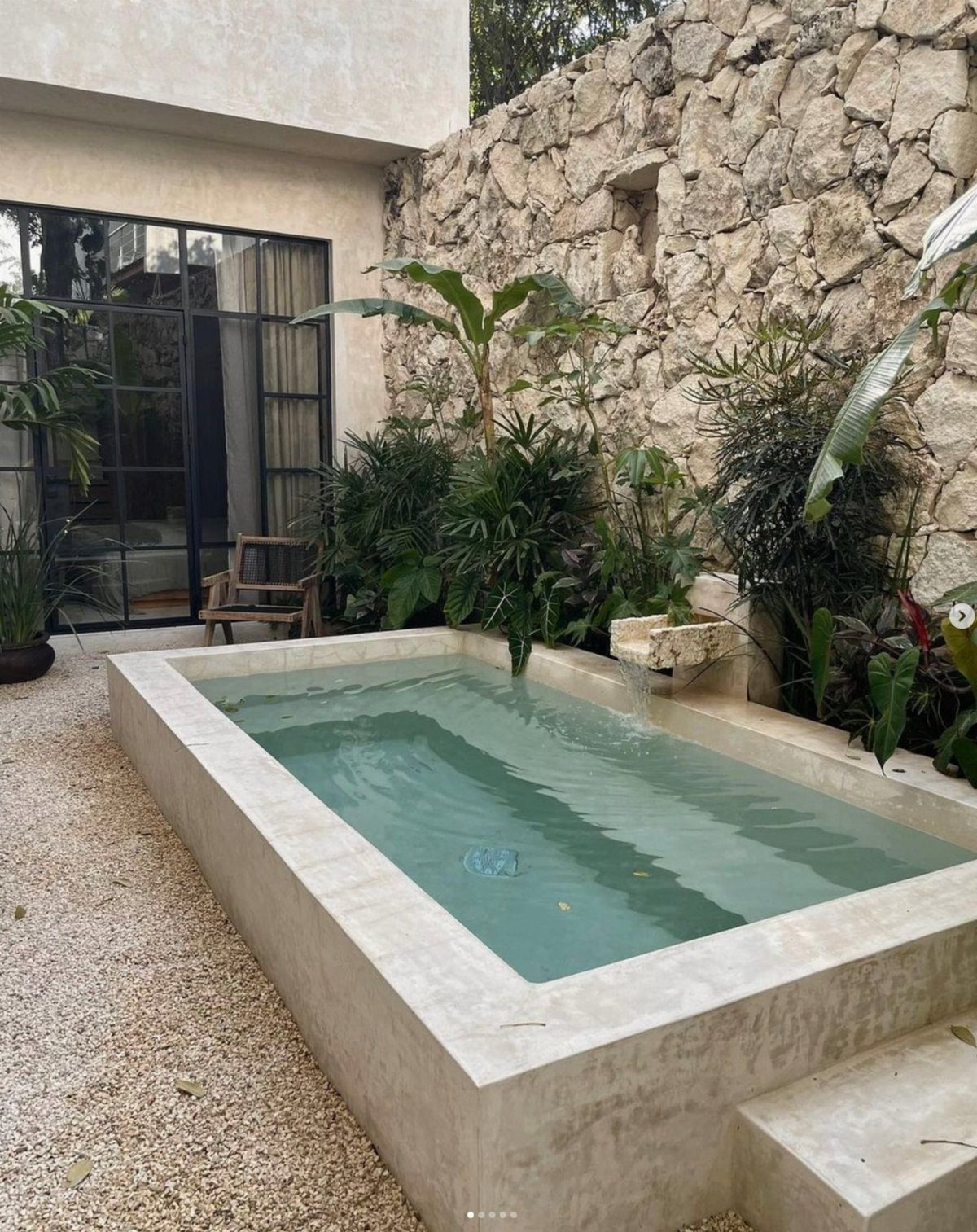
Pea gravel is cheap installed, cheaper still if you haul and rake it yourself.
You’ll want edging to keep it from migrating into the pool or the lawn, and a weed barrier underneath, or you’ll be picking stones out of your grass for years.
It drains fast, stays cool underfoot, and gives a loose, informal look that works with tropical plantings or a rustic stone wall.
I would not use it on a steep grade or anywhere kids run straight from pool to house. It’s too easy to track inside.
2. Above-Ground Pool with Partial Platform
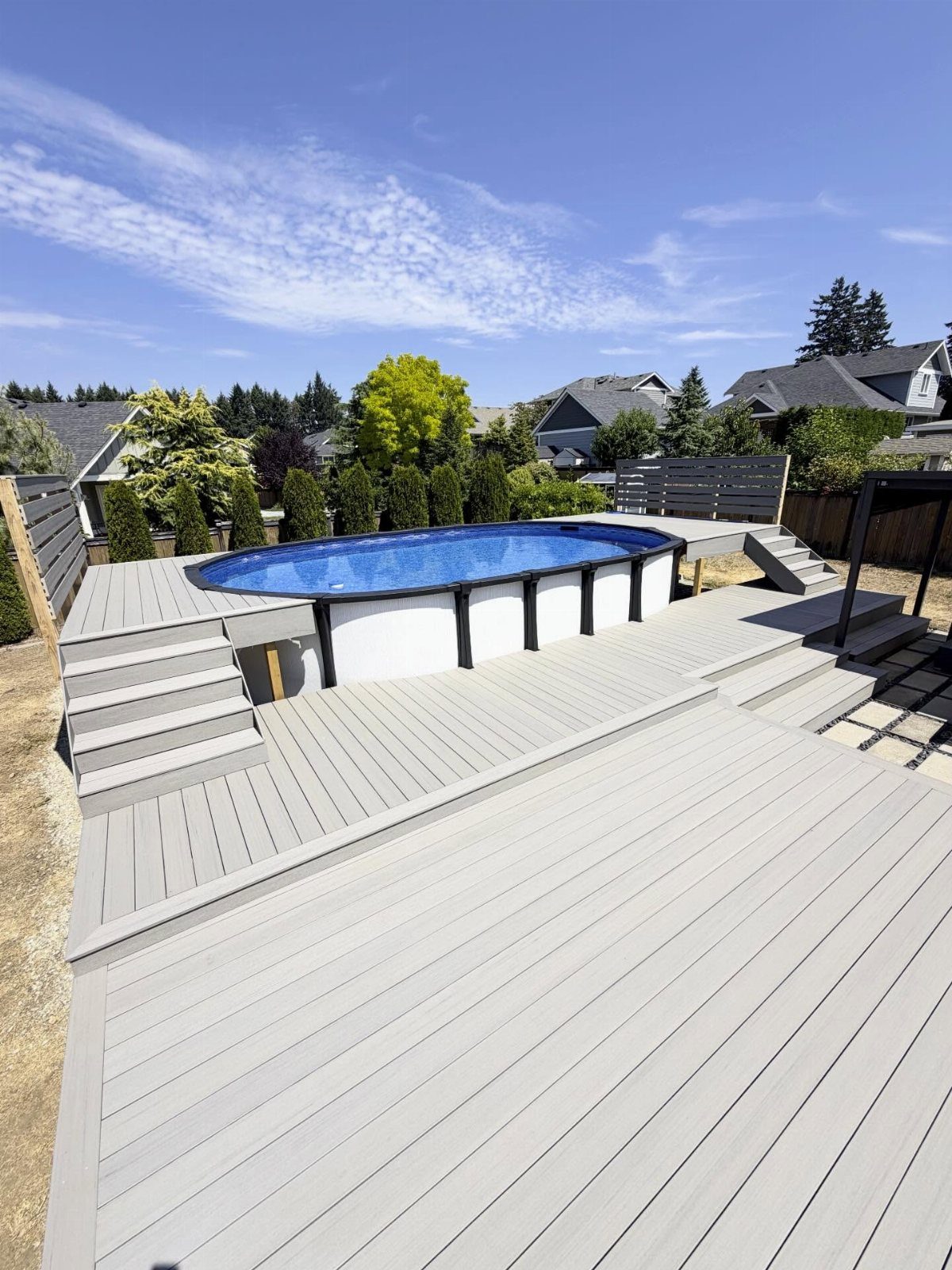
A partial platform lets you build real deck structure around an above-ground pool without committing to a full wrap.
What I notice in the visible build is the multi-level design: stair access on one side, a privacy screen on another, and the decking material runs right to the pool coping. That last part matters.
Above-ground pool walls flex with temperature and water weight. The deck edge needs a gap or a floating connection so the pool can move without cracking your boards over a season or two.
Composite here is a smart choice because it won’t check or warp like pressure-treated pine once you cut those notches for the rail posts.
Budget this as you would a ground-level deck of the same footprint, plus hardware rated for the rail height your code requires for anything well above grade.
3. Concrete Pavers Pool Surround
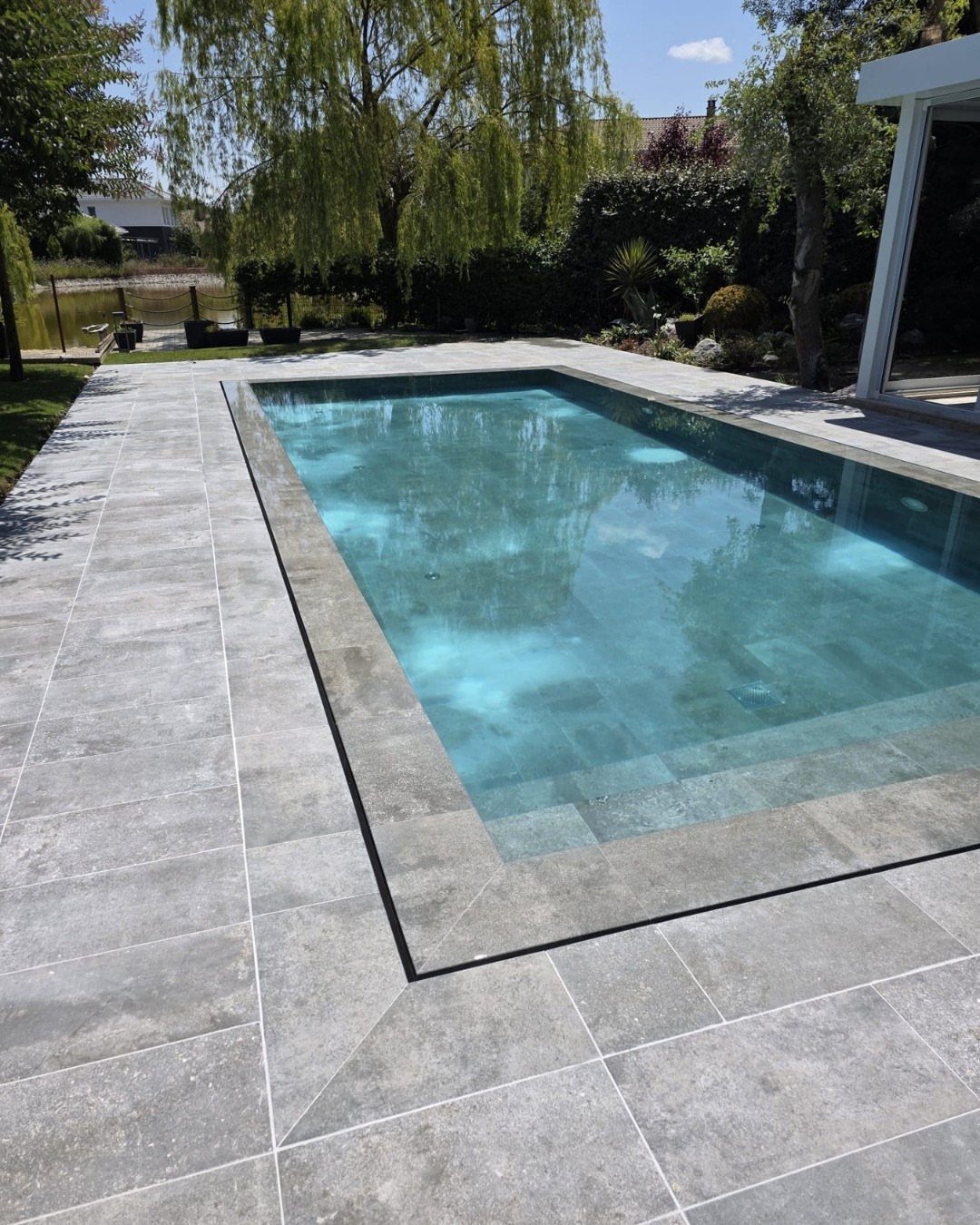
Concrete pavers give you a hard surface with the practical win that you can repair a settled section without tearing out the whole deck. The visible install uses large grey stones with tight joints.
That scale reads as modern, and big units settle less unevenly than small bricks. You’ll compact the base in lifts, lay on a sand bed, and sweep polymeric sand into the joints to lock it.
I would check 2 things before ordering: whether your soil drains well enough to prevent frost heave, and whether your pool coping can accept a paver edge that meets it flush.
A few rows of smaller pavers or a concrete border can bridge that gap if the levels don’t line up.
4. Stamped Concrete Pool Deck
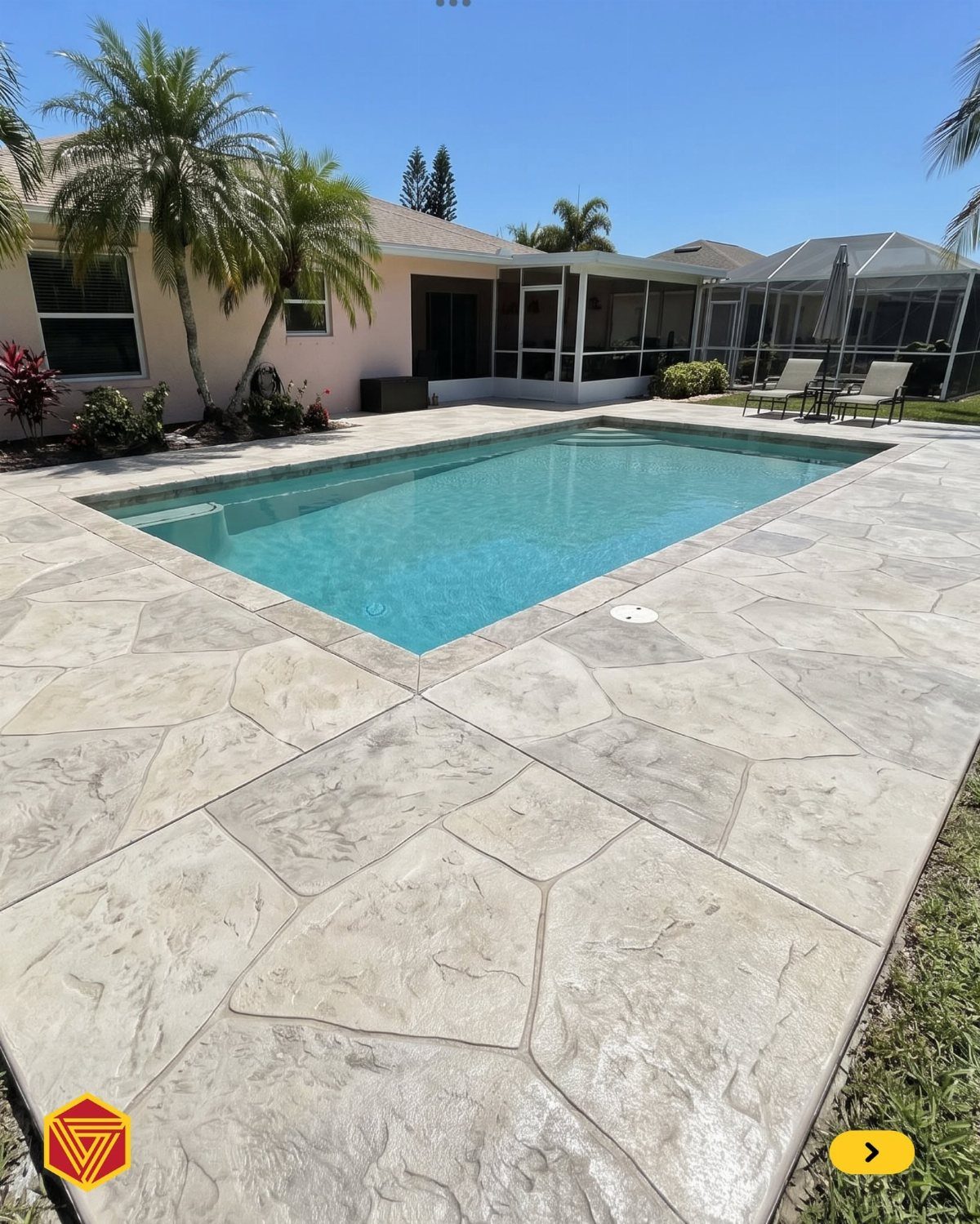
Stamped concrete mimics stone or tile at a price that lands between plain poured concrete and real flagstone. The visible deck shows a large ashlar pattern in a light tone that stays cooler than dark grey or terracotta.
Release color and antiquing add variation that hides the occasional crack, though it won’t hide structural failures. I would ask the contractor about control joint placement before the pour.
Too few joints, and the slab cracks randomly. Too many, and the pattern looks interrupted.
Regular sealing is non-negotiable where pool chemicals sit on the surface. Skip that maintenance and the color fades out in patches.
5. Classic Wooden Deck
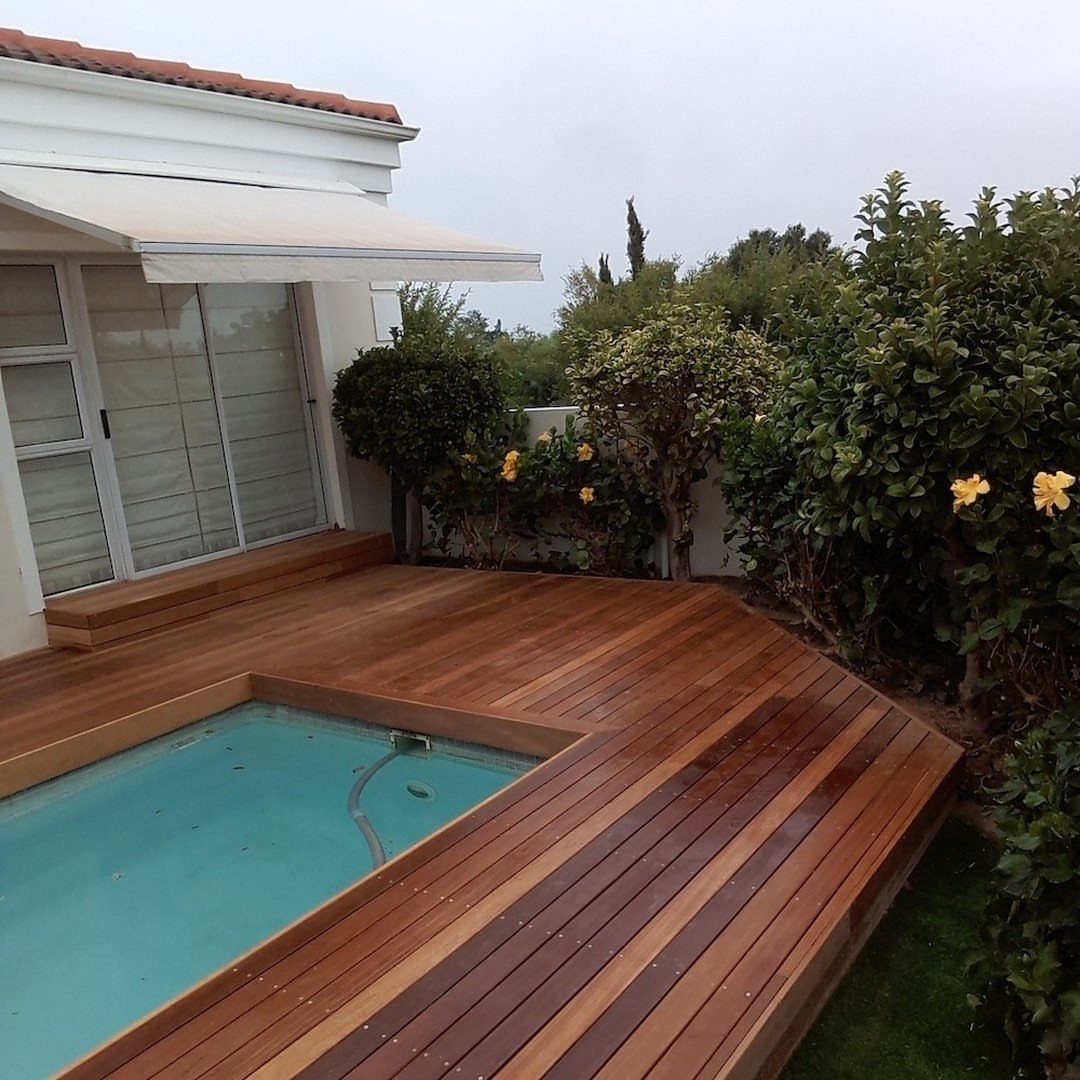
A classic wood deck around a pool uses pressure-treated pine, cedar, or tropical hardwood, in that order of cost and longevity.
The visible planks run perpendicular to the pool edge, which is the standard way to handle the border detail, and the finish looks like a penetrating oil rather than a film-forming stain.
Oil holds up better where water pools on the surface.
I would not install wood within an inch of the waterline. Capillary draw will wick moisture up the grain and rot the boards from below.
Fastener choice matters too: stainless or coated deck screws, never nails that pop with seasonal movement. Plan on re-oiling every year, power washing every two, and replacing boards as needed.
It is more work than composite. It also looks like no other material.
6. Composite Wood Deck
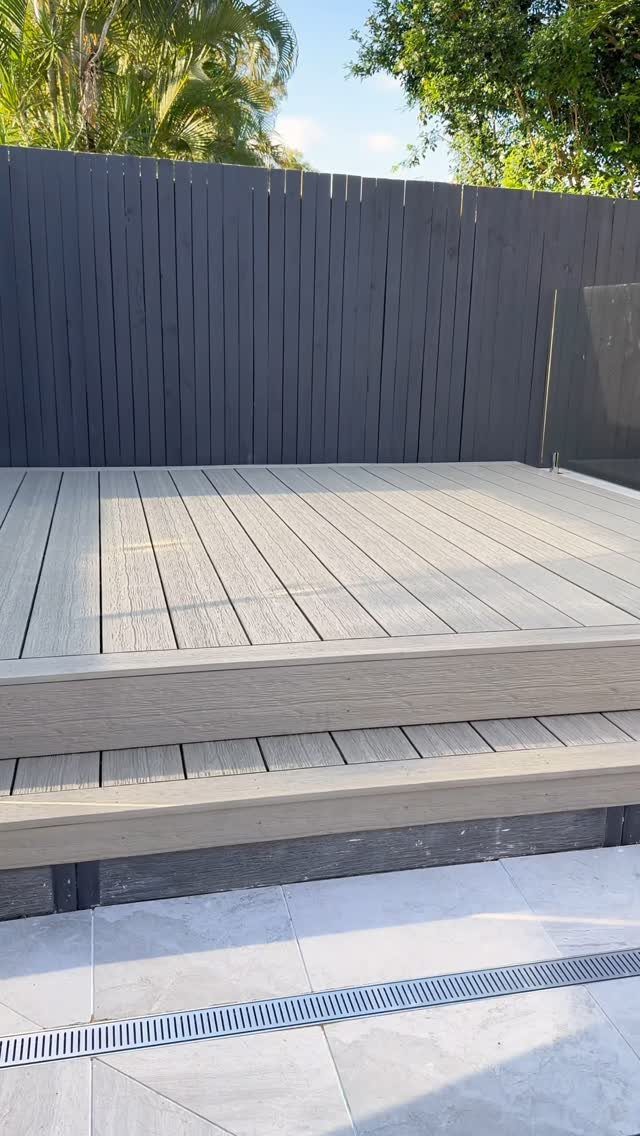
Composite decking solves the maintenance problem that wood introduces around chlorinated water. The visible install is light grey with a subtle wood grain, built with a raised step and built-in fascia board.
That step detail is worth copying: it defines the deck edge without a trip hazard and gives you a place to hide the end grain of the decking boards.
I would check the temperature rating before I bought. Some early-generation composites got slick when wet and hot enough to blister bare feet in full sun.
Current capstock lines run cooler. You’ll pay roughly double the material cost of pressure-treated pine, and you’ll still need a wood or steel frame underneath.
Fasten with the manufacturer’s clips; the hidden-fastener system keeps the surface cleaner than face-screwing, where water can leave marks over time.
7. Interlocking Deck Tiles
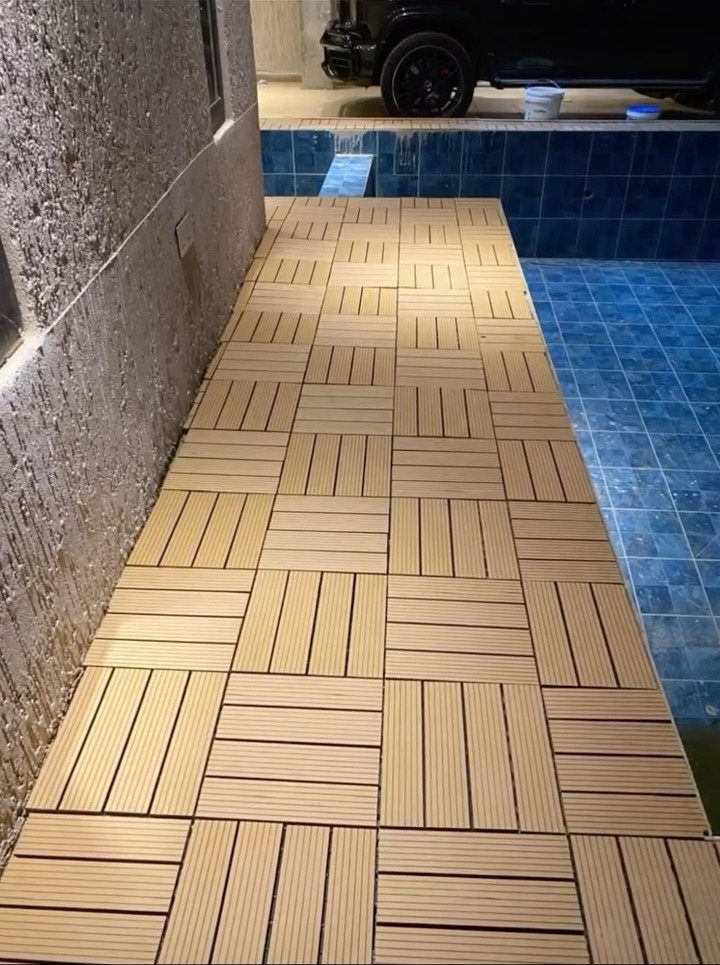
Interlocking deck tiles press together over whatever you’ve already got, no thinset or glue needed.
The visible install shows a basketweave pattern in tan, which hides dirt better than pale grey and adds some visual grip on a narrow walkway where you can’t afford a stumble.
I would check what sits underneath before ordering. These need a flat, firm base; over cracked concrete or uneven pavers they rock and pop loose.
The gap to the pool coping also matters. These sit high enough above the surface that you’ll need to think about your edge, or you’ll be stubbing your toe every time you step off.
They rinse clean and lift for winter storage, which suits renters or anyone who wants to take their investment with them.
The cheaper resin ones baking in full sun won’t last forever; I’d expect a handful of good seasons before they start looking tired. The wood composites last longer but cost triple.
8. Exposed Aggregate Concrete Deck
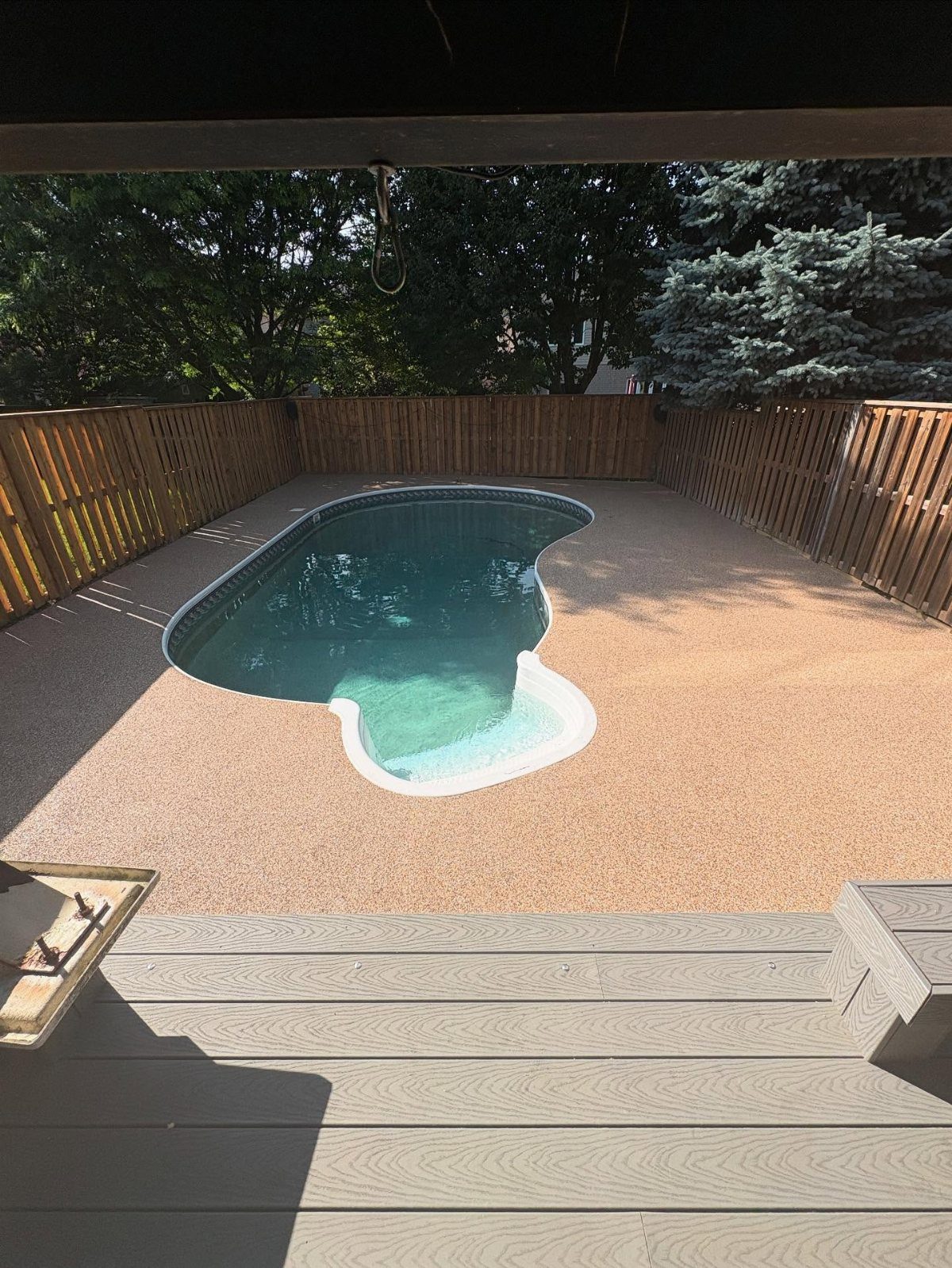
Exposed aggregate gets its texture by washing away the top layer of cement paste before it sets, leaving the stones visible.
The visible deck reads as tan pebble-dash, which stays cooler underfoot than dark quartz and gives decent traction when wet. That texture matters around a pool; smooth broomed concrete gets slippery fast.
This finish costs more than plain brushed concrete because of the extra labor in timing the wash and the added stone.
I would ask to see a sample slab cured in sun before I signed off. The color changes as the cement skin comes off, and what looks tan wet can dry lighter or pinker than you expected.
Sealing helps lock the tone and prevents the stones from popping loose where freeze-thaw hits hard. It wants a new coat of sealer on a regular rhythm, or the surface will dull and the aggregate will loosen.
One limit: the rough surface catches skin on a running dive, so I would not use it on the takeoff edge of a diving board run.
9. Poured Concrete Pool Deck
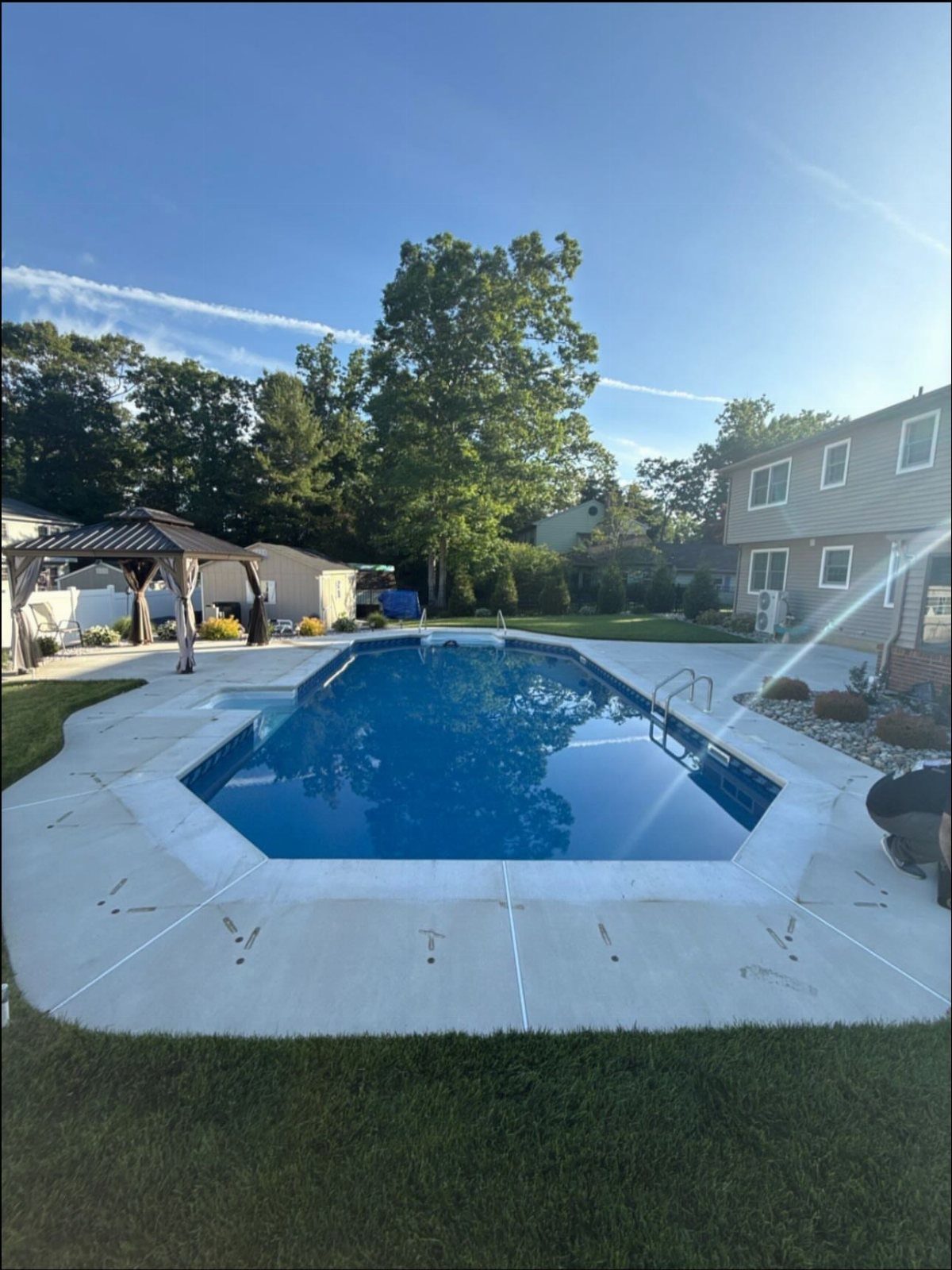
Poured concrete is the baseline most other pool decks get compared against.
The visible install is light grey, brushed finish, with no stamping or color added. That plain approach keeps it the cheapest hardscape option by square foot, and the light tone reflects heat rather than absorbing it.
The brush marks give bare feet some grip, though not as much as exposed aggregate.
I would pay attention to control joints; on a rectangular pool they should align with the coping breaks so the slab can move without cracking through the middle.
A broomed edge against curved coping takes some skill to keep consistent, so I would ask a contractor how they handle that detail before I hired.
The real cost surprise tends to be access: if a pump truck can’t reach the backyard, the hose setup adds labor hours fast.
Sealed properly, this deck lasts decades. Left bare, it will spall where pool chemicals pool and freeze.
Cost-effective Materials
Treated lumber runs $5–$8 per square foot, which lands well under composite or cedar. I would not expect prices to drop soon; lumber markets have stayed high, and the gap between pressure-treated pine and the alternatives keeps widening.
Bamboo is another option at $3–$4 per square foot, though I have less confidence in how it performs long-term around constant moisture and chlorine.
Modern pressure-treating uses preservatives safer than the old arsenic formulas, so the health concern that scared people off a decade ago is largely gone.
What remains is the maintenance rhythm: seal annually, stain every few years if you want the cedar or greyed look, and a well-kept deck outlasts its warranty by a wide margin.
That span makes the low first cost more appealing than it first appears. I would buy the sealer and the stain at the same time as the boards; it removes the temptation to skip a year when the weather turns.
Pressure-treated wood costs about $5 to $8 per square foot. Bamboo is another budget-friendly option at $3 to $4 per square foot.
— Yahoo!
Building in Sections
A full wrap can wait. Building one section at a time lets you swim now and spend later, and it gives you a chance to live with the layout before you commit the rest of the yard.
I would start with the side you use most: the entry point, or the side that catches evening sun if you want a lounge area.
A partial platform also hides pump equipment without a separate enclosure, which saves some money and some visual clutter.
Plan the joint where one section ends and the next will begin; that seam is what makes the build manageable.
Leave the framing ready to bolt on, with posts and footings spaced for the full span even if the boards stop halfway. Coming back to dig footings between finished sections is far harder than doing them all at once.
I would also run the decking direction and board width the same across the break, so the two halves read as one design when you finish.
Maintenance Considerations
Every material around a pool lives in a wet-dry cycle with UV on the dry days and chlorine or salt on the wet ones.
The winners are the ones you will actually maintain, not the ones that promise to be trouble-free.
Pressure-treated pine wants sealing every year and re-oiling or staining on a regular schedule. Skip one season and the grain opens, water gets in, and you are replacing boards instead of recoating them.
Concrete and pavers shift the work to the joints: polymeric sand washes out, control joints fill with debris, and both need attention before freeze-thaw turns small gaps into lifted edges.
I would pick the material whose maintenance matches the time you will actually spend, not the time you imagine you will.
A deck that gets its annual hour of attention lasts longer than one that gets ignored, whatever the label on the box promised.
Frequently Asked Questions
Does an above ground pool with a deck add value to a home?
It adds value in how you use the space, not in resale dollars. A deck makes entry and exit easier, hides the pool wall, and gives you a place to set a chair.
I would not count on it returning the full build cost at sale; above-ground pools are still seen as temporary by most buyers. The win is the years you spend with it, not the appraisal.
What is the least expensive deck material?
Pea gravel is the cheapest at roughly $1–$3 per square foot, with pressure-treated pine next at $5–$8. Gravel you can haul and spread yourself in a day; wood needs framing, fasteners, and a finish coat.
I would pick gravel for a tight budget and a flat yard, wood if you want a surface you can walk on barefoot without tracking stone indoors.
Can I get an inground pool for $30,000?
A basic inground pool usually starts well above that, once you count excavation, shell, plumbing, and the deck you will still need to build around it.
I would put my money into a quality above-ground unit and a well-built surround rather than stretch for an in-ground install that cuts corners.
How do I build a deck for my pool?
Start with concrete piers set level, frame with pressure-treated lumber, and run decking boards perpendicular to the pool edge with a small gap for drainage.
I would use coated or stainless screws, never nails, and seal the wood before the first swim season.





