
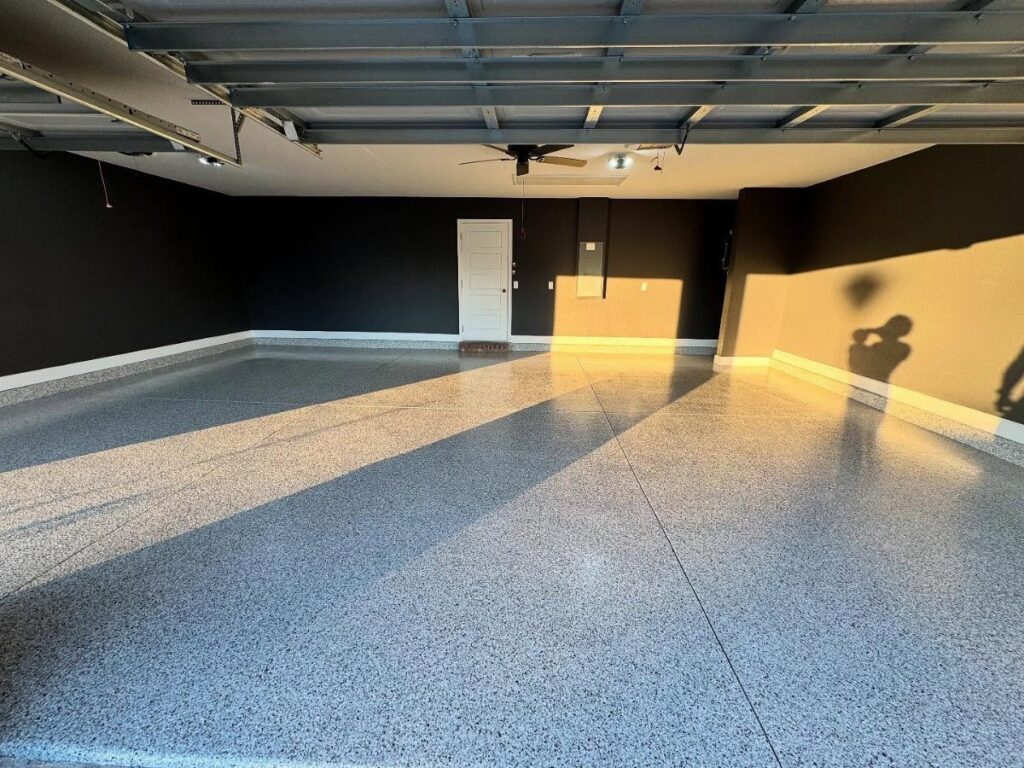
These 7 garage painting ideas run from a weekend of masking tape and latex to a full epoxy cure with metallic pigment, and the right one depends on whether your garage still stores yard equipment or has become a space clean enough to show.
A two-tone grey and white wall takes two coats and a level; a metallic swirling epoxy floor needs practice on a sample board first and a tolerance for unpredictable resin behavior.
I would check my concrete slab for moisture with a taped-down plastic square before choosing any epoxy route, since condensation underneath means bubbles and peeling inside a year.
[link-whisper-related-posts]1. Epoxy Floor with Decorative Flakes
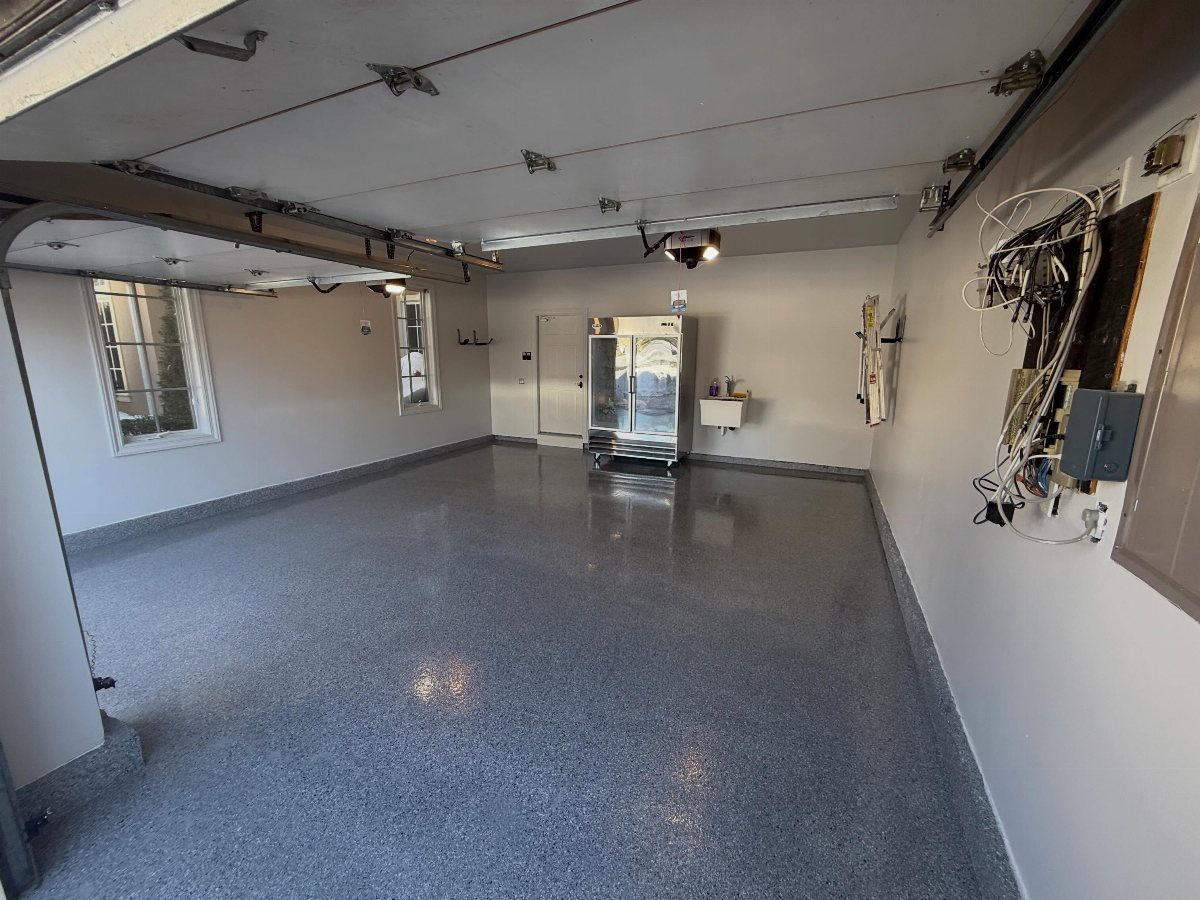
Epoxy with decorative flakes gives concrete a hard, glossy shell that hides dust and wipes clean. A gray epoxy base keeps the floor neutral; blue flecks add just enough movement to keep it from looking like a warehouse floor.
Check your slab first. Epoxy needs a bare, porous surface, so any sealer has to come off with a grinder or chemical stripper.
Moisture is the real enemy here: tape a plastic square down and look for condensation underneath before you start. If it shows, epoxy will bubble and peel within a year.
I would do the flake broadcast on a dry Saturday, working in sections small enough to reach across without walking in wet coating. The chips themselves are cheap insurance; they camouflage the inevitable dropped bolt or oil spot.
2. Painted Garage Door
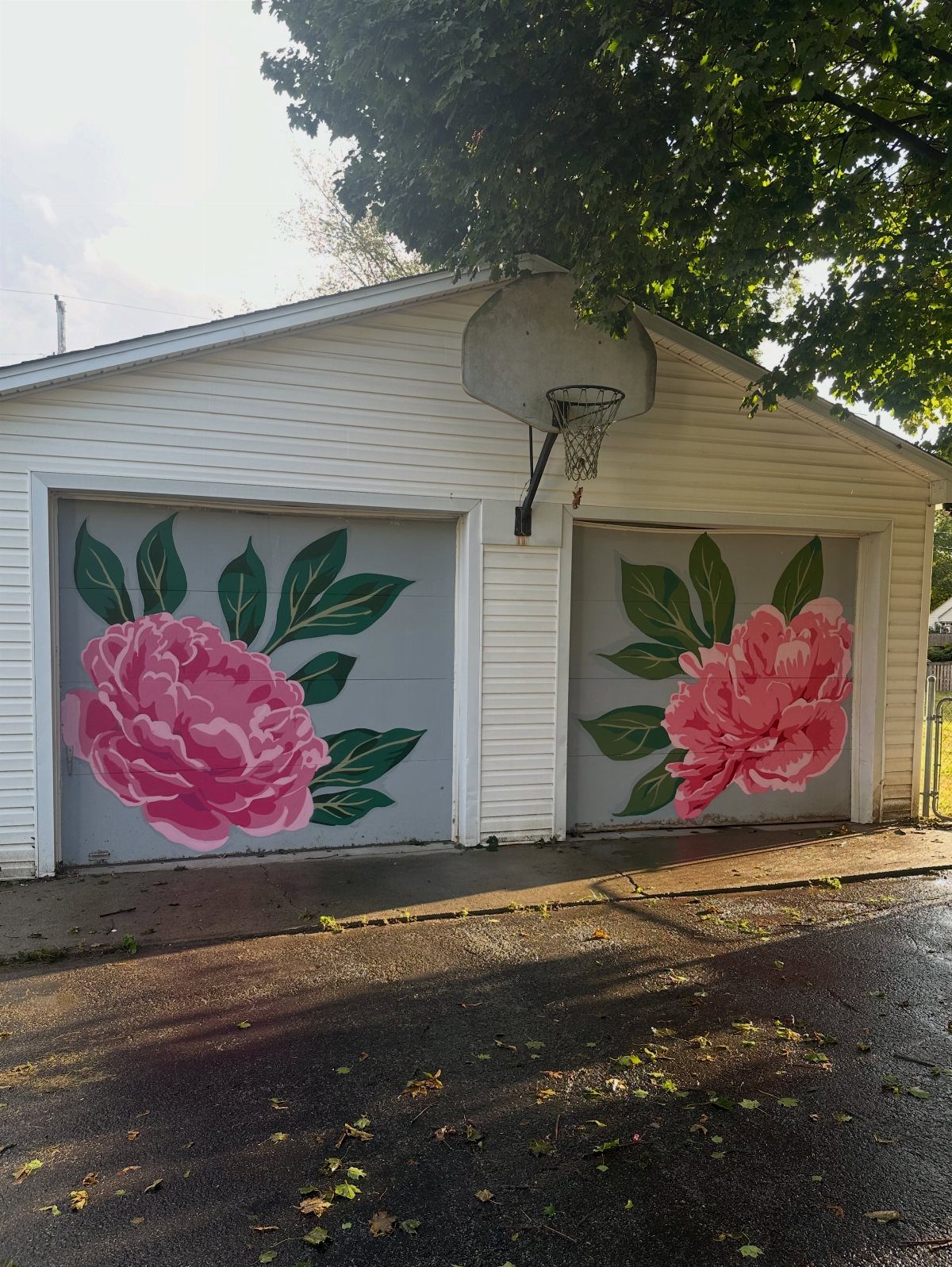
Painted garage doors are the one surface where art meets curb appeal without asking permission from the HOA, though I would check anyway. Gray panels behind peonies keep the flowers from reading as precious or suburban-cute.
The door material decides your prep.
Steel needs a rust-inhibiting primer and an exterior acrylic; wood wants oil-based or a high-build acrylic that can handle expansion and contraction. Either way, power-wash first, then sand the old finish until it dulls.
A design this large is easier to scale up from a paper grid than to freehand.
I would project a sketch at night and trace the outlines in chalk, then fill with exterior-grade paint matched to the local light; morning sun and afternoon shade read colors differently.
3. Matte Black Walls and Ceiling
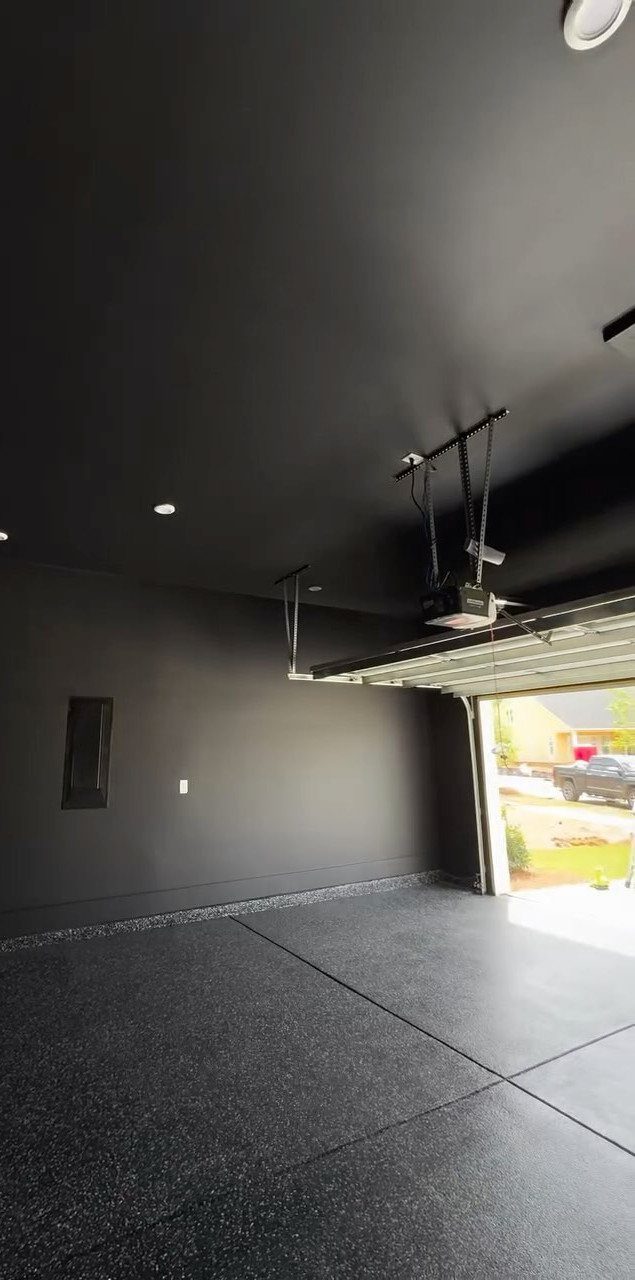
Matte black on every vertical surface turns a garage into something closer to a showroom or photography studio. A flat enough finish swallows reflections, which helps recessed lighting do its job without competing glare.
This much dark pigment shows every flaw, so your drywall has to be smooth.
I would skim-coat joints and screw holes, then prime with a tinted shellac or high-hide primer before the color coat. 2 coats minimum; black builds unevenly and the second pass corrects the first.
Ceiling paint is the harder call. Rolling overhead is miserable work, and matte black will need touching up after every project that sends dust or sparks upward.
I would only commit if the garage stays clean enough to stay closed most days, or if the look matters more than the maintenance.
4. Dark Grey Walls
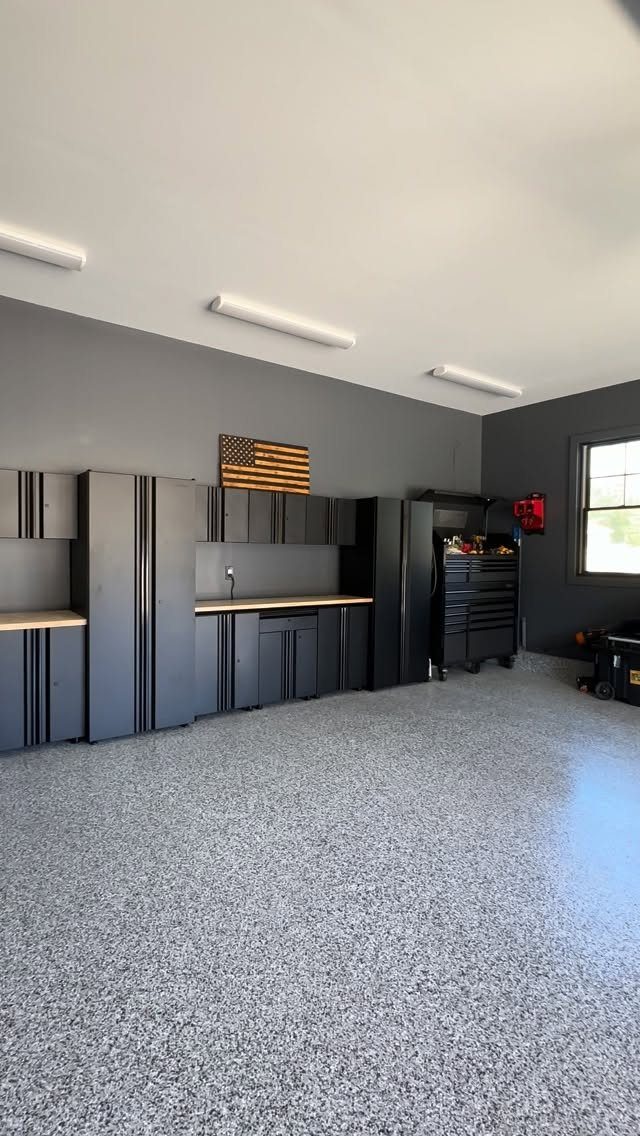
Dark grey walls sit between the drama of black and the utility of white, and they forgive more than either. The photo pairs them with black cabinets and a speckled floor, a combination that reads as intentional rather than leftover.
Paint sheen matters in a garage.
Flat hides wall flaws but holds grease and dust; satin or eggshell wipes down without the plastic look of semi-gloss. I would pick eggshell for the walls and reserve any gloss for trim or doors that take real abuse.
This color works as backdrop for whatever you hang, flags included.
Tools, memorabilia, even a single bright piece of equipment will pop against it. I would paint the ceiling white or pale grey to keep the space from feeling like a cave; the walls can carry the weight.
5. Custom Painted Wall Mural

A custom mural turns the wall above the garage door into a feature instead of dead space. A cartoon style reads as street art, which suits a garage’s informal role better than a living-room landscape would.
The surface prep is standard: clean, prime, paint.
The hard part is the image itself. I would work from a projector or a scaled grid, not from memory, and use exterior-grade acrylics even inside; garage humidity swings and the occasional open door will stress interior paint.
This is the one idea on the list that trades durability for personality.
A tire scuff or a shelf bolted through the mural won’t patch invisibly. I would only commit if the wall stays mostly clear, or if I were ready to repaint when the image tires or damages.
6. Metallic Swirling Epoxy Floor
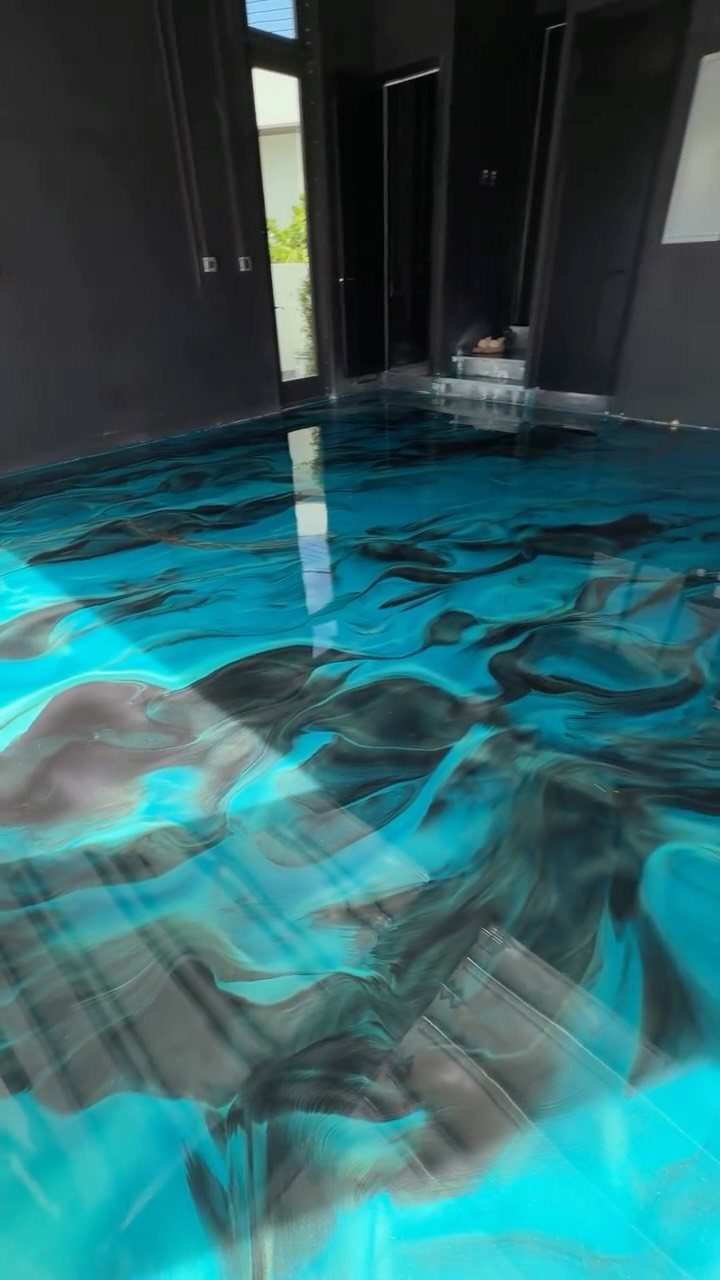
Metallic swirling epoxy reads as liquid marble, a floor that wants to be looked at rather than walked across. Turquoise and black shift with light and angle, which means the effect changes as you move through the space.
This is a different product from standard flake epoxy. Metallic pigment suspends in clear resin and gets pushed around with squeegees, rollers, or even a leaf blower to create the veins.
The technique is less predictable than broadcasting chips, and the result varies with humidity, temperature, and how fast the resin starts to set.
I would practice on a sample board first, and I would not attempt this in a garage I still use for oily projects.
The gloss shows every footprint and the metallic layer can wear dull under tires. This floor suits a show garage or a workshop kept clean, not a daily-driver space.
7. Two-tone Grey and White Walls
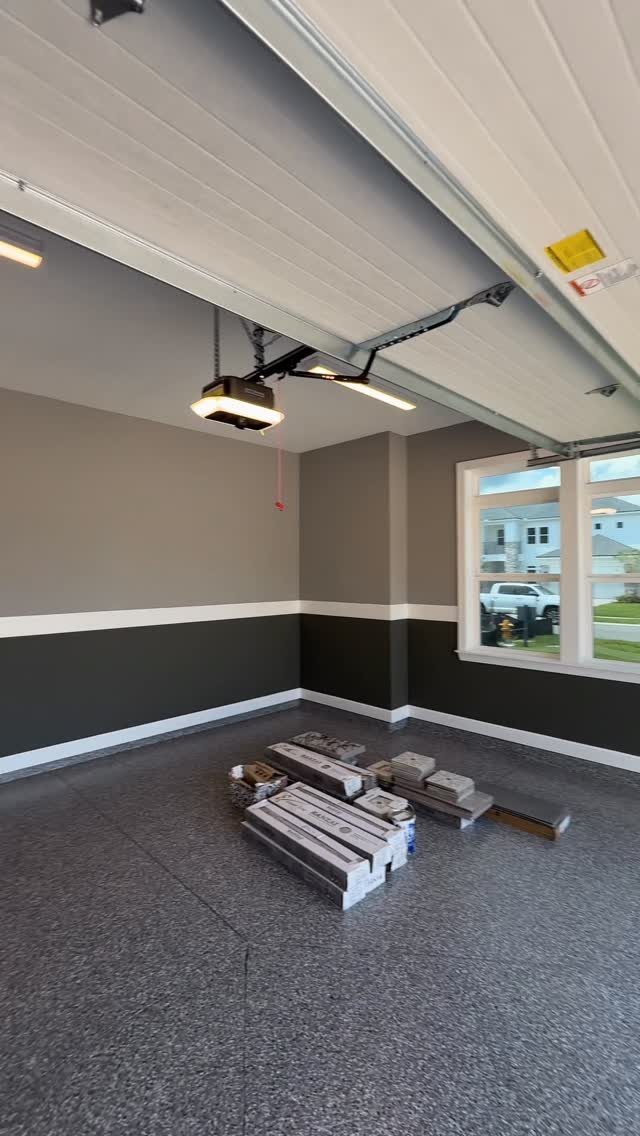
Two-tone grey and white walls split the visual weight so neither color has to carry the room alone.
The white stripe sits at a height that breaks up the wall without fighting the door track or any shelving you add later.
I would paint the darker grey on the bottom half, where scuffs from bins and bike tires actually happen, and keep white above for bounce light.
Frog tape or a laser level gives you the clean line this idea needs; freehanding reads as a mistake, not a choice.
This is the lowest-drama option on the list.
No epoxy curing, no mural upkeep, just 2 coats of durable latex and a weekend of masking. I would pick it for a garage that still stores yard equipment and holiday bins, where looks matter but function still wins.
Choosing the Right Paint Finish
Satin or semi-gloss on garage walls cleans up with a damp cloth and holds up to the scuff from a bike tire or the splash from a power-steering reservoir.
I would not go flatter than eggshell in any garage that sees active use; flat paint hides drywall seams but stays stained once grease settles in.
VOC content is the detail I check on the label before I buy.
Zero or low-VOC latex lets me work with the door open and not think about the air I am standing in. It matters more in a garage than in a bedroom because the ventilation is usually worse.
Sheen also decides how much your lighting does for you.
Satin or semi-gloss throws light back into the room from the walls themselves, which helps when the ceiling fixtures are sparse and you are working under a car or at a bench with its own shadows.
Importance of Light Colors
Light colors let you get away with fewer fixtures in a space that rarely has enough windows.
White or pale grey on the ceiling bounces what light you have downward, which I think matters more than wall color because the ceiling is the surface you actually need to see past when you lift something over your head.
Darker walls hide the tire marks and the oil that concrete dust carries, but they turn every cobweb and every concrete dusting into a visible event.
A single dark accent wall can split the difference. It grounds the room and gives tools or a workbench visual weight without swallowing the ambient light the way black on every surface does.
Durability Considerations
Moisture resistance is non-negotiable in a garage because the slab draws ground water and the open door lets weather in. I would look for mildew-resistant formulas on the label, not assume all exterior-grade claims cover the same ground.
Scratch resistance matters on walls, but chip resistance is the floor’s fight.
Interior semi-gloss latex handles scuffs from bikes and tool handles well enough for most walls; the floor wants epoxy or at least a porch-and-floor enamel if you are not committing to a full resin coating.
UV protection sounds like an outdoor concern, but garage paint sees sun whenever the door is open.
I would not shop specifically for UV-rated wall paint unless the door faces south and stays open for hours at a time, though it is a reasonable ask on a south-facing exterior door painted to match.
Frequently Asked Questions
What is the best color to paint the interior of a garage?
Light grey or white on the ceiling matters most, since that surface bounces light downward where you actually need to see.
Dark grey walls carry some of black’s weight without turning the space into a cave, and tire marks or tool scuffs do not jump out the way they would on white.
I would keep the ceiling pale even with darker walls so the space does not feel like a cave.
What is the cheapest way to cover a garage floor?
Rolling on a single coat of masonry or epoxy paint costs the least upfront and holds up for a few years of normal use; you will need another coat sooner than with pricier systems, but that is the trade for spending half as much now.
For something that lasts longer without the full resin investment, a porch-and-floor enamel is the middle ground I would look at first.





