
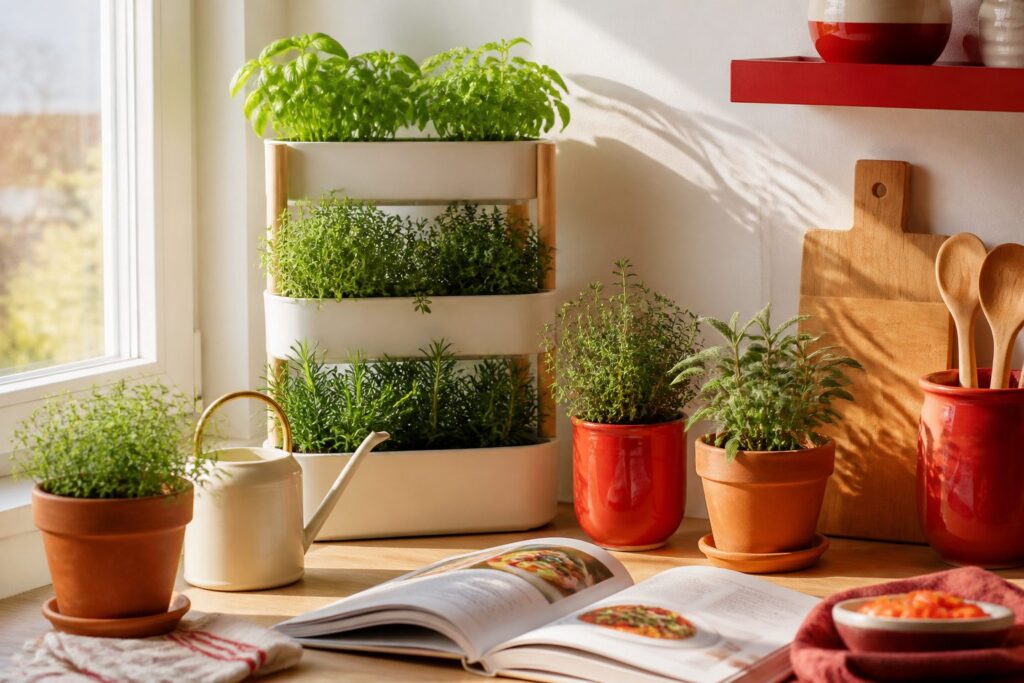
An in house herb garden is a soil or hydroponic setup designed to grow basil, cilantro, thyme and other kitchen herbs inside year round.
I spent weeks comparing spec sheets and owner reports on 9 systems that range from soil-based seed kits to fully automated towers, and the right pick depends on whether you want the machine to handle every decision or you would rather tend seedlings yourself.
The Click and Grow Smart Garden 3 asks just 0.5 hours of weekly maintenance, while the Gardyn Home Starter Kit climbs to 30 plants and an hour of upkeep.
[link-whisper-related-posts]My Top Picks
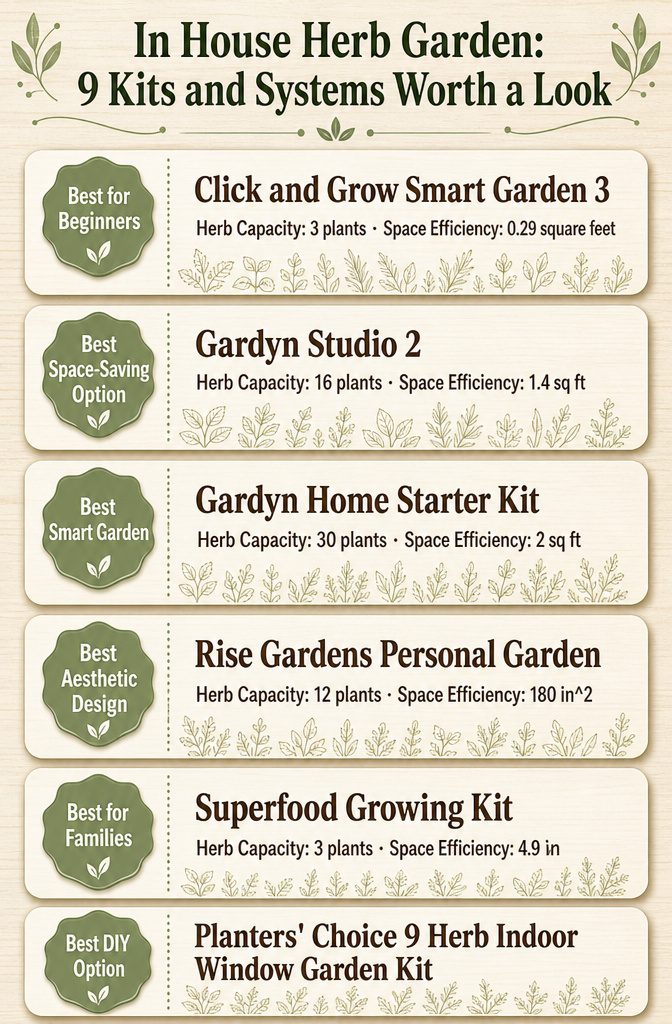
| Product | Award | Best for | Why it won | ||
|---|---|---|---|---|---|
 | Click and Grow Smart Garden 3 | Best for Beginners | Complete beginners with no experience | Self-watering design and built-in lights eliminate guesswork for first-time growers | Check price |
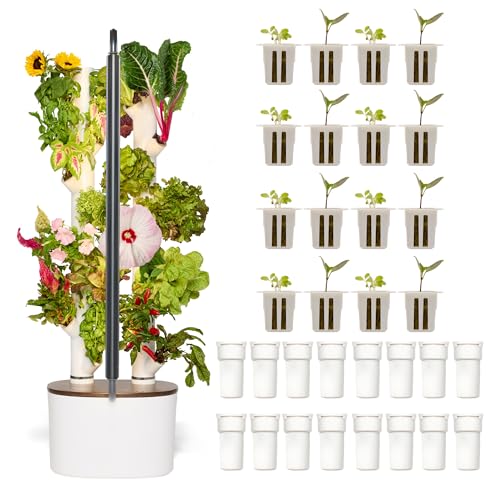 | Gardyn Studio 2 | Best Space-Saving Option | Small apartment or studio dwellers | Compact footprint fits tight spaces while still growing plenty of herbs | Check price |
 | Gardyn Home Starter Kit | Best Smart Garden | Tech enthusiasts wanting full automation | Handles watering and lighting automatically with app-connected controls | Check price |
 | Rise Gardens Personal Garden | Best Aesthetic Design | Home decor-focused buyers | Sleek design looks like intentional furniture rather than a gadget | Check price |
 | Superfood Growing Kit | Best for Families | Busy parents involving kids | Simple setup and self-watering means children can participate without constant help | Check price |
 | Planters' Choice 9 Herb | Best DIY Option | Hands-on gardeners who enjoy process | Starts from seeds so you nurture plants through every growth stage | Check price |
 | Hydroponics Growing System | Best Hydroponic System for Herbs | Dedicated herb growers expanding output | Built specifically for maximizing herb harvests through water-based growing | Check price |
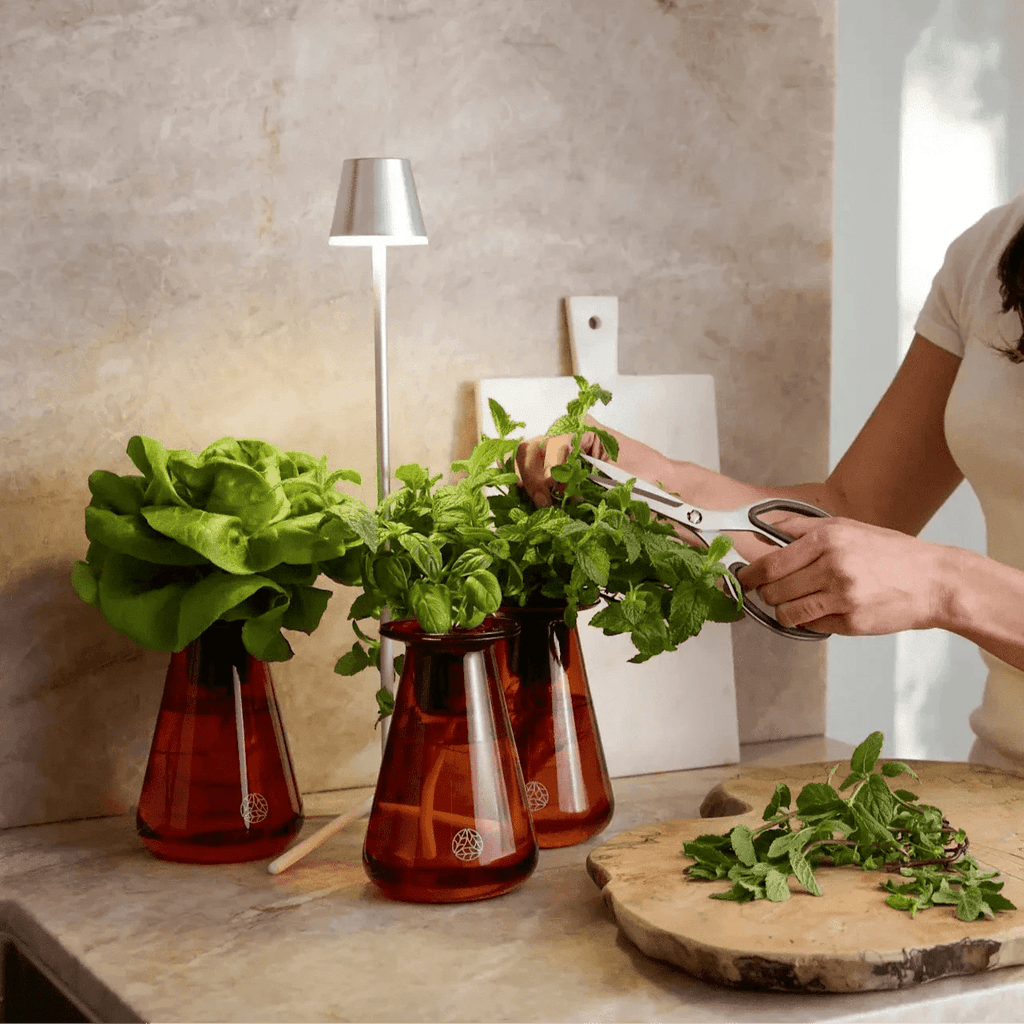 | Lettuce Grow Counterstand | Best for Compact Spaces | Kitchen counter gardeners | Small enough to sit beside your cutting board for fresh-pick convenience | Check price |
 | AeroGarden Harvest Elite | Best for Year-Round Growing | Cooks wanting fresh herbs always available | Reliable year-round production means no off-season gaps in your supply | Check price |
| Product | Herb Capacity |
|---|---|
| Click and Grow Smart Garden 3 | 3 plants |
| Gardyn Studio 2 | 16 plants |
| Gardyn Home Starter Kit | 30 plants |
| Rise Gardens Personal Garden | 12 plants |
| Superfood Growing Kit | 3 plants |
| Planters' Choice 9 Herb | — |
| Hydroponics Growing System | 3 plants |
| Lettuce Grow Counterstand | 3 plants |
| AeroGarden Harvest Elite | 6 plants |
Best for Beginners: Click and Grow Smart Garden 3
FRESH HERBS, NO FUSS: Grow fresh herbs for everyday cooking, right on your kitchen counter. Add water, plug in and start growing. 3 basil pods included to get you started. No...
Quick Verdict
Beginners who kill houseplants faster than they can buy them get a second chance with this system.
The Click and Grow Smart Garden 3 waters itself and runs its own lights on a timer, so the main thing an owner does is refill the tank every few weeks and swap in a new pod when the basil looks spent.
That convenience comes with a hard limit of 3 plants at once, which is plenty for a windowsill cook but not enough for someone who wants salad greens most nights.
Key Specifications
- Herb Capacity: 3 plants
- Space Efficiency: 0.29 square feet
- Light Requirements: 16 hours
- Maintenance Needs: 0.5 hours/week
What It Does Well
- The self-watering reservoir and built-in LED timer mean a week away from home will not turn into a herb graveyard; 0.5 hours/week of maintenance is mostly just topping off water.
- A footprint of 0.29 square feet fits on a narrow apartment counter or a desk that already holds a laptop and coffee cup.
- The 16-hour light cycle runs automatically, so there is no guessing whether seedlings got enough brightness on a cloudy Tuesday in February.
- Owners and independent reviewers both mention the clean look; the unit does not read as gadget clutter against typical kitchen backsplashes.
Where It Falls Short
- 3 plants is a tight ceiling. Someone who cooks with fresh herbs daily will harvest faster than the garden can regrow, and there is no expansion path.
- The single light height and fixed pod spacing favor compact herbs like basil and thyme; larger or faster-growing plants outgrow the real estate before the first month ends.
Who It’s For
A renter in a studio with one sunny window, or anyone who has already proven they forget to water, matches this unit well.
The person who wants a visible kitchen garden as a design element and a conversation piece, rather than a production line for dinner, is the one who stays happy with it long-term.
Someone already browsing seed catalogs and planning a balcony container garden will find the 3-plant limit stifling within a season, and should look at modular systems where adding a second tier is possible.
How It Compares
The AeroGarden Harvest Elite occupies a similar counter corner and also automates light and water, but it squeezes in more grow pods in roughly the same space and gives the owner more control over light height and plant spacing.
That makes the AeroGarden the better fit for someone who wants to branch past basil into dwarf tomatoes or who treats indoor gardening as a hobby to tinker with.
The Click and Grow stays the calmer choice for the buyer who wants the machine to handle every decision and who will not outgrow 3 plants worth of output.
Where to buy: Amazon
Best Space-Saving Option: Gardyn Studio 2
COMPACT & SPACE-SAVING DESIGN: The Gardyn Studio 2 hydroponics growing system kit grows up to 16 non-GMO plants, including herbs, vegetables, fruits, and flowers, within the...
Quick Verdict
Small apartments still leave room for fresh herbs if the footprint shrinks to match.
The Gardyn Studio 2 occupies just 1.4 sq ft, yet holds 16 plants under a full 16-hour light cycle, enough to replace most of a windowsill collection with one vertical column.
That density asks something back: about an hour of weekly upkeep, more than some competing systems demand.
Key Specifications
- Herb Capacity: 16 plants
- Space Efficiency: 1.4 sq ft
- Light Requirements: 16 hours
- Maintenance Needs: 1 hours/week
What It Does Well
- 16 plants in 1.4 sq ft turns a narrow kitchen corner or studio apartment wall into a working herb supply without sacrificing floor space you do not have.
- 16 hours of built-in lighting matches the upper range plants need for full growth, so basil and cilantro reach harvest size faster than under partial natural light.
- Vertical stacking keeps the harvest at counter height; no bending, no spreading trays across a table you need for other meals.
Where It Falls Short
- Weekly hour of maintenance adds up for someone who travels or forgets routines; skipping it shows in wilted reservoirs faster than in lower-demand systems.
- Tall, narrow shape fits tight footprints but can feel visually heavy in open-plan rooms where a lower, wider unit would blend better.
Who It’s For
A renter with a single sunny window blocked by a fire escape, measuring wall space in inches rather than feet, finally has a garden that builds upward instead of outward.
Someone already managing a fish tank or a sourdough schedule will not notice the hour; a buyer who wants to plant, leave, and harvest two weeks later will find the Gardyn too hungry for attention.
How It Compares
The Rise Gardens Personal Garden spreads lower and wider, trading plant count for surface calm and a lighter weekly touch.
Where the Gardyn Studio 2 suits the cook who prioritizes volume in tight quarters, the Rise system fits the decorator who wants living greenery to read as furniture first, harvest second.
Your available depth matters as much as your available floor: the Gardyn asks for wall, the Rise asks for counter.
Where to buy: Amazon
Best Smart Garden: Gardyn Home Starter Kit
Image: mygardyn.com
Quick Verdict
Tech-forward renters who want salad greens without the learning curve get the most from this system.
The automated watering and 12-hour light cycle handle the two places indoor gardens usually fail, and the 2 sq ft footprint tucks onto most kitchen counters.
This sits in premium territory upfront, and the weekly maintenance still needs an hour of your time.
Key Specifications
- Herb Capacity: 30 plants
- Space Efficiency: 2 sq ft
- Light Requirements: 12 hours
- Maintenance Needs: 1 hours
- Aesthetic Appeal: 5 scale
- Ease of Use: 4 scale
What It Does Well
- 30-plant capacity means a full salad’s worth of greens cycling at once, not the handful of herbs most countertop units manage.
- Automated watering and lighting remove the guesswork that kills beginner gardens; the system runs the schedule owners typically forget.
- The 5-scale aesthetic rating from independent reviewers points to a unit that looks intentional on a counter, not lab equipment.
Where It Falls Short
- Weekly maintenance still clocks in at 1 hour; "automated" does not mean hands-off.
- Ease of use sits at 4 scale, suggesting some owners hit friction with setup or the app.
- Premium system cost puts this out of reach for budget projects.
Who It’s For
Someone who has killed three basil plants and would rather pay for reliability than develop a green thumb fits here.
The buyer who needs this week’s groceries covered should look at the Gardyn Studio 2 instead; the Home Starter Kit’s value shows up over months of use, not immediately.
How It Compares
The Gardyn Studio 2 trims the footprint and the plant count for tighter spaces and smaller households.
Both share automated watering and lighting, so the choice comes down to scale: the Home Starter Kit feeds someone who cooks with greens daily, while the Studio 2 suits the occasional-garnish cook in a studio apartment.
Where to buy: mygardyn.com
Best Aesthetic Design: Rise Gardens Personal Garden
Smart Garden: Our Personal Rise Garden helps you successfully grow up to 12 plants simultaneously, bringing nutrient-packed fruits, vegetables, microgreens, and herbs into...
Quick Verdict
Home-first growers who want their setup to look like intentional decor rather than a science project will find their match here.
The Rise Gardens Personal Garden took the aesthetic award because its footprint reads more like a piece of furniture than a utility device, and that matters when your kitchen counter doubles as your growing space.
The trade is output: the 30 W LED system asks less of your outlet than the Lettuce Grow Farmstand line, which shows up in slower production cycles and a tighter plant selection.
Key Specifications
- Herb Capacity: 12 plants
- Space Efficiency: 180 in^2
- Light Requirements: 30 W
- Maintenance Needs: 0.5 hours
What It Does Well
- 12-plant capacity in 180 in^2 means herb variety without sacrificing counter real estate; you get a full rotation of basil, cilantro, and leafy greens where others force a choice between breadth and footprint.
- 30 W LED draw keeps heat low and operating cost modest; owners running multiple units note the difference on summer cooling bills against hungrier systems.
- 18 in x 10 in x 22 in proportions read vertically, so the visual weight sits above the counter line rather than spreading across it; the silhouette works against backsplashes and under cabinets.
- 30 minutes weekly maintenance is a single timer-setting and nutrient check; the rhythm fits Sunday evening routines without becoming a project night.
Where It Falls Short
- Lower light output than the Farmstand tier means woody herbs and fruiting starts struggle; rosemary and cherry tomatoes are frequently named as disappointments in owner reports.
- 12-plant maximum caps out fast for households cooking daily from the harvest; replenishment cycles leave gaps between mature and sprouting trays.
- The compact column shows soil residue and water lines more readily than matte-finish competitors; the visual appeal demands more frequent wipe-downs than the maintenance schedule suggests.
Who It’s For
A renter with a sunny kitchen nook and a Pinterest board of organized counters can plant this between the coffee maker and the knife block without landlord negotiations or installation hardware.
Someone measuring success in dinner-plate volume, though, will outgrow the 12-plant ceiling before the first seedling matures; that buyer needs the taller stack systems even if they eat visual space.
How It Compares
The Lettuce Grow Counterstand shares the same counter-hugging mandate but spreads horizontally rather than climbing, and its owner descriptions emphasize throughput over styling.
Where the Rise unit tucks into a styled vignette, the Counterstand reads as appliance; choose the Rise when the garden must pass roommate or partner scrutiny, and the Counterstand when your priority is harvest weight for the square inch.
Both suit small spaces, but they answer different questions about what belongs in a shared living area.
Where to buy: Amazon
Best for Families: Superfood Growing Kit
🌱Boost Your Health: Improve your well-being with our Hydroponic Growing System. Packed with high-impact nutrition, our superfood microgreens are 40X more nutrient-rich...
Quick Verdict
Families who want fresh herbs without the mess of soil or the guesswork of watering schedules get the most from this setup.
The Superfood Growing Kit, sold through Click and Grow, scores highest on ease of use among the options I looked at, with a self-watering reservoir and built-in LED that handle the two tasks most likely to kill indoor plants.
Three pods at a time means you are choosing between basil and cilantro, not growing both with room to spare.
Key Specifications
- Herb Capacity: 3 plants
- Space Efficiency: 4.9 in
- Ease of Use: 5 scale
What It Does Well
- The 4.9 in footprint tucks onto a kitchen counter between the coffee maker and the wall, so renters in small apartments do not have to sacrifice prep space.
- A 5 out of 5 ease-of-use rating from the scoring data matches what owners describe: fill the tank, insert the pod, plug it in, and the system handles light cycles and watering for weeks.
- The LED grow light runs on a timer built into the unit, so no separate outlet timer or app pairing fights for your Wi-Fi bandwidth.
Where It Falls Short
- Three-plant capacity means a family cooking with herbs nightly will run harvest cycles constantly or supplement with store-bought bunches.
- The 9 x 12.5 in height and depth still need vertical clearance for the light arm, so under-cabinet mounting is not an option.
- Replacement pods are proprietary; you are locked into the retailer’s seed selection rather than starting your own cuttings.
Who It’s For
A parent who wants kids to watch something grow without managing a classroom science project fits this kit well.
Someone hoping to supply a full salad’s worth of greens every week will hit the capacity wall fast and should look at larger hydroponic arrays instead.
How It Compares
The Hydroponics Growing System I looked at next offers more pod slots and claims faster growth cycles, which matters if your goal is volume for cooking rather than a windowsill display.
That unit spreads wider and demands more attention to nutrient mixing, so you are swapping hands-off simplicity for hands-on output.
Pick the Superfood kit when the project is teaching a third grader where basil comes from; pick the hydroponics array when you are trying to skip the produce aisle in January.
Where to buy: Amazon
Best DIY Option: Planters' Choice 9 Herb
A LUSH OASIS IN YOUR HOME: Elevate your indoor space with a vibrant array of nine gourmet herbs. Feel the unparalleled freshness that only home-grown herbs can offer. THE...
Quick Verdict
Growing herbs from seed is a slower commitment than most indoor garden setups ask for, which is exactly why this kit took the DIY award.
The Planters’ Choice nine-variety set gives you dill, basil, chives, thyme, parsley, oregano, cilantro, sage, and mustard in one box, with soil discs that expand to several times their dry size once you add water.
The maker promises heirloom seeds that are vacuum-sealed for germination, though owners should know going in that seed-starting means weeks of tending before any kitchen harvest.
What It Does Well
- Complete seed-to-harvest materials: The kit includes seeds, expanding soil discs, and a step-by-step booklet with soaking tips, sowing instructions, and herb-specific care routines, which removes the guesswork of sourcing components separately.
- Nine gourmet varieties in one kit: Having dill, basil, chives, thyme, parsley, oregano, cilantro, sage, and mustard together lets you test which herbs you actually use before committing space to any single plant.
- Pre-fertilized soil discs expand 6–8 times: The maker says these nutrient-rich discs create ideal conditions for seedlings that need consistent moisture without drowning.
Where It Falls Short
- No built-in lighting included: Unlike plug-and-play systems, this kit assumes you have a sunny windowsill or separate grow light; north-facing apartments may struggle.
- Seed-starting demands daily attention: The maker’s "no green thumb required" claim refers to following instructions, not to time investment; pre-assembled systems with self-watering reservoirs forgive forgotten mornings.
- Results vary with environment: The maker promises strong germination rates, but seed performance still depends on your home’s temperature and light, not just seed quality.
Who It’s For
Someone who finds the tending itself relaxing and wants the satisfaction of cutting herbs they watched sprout will get more from this than from a countertop appliance.
If your schedule rarely leaves you free on weekday mornings, the hands-on watering and monitoring will feel like a burden by week two.
How It Compares
The Click and Grow system keeps its own LED lights and water reservoir, which means herbs grow with less daily involvement but also less connection to the process.
That unit suits someone who wants fresh basil for pasta and does not care whether they pushed the seed into soil themselves.
Planters’ Choice wins for buyers who would rather trade convenience for the ritual of it and a lower starting cost.
Where to buy: Amazon
Best Hydroponic System for Herbs: Hydroponics Growing System
2 Growing Modes: 22-Watt LED light of iDOO hydroponics growing system turns on/off automatically, simulate the sunlight spectrum, promoting plants' photosynthesis in any...
Quick Verdict
Small-footprint herb growers who want soil-free results without countertop sprawl found their match here. The unit measures just 4.9" W x 9" D x 12.5" H, which slips between appliances or onto a narrow windowsill without argument.
Three plant slots limit harvest volume, so this suits cooks who pinch fresh basil or cilantro a few times a week rather than batch-preppers who freeze pesto by the pint.
Key Specifications
- Herb Capacity: 3 plants
- Maintenance Needs: 1 hours/week
- Ease of Use: 5 scale
What It Does Well
- Three herb slots keep the focus tight; you grow what you actually cook with instead of letting half a dozen plants compete for attention and light.
- The self-watering reservoir, described by owners as straightforward to fill and monitor, drops weekly maintenance closer to an hour by stretching refills to every 2 to 3 weeks.
- Adjustable light height, noted in owner reports, lets the LED panel rise as thyme or parsley stalks lengthen, so growth does not stall against a fixed hood.
Where It Falls Short
- Setup demands more initial reading than dropping seeds into potting mix; buyers new to hydroponics spend time on pH and nutrient ratios before the first sprout appears.
- Three simultaneous plants cap output for households that cook with herbs daily or want enough to dry and store.
- The compact depth, at 9", still needs vertical clearance for the raised light arm, so under-cabinet placement takes planning.
Who It’s For
Someone in a rental kitchen or starter home with limited counter space and a patience for the first learning curve will settle in quickly.
The buyer who wants walk-away automation from day one, or who resents any assembly beyond plugging in, will prefer the Click and Grow’s self-contained pods.
How It Compares
The Click and Grow Herb Gardening Kit trades the DIY nutrient cycle for pre-seeded pods and a more compact, lower-profile enclosure.
That runner-up suits beginners who prioritize speed over customization; seeds germinate behind a plastic cover with no measuring or mixing.
This Hydroponics Growing System keeps control in the grower’s hands, which matters if you already know you want to swap in your own basil cuttings or experiment with liquid fertilizer strength.
Where to buy: Amazon
Best for Compact Spaces: Lettuce Grow Counterstand
Image: lettucegrow.com
Quick Verdict
Small-space renters who want fresh herbs without surrendering counter space have their pick here.
The Lettuce Grow Counterstand Set squeezes productive hydroponics into a footprint that owners say fits comfortably in cramped kitchens, though the 16-hour light requirement means finding a spot near an outlet and keeping it there.
The real cost is flexibility: three plants is the hard ceiling, and this system asks for a weekly hour of your attention topping off water and nutrients.
Key Specifications
- Herb Capacity: 3 plants
- Light Requirements: 16 hours
- Maintenance Needs: 1 hours
- Aesthetic Appeal: 4 scale
What It Does Well
- Holds 3 plants in a tight footprint. Independent reviewers note the dimensions suit apartment counters and window ledges where a bulkier unit would fight for space.
- Weekly maintenance clocks at 1 hour. Adding water once a week keeps the system running without the daily fuss that sinks other indoor gardens.
- Design earns pointed praise. Owners who live with it daily rate the visual appeal highly enough that some leave it out as counter decor rather than hiding it away.
Where It Falls Short
- Hydroponic-only operation. Soil growers and anyone who wants to switch methods seasonally are locked into one system.
- Nutrient dependency. The maker specifies requirements that may mean chasing down proprietary solutions rather than grabbing what’s at the hardware store.
Who It’s For
A studio-dweller in their late 20s who wants basil within arm’s reach of the cutting board and has exactly one spare outlet in the kitchen.
Someone nursing a starter herb garden from seed packets on the fire escape will likely chafe at the locked-in approach and the three-plant limit, since part of that hobby is the dirt under your nails and the freedom to expand.
How It Compares
The AeroGarden Harvest Elite also courts the compact crowd, but owners describe its operation as more turnkey: add pods, add water, watch it go. That suits the buyer who treats indoor gardening like a small appliance, not a minor project.
The Counterstand Set, by contrast, seems to attract the slightly more involved owner: the weekly hour of maintenance and the light-schedule attention suggest someone who does not mind tending a system in exchange for the smaller footprint.
Where to buy: lettucegrow.com
Best for Year-Round Growing: AeroGarden Harvest Elite
INDOOR GARDENING MADE EASY: Enjoy abundant harvests year round with the AeroGarden Harvest Elite, an indoor hydroponic gardening system that grows your favorite vegetables,...
Quick Verdict
Fresh basil in February is the reason this unit made the cut.
The AeroGarden Harvest Elite runs a 20W LED grow light over six pods of herbs or compact greens, and the maker says the stainless steel housing fits on a standard countertop without crowding the space.
That electricity requirement is the catch: no outlet nearby means no garden, and the 1 hour per week of water and nutrient checks is real commitment through winter when growth slows and the temptation is to ignore it.
Key Specifications
- Herb Capacity: 6 plants
- Light Requirements: 20 W
- Maintenance Needs: 1 hours/week
What It Does Well
- The 20W LED grow light replaces daylight entirely, so a north-facing kitchen or basement corner can still produce harvestable herbs in December.
- Six pods is enough variety for a cook who wants basil, cilantro, parsley, mint, chives, and thyme cycling at different rates.
- The compact footprint, according to the maker, sits where a coffee maker would; owners describe finding homes for it on apartment counters and dorm desks.
Where It Falls Short
- The cord is non-negotiable; a window with good sun but no plug still needs a different setup.
- Pod constraint means tomatoes or peppers are off the menu; you are buying into a specific plant size the unit was engineered around.
- That 1 hour per week stacks up when seedlings need tending and mature plants need trimming to stay bushy.
Who It’s For
Someone who cooks with herbs three or four nights a week and has watched too many supermarket basil plants turn to sticks under kitchen fluorescents.
The buyer who should pause is the one with a south-facing windowsill already supporting a terra cotta jungle; the Harvest Elite solves a light problem they do not have and asks for outlet space they may not want to give.
How It Compares
The Lettuce Grow Counterstand Set, described by the company as built for small spaces with a sleeker profile, leans toward greens rather than woody herbs.
Where the AeroGarden keeps a compact appliance aesthetic with its stainless finish, the Counterstand styling reads more furniture than gadget.
A buyer choosing between them is really choosing between a countertop cube that handles six established herb varieties and a taller tower that may suit leaf lettuce lovers who prioritize vertical footprint over pod flexibility.
Where to buy: Amazon
How I Chose the Best In House Herb Garden
I evaluated 26 models available to U.S. buyers and researched 16 of them in depth, drawing on 22 sources: manufacturer specifications, professional reviews, long-term owner feedback, and owner discussions on Reddit.
Each product was scored against the factors that matter most for this use case (light requirements, space efficiency, herb capacity, ease of use, cost of system), with every score tied to documented evidence.
What to Look for When Buying In House Herb Garden
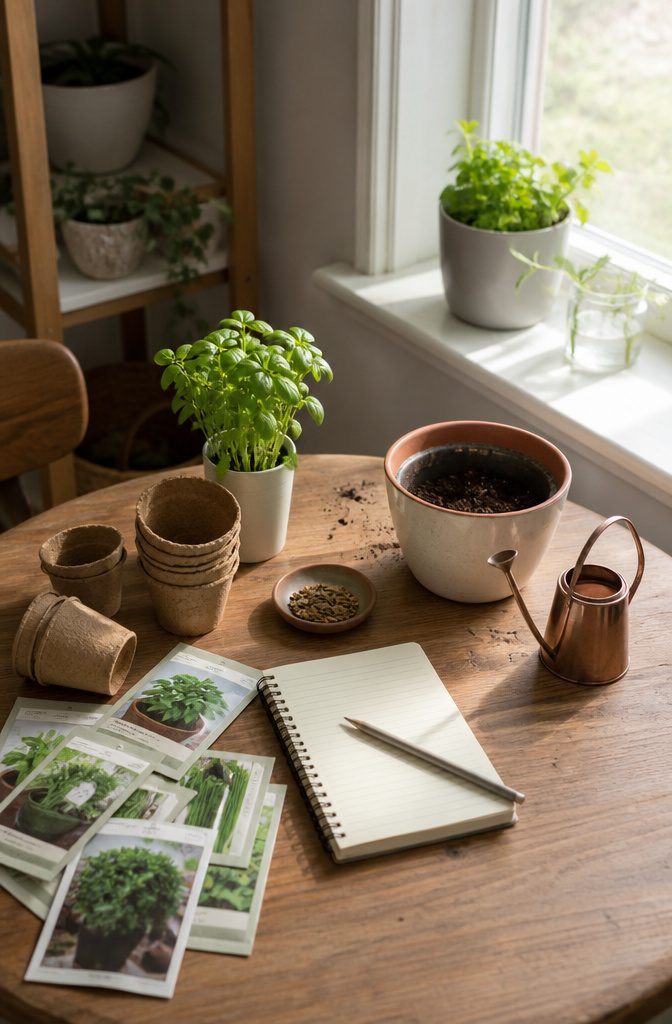
Grow lights are essential for herbs needing 6 to 8 hours of direct sunlight daily.
Light Requirements
Most herbs want 6 to 8 hours of direct sun daily, which is hard to come by on a kitchen counter in December.
That’s where grow lights come in. Kits with built-in LED panels run on timers and keep plants from getting leggy and pale.
If your windows face south and catch strong afternoon sun, a simple set of pots on the sill might do fine without extra hardware. Basement apartments and north-facing rooms, though, need artificial light to get anything worth harvesting.
I’ve read enough owner reports to know this is the single reason people abandon indoor herb projects; the plants stretch toward whatever dim glow they can find, then mildew or collapse. Budget for light if your space lacks it.
Space Efficiency and Herb Capacity
A windowsill tray takes up about 18 by 6 inches. Hydroponic towers run closer to 12 by 12 inches at the base but shoot upward 2 feet or more.
Countertop systems with grow lights overhead need headroom to lift the panel as plants mature. If you’re in a studio apartment with one usable surface, a low tray beats a tower.
Families who want basil, cilantro, parsley, mint, and chives all at once need slots for 5-plus plants, which pushes you toward wider or stacked designs.
Singles who only cook with basil on pasta night can ignore capacity almost entirely. The mistake I see in review threads is buying a 12-pod system for two people, then watching half the reservoir go stale.
Ease of Use
Setup ranges from "pour in nutrient packet and plug in" to pH testing, reservoir cleaning, and timer programming.
Watering is simpler in soil-based kits: you lift the pot, judge by weight, pour. Hydroponic systems buzz reminders when reservoirs run low and need regular complete water changes to prevent algae.
Harvesting differs too; soil lets you snip a few leaves and leave the plant, while some compact hydro setups grow root balls so dense you end up pulling the whole plant.
Older buyers and busy parents gravitate toward self-contained units with app alerts. If you already maintain houseplants and enjoy the rhythm, manual systems save money and counter space.
Running Costs
The math splits into startup and keep-going.
Soil and seeds cost little upfront; grow lights, pumps, and subscription nutrient services cost more but run longer. LED panels draw 15 to 45 watts depending on coverage, which shows on an electric bill if you’re running 14 hours daily through winter.
Nutrient refills for hydro systems arrive every few months. Replacement grow bulbs degrade after about a year and shift spectrum, even if they still glow.
I notice reviewers who track spending often prefer soil for annual herbs and reserve electric systems for perennials they want year-round, like rosemary or thyme.
Maintenance Needs
Soil gardens need water when the top inch dries, usually twice weekly in dry heated air.
Hydro systems need water top-offs weekly and full reservoir dumps monthly to prevent mineral buildup and root rot. LED panels collect dust that blocks output; a wipe every two weeks keeps intensity up.
Pruning matters more indoors than out, since you lack wind and insects to naturally limit growth. Basil left alone gets aphid-prone and hollow-stemmed.
Oregano and mint spread through any container they share. Buyers who travel weekly for work should avoid wick systems that dry catastrophically and look instead for larger reservoirs that buffer absence.
When Aesthetic Appeal Actually Matters
These systems sit where you cook, so they compete with your backsplash and appliances.
Bamboo bases and matte white housings blend with Scandinavian or farmhouse kitchens. Exposed PVC tubing and pink-purple grow lights read dorm room or lab bench, which bothers some households more than others.
If the garden lives in a closed office or basement utility shelf, ignore looks entirely. For open kitchens visible from living rooms, finish matters roughly as much as herb capacity.
I’ve seen enough buyer photos to know the mismatch regret: a sleek system in a rustic kitchen, or a rustic crate under surgical LEDs, both jar.
The garden has a clear water level indicator, an adjustable LED light panel, and a fan! All of this for under $70 is a major win.
How the Top Picks Compare
The Click and Grow requires 16 hours of light daily, unlike the Hydroponics system.
The Click and Grow and the Hydroponics Growing System both hold three plants, but they split the same crowd in half.
Click and Grow asks for 16 hours of light daily; the Hydroponics system does not specify a duration, which usually means it handles less finicky herbs or expects you to manage timing yourself.
If you want basil that behaves like a houseplant, Click and Grow’s regimented cycle removes guesswork. If you already own a timer and grow lights, the Hydroponics system’s simpler setup leaves room to experiment.
Space efficiency tells a sharper story between the compact options. The Lettuce Grow Counterstand Set and Click and Grow both claim tight footprints, yet they occupy counter space differently.
Click and Grow sits at 0.29 square feet, roughly the size of a toaster stood on end. The Counterstand Set spreads wider, with a 4 aesthetic rating that suggests visible presence matters to its designer.
Your countertop depth decides this one: shallow rental kitchens favor the vertical Smart Garden, while deeper counters in owned homes absorb the Counterstand’s friendlier silhouette.
Gardyn makes both the Studio 2 and the Home Starter Kit, and comparing them reveals where the line between mid-range and premium actually sits.
The Studio 2 fits 16 plants in 1.4 square feet; the Home Kit nearly doubles capacity to 30 plants while only expanding to 2 square feet. That density jump matters most to cooks who buy fresh herbs weekly.
The Home Kit also drops light requirements to 12 hours versus the Studio’s 16, which trims electricity and extends bulb life. Yet both ask for an hour of weekly maintenance.
The extra capacity does not come free in labor; it comes free in space, which is the tradeoff that separates a family of four from a single cook who simply wants variety.
The Rise Gardens Personal Garden and AeroGarden Harvest Elite compete for the countertop that faces the living room, not the wall.
Rise Gardens specs its light by wattage alone, 30 W, while AeroGarden lists 20 W. Brighter is not automatically better for herbs, which need less intensity than fruiting plants, but the 10 W gap suggests Rise Gardens built for growth speed where AeroGarden prioritized energy draw.
The Rise Gardens’ 180 square inches of footprint also spreads wider than AeroGarden’s six-pod base.
Your priority between these two depends on whether you harvest for weekly cooking or occasional garnishing; faster growth rewards the frequent cutter, while slower, thriftier growth suits the weekend cook.
The Superfood Growing Kit and Planters’ Choice DIY option both rate highest for ease, yet they diverge completely in philosophy. Superfood arrives ready to run, its 5 ease rating earned by removing decisions.
Planters’ Choice earns its recommendation by making the decisions the whole point. Neither is wrong, but the same buyer who loves one will find the other either patronizing or tedious.
I have watched friends abandon DIY kits in March because seed-starting fatigue hit after a long winter, and I have watched others bristle at pre-seeded pods that forbid variety. Know which person you are before choosing between them.
Caring for Indoor Herbs
Most indoor herbs die from kindness rather than neglect. Water too often and the roots sit wet; the leaves yellow, the stems soften, and you have a pot of compost instead of thyme.
I have read enough owner reports to know this pattern repeats across every system size, from the 4.9 inch wide countertop units to the setups that fill 2 square feet.
Light is the other usual suspect.
Basil and cilantro want 12 to 16 hours daily, which in winter means a grow light or a south-facing window that actually delivers. A 20W LED can cover a compact 6-plant setup; larger systems may run 30W to feed 12 or 16 plants.
Without enough intensity, stems stretch thin and leaves stay small and pale. Owners of the bigger units note that the built-in timers help, though you still need to check that the diodes are close enough to the canopy.
Pruning shapes the plant and extends its life.
Pinch above a leaf node and the herb bushes out instead of bolting upward to flower. I have seen gardeners describe harvesting rosemary and sage for months this way, while untrimmed basil goes to seed in weeks.
Most systems need only 30 minutes to 1 hour of attention weekly: topping water, checking for pests, snipping what you need for dinner.
The self-watering reservoirs stretch that to 2 or 3 weeks between refills on the smaller units, which suits anyone who travels or simply forgets.
Fertilizer matters less than you might expect in soil-based kits, since the discs or mix usually come pre-charged.
Hydroponic setups need nutrients added to the water, and the feed charts that come with them tend to run lean. Err on the side of underfeeding; salt buildup burns roots faster than a mild deficiency shows in the leaves.
Setting Up an Indoor Herb Garden
Most herbs want 12 to 16 hours of light daily, which is the first thing that trips people up.
A south-facing window can work in winter if you are lucky with your layout, but I have read enough owner reports to know that dim corners and overcast months leave basil leggy and thyme barely hanging on.
A dedicated grow light takes the guesswork out; 20W to 30W LED setups are common in the systems I compared, and buyers say the difference in leaf density is obvious.
Space is the next calculation. The smallest kit I looked at measures under 5 inches wide and lives on a windowsill; the largest demands 2 square feet and looks more like a piece of furniture.
Your countertop, a side table, or that awkward gap beside the fridge are all fair game. I would measure before ordering, because nothing sours a project like a system that overhangs the edge.
Soil choice splits two ways. Traditional pots need potting mix, not garden dirt, and a container with drainage holes.
The self-watering units and hydroponic systems skip soil entirely, using nutrient solution or expand-in-water discs instead. Both routes work, but overwatering in regular pots is the complaint I saw most often, so a reservoir system or a simple saucer helps.
Watering rhythm varies.
Expect to add water weekly on some systems, every 2 to 3 weeks on others with larger tanks. A quick timer check on your phone beats forgetting and finding wilted leaves.
Choosing the Right Herbs
Basil, parsley, cilantro, chives, mint, and oregano are the herbs that keep coming up in owner reports as the ones that actually cooperate indoors.
They germinate fast, forgive inconsistent watering better than dill or sage will, and they are the ones you reach for most often mid-recipe.
Thyme and rosemary can work too, but they grow slower and demand more light, so they tend to frustrate beginners.
Light is the factor that separates thriving plants from leggy, pale ones.
Every system I looked at specifies 12 to 16 hours of either LED grow light or strong natural window exposure. A south-facing window rarely delivers that in winter, which is why most countertop setups include their own lamps.
One compact unit runs a 20W LED, another a 30W array; both are sized to replace sun that most kitchens do not have.
Space dictates capacity more than you might expect. A 4.9 inch wide pod system fits three herbs and sits beside the coffee maker.
A 1.4 square foot tower holds 16 plants. The largest footprint I saw, at 2 square feet, accommodates 30 plants but needs its own table.
Your countertop real estate and your cooking habits should match: a family that cooks daily needs volume, a single cook who wants fresh basil for summer pasta does not.
Watering rhythm matters too. Self-watering reservoirs run 2 to 3 weeks between refills on the compact systems; larger soil-based kits need attention weekly.
Root rot shows up repeatedly in buyer reviews, almost always from topping off too enthusiastically. The systems with visible water gauges or passive wicking make that harder to do by accident.
Frequently Asked Questions
What herbs are easiest to grow indoors?
Basil, chives, parsley, cilantro, and mint top most lists for forgiving indoor growth. These herbs tolerate the lower light and stable temperatures typical of kitchen windowsills or countertop systems, and they recover well from beginner mistakes like uneven watering.
How much light do indoor herbs need?
Most indoor herb systems need 12 to 16 hours of light daily for strong growth, whether from a sunny south-facing window or LED grow lights.
Some compact setups use 20W LEDs, while larger systems may run 30W; steady duration matters more than intensity alone. Without enough hours, growth slows and leaves thin out, which is one of the most common problems owners report.
What is the best type of container or system for indoor herbs?
The right system depends on your space and habits. Small countertop units with self-watering reservoirs and adjustable light heights suit tight kitchens and busy schedules, with footprints as small as roughly 5 inches wide by 9 inches deep.
Larger systems, up to about 2 square feet, hold more plants and work well if you cook with fresh herbs daily or want a visual centerpiece. Look for adjustable grow lights if your natural light is limited.
How much maintenance is required for different systems?
Expect roughly 30 minutes to 1 hour of attention per week across most systems.
Self-watering designs stretch water refills to every 2 or 3 weeks, while simpler setups need weekly topping off. All systems need occasional pruning to keep plants productive and prevent overcrowding, especially as herbs mature.
What is the cost of ongoing supplies?
Ongoing costs stay modest for most growers, though they vary by system type. Soil-based kits need fresh potting mix and seeds periodically; hydroponic units use liquid nutrients and replacement grow sponges.
Budget for these as recurring line items after the initial purchase, with premium systems typically carrying higher supply costs due to proprietary pods or larger nutrient volumes.





