
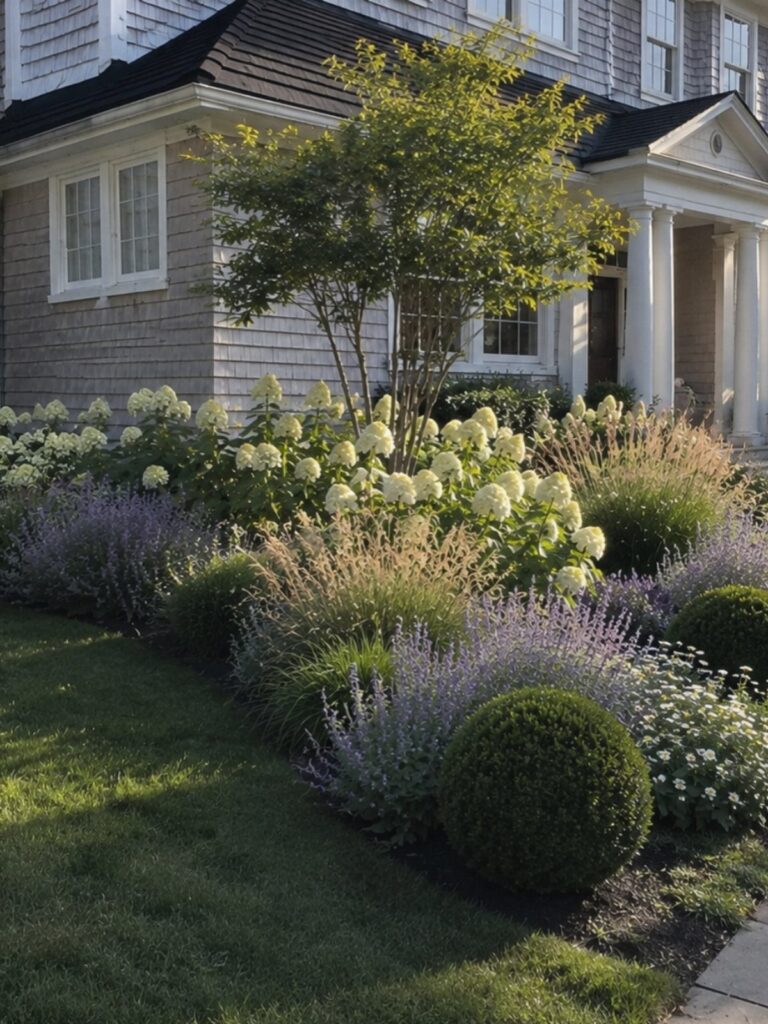
A garden front of house can mean self-planted containers you carry home in your car, or a terraced boulder wall that needs engineered plans and a crew with heavy equipment.
What decides which idea is yours is how much hands-on work you want to take on, and whether you are solving for curb appeal now or for the years you will live with the results.
[link-whisper-related-posts]1. Foundation Plants
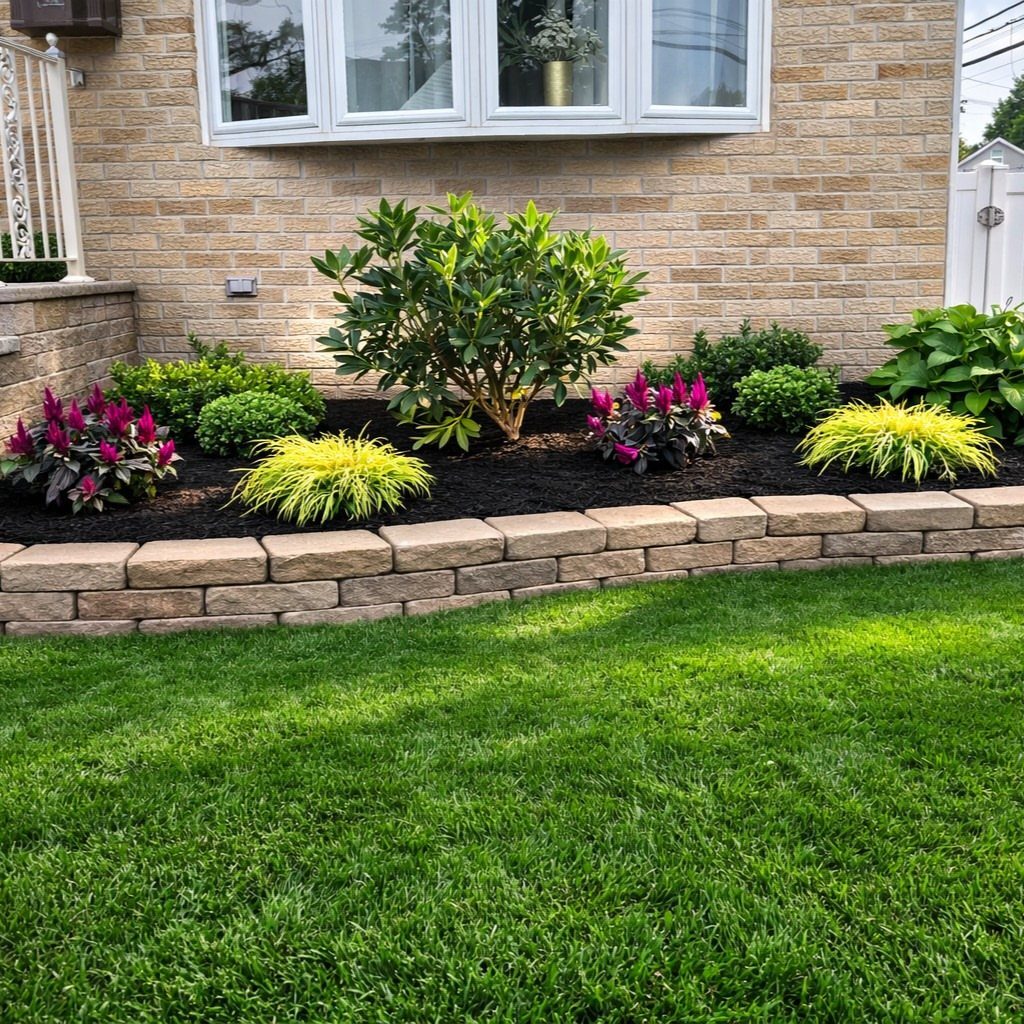
Foundation planting is what you put along the base of your house to soften the line where siding or brick meets soil.
Before you dig, check mature plant heights against window heights; a shrub that reads small at the nursery can finish tall enough to block first-floor windows in a few growing seasons.
I look for compact varieties labeled for the front face, with something slightly taller only at corners where the eye expects weight.
Stone edging is doing real work here: it keeps mulch off the brick, which matters more than it looks like it would for pest access and for how clean the bed reads from the street.
2. Container Garden
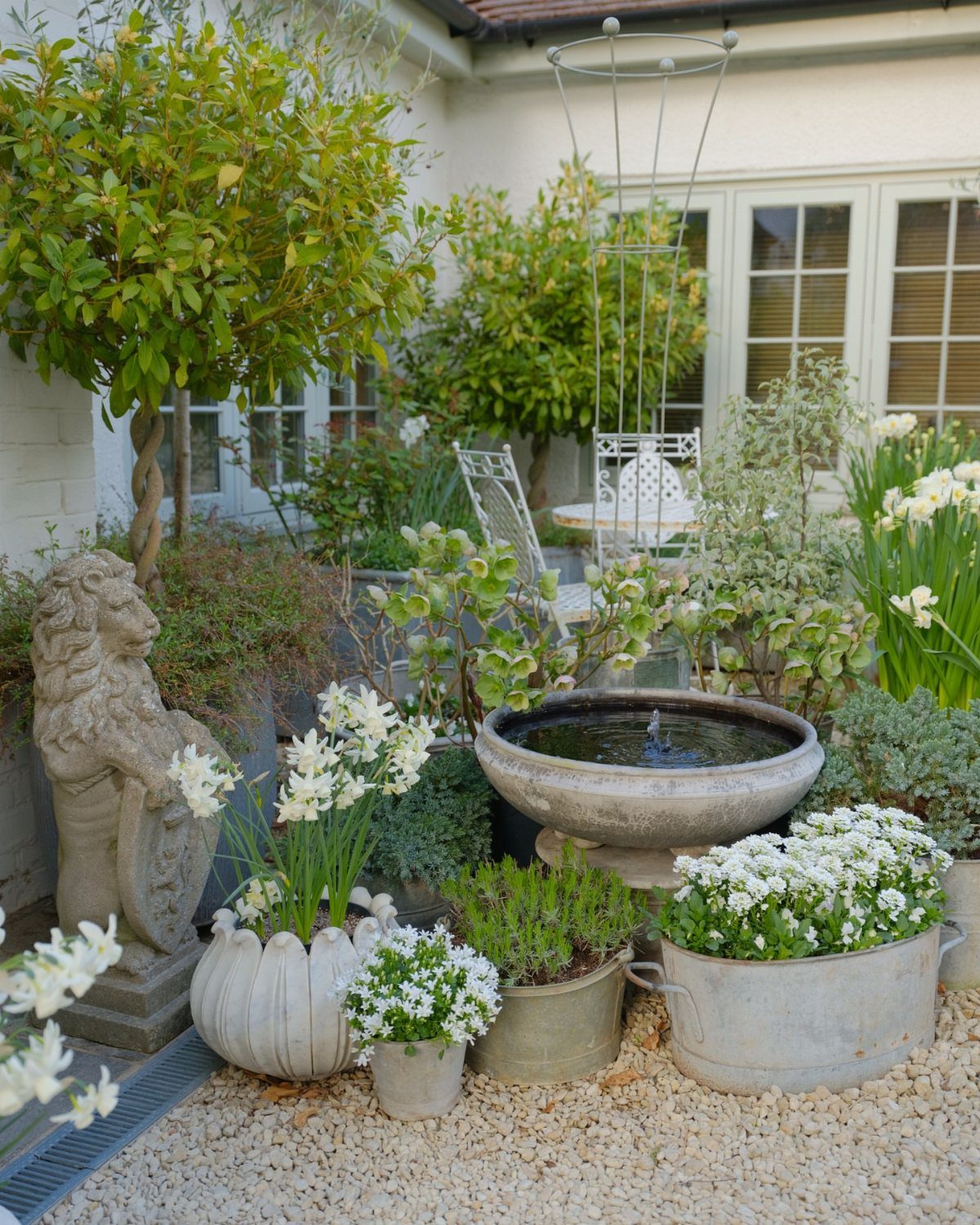
Containers let you rearrange your garden the way you move furniture, which is why I keep coming back to them when I want a front-of-house look that can shift with the season.
Galvanized tubs and varied pots sitting on gravel solves the drainage problem that kills more potted plants than bad light does; water has somewhere to go instead of pooling against roots.
I would check the weight before I committed to anything large. A terracotta pot filled with damp soil gets surprisingly heavy, and a galvanized tub does not save you much once it is loaded.
If your front space is sloped or you move pots seasonally, resin or fiberglass copies the look without the hernia.
3. Fountains, Sculptures
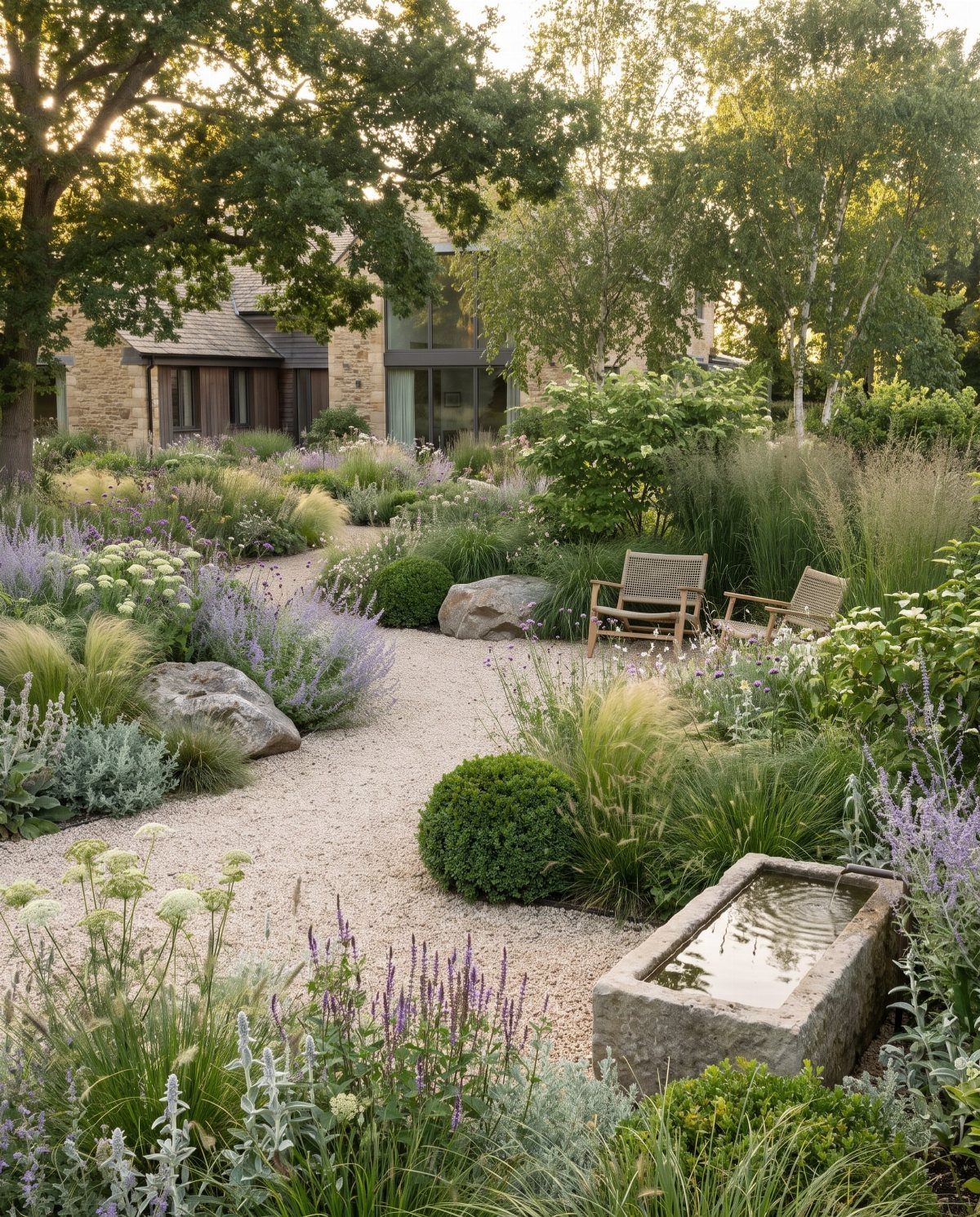
A water feature in the front garden does something no plant can: it gives you sound, and sound changes how long a visitor feels willing to stand at your door.
A stone trough sitting at grade in gravel reads as settled in rather than dropped on top of the landscape; I think that integration matters more than the fountain’s price.
Solar pumps have gotten reliable enough that you can skip the outdoor outlet if you are willing to accept a weaker flow on overcast days.
I would place it where I hear it from a window I open often, because a fountain I never hear becomes maintenance I resent.
4. Hedges
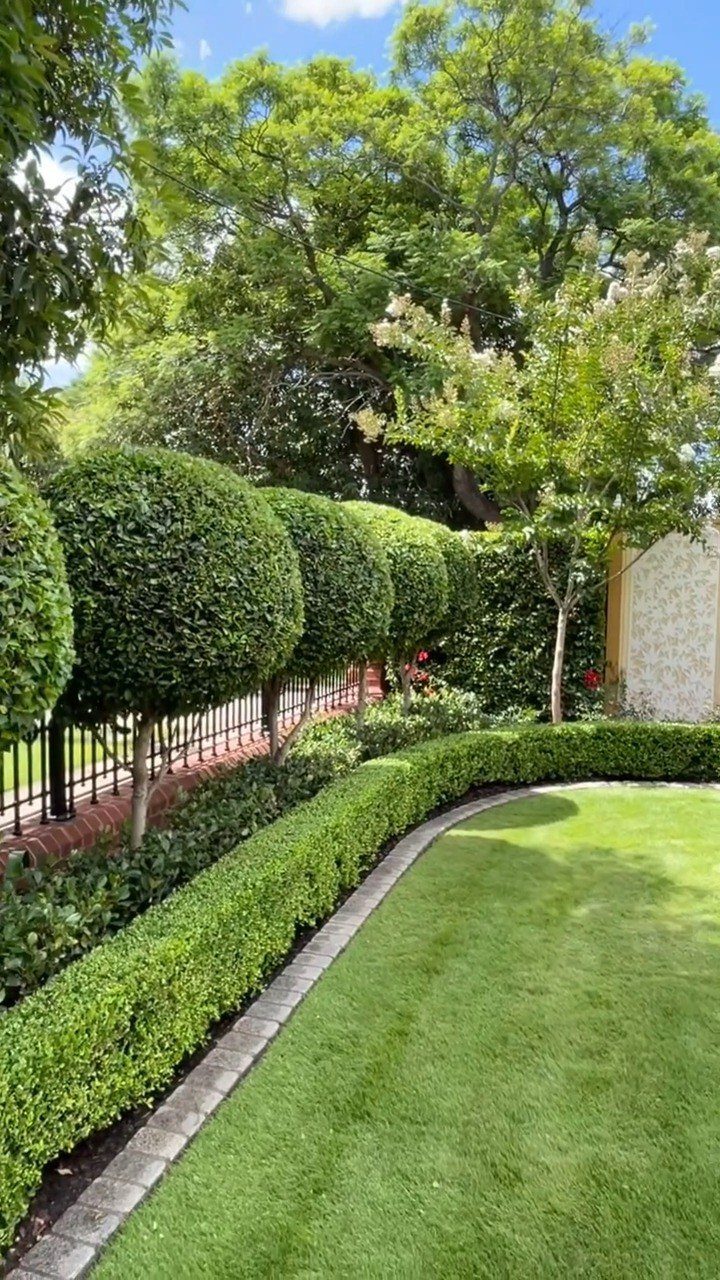
Low hedges define space without asking for the full commitment of a fence, and a boxwood curve keeps the lawn from reading as an unbroken plain.
Before you plant, know your clipping tolerance. Boxwood wants regular trims to stay this sharp, and skipping even one season means a year of growing back into shape.
I would skip the spheres unless I genuinely enjoyed the shears; a flat-topped hedge or a simple undulating line gives you most of the formality with less fuss.
The stone edging underneath is doing the same job as in the foundation bed, keeping the hedge’s mulch or soil from migrating into grass that the mower already handles.
5. Rose of Sharon
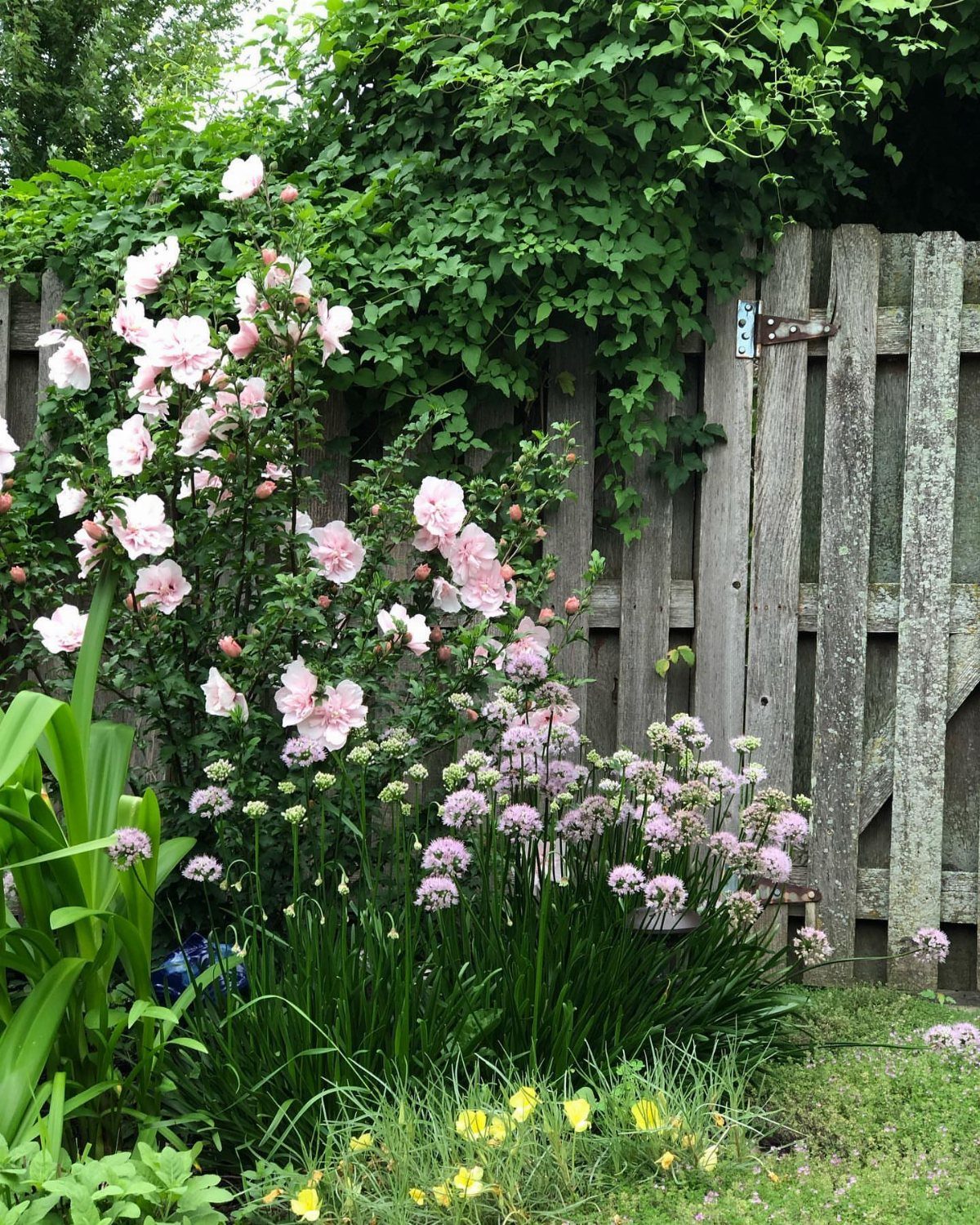
Rose of Sharon is a shrub that blooms late, carrying color in August when earlier performers have finished, and the pink varieties against a wooden fence read as cottage garden without the cottage.
What I would check before planting: this is Hibiscus syriacus, which reseeds freely, and in some regions it has edged toward invasive status. Your extension office can tell you whether that is a concern in your county.
I would also site it where I did not need to walk past it wet; the blooms are generous but sticky underfoot, and a narrow front path planted tight to both sides becomes a chore in morning dew.
Give it sun and room to reach 8 to 12 feet, or plan to prune to a multi-stem tree form.
6. Mixed Borders
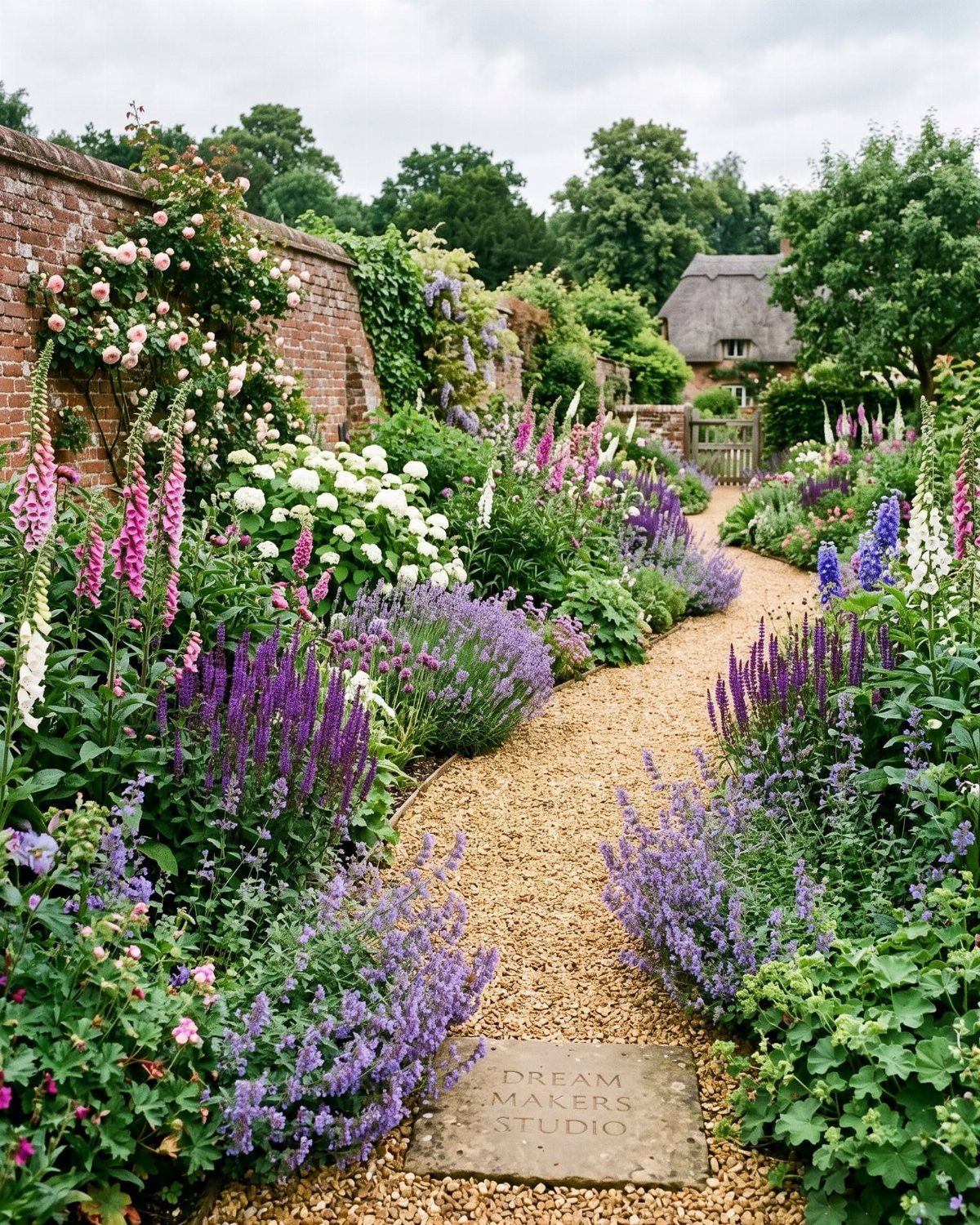
A mixed border is the opposite of a hedge: no single plant repeated, but layers of heights and textures that keep something happening from April to frost.
I would buy the largest plants I could afford for the back layer, the structural shrubs or tall grasses that give the border its spine, and fill forward with smaller perennials and annuals that knit together while the big stuff settles.
A gravel path is a useful detail; it lets you tend the border without compacting the planting soil, and it drains faster than pavers after rain.
7. Arbors and Trellises
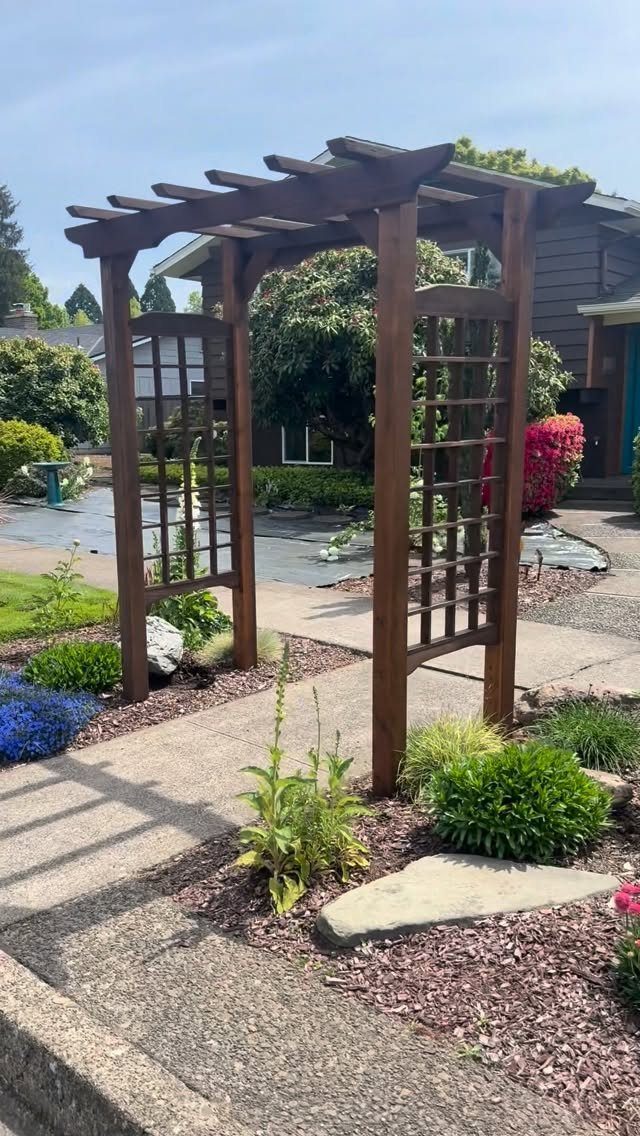
An arbor turns a straight front walk into something worth walking slowly, and the side trellis panels give climbing roses or clematis a structure to work with from the ground up.
Wood-look vinyl or fiberglass saves the painting cycle every few years, though real cedar weathers to silver in a way the copies do not quite match.
Anchor posts sit below frost line or the freeze-thaw cycle will push them out of square by year three.
Where trellis sides meet garden soil, leave breathing room for the clippers; growth that buries the lattice bottom means rot and a harder reshape later.
8. Pathway Design
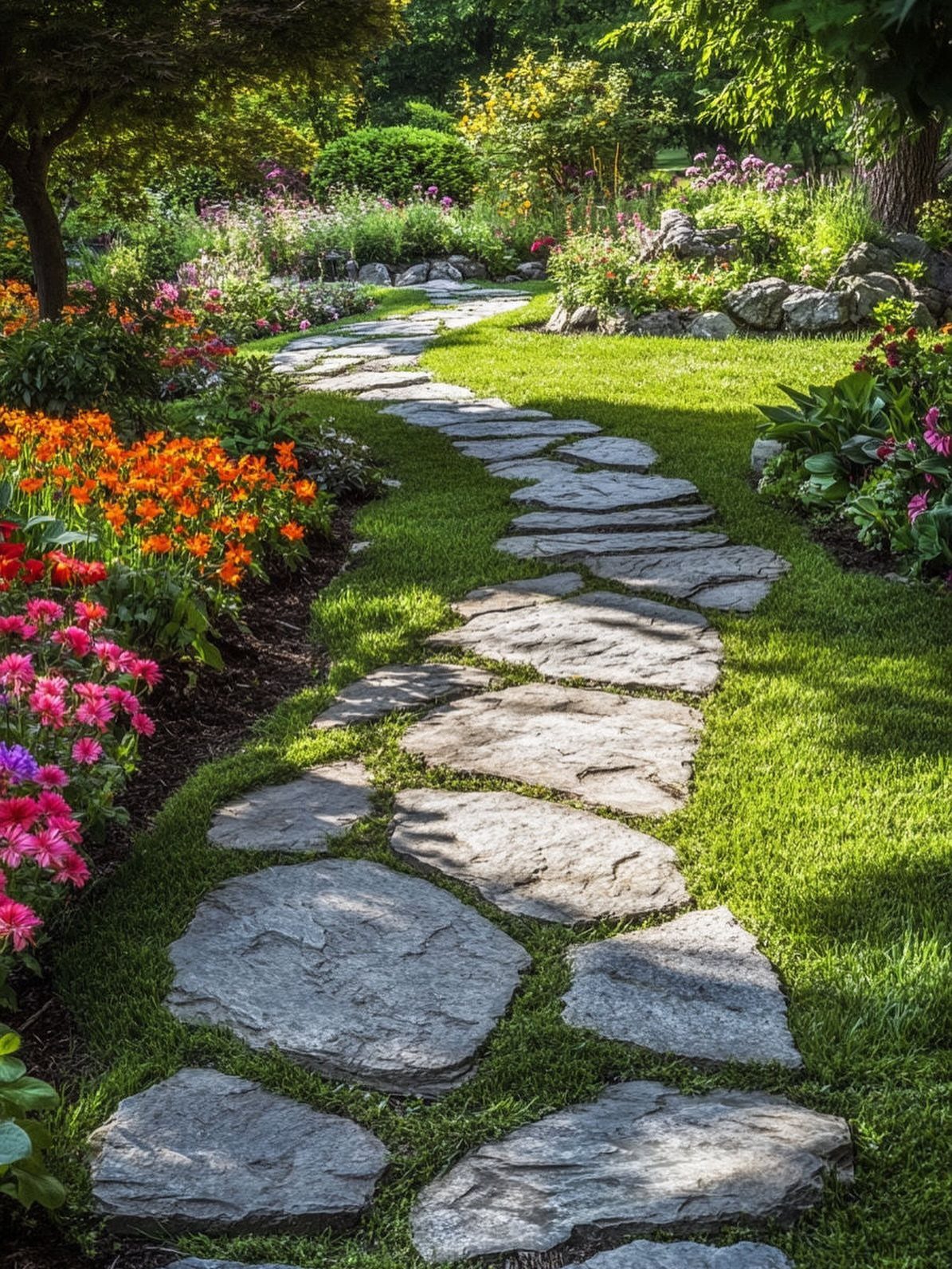
Curved flagstone breaks up a rectangular lot better than straight concrete, and the irregular edges let you adjust the line around a tree or a bed that already exists.
Thickness matters more than stone type for a path set into lawn: flagstone thick enough to sit flush with grass still takes a mower wheel without rocking.
I would lay it on compacted crusher run, not just on topsoil, or the freeze-thaw will shift each piece into a trip hazard within 2 winters.
Dry-laid stone drains immediately and shifts with the ground; mortared joints crack where the soil moves.
A path this informal wants the planting to creep at its edges, so I would back the curve with something low and soft rather than a rigid hedge that fights the line.
9. Boulder Retaining Wall
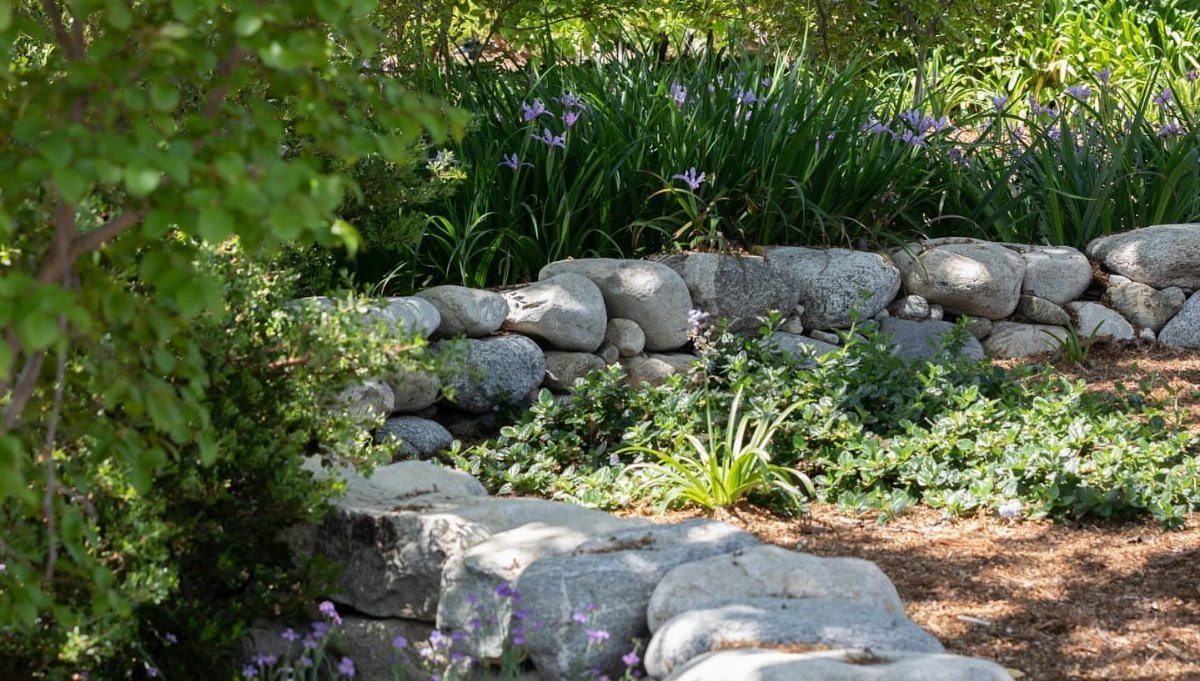
Rounded boulders stacked low read as found on site rather than delivered, which is the look I want when I am terracing a front slope that would otherwise wash mulch downhill in every rain.
A low boulder wall keeps out of permit territory in most municipalities; anything tall enough to need engineered plans and rebar is a different project entirely.
I would grade behind each tier with gravel and a drain sleeve, or the water pressure on the back face will push stones out by spring.
Flat-faced quarry stone gives a sharper line; these rounded ones want a looser, more casual planting at their feet. Iris rhizomes sitting right against the stone divide and thicken in place without lifting the rock.
10. Architectural Palm Accent
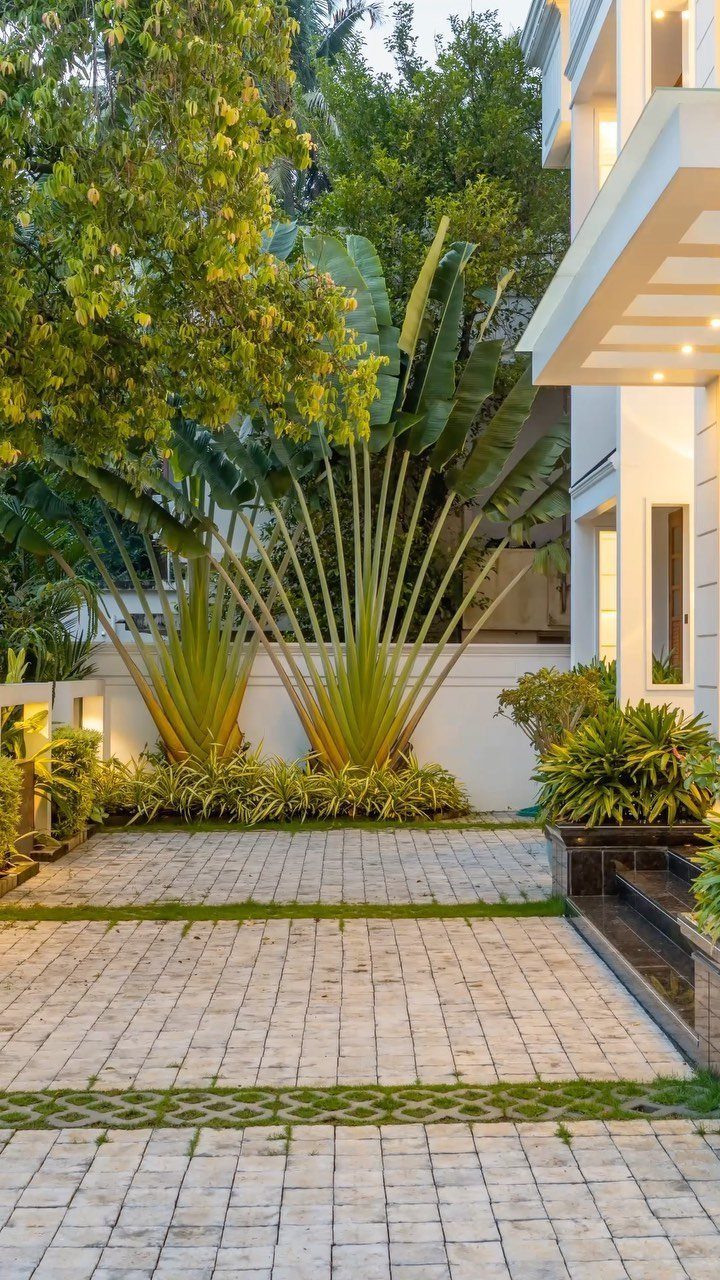
Traveler’s palms are not true palms, but the fan-shaped leaves do the same vertical work against a flat white wall, dramatizing height without narrowing the space the way a conifer column would.
Two planted as a pair gives symmetry; one off-center reads as deliberate and breaks a long facade.
I would check hardiness for my zone before committing to Ravenala madagascariensis; it wants tropical conditions and most of the US will treat it as an annual or a move-in-for-winter container.
Low underplanting keeps the base of a specimen palm from looking stranded, and paved ground means no mower line to maintain.
In a cooler climate I would try a hardy sabal or needle palm for the same silhouette, knowing the leaf will be less theatrical and the scale more compact.
Evaluate Light Conditions
Before you settle on any planting scheme, walk your front yard at 3 different times of day and note where the shadows fall.
The south-facing wall that reads as full sun at noon may sit in shade until 10 a.m., which matters for plants that need several hours of direct light to set bloom.
Morning shade with afternoon sun is the harder combination; soil heats up and dries out while the plant is still trying to photosynthesize, so I would look for species that tolerate both stressors rather than ones that demand perfect conditions.
Shade does not mean colorless.
A solid list of shade-tolerant plants will get you further than guessing at nursery tags, and the plants that thrive there are often the ones that look freshest in August when sun lovers are fried at the edges.
Match the plant to the light you actually have, not the one you wish for.
Consider Maintenance Level
Seedlings cost less but need patience, weeding, mulching, and looking at bare soil before they fill their allotted space.
Be honest about your clipping tolerance before planting anything that needs shearing. Boxwood hedges reward the steady hand and punish the distracted gardener; skip them if your weekends already feel full.
The same honesty applies to lawn. A traditional turf strip takes more water, time, and equipment than most first-home owners expect, and some HOAs or city ordinances restrict or prohibit it outright in arid regions.
Native or xeriscape plantings cut that commitment sharply, and permeable pavers with gravel handle foot traffic without the irrigation schedule.
Plan for Functionality
Your front yard is already working whether you designed it or not; the question is what job you want it to do.
A strip of lawn between beds gives children somewhere to fall and keeps the space from reading as purely decorative, but it also commits you to mowing, watering, and the seasonal fertilizer debate.
Check your HOA or municipal rules before killing off all the turf, since some jurisdictions still require minimum green coverage and fine homeowners who remove it.
Soil matters here more than it looks like it would. Years of lawn-only care leave dirt compacted and nutrient-bare, so any new planting bed needs amendment before you expect plants to thrive.
Test what you have; the bagged garden soil you add on top will not fix hardpan below the surface.
If you are planting for resale rather than for yourself, the math changes.
Immediate fullness reads as cared-for to buyers, so annuals between young perennials make sense as a short-term bridge. For a garden you will live with, patience and smaller plants win on budget.
Don’t be afraid to think outside the box. A front yard can be the site of a vegetable plot, cottage garden, wildflower meadow, rock garden, or patio.
Frequently Asked Questions
What to put in a garden in front of a house?
I would start with foundation planting along the base of the house to soften where siding or brick meets soil, using compact varieties sized to stay below window height.
A low hedge or curved flagstone path gives the space structure without demanding a fence’s full commitment.
What is the best shrub to grow in the front of my garden?
Boxwood works for low formal hedges if you enjoy regular trimming, and Rose of Sharon carries color late in August when earlier shrubs have finished.
Before choosing, check mature height against your windows and your own tolerance for clipping; a shrub that reads small at the nursery can block first-floor glass in a few seasons.





